
TL;DR

Get the latest gadgets delivered free — and shop member deals
- Fast, free delivery on millions of items
- Access to Prime Big Deal Days deals on October 6–7
- Prime Video, Amazon Music and more included
Fitness trackers often struggle to accurately monitor heart rate over tattoos due to sensor interference. Some workarounds help, but technology improvements are needed. This affects users with tattoos seeking reliable data.
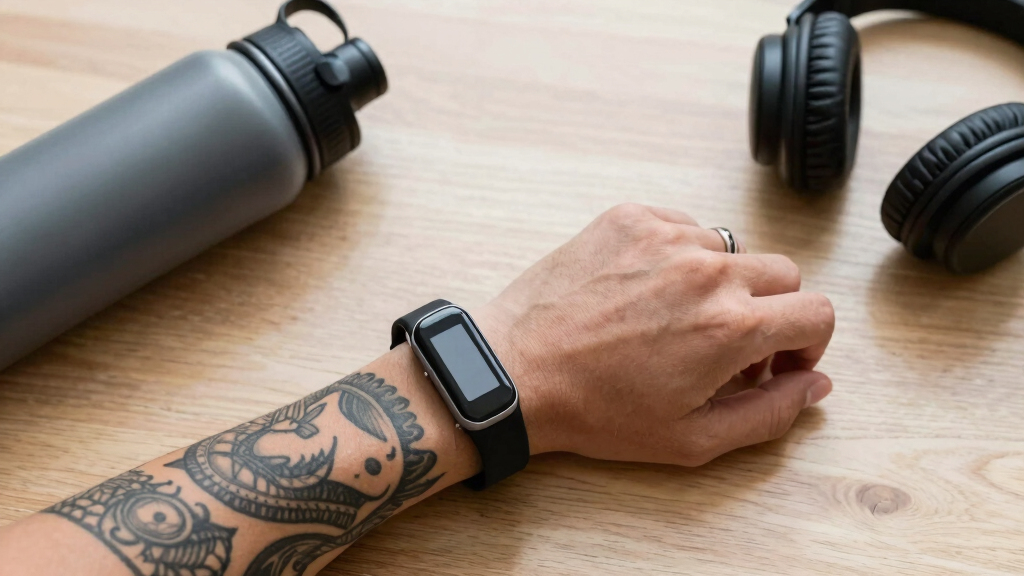
Fitness trackers and smartwatches can have reduced accuracy or fail to register properly when worn over tattoos, according to device makers and recent research. This issue affects users who rely on these devices for health monitoring, making it a relevant concern for millions with body ink.
Many wearable devices use photoplethysmography (PPG) sensors that rely on green light to measure heart rate. Tattoos can block or distort this light, leading to inaccurate readings or device non-responsiveness. Companies like Garmin and Apple have acknowledged this issue, advising users to avoid placing trackers over tattoos for optimal performance.
Some users have found temporary workarounds, such as wearing the device on an uninked wrist or using accessories like clear tape or stickers over sensors. Others opt for chest strap monitors, which are less affected by skin pigmentation or ink. Despite these solutions, the problem persists, especially with darker tattoos or saturated ink.
Recent research from 2025 indicates that tattoos can impact heart rate accuracy, especially at rest, but the effect varies depending on factors like ink color, saturation, and activity level. The study found that some devices perform better over tattoos than others, but overall, sensor technology needs improvement to reliably account for skin variations.
Impact of Tattoos on Fitness Tracker Accuracy
This issue matters because many users depend on fitness trackers for health insights, workout optimization, and medical monitoring. Inaccurate data can lead to misinformed decisions or reduced trust in wearable technology. As tattoos become more common, device manufacturers must address sensor limitations to ensure reliable performance across diverse users.
fitness tracker for tattooed skin
As an affiliate, we earn on qualifying purchases.
As an affiliate, we earn on qualifying purchases.
Background on Wearable Sensor Challenges
The reliance on optical sensors in fitness devices has historically been challenged by variations in skin tone, tattoos, and other skin characteristics. Manufacturers have acknowledged these limitations since the early days of device release, with advice to avoid placing trackers over tattoos. Recent studies aim to quantify the extent of interference and explore potential technological solutions.
While some newer devices like Google’s Pixel Watch 4 are rumored to handle tattooed skin better, the overall landscape remains inconsistent. Past updates from brands like Samsung have not fully resolved the problem, and ongoing research continues to highlight the need for sensor innovation.
“Tattoos can block the heart rate sensor’s light, causing inaccurate or missing readings.”
— an anonymous researcher
As an affiliate, we earn on qualifying purchases.
Extent and Consistency of Tattoo Interference
It remains unclear how much tattoos affect sensor accuracy across different devices, ink types, and skin tones. The variability in research results indicates that further studies are needed to develop comprehensive solutions. The effectiveness of upcoming device updates or new sensor technologies is still unconfirmed.
wearable device for tattooed wrist
As an affiliate, we earn on qualifying purchases.
As an affiliate, we earn on qualifying purchases.
Future Improvements and Ongoing Research
Device manufacturers are expected to continue refining sensor technology to better accommodate tattoos. Future updates may improve accuracy, especially if supported by more extensive research. Consumers should watch for new device releases and software updates aimed at addressing this challenge, while researchers work to better understand the variables involved.
waterproof fitness tracker with accurate heart rate
As an affiliate, we earn on qualifying purchases.
As an affiliate, we earn on qualifying purchases.
Key Questions
Can I still use my fitness tracker if I have tattoos?
Yes, but you may experience reduced accuracy, especially in heart rate monitoring. Some workarounds, like positioning the device differently or using external sensors, can help improve performance.
Are some devices better at handling tattoos than others?
Early indications suggest that newer models like Google’s Pixel Watch 4 may perform better, but overall, device reliability varies. Continued research aims to improve this aspect across brands.
What can I do if my tracker isn’t accurate over tattoos?
Try wearing the device on a different wrist or location, use accessories like clear tape over sensors, or consider alternative heart rate monitors like chest straps for more precise data.
Will future devices solve the tattoo interference problem?
Likely, as sensor technology advances and more research is conducted. Manufacturers are aware of the issue and are working to develop solutions that accommodate diverse skin types and ink saturation levels.
Does the color or saturation of tattoos affect sensor performance?
Yes, darker and more saturated tattoos tend to block sensor light more effectively, leading to greater inaccuracies. However, the exact impact varies depending on the device and individual characteristics.
Source: Engadget
Evergreen bestsellers Picks
bestsellers
As an affiliate, we earn on qualifying purchases.