Noise cancellation works by reducing unwanted sounds through a clever process. Your device detects ambient noise with microphones and creates anti-noise sound waves that cancel out those sounds. This is based on the sound wave interference principle, where opposing waves cancel each other. Passive methods rely on physical barriers, while active noise cancellation adjusts in real time for different noises. If you want to understand how this technology can make your environment quieter, keep exploring how these sounds work together.

Get the latest gadgets delivered free with Prime
- Fast, free delivery on millions of items
- Prime Video, Amazon Music and more included
- Member-only deals all year
Key Takeaways
- Noise cancellation reduces background sounds by creating sound waves that cancel out ambient noise through interference.
- Passive noise reduction uses physical barriers like ear cups, while active noise cancellation (ANC) uses microphones and anti-noise sounds.
- ANC detects ambient noise, then generates opposing sound waves in real time to block out consistent background sounds.
- It works best with steady, low-frequency noises and is less effective against sudden or irregular sounds.
- Overall, noise cancellation helps improve focus and relaxation by minimizing environmental noise.
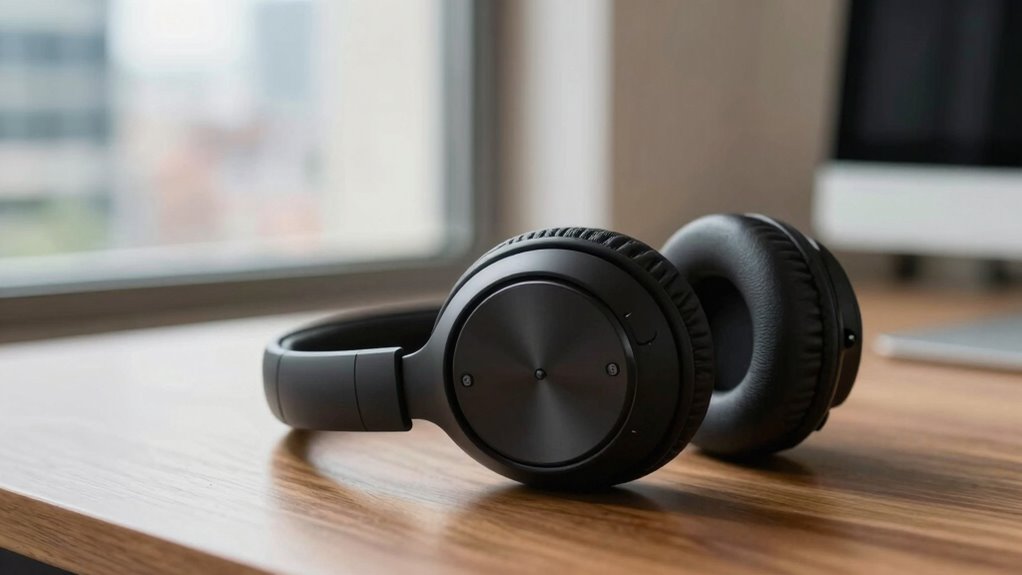
Have you ever wished you could block out the world and focus entirely on what matters? That’s where noise cancellation comes in. It’s a technology designed to reduce unwanted sounds, making your environment quieter and more peaceful. At its core, noise cancellation works by tackling sound wave interference—the way sound waves from external sources interact with the signals your headphones or earbuds produce. When noise cancellation is active, your device creates sound waves that are the exact opposite, or phase-inverted, of the ambient noise. These opposing waves cancel each other out, reducing the overall noise you hear. This process is called destructive interference.
Noise cancellation reduces unwanted sounds by creating phase-inverted waves that cancel out ambient noise through destructive interference.
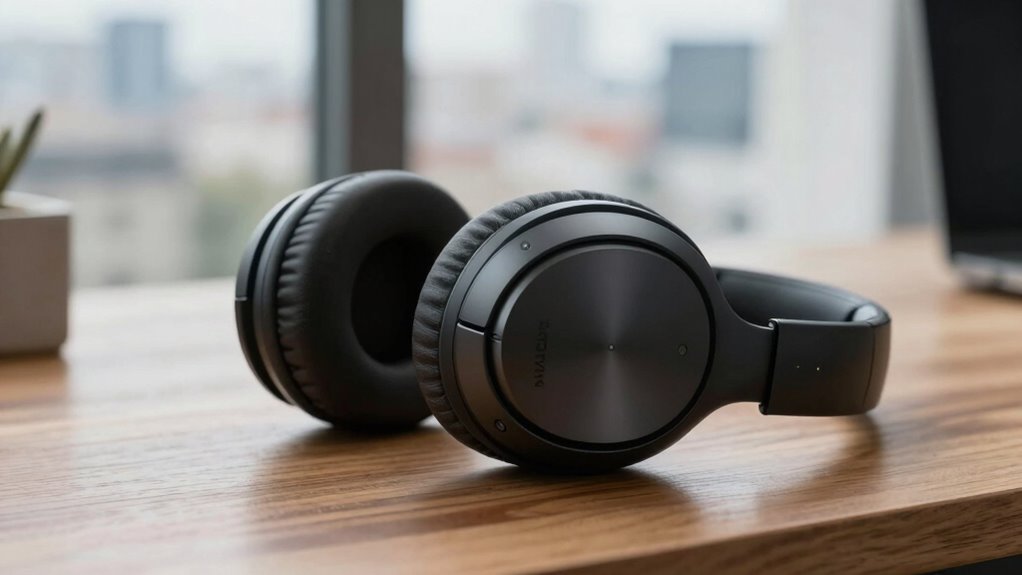
There are two main types of noise cancellation: passive and active. Passive noise reduction relies on physical barriers, like thick ear cups or ear tips, to block out sound. It’s effective for higher frequencies, such as human speech or sharp noises. Active noise cancellation (ANC), however, takes it a step further by using microphones to detect ambient noise and then generate anti-noise sound waves in real time. These anti-noise waves blend with the incoming sound waves, markedly reducing ambient noise. When properly tuned, ANC can cut down consistent background sounds, like the hum of an airplane engine or air conditioning, creating a quieter listening experience.
Understanding ambient noise reduction is key to appreciating how noise cancellation works. Ambient noise includes all the background sounds that fill your environment—traffic, chatter, machinery, or even the drone of a fan. Without noise cancellation, these sounds can intrude on your focus or relaxation. Noise-canceling devices aim to minimize this intrusion, allowing you to concentrate or unwind without distraction. By actively monitoring ambient noise, your device continuously adjusts its anti-noise signals to adapt to changing environments. This dynamic process makes noise cancellation especially effective in unpredictable or noisy settings. Additionally, the effectiveness of noise cancellation depends on the sound wave interference process, which is influenced by the frequency and consistency of ambient sounds.
It’s important to realize that noise cancellation isn’t perfect. It works best with steady, low-frequency sounds and less so with sudden or irregular noises. Some users might notice a slight pressure or hissing sensation, which is a normal part of the anti-noise process. However, advancements in smart technology are continuously improving the adaptive capabilities of noise-canceling devices. These innovations utilize artificial intelligence to better distinguish between different types of sounds and enhance cancellation effectiveness. Moreover, the design and technology integration in modern devices significantly impact overall noise cancellation performance. Overall, noise cancellation offers a powerful way to improve your listening experience, whether you’re commuting, working, or relaxing at home. It’s fundamentally a smart, active method of ambient noise reduction that uses sound wave interference to keep the world’s chaos at bay, helping you focus on what truly matters.
As an affiliate, we earn on qualifying purchases.
Frequently Asked Questions
How Effective Is Active Noise Cancellation in Different Environments?
Active noise cancellation works well in various environments, but its effectiveness depends on sound quality and environmental impact. In loud settings like airplanes or busy streets, it considerably reduces background noise, enhancing your listening experience. However, in quiet spaces, it might be less noticeable. Keep in mind that some environmental impact occurs due to the device’s electronic noise, but overall, it provides a more immersive and comfortable audio experience across different environments.
Does Noise Cancellation Drain Battery Life Quickly?
Noise cancellation can slightly drain your battery life, but it generally doesn’t do so quickly thanks to improved power efficiency in modern devices. When you activate active noise cancellation, your device uses battery consumption to power the microphones and processing. However, manufacturers design these features to balance performance and battery life, so you can enjoy noise reduction without worrying about excessive power drain. Just keep an eye on your battery levels during long use.
Can Noise Cancellation Cause Any Health Issues?
Noise cancellation generally doesn’t cause health risks or long-term effects when used properly. However, some people might experience temporary discomfort, like ear pressure or headaches, if they use it at high volumes or for extended periods. To stay safe, keep the volume moderate and take breaks. If you notice persistent issues, it’s best to consult a healthcare professional. Overall, noise cancellation is safe for most users.
How Does Noise Cancellation Work With Multiple Sound Sources?
When multiple sound sources are present, noise cancellation works by detecting each source and using microphones to analyze their sound waves. It then applies phase cancellation, where anti-phase signals are generated to neutralize unwanted noise. However, sound source interference can make this process tricky, as overlapping sounds may confuse the system. Despite this, advanced noise-canceling technology adapts in real-time to effectively reduce diverse background noises.
Are There Differences Between Noise-Canceling Headphones and Earplugs?
Yes, there are differences between noise-canceling headphones and earplugs. Headphones often provide active noise cancellation, which is great for reducing background noise while allowing you to listen to audio. Earplugs mainly block sound passively and offer less comfort and sound quality. Consider personal comfort and cost; headphones tend to be more expensive but offer added features, while earplugs are affordable and simple, making them suitable for quick noise reduction.
As an affiliate, we earn on qualifying purchases.
Conclusion
Now that you understand noise cancellation, you’re practically a superhero in a world full of chaos! With this technology, you can conquer noisy streets, loud offices, and even restless flights with ease. It’s like having a personal shield that blocks out the chaos and surrounds you with pure, peaceful silence. So go ahead—embrace noise cancellation and transform your daily life into a tranquil oasis. Nothing is more powerful than a calm mind in a storm!
passive noise cancelling ear cups
As an affiliate, we earn on qualifying purchases.
As an affiliate, we earn on qualifying purchases.
noise cancelling headphones for airplane
As an affiliate, we earn on qualifying purchases.
As an affiliate, we earn on qualifying purchases.
Halloween Picks
halloween
As an affiliate, we earn on qualifying purchases.