
TL;DR

Get the latest gadgets delivered free — and shop member deals
- Fast, free delivery on millions of items
- Access to Prime Big Deal Days deals on October 6–7
- Prime Video, Amazon Music and more included
Researchers have uncovered a 1950s Japanese computer called Parametron that functioned without transistors or vacuum tubes, relying instead on magnetic logic. This challenges assumptions about early computer technology and highlights Japan’s innovative approaches.
A 1950s Japanese computer named Parametron has been identified as one of the earliest digital machines to operate without transistors or vacuum tubes. This discovery, made by researchers analyzing historical documents and hardware, reveals an alternative approach to early computing technology that predates widespread transistor use. The finding matters because it broadens understanding of technological innovation during the post-war period in Japan and challenges the dominant narrative centered on transistor-based electronics.
The Parametron was developed in Japan during the 1950s by researchers aiming to create reliable digital computing machines in an era when vacuum tubes were standard but fragile and power-consuming. Unlike contemporary computers that relied on vacuum tubes or later transistors, the Parametron utilized a magnetic logic device based on the magnetic properties of ferrite cores. This technology enabled digital switching and logic operations without the need for vacuum tubes or semiconductors.
Recent research, published in a scholarly journal, analyzed preserved hardware and technical documents, confirming that the Parametron employed a magnetic logic system. This system used ferrite cores to represent binary states, and the machine’s circuitry was built around magnetic induction rather than electronic switching. The discovery was made possible through the efforts of historians and engineers who examined the hardware in a Japanese university collection, revealing a unique, transistor-free digital computer from the 1950s.
Historical Impact of Magnetic Logic Computing
This discovery highlights a diverse range of technological approaches in early computing history, particularly in Japan, where magnetic logic offered an alternative to vacuum tubes and transistors. It underscores that innovation was not solely driven by Western developments and that Japan played a significant role in pioneering different methods of digital logic. The Parametron’s design also suggests potential avenues for understanding magnetic computing’s historical and future applications, especially as magnetic materials are explored for modern computing technologies.
As an affiliate, we earn on qualifying purchases.
Early Japanese Computing Innovations and Magnetic Logic Development
During the 1950s, the global computing landscape was dominated by vacuum tube-based machines, which were fragile and power-intensive. Japan, emerging from World War II, sought to develop its own computing capabilities. The Parametron was part of this effort, representing a unique approach to digital logic. Its development was driven by the need for reliable, compact, and efficient computing hardware, leading to experimentation with magnetic materials. Although the widespread adoption of transistors in the late 1950s and early 1960s overshadowed magnetic logic, the Parametron remained a notable example of alternative innovation. Prior to this discovery, most historical accounts focused on transistor and vacuum tube technologies, with little mention of magnetic logic systems in Japan.
“The Parametron represents a remarkable chapter in early digital computing, showcasing how magnetic materials were harnessed to perform logic operations without semiconductors or vacuum tubes.”
— Dr. Hiroshi Takeda, historian of computing technology
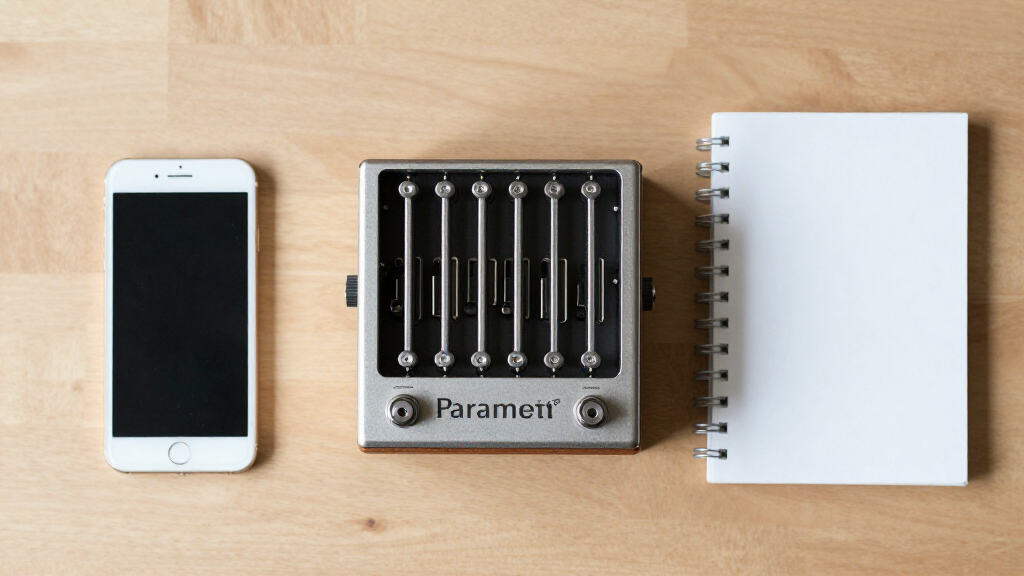
historical computer hardware replica
As an affiliate, we earn on qualifying purchases.
As an affiliate, we earn on qualifying purchases.
Remaining Questions About Parametron’s Design and Usage
Details about the specific circuitry, operational speed, and practical applications of the Parametron are still under investigation. It is not yet clear how widespread this technology was or whether similar magnetic logic systems were developed elsewhere in Japan or globally. The extent of the Parametron’s influence on subsequent computing developments remains uncertain, and further research is needed to fully understand its place in technological history.
As an affiliate, we earn on qualifying purchases.
Future Research and Preservation Efforts for Magnetic Logic Computers
Researchers plan to conduct detailed technical analyses of existing Parametron hardware and documents to better understand its architecture and performance. Preservation efforts are underway to secure and restore the remaining hardware, with the goal of possibly recreating or simulating the system. Further scholarly work aims to contextualize the Parametron within the broader history of magnetic and early digital computing, potentially inspiring new research into magnetic logic’s applications today.
As an affiliate, we earn on qualifying purchases.
Key Questions
How was the Parametron different from other computers of its time?
The Parametron used magnetic logic based on ferrite cores to perform digital operations, unlike most contemporaries that relied on vacuum tubes or later transistors for switching and logic functions.
Why was magnetic logic not more widely adopted?
Although innovative, magnetic logic systems faced limitations in speed and scalability compared to transistor-based circuits, which led to their decline in favor of semiconductor technology.
Does this discovery change our understanding of early Japanese computing efforts?
Yes, it reveals that Japan explored diverse technological paths in the 1950s, including magnetic logic, which has been largely overlooked in mainstream histories.
Could magnetic logic be relevant for future computing technologies?
While magnetic logic was largely replaced by semiconductor devices, ongoing research into magnetic materials suggests potential applications in non-volatile memory and low-power computing.
Source: hn
Halloween Picks
halloween
As an affiliate, we earn on qualifying purchases.