

Online learning offers flexibility, letting you study anytime and anywhere, while traditional classes provide immediate face-to-face interaction and social engagement. Online programs often cost less and are more accessible, but rely heavily on reliable internet and technology, which can cause frustrations. In contrast, in-person learning fosters natural communication but may be less convenient and affordable. Exploring these pros and cons helps you choose what best fits your needs, so keep going to discover more insights.

Get the latest gadgets delivered free with Prime
- Fast, free delivery on millions of items
- Prime Video, Amazon Music and more included
- Member-only deals all year
Key Takeaways
- Online learning offers flexible schedules and accessibility, while traditional learning provides real-time interaction and immediate feedback.
- Digital platforms reduce costs and eliminate commuting, but depend on reliable internet and devices.
- Traditional classrooms foster natural social interaction and community building through face-to-face communication.
- Online programs enable self-paced study and innovative content delivery, though they may hinder reading body language and non-verbal cues.
- Both formats require discipline and self-regulation, with online learning facing technological challenges and traditional learning relying on physical presence.
Flexibility and Convenience
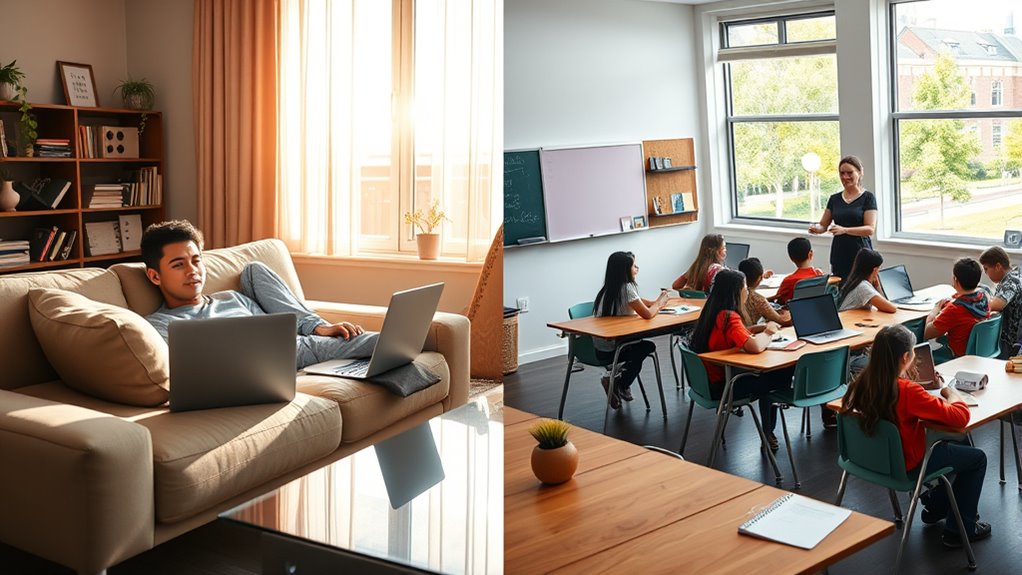
Online learning offers unmatched flexibility and convenience, allowing you to access course materials and complete assignments on your schedule. You can study early in the morning, late at night, or during your lunch break, fitting education into your busy life. There’s no need to commute or adhere to rigid class times, saving you time and travel costs. With everything available online, you can pause lectures, revisit materials, and work at your own pace. This flexibility helps you balance school, work, and personal commitments more easily. Additionally, the ability to update content as science evolves ensures that learners always have access to the most current information. Incorporating cutting-edge teaching methods further enhances the effectiveness of online education by engaging students in innovative ways. Moreover, the use of interactive project-based activities can improve understanding and retention, making online learning more dynamic, especially as it adapts to emerging educational technologies. The ongoing development of personalized learning experiences also contributes to tailored educational pathways that meet individual learner needs.
Interaction and Engagement

How does the level of interaction and engagement compare between online and traditional learning? In traditional settings, you often experience face-to-face conversations, immediate feedback, and spontaneous discussions that keep you actively involved. This environment fosters personal connections, making it easier to stay motivated. Online learning, however, tends to rely on digital communication tools like forums, chats, and video calls. While these can facilitate interaction, they sometimes feel less natural and immediate, which may reduce your engagement. You might find it harder to read body language or gauge classmates’ reactions, potentially leading to feelings of isolation. However, well-designed online courses incorporate interactive elements like quizzes and breakout rooms to boost participation. Active participation is essential for effective learning in either environment, and incorporating adaptive learning technology can further personalize your experience and enhance engagement in both settings. Additionally, fostering a sense of community through collaborative projects can help bridge the gap in student interaction between online and traditional formats. Understanding how learning environments influence engagement can help you choose the most effective educational approach. Recognizing the importance of learning environment design can significantly impact your overall motivation and success.
Accessibility and Resources

While online learning offers greater flexibility in accessing educational resources, it also depends heavily on your internet connection and the availability of suitable devices. If your internet is unstable or you lack a laptop or tablet, your access may be limited. On the other hand, traditional learning often provides on-site resources like libraries and physical materials, which are immediately accessible. Consider the following:
| Accessibility Factors | Impact on Your Learning Experience |
|---|---|
| Reliable internet | Ensures smooth access to online materials |
| Suitable devices | Allows seamless participation in lessons |
| Physical resources | Immediate access in classrooms or libraries |
Additionally, European cloud infrastructure plays a vital role in supporting reliable and secure online learning environments, ensuring data privacy and efficient access to resources. Effective storytelling can also enhance engagement and motivation, making the learning process more enjoyable and memorable. Proper technology infrastructure is essential to bridge gaps and provide equitable access for all learners. Reliable internet connectivity is crucial for maximizing the benefits of online education, especially in areas with limited digital access. Furthermore, investing in digital literacy can empower students to navigate online platforms confidently and effectively.
Learning Environment and Discipline
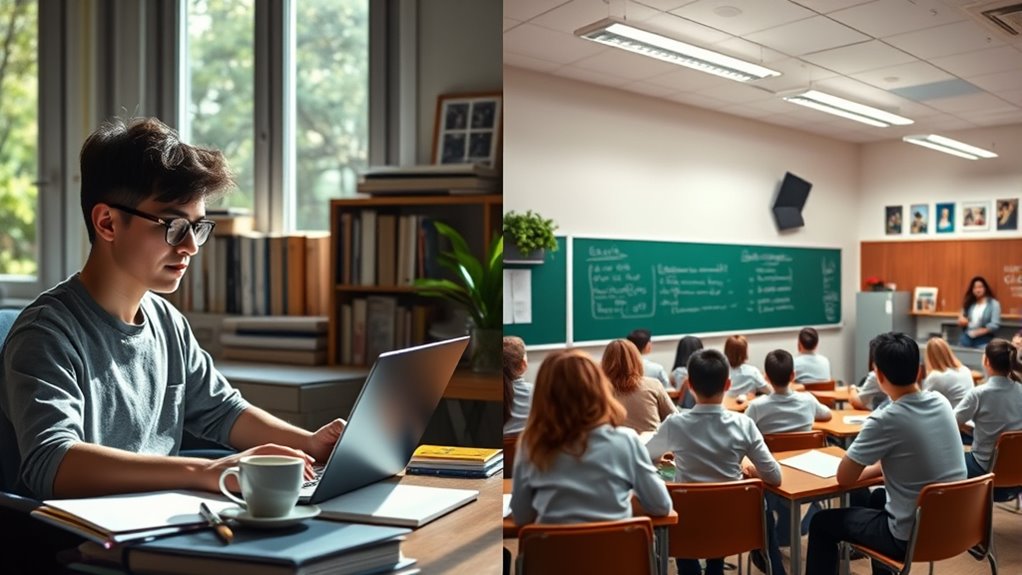
A well-structured learning environment and disciplined approach are essential for academic success, regardless of whether you’re studying online or in person. Your environment influences focus and motivation. To create an effective space, consider these steps:
Creating a focused, organized study space enhances motivation and academic success.
- Designate a dedicated, clutter-free study area.
- Keep necessary supplies within reach to minimize interruptions.
- Set specific study hours to build consistency.
- Remove distractions like phones or noisy surroundings.
- Incorporate ventilation considerations to ensure comfort and focus during study sessions. Proper space planning also helps optimize your environment for better concentration and productivity.
- Additionally, understanding the role of learning environment design can significantly enhance your ability to stay engaged and motivated throughout your studies. Creating an environment that supports attention to detail is critical for effective learning, as it helps you identify areas for improvement and maintain high standards.
Maintaining discipline helps you stay on track, meet deadlines, and absorb material effectively. Online learners must self-regulate, while in-person students benefit from structured schedules. Both settings demand a quiet, organized space and a committed attitude to succeed academically. Your environment and discipline directly impact your learning outcomes, making them crucial components regardless of your chosen method.
Cost and Affordability

When comparing costs, you’ll find online programs often offer flexible payment options that can make education more accessible. Over time, online learning can be more cost-effective, saving you money on commuting and housing. Considering these factors helps you determine which option best fits your budget and financial goals. Additionally, screening guidelines can influence the overall expenses related to health check-ups and preventative care. Implementing cost-effective strategies in choosing educational resources can further reduce expenses and improve learning efficiency. Moreover, integrating music therapy techniques into online learning environments can enhance emotional well-being and reduce stress, supporting student success.
Flexible Payment Options
Flexible payment options play an essential role in making education accessible and affordable, especially in online learning. They give you the freedom to choose how you pay, easing financial stress. Here are some common options:
- Installment plans allow you to spread costs over several months, making payments manageable.
- Scholarships and grants reduce your overall tuition, decreasing the financial burden.
- Income-based repayment options adjust costs based on your earnings, ensuring affordability.
- Deferred payments let you start courses without immediate payment, giving you time to secure funds.
- Understanding payment flexibility can help you better plan and manage your educational investments.
These options help you tailor your payment plan to your financial situation, making education more attainable without sacrificing quality or progress.
Cost-Effectiveness Over Time
Over time, online learning often proves more cost-effective than traditional classroom settings because it eliminates expenses like commuting, housing, and physical materials. You save money by not commuting daily or relocating closer to campus. Additionally, online programs typically have lower tuition costs and fewer fees for textbooks and supplies, as digital materials are often included or cheaper. You can also avoid costs related to on-campus amenities and extracurricular activities. While there may be initial investments in devices or internet upgrades, these are often outweighed by long-term savings. Online platforms also often offer affordable learning resources that further reduce overall expenses. Over the course of your education, online learning tends to be more economical, making it accessible to a broader range of students. This financial advantage can considerably reduce your overall student debt and make lifelong learning more achievable.
Technological Dependence and Challenges

While online learning offers convenience and accessibility, it also increases reliance on technology, which can pose significant challenges. First, technical issues like poor internet connections or device malfunctions can disrupt your learning experience. Second, you might face cybersecurity risks, such as data breaches or malware. Third, constant updates and software compatibility problems can hinder your progress. Fourth, overdependence on digital tools may reduce your ability to learn independently or develop critical thinking skills. These challenges require you to have reliable technology, cybersecurity awareness, and adaptability. If you’re not prepared, technological setbacks can cause frustration and hinder your educational goals. Consequently, understanding and managing these technological dependence issues is vital for a successful online learning experience.
Frequently Asked Questions
How Do Online Courses Impact Long-Term Career Prospects?
Online courses can boost your long-term career prospects by expanding your skills and demonstrating your initiative. They show employers you’re proactive and adaptable, especially in a digital world. Plus, flexible online learning allows you to balance work and education, gaining relevant certifications that can help you stand out. However, make certain the courses are reputable to maximize their impact, and continue building practical experience alongside online studies for the best results.
What Are the Best Strategies for Staying Motivated in Online Learning?
Staying motivated in online learning starts with setting specific, sincere, and simple goals that spark your interest. Break tasks into manageable milestones, maintaining momentum with mini-milestones. Stay structured by sticking to a schedule, and seek social support through study groups or online communities. Celebrate small successes, stay consistent, and keep reminding yourself of your purpose. These strategies will help you stay focused, foster discipline, and keep your drive dynamic and driven.
How Do Online Programs Ensure Academic Integrity and Prevent Cheating?
To guarantee academic integrity, online programs use several strategies. You might encounter proctoring software that monitors your exam environment through your webcam, and many platforms use secure browsers that block cheating tools. Additionally, they often include plagiarism detection for written assignments and randomize questions to prevent sharing answers. These measures help maintain fairness and uphold the credibility of your online coursework.
Can Online Learning Effectively Replace Hands-On Practical Training?
Can online learning effectively replace hands-on practical training? Think of it as trying to capture the essence of a live performance through a recording—challenging but not impossible. With advanced simulations, virtual labs, and interactive tools, you can gain practical skills remotely. While it may not fully replicate real-world experience, innovative online methods can bridge the gap, making practical training accessible and effective, especially when traditional options aren’t available.
What Support Systems Are Available for Students Facing Technological Issues?
When you face technological issues, support systems are readily available to help. You can contact technical support through your institution’s helpdesk via email, chat, or phone. Many online platforms also offer tutorials, FAQs, and troubleshooting guides. Additionally, peer forums and online communities provide quick advice. Don’t hesitate to reach out promptly; these resources are there to guarantee your learning experience remains smooth and uninterrupted.
Conclusion
Choosing between online and traditional learning is like picking the right path in a forest—you need to contemplate what suits your style best. Online learning offers unmatched flexibility and access, but it can also be challenging without in-person interactions. Traditional classes provide hands-on engagement, yet may lack convenience. Weigh the pros and cons carefully, and you’ll find the route that leads you to success. Remember, the right choice depends on what fits your learning journey best.
Columbus Day / Indigenous Peoples' Day Picks
long weekend sales
As an affiliate, we earn on qualifying purchases.