

To use your gadgets responsibly, choose energy-efficient devices with eco-friendly certifications and support brands committed to sustainability. Turn off devices when not in use, lower screen brightness, and limit background apps to save power. Recycle electronics properly at certified centers and protect personal data beforehand. Supporting policies that promote renewable energy and green tech also helps. Keep exploring ways to reduce your environmental impact and make smarter tech choices for a greener future.
Key Takeaways
- Choose energy-efficient devices with certifications like ENERGY STAR to reduce environmental impact.
- Turn off gadgets when idle and enable power-saving modes to conserve energy.
- Recycle electronics responsibly through certified facilities to prevent pollution and reclaim materials.
- Support brands committed to sustainable manufacturing and transparent supply chains.
- Advocate for policies promoting renewable energy use and eco-friendly hardware in the tech industry.
Understand the Environmental Impact of Your Devices

Understanding the environmental impact of your devices starts with recognizing how much energy they consume. Every screen, laptop, or smart gadget you use requires electricity, much of which still comes from fossil fuels. High-energy devices, especially those connected to data centers or cloud services, contribute considerably to greenhouse gas emissions. AI-powered apps and streaming services demand more energy than simple tasks, increasing environmental strain. By being aware of your device’s energy use, you can make smarter choices, like reducing unnecessary activity or opting for devices with better energy efficiency. Additionally, keeping your devices updated and properly maintained helps them run more efficiently and consume less power. Small adjustments in your daily habits can collectively lower your carbon footprint and lessen the environmental impact of your technology use.
Furthermore, choosing gadgets with high energy efficiency ratings can significantly reduce their environmental footprint over their lifespan. Incorporating energy-efficient hardware and software settings can also help optimize device performance and reduce unnecessary power consumption.
Choose Eco-Friendly Gadgets and Brands

Choosing eco-friendly gadgets and brands can substantially reduce your environmental impact, especially as technology’s energy demands grow. Look for products labeled with sustainability certifications like EPEAT, ENERGY STAR, or Carbon Trust. These indicate manufacturers prioritize energy efficiency, responsible sourcing, and eco-friendly manufacturing processes. Support brands committed to transparency about their supply chains and environmental goals. Consider devices made from recycled or sustainable materials, which lower resource extraction and waste. When possible, choose modular or repairable gadgets that extend lifespan and reduce electronic waste. Additionally, selecting products with durability and repairability ensures they can be used for longer periods, further minimizing waste. Incorporating eco-conscious manufacturing practices also plays a significant role in reducing the overall environmental footprint of the gadgets we use. For example, some companies focus on ethical sourcing and environmentally friendly production methods to enhance their sustainability credentials. Being aware of the free floating design approach can help you make smarter choices that support sustainability. Making informed decisions about sustainable product design encourages industry-wide shifts toward greener practices. By selecting eco-conscious brands, you encourage industry-wide shifts toward greener practices. Your choices matter—opt for products designed with sustainability in mind to help minimize your carbon footprint and promote a healthier planet.
Optimize Usage to Reduce Energy Consumption

To minimize your energy footprint, you should actively optimize how you use your devices and digital services. Start by turning off devices when not in use, rather than leaving them on standby. Adjust your screen brightness and enable power-saving modes to reduce energy consumption. Limit background app activity and close unused tabs or apps to prevent unnecessary processing. When streaming videos or music, choose lower quality settings to save energy. Use energy-efficient settings for your printers and other peripherals. Regularly update your device’s software to improve efficiency. Additionally, scheduling large downloads or updates during off-peak hours can lessen the load on data centers. Implementing local automation can further help manage device activity efficiently, reducing unnecessary energy use. Incorporating digital sustainability practices can amplify your efforts to lower energy consumption. Being mindful of device energy efficiency standards can also ensure you’re making the most environmentally responsible choices. These small changes can considerably cut down your energy use, helping to reduce overall emissions associated with digital activities.
Properly Recycle and Dispose of Old Electronics
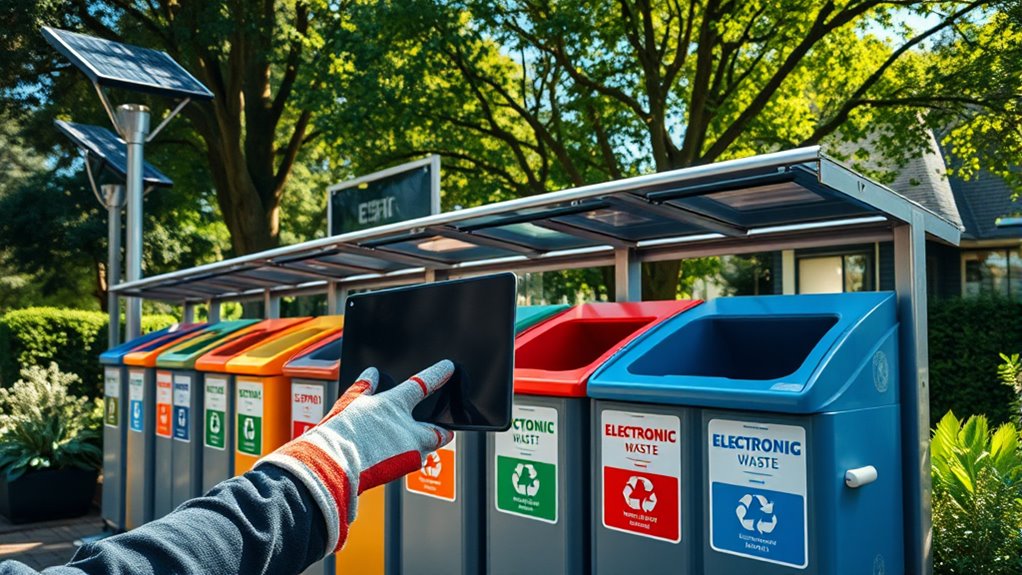
Recycling and properly disposing of old electronics is essential for reducing environmental harm and conserving natural resources. When you toss gadgets in the trash, toxic materials like lead, mercury, and cadmium can leak into soil and water, harming ecosystems and human health. Instead, take your devices to certified e-waste recycling centers or participate in manufacturer take-back programs. These facilities safely recover valuable materials like metals and plastics, reducing the need for mining and manufacturing new components. Before recycling, wipe personal data from your devices to protect your privacy. Avoid illegal dumping or burning electronics, as these practices release hazardous substances into the environment. Proper disposal guarantees harmful chemicals are contained and valuable resources are reused, reducing your environmental footprint. Ensuring environmentally responsible practices in electronics disposal helps reduce pollution and supports sustainable resource management. Additionally, choosing recycling programs that adhere to environmentally friendly standards ensures your electronics are handled safely and sustainably. Implementing proper disposal methods also helps prevent contamination and promotes a circular economy for electronic materials.
Support Policies and Initiatives Promoting Sustainable Tech

Supporting policies and initiatives that promote sustainable technology is essential to mitigating AI’s environmental impact. You can advocate for government regulations that encourage renewable energy use in data centers and prioritize energy efficiency standards for AI hardware. Support organizations pushing for transparency in emissions reporting from tech companies, ensuring accountability. Participating in or donating to initiatives that fund clean energy projects helps reduce reliance on fossil fuels powering AI infrastructure. Encourage your local representatives to develop policies that incentivize green computing practices and invest in research for eco-friendly AI hardware. Promoting renewable energy adoption in tech operations can significantly decrease carbon footprints. Additionally, implementing energy-efficient hardware standards can further reduce the sector’s environmental impact. By staying informed and voicing your support, you influence industry standards and government actions. Collective efforts can drive the tech sector toward more sustainable innovations, lowering emissions and conserving natural resources.
Frequently Asked Questions
How Can I Verify if a Gadget Is Truly Environmentally Friendly?
You can verify if a gadget is truly environmentally friendly by checking for credible eco-labels like ENERGY STAR or EPEAT, which certify energy efficiency and sustainable manufacturing. Read the product’s specifications for details on materials and recyclability. Research the company’s environmental commitments and transparency reports. Look for reviews from environmental organizations, and choose gadgets designed to last longer, be easily repaired, and have minimal energy consumption to reduce your ecological footprint.
What Are the Hidden Energy Costs of Cloud-Based Services?
You might not realize it, but cloud-based services have hidden energy costs, mainly from data centers that process your data. These centers consume massive amounts of electricity, often from non-renewable sources, and require cooling systems that use water and energy. As your use of these services increases, so does their environmental footprint, contributing to higher greenhouse gas emissions and resource strain, especially if the infrastructure isn’t powered by renewable energy.
How Does Manufacturing Impact the Environmental Footprint of Electronics?
Manufacturing impacts your electronics’ environmental footprint through resource extraction, energy-intensive production, and waste. When you buy gadgets, you’re contributing to mining for minerals like lithium and cobalt, which can harm ecosystems. The manufacturing process consumes significant energy, mostly from fossil fuels, releasing greenhouse gases. Plus, electronic waste from obsolete devices adds to pollution. Choosing sustainable brands, recycling, and extending your device’s lifespan help reduce this environmental impact.
Are There Sustainable Alternatives to Ai-Powered Devices?
Yes, there are sustainable alternatives to AI-powered devices. You can choose energy-efficient gadgets with low power consumption and prioritize those that use renewable energy sources. Opt for devices made from eco-friendly materials, and support companies committed to reducing their environmental impact. Additionally, limit your use of AI features when possible, and recycle or repurpose old electronics to minimize waste. Your mindful choices can markedly reduce your ecological footprint.
How Can Consumers Influence Companies to Prioritize Green Technology?
You can influence companies to prioritize green technology by demanding sustainable practices through your purchasing choices and feedback. Support brands committed to renewable energy and eco-friendly AI development. Share your concerns on social media and reviews, encouraging transparency and accountability. Join or initiate campaigns advocating for greener innovations. Your voice matters; when you push for responsible tech, companies are more likely to invest in environmentally friendly solutions.
Conclusion
By being mindful of your gadget use, you can considerably reduce environmental harm. Did you know that electronics account for about 2-3% of global greenhouse emissions? Choosing eco-friendly devices, optimizing energy use, and recycling properly make a real difference. Every small action adds up—so stay informed and support sustainable tech initiatives. Together, we can enjoy the benefits of technology while protecting our planet for future generations.