

When using your phone in public, be mindful of the setting and others around you. Use your device discreetly in quiet spots like libraries or theaters, keep notifications silent, and avoid loud conversations or calls. In social or dining environments, limit phone use to show respect and focus on the moment. Different cultures have varying norms, so adapt your habits accordingly. Continue exploring proper phone etiquette to ensure respectful and considerate interactions everywhere you go.
Key Takeaways
- Turn off or silence your phone in quiet environments like libraries, theaters, and religious spaces.
- Avoid loud conversations or speakerphone use in confined public settings to respect others.
- Excuse yourself and step aside when making or answering calls in social or group settings.
- Be mindful of cultural norms; in some countries, restrained phone use and quiet behavior are expected.
- Limit phone use during meals or meetings to maintain focus, connection, and show respect to others.
Recognizing Respectful Locations for Phone Use
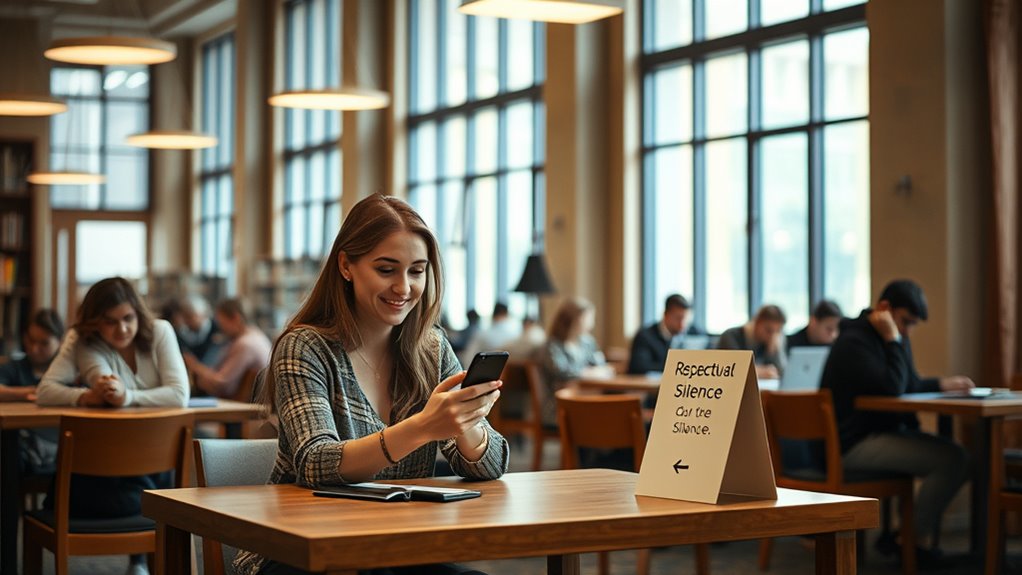
Knowing where to use your phone shows respect for others and helps maintain good social etiquette. Public spaces like streets and public transit are generally acceptable for phone use, especially among younger people. Over 75% of adults believe it’s okay to use phones while walking or riding transit, with younger adults more tolerant than seniors. However, certain places demand silence, like libraries, theaters, and churches, where phones should be turned off. Using your phone discreetly in these quiet settings shows you respect the environment and those around you. Recognizing these boundaries also involves understanding the importance of appropriate technology use, which helps you stay courteous and considerate, ensuring your phone use doesn’t disturb or offend others in public. Respectful environments also include private gatherings or meetings where phone use might be disruptive. Being mindful of the social context can prevent misunderstandings and maintain positive interactions.
Navigating Social Gatherings and Group Settings

In social gatherings and group settings, your phone habits can considerably influence the atmosphere and the quality of interactions. Constantly checking your device can distract others and make conversations feel less engaging. If you need to use your phone, excuse yourself briefly and step aside to avoid disrupting the flow. Be mindful of others’ comfort—if people seem annoyed or distracted, it’s a sign to put your phone away. Avoid texting, scrolling, or making calls during group chats or conversations, since these actions can signal disinterest or disrespect. Remember, the goal is to be present and engaged. Limiting phone use shows respect and helps foster genuine connections, making gatherings more enjoyable for everyone involved. Recognizing manipulation tactics used in social situations can also help you maintain boundaries and stay authentic.
Appropriate Behavior in Dining and Quiet Environments

When you’re in a quiet or dining setting, it’s important to respect the boundaries of those around you. Using your phone quietly or not at all shows consideration for others’ need for focus and conversation. Being mindful of silent zones helps maintain the calm and respect that these environments deserve.
Silent Zones Respect Boundaries
Respecting silent zones is essential to maintaining a considerate environment in dining and quiet settings. When you’re in places like restaurants, family dinners, or theaters, your phone should be silent or turned off. Avoid loud notifications or conversations that disturb others’ peace. Remember, most people value these moments of quiet and find phone use intrusive.
Be mindful of these boundaries:
- Don’t answer calls that might disturb others around you.
- Keep your phone on silent mode to prevent unexpected sounds.
- Refrain from texting loudly or using speakerphone.
- Respect the atmosphere—if it’s meant to be quiet, your phone should follow suit.
Mindful Phone Use
Mindful phone use in dining and quiet environments shows consideration for those around you. When you’re at a restaurant, family dinner, or a meeting, keep your phone silent or on vibrate to avoid disruptions. Resist the urge to check or respond to messages constantly, as it distracts others and breaks the flow of conversation. If you must take an urgent call, step away from the table or quiet space to avoid disturbing others. Remember, about 90% of adults view phone use during meals or meetings as rude. Keep your phone out of sight in settings where silence and focus are expected. Using the appropriate phone etiquette can improve social interactions and show respect for those sharing the environment. Being aware of public behavior standards helps maintain a respectful atmosphere and enhances overall social harmony. Practicing these mindful habits fosters a more considerate and respectful environment for everyone involved.
Managing Phone Habits in Public Spaces

Managing phone habits in public spaces requires awareness of social norms and consideration for others. You should always be mindful of your surroundings and how your phone use impacts those nearby. Respect quiet zones like libraries and theaters by turning off or silencing your device. Avoid loud conversations or speaking on the phone in confined or intimate settings, such as restaurants and family dinners. Remember, many find disruptive behaviors like speakerphone, loud talking, or phone use during conversations rude and intrusive. Be considerate by limiting your phone activity when it might disturb or exclude others. [Practicing proper phone etiquette] is essential to maintain respectful interactions and foster positive social environments.
Understanding International Norms and Cultural Expectations

Understanding international norms and cultural expectations around phone use can help you navigate different social settings more effectively. In some countries, like Germany and the Netherlands, people value strict adherence to rules, and loud or disruptive phone use can provoke negative reactions. Meanwhile, in France, speaking loudly on the phone or making noise in public places is considered rude. Americans tend to prefer texting over voice calls in public, viewing them as less intrusive. In countries emphasizing collective norms, phone use is often more restrained and may be strictly regulated. Giving your name when answering calls is common in the Netherlands and Germany. Being aware of these differences helps you show respect and avoid offending locals, ensuring your phone habits align with cultural expectations wherever you go.
Avoiding Common Phone Etiquette Pitfalls

Being aware of cultural differences in phone use is a good start, but it’s equally important to recognize and avoid common etiquette mistakes that can offend others. You want to be respectful and considerate in public spaces. Avoid talking loudly, as 79% of people find loud calls unacceptable. Don’t use speakerphone unless you’re alone; most find it invasive. Never interrupt a conversation or shift attention without warning—52% of people dislike this. Finally, don’t chew gum or eat while on a call, as 81% see it as rude. By being mindful of these pitfalls, you show respect for those around you and foster a more courteous environment. Incorporating smart home technology can help you manage your devices discreetly and avoid disruptions. Being aware of public phone etiquette and practicing good manners can significantly improve social interactions and reduce misunderstandings. Developing consistent phone habits can further enhance your consideration for others and help maintain a peaceful atmosphere in shared spaces. Paying attention to social norms related to phone use ensures you stay respectful and considerate, especially in diverse settings. Additionally, understanding the influence of modern communication trends can help you adapt your behavior to different environments. Your small actions can make a big difference in how others perceive your phone manners.
Frequently Asked Questions
How Can I Tell if My Phone Use Is Bothering Others?
You can tell your phone use bothers others if you notice people looking uncomfortable, irritated, or avoiding eye contact. If someone nearby shifts away, frowns, or gives you a distracted or annoyed look, it’s a sign. Also, if your voice is loud, or you’re speaking on speakerphone, people might feel disturbed. Pay attention to their body language and tone; these cues help you gauge if your phone habits are bothering others.
Are There Specific Times When Phone Use Is Completely Inappropriate?
You should avoid using your phone during quiet or intimate settings, like family dinners, meetings, or movie theaters, as most people see it as rude. Also, don’t use your phone at religious services, in libraries, or in cinemas. In these moments, your attention should be on those around you or the activity happening. Respect these times, and you’ll avoid disturbing others and appearing disrespectful.
What Are Polite Ways to Excuse Myself From a Phone Call?
When you need to excuse yourself from a phone call, think of it as slipping out a side door. Politely say, “Sorry, I need to step away for a moment,” or “Please excuse me, I’ll be right back.” Keep your tone respectful and brief. Apologize if necessary, and step away quietly. This way, you respect others’ space and avoid disrupting the flow of the gathering.
How Do Cultural Norms Influence Phone Etiquette Worldwide?
Cultural norms shape how you should use your phone worldwide. In some countries, like Germany or the Netherlands, people respect strict rules, avoiding loud conversations or speakerphone use. Others, like the U.S., prefer discreet texting over calls. You should observe local customs, such as giving your name when answering in certain places or lowering your voice, to show respect and avoid offending others. Adapting to these norms helps you navigate social settings smoothly.
What Features Can Help Minimize Disturbance During Phone Conversations?
Your phone’s features can dramatically cut down disturbances during calls. Turn on silent mode or vibrate to avoid loud ringtones that echo through quiet spaces. Use headphones or a speakerphone in private settings, but switch to earbuds for discretion. Enable do-not-disturb mode to block notifications, ensuring your focus stays on the call. These simple features can prevent your conversations from becoming the center of attention, saving everyone from unnecessary frustration.
Conclusion
Remember, your phone habits reflect your respect for others. When you’re mindful, it’s easy to create positive interactions—sometimes, a simple glance at your screen can make all the difference. Just like finding a quiet corner when needed, good etiquette becomes second nature. Coincidentally, the more considerate you are in public, the more others will mirror your respect. Ultimately, respectful phone use fosters smoother, more enjoyable shared spaces for everyone.