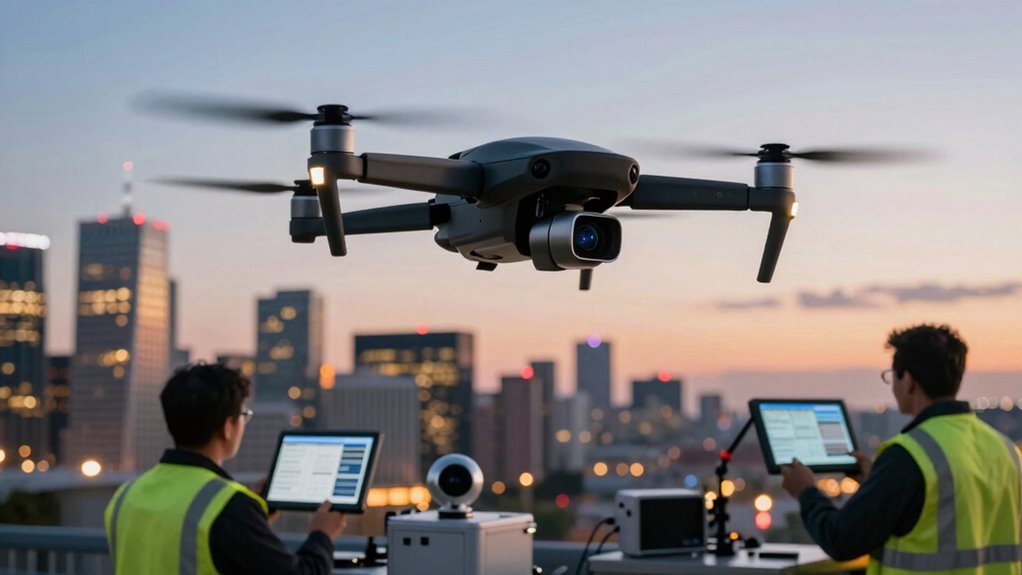

Drones are now about more than aerial photography because they serve essential roles in wildlife conservation, disaster relief, and infrastructure inspection. You see them silently monitoring endangered species, helping rescue teams find trapped people with thermal cameras, or inspecting bridges and power lines for damage. Their ability to gather real-time data and operate in dangerous areas makes them invaluable beyond capturing images. If you’re interested, you’ll discover how these versatile tools are shaping a safer, more efficient future.

Get the latest gadgets delivered free with Prime
- Fast, free delivery on millions of items
- Prime Video, Amazon Music and more included
- Member-only deals all year
Key Takeaways
- Drones now support wildlife conservation efforts by discreetly monitoring animals and habitats with minimal disturbance.
- They assist in disaster relief by providing rapid aerial assessments and thermal imaging to locate trapped individuals.
- Drones are used for infrastructure inspection, environmental monitoring, and detecting illegal activities like logging or fishing.
- They enable proactive environmental management and resource protection through real-time data collection and analysis.
- Advances in drone technology facilitate diverse applications beyond photography, shaping safer and more efficient future solutions.
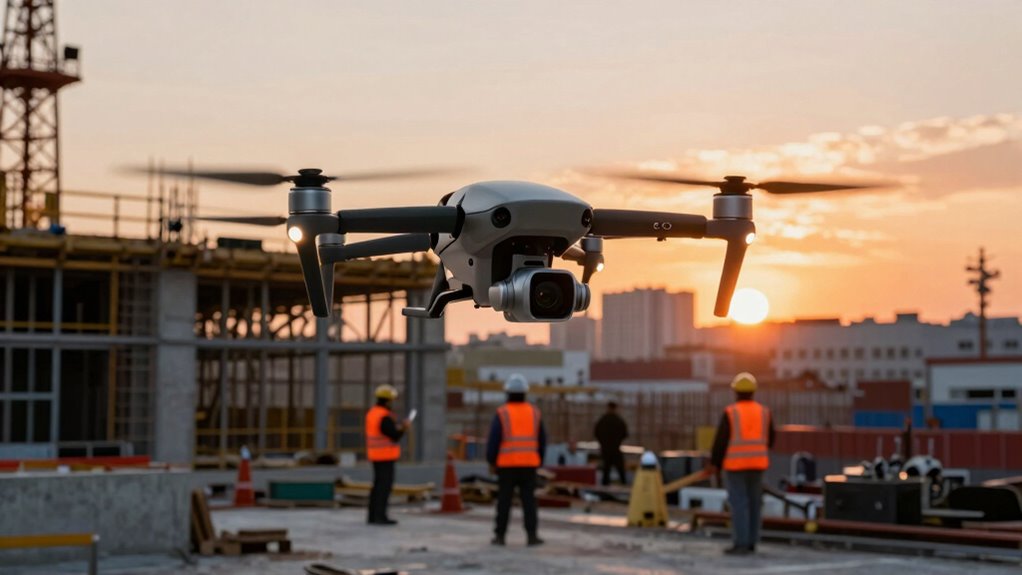
Have you ever wondered what else drones can do besides capturing stunning aerial photos? These flying devices have evolved far beyond their original purpose. Today, they play crucial roles in areas like wildlife conservation and disaster relief, proving their value in ways you might not expect. Instead of just snapping pictures from above, drones now help protect endangered species and save lives during emergencies.
Drones now do much more than photos—protecting wildlife and saving lives in emergencies.
In wildlife conservation, drones offer a discreet way to monitor animals and their habitats. You can imagine how difficult it is to track elusive wildlife or survey vast terrains using traditional methods. Drones provide a solution, flying silently over remote areas, capturing high-resolution images, and collecting data without disturbing the animals. This real-time information helps conservationists identify poaching activities, track migration patterns, and assess habitat health. With this technology, you can better understand ecosystems and implement targeted strategies to preserve endangered species.
During disaster relief efforts, drones become indispensable tools for first responders. When catastrophe strikes—be it a hurricane, earthquake, or flood—getting an accurate picture of the affected area quickly can mean the difference between life and death. Drones can swiftly survey disaster zones, providing detailed aerial views that ground teams might not be able to access immediately. This rapid assessment helps prioritize rescue operations, locate stranded individuals, and identify infrastructure damage. Drones equipped with thermal cameras can detect heat signatures, revealing people trapped beneath debris or in hard-to-reach locations. Their ability to operate in dangerous or inaccessible environments makes them critical in disaster response, saving lives and accelerating recovery efforts.
Beyond these applications, drones are also used for environmental monitoring, agriculture, and even infrastructure inspections. They can detect illegal activities like logging or fishing, assist in mapping large areas, and inspect bridges or power lines for maintenance needs. This versatility extends their impact far beyond aerial photography, transforming how we approach conservation, safety, and resource management.
In essence, drones are becoming essential tools that empower you and others to tackle complex challenges more efficiently. They enable proactive responses to environmental threats, enhance safety during crises, and open new avenues for research and protection. As technology advances, their potential continues to grow, proving that drones are no longer just camera platforms but vital instruments shaping a better future. Additionally, advancements in projector technology contribute to creating immersive environments for training, simulations, and entertainment, demonstrating how innovative tools can complement drone applications in various sectors.
wildlife conservation drone camera
As an affiliate, we earn on qualifying purchases.
As an affiliate, we earn on qualifying purchases.
Frequently Asked Questions
What Legal Regulations Govern Commercial Drone Use Today?
You must follow drone licensing and airspace regulations to operate commercially. You’ll need to obtain a drone license from the FAA, like the Part 107 certification, to guarantee you’re legally flying. Additionally, you must adhere to airspace restrictions, avoid no-fly zones, and respect altitude limits. Staying compliant with these regulations helps you avoid penalties and ensures safe, legal drone operations for your business endeavors.
How Do Drones Contribute to Disaster Relief Efforts?
Drones play a essential role in disaster relief by performing aerial mapping, which helps assess damage quickly and accurately. You can use them for search and rescue operations, reaching areas that are otherwise inaccessible and locating victims efficiently. Their real-time data collection speeds up decision-making, saves lives, and coordinates emergency responses more effectively. By providing detailed visuals and critical information, drones enhance disaster management efforts considerably.
What Are the Environmental Impacts of Widespread Drone Deployment?
Think of drones as vigilant guardians in the sky, symbolizing progress and innovation. Their widespread deployment impacts the environment by aiding wildlife monitoring and pollution tracking, helping us understand ecosystems better. However, they can disturb wildlife, cause noise pollution, and contribute to electronic waste. While they offer environmental benefits, it’s essential to manage their use responsibly, ensuring they enhance conservation efforts without harming the very ecosystems they aim to protect.
How Secure Are Drones Against Hacking and Privacy Breaches?
Drones face significant cybersecurity vulnerabilities that could allow hackers to take control or access sensitive data, raising serious privacy concerns. You should be aware that weak encryption or outdated software can make drones susceptible to hacking. To protect yourself, confirm your drone’s firmware is updated regularly and use secure communication channels. While advancements are being made, absolute security isn’t guaranteed, so stay vigilant about potential privacy breaches.
What Advancements Are Expected in Drone Battery Technology?
You can expect significant advancements in drone battery technology driven by battery innovation and a focus on energy efficiency. Manufacturers are developing higher-capacity, faster-charging batteries that extend flight times and reduce weight. Future batteries will likely incorporate new materials and designs, making drones more sustainable and reliable. These improvements will enable longer missions, better performance, and broader applications, transforming how you use drones across industries like delivery, agriculture, and surveillance.
thermal imaging drone for rescue
As an affiliate, we earn on qualifying purchases.
As an affiliate, we earn on qualifying purchases.
Conclusion
Now that you know drones are transforming industries beyond just stunning photos, imagine what’s next. With technology advancing rapidly, the potential applications are almost limitless—and some could change your world in ways you never expected. Are you ready to see how these flying machines will shape the future? Stay tuned, because what’s coming might be even more surprising than what you’ve seen so far. The real revolution is just around the corner.
drone inspection for infrastructure
As an affiliate, we earn on qualifying purchases.
As an affiliate, we earn on qualifying purchases.
illegal activity detection drone
As an affiliate, we earn on qualifying purchases.
As an affiliate, we earn on qualifying purchases.
Columbus Day / Indigenous Peoples' Day Picks
long weekend sales
As an affiliate, we earn on qualifying purchases.