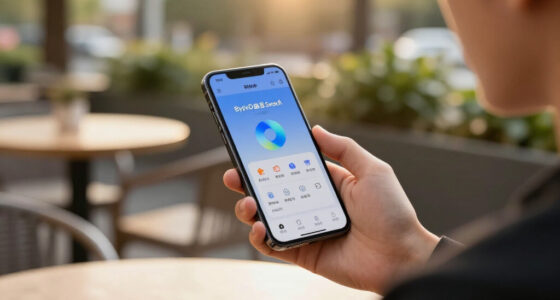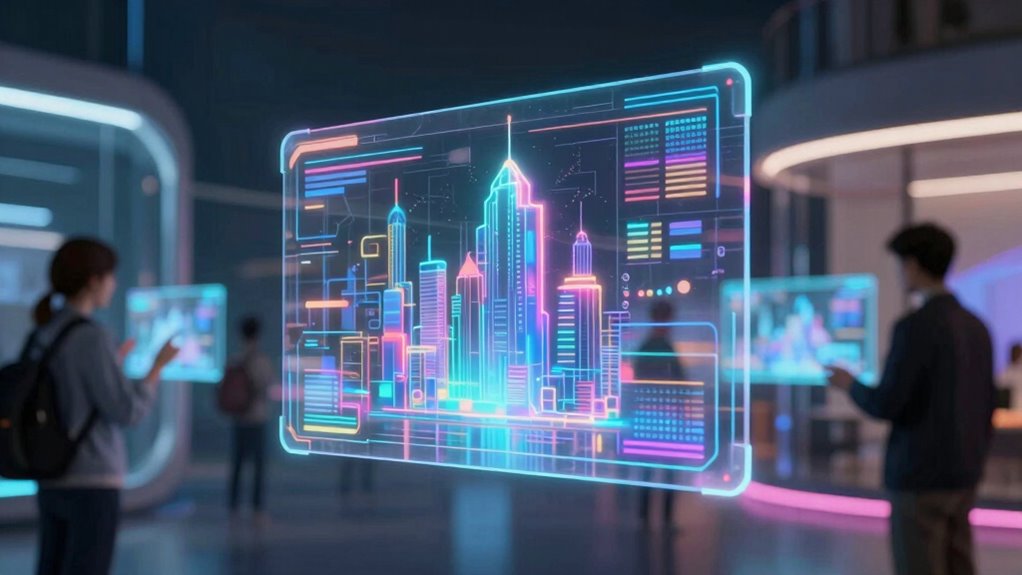

The future of screens goes beyond phones and laptops by integrating flexible displays and augmented reality to create immersive, adaptable experiences. You’ll see screens that bend, fold, or roll into various forms, transforming how you interact with digital content anywhere. AR overlays will bring digital info into your physical surroundings instantly. As these innovations become more affordable and durable, your daily environment will become a seamless extension of your digital world—so stick around to discover what’s next.

Get the latest gadgets delivered free with Prime
- Fast, free delivery on millions of items
- Prime Video, Amazon Music and more included
- Member-only deals all year
Key Takeaways
- Flexible, foldable, and rollable displays will transform devices into versatile, immersive interfaces beyond traditional phones and laptops.
- Augmented reality overlays will enable digital information to seamlessly integrate into physical environments.
- Screens will become ubiquitous on any surface, eliminating the need for dedicated devices.
- Wearable AR and flexible displays will create lightweight, multifunctional interfaces integrated into daily life.
- Sustainable manufacturing and innovative materials will make advanced display technologies more accessible and eco-friendly.

As technology advances, screens of the future will become more integrated into our daily lives, offering unprecedented flexibility and interactivity. Imagine a world where your screens aren’t confined to rigid shapes or fixed sizes but instead can adapt seamlessly to your environment. Flexible displays are at the forefront of this revolution, allowing screens to bend, fold, and roll as easily as paper. You might carry a single device that unfolds into a tablet, wraps around your wrist, or even covers an entire wall. These displays promise to eliminate the need for multiple gadgets and create a more immersive, versatile user experience.
Flexible displays will reshape devices, enabling seamless adaptation and creating immersive, versatile experiences in everyday life.
Augmented reality (AR) will play a vital role in this evolution, seamlessly blending digital content with the physical world. Instead of switching between screens, you’ll interact with virtual objects overlaid directly onto your surroundings through lightweight, transparent displays. Imagine walking through your home and instantly seeing the weather forecast or your calendar projected onto a wall or a piece of furniture. AR glasses or contact lenses could become your primary interface, providing real-time information without pulling out a device. This integration makes your environment smarter and more responsive, turning everyday spaces into interactive hubs.
With flexible displays and augmented reality working hand in hand, the concept of a “screen” will shift dramatically. You won’t be confined to a single device or a specific location to access content. Instead, digital information will be available wherever you need it, whether on a flexible display that curves around your arm or through AR overlays that transform any surface into a dynamic interface. This means your interactions will become more natural, intuitive, and spontaneous, reducing the barriers between the digital and physical worlds. Incorporating advanced display technologies will further enhance the capabilities of these adaptable screens, making them more durable and energy-efficient.
Furthermore, these advancements will influence how you work, communicate, and entertain yourself. Imagine collaborating on a shared digital whiteboard that spans across a flexible display or engaging in immersive gaming experiences that surround you through AR. Your environment will become a customizable interface, adapting to your needs and preferences. The future screens will be lightweight, portable, and multi-functional, capable of transforming any space into a digital playground or workspace. Additionally, developments in wearable display tech will help seamlessly integrate these screens into daily life, making their use even more intuitive. As sustainable display materials are developed, the environmental impact of these new technologies will be minimized, ensuring eco-friendly innovation.
The integration of display manufacturing techniques will also play a crucial role in making these flexible and AR-enabled screens more accessible and affordable for consumers.
foldable flexible display tablet
As an affiliate, we earn on qualifying purchases.
As an affiliate, we earn on qualifying purchases.
Frequently Asked Questions
Will Screens Become Fully Transparent in Future Devices?
Yes, screens will likely become fully transparent in future devices. You’ll see augmented displays integrated into transparent interfaces, making screens blend seamlessly into your environment. This allows for more immersive experiences, like viewing information or media without obstructing your view. As technology advances, transparent interfaces will become more versatile, enabling you to interact naturally with digital content while maintaining the transparency of the surfaces around you.
How Will Screen Technology Impact Privacy and Security?
Imagine you’re using a transparent screen that scans your biometric data for access. This tech can enhance security through biometric authentication, but it also raises privacy concerns. Data encryption becomes critical to protect sensitive info from hackers. You’ll need robust encryption and secure biometric systems to prevent unauthorized access, ensuring your personal data stays private, even as screen technology advances and becomes more integrated into your daily life.
Can Screens Be Integrated Into Everyday Objects Seamlessly?
Yes, screens can be integrated into everyday objects seamlessly through augmented reality and wearable displays. You’ll find smart glasses, embedded in jewelry, or even in clothing, blending technology with your daily life. These innovations allow you to access information without disrupting your environment, making interactions more natural. As technology advances, expect more discreet, functional, and stylish wearable displays that enhance your routine without drawing attention.
What Environmentally Friendly Materials Will Future Screens Use?
You’ll see future screens made from biodegradable displays and recyclable materials, making them more eco-friendly. These innovations guarantee that when you upgrade or dispose of devices, they won’t harm the environment. Manufacturers focus on sustainable options, reducing waste and pollution. By choosing screens crafted from these materials, you help promote a greener planet while enjoying advanced technology that’s designed to be environmentally responsible.
How Will Screens Adapt to Different Lighting Conditions Automatically?
Ever wonder how your screen adjusts seamlessly to bright sunlight or dim rooms? It’s thanks to adaptive brightness and ambient light sensors that automatically tweak display settings. These sensors detect changes in lighting conditions and tell your device to brighten or dim the screen, ensuring ideal visibility without manual adjustments. This intelligent adaptation creates a comfortable viewing experience, making your device truly responsive to your environment at all times.
As an affiliate, we earn on qualifying purchases.
Conclusion
Imagine holding a world in your hand, where screens are no larger than your palm but can project entire landscapes or conversations. Just like the first time you saw color TV, these future screens will redefine your experience, making everything more immersive and seamless. As technology advances, you’ll find yourself effortlessly stepping into another dimension, where the boundaries between digital and real blur. The future of screens isn’t just about visibility—it’s about living it.
As an affiliate, we earn on qualifying purchases.
As an affiliate, we earn on qualifying purchases.
Halloween Picks
halloween
As an affiliate, we earn on qualifying purchases.