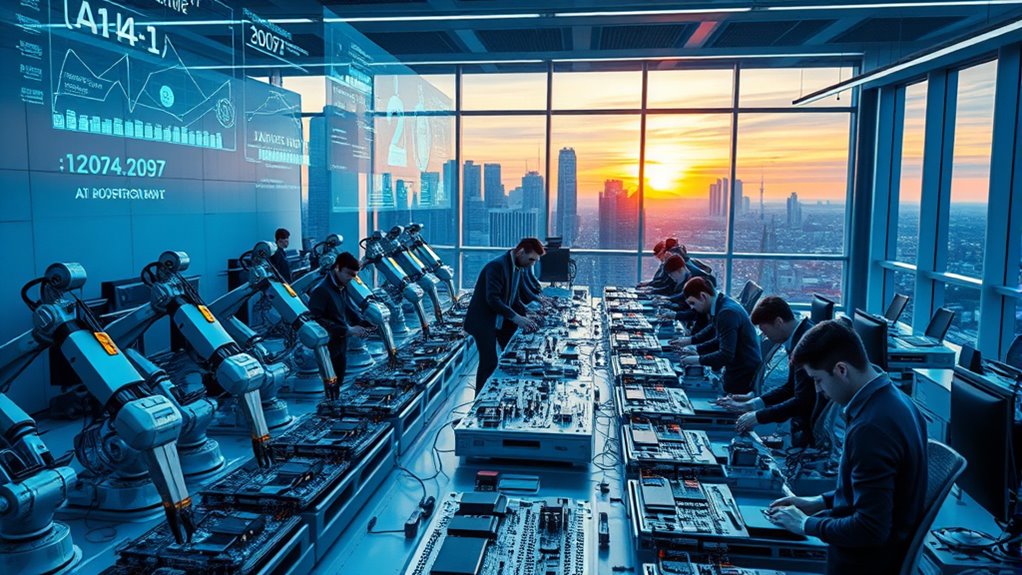

AI is transforming many industries and changing job roles, especially in manufacturing, retail, finance, healthcare, and transportation. While some repetitive or routine jobs might be automated, many roles will evolve, emphasizing creative, strategic, and interpersonal skills. To stay relevant, you’ll need to cultivate critical thinking, adaptability, and digital skills. Want to learn how to prepare for these changes and ensure your career stays resilient? Keep exploring to discover the key strategies that can help you succeed.
Key Takeaways
- AI may automate repetitive tasks in industries like manufacturing, retail, and transportation, risking certain jobs but also creating new opportunities.
- Roles requiring creativity, emotional intelligence, and complex problem-solving are less vulnerable and will evolve alongside AI.
- Developing skills such as critical thinking, adaptability, and digital literacy is essential to stay relevant in an AI-driven job market.
- Ethical considerations and policy measures are crucial to ensure AI benefits are shared fairly and to mitigate potential job displacement.
- Continuous reskilling and embracing lifelong learning are key strategies to thrive in the future of work influenced by automation.
Industries Most Affected by Artificial Intelligence
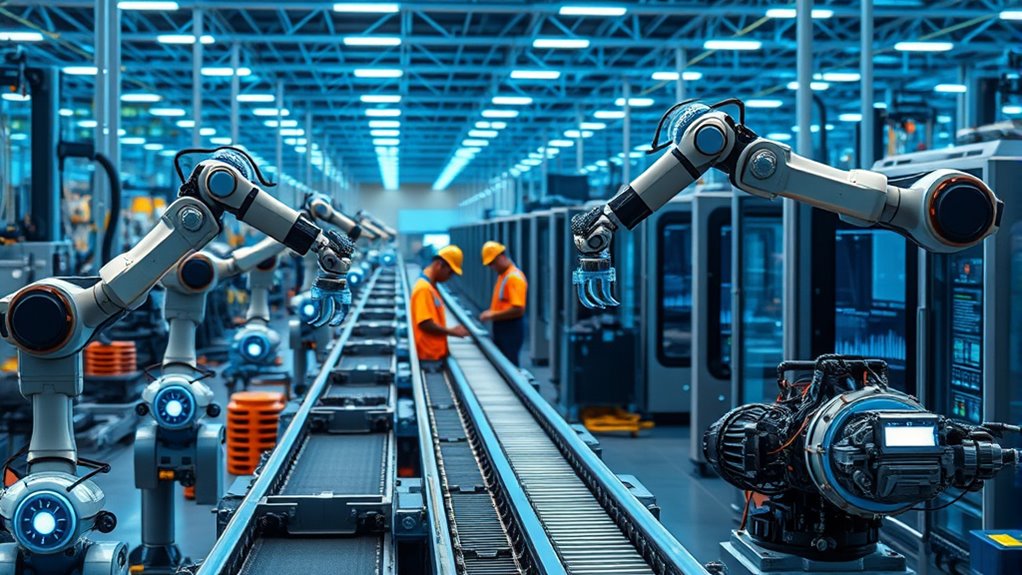
Artificial intelligence is transforming various industries, but some are more affected than others. You’ll notice the biggest impact in manufacturing, where automation streamlines production lines and reduces manual labor. In retail, AI powers inventory management, personalized recommendations, and customer service chatbots, changing how you shop. The finance sector sees AI analyzing data to detect fraud, automate trading, and offer tailored financial advice. Healthcare benefits from AI-driven diagnostics, robotic surgeries, and administrative automation, making patient care more efficient. Transportation is also heavily influenced, with self-driving vehicles and route optimization. These industries experience rapid change, as AI enhances efficiency, cuts costs, and shifts job roles. If you work in any of these sectors, expect significant adjustments in the near future. Sustainable cloud solutions are increasingly supporting these AI advancements by providing secure and energy-efficient computing infrastructure.
Jobs at High Risk of Automation
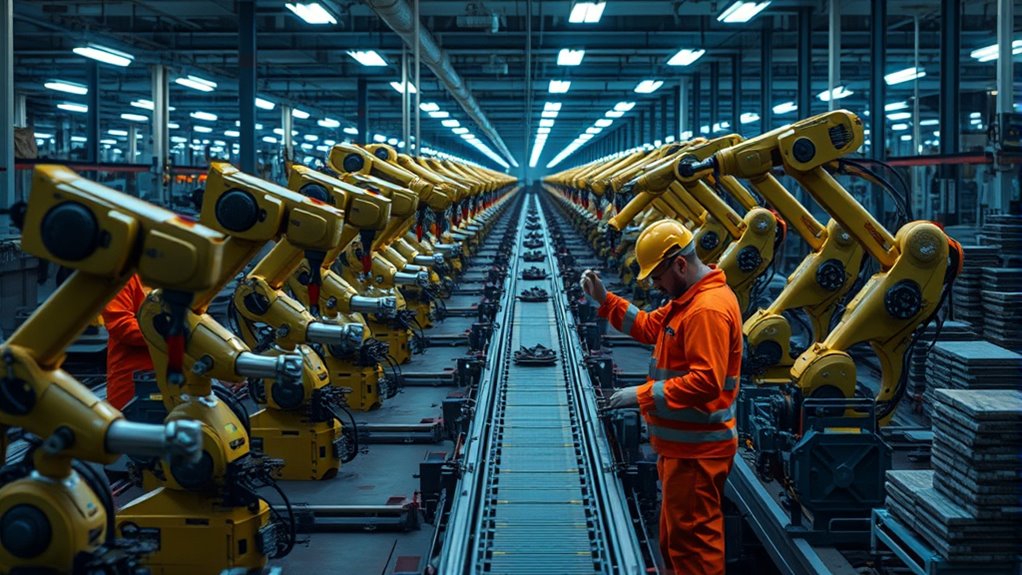
As AI continues to reshape industries, certain jobs face a particularly high risk of automation. Tasks that involve repetitive, predictable activities are easiest for AI to replace. This includes roles like data entry clerks, assembly line workers, and telemarketers. Jobs that require routine decision-making, such as basic clerical work or inventory management, are also vulnerable. If your work involves following strict rules or procedures without much need for creativity or judgment, AI can likely handle it soon. The automation of these jobs could lead to significant displacement unless you adapt your skills. While some tasks will be replaced, others might evolve, but those in high-risk roles need to prepare for potential changes in the job landscape. Developing problem-solving skills can help you stay relevant as automation advances. Additionally, understanding industry-specific trends can provide insights into which roles are most susceptible to automation and how to position yourself for future opportunities. Staying informed about emerging technologies can also help you identify new areas where human expertise will remain essential. Recognizing the importance of advanced technologies like AI and robotics can empower workers to leverage these tools for augmenting their roles rather than being replaced. Moreover, acquiring knowledge about specialized equipment can be advantageous in sectors where automation is less prevalent.
Professions Likely to Evolve With AI Assistance

Many professions will see their roles transformed rather than replaced by AI, as these tools can enhance productivity and decision-making. Instead of replacing workers, AI will serve as a support system, helping you analyze data faster, generate insights, and streamline tasks. Your expertise will become more focused on strategic thinking and complex problem-solving, while routine activities are handled by AI. This evolution allows you to work more efficiently and make better-informed decisions.
- Collaborating with AI to customize solutions for clients
- Using AI-powered tools to reduce errors and save time
- Focusing on creative, interpersonal, and strategic aspects of your job
Skills That Will Keep You Ahead in the AI Era

To stay competitive in the evolving workplace, honing certain skills will set you apart as AI becomes more integrated into daily tasks. Focus on developing critical thinking, creativity, emotional intelligence, and adaptability. These skills enable you to solve complex problems, generate innovative ideas, connect with others, and adjust to change—areas where AI still falls short. Cultivating these qualities guarantees you remain valuable and irreplaceable. Here’s a deeper look:
| Skill | Why It Matters | How to Develop It |
|---|---|---|
| Critical Thinking | Analyzing and evaluating information | Practice questioning assumptions |
| Creativity | Innovating and generating ideas | Engage in brainstorming activities |
| Emotional Intelligence | Building relationships and empathy | Improve communication skills |
| Adaptability | Embracing change | Seek new challenges and learn |
| Problem-Solving | Addressing complex issues | Tackle varied, real-world problems |
How Businesses Are Integrating AI Into the Workforce

Businesses are actively integrating AI into their daily operations to enhance efficiency and innovation. You’ll see AI-powered tools automating routine tasks, freeing up human workers for more strategic roles. Companies are deploying chatbots for customer service, streamlining communication and reducing wait times. Additionally, AI assists in data analysis, providing insights that drive better decision-making. To deepen the integration, businesses are:
- Implementing machine learning algorithms to optimize supply chains
- Using AI for predictive maintenance, preventing equipment failures
- Training employees to work alongside AI systems effectively
This approach not only boosts productivity but also fosters a culture of technological adaptability, positioning companies to stay competitive in an evolving landscape. Your role may shift from manual tasks to oversight and strategic planning as AI becomes more prevalent.
Strategies for Reskilling and Upskilling

To stay relevant in an evolving job market, you need to embrace continuous learning and actively seek new skills. Focus on developing transferable skills that can adapt to various roles and industries. By doing so, you’ll better prepare yourself for the opportunities and challenges that AI brings. Incorporating sound healing science into your skill set can also open up innovative career paths in health and wellness sectors.
Embrace Continuous Learning
As AI continues to transform the workplace, embracing continuous learning becomes essential for staying relevant. To keep your skills sharp, seek out new knowledge regularly and stay curious about emerging technologies. Invest time in online courses, webinars, and industry seminars to deepen your expertise and adapt to changing demands. Remember, learning isn’t a one-time effort but an ongoing process that helps you remain competitive. Focus on developing a growth mindset, viewing challenges as opportunities to expand your skills.
- Stay updated with industry trends through news and reports
- Experiment with new tools and software to build practical skills
- Network with peers to gain insights and share knowledge
Develop Transferable Skills
Developing transferable skills is essential as AI reshapes job roles, enabling you to adapt across different industries and functions. Focus on skills like problem-solving, communication, adaptability, and digital literacy. These competencies allow you to pivot when automation changes your job landscape. To help identify key skills, consider the table below:
| Skill | Why it matters |
|---|---|
| Problem-solving | Critical for troubleshooting and innovation |
| Communication | Essential for teamwork and leadership |
| Adaptability | Helps you stay relevant amidst change |
| Digital literacy | Enables you to work efficiently with tech |
| Creativity | Drives unique solutions and competitive edge |
The Ethical and Economic Implications of AI in Employment
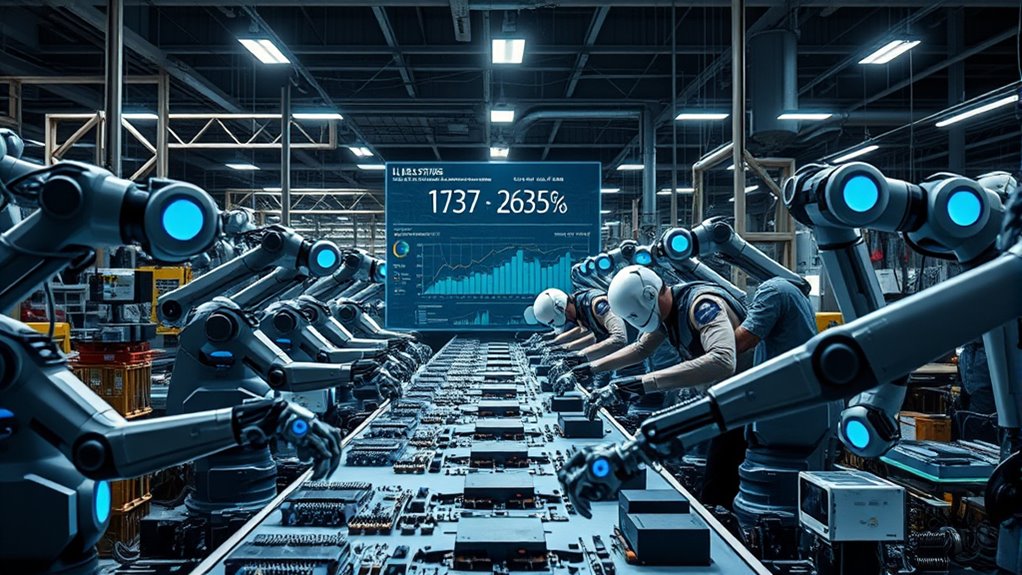
While AI offers significant benefits for increasing efficiency and productivity, it also raises complex ethical and economic questions about employment. You might wonder how automation impacts job security, income inequality, and workplace fairness. As AI replaces certain roles, workers could face displacement, prompting debates over social safety nets and reskilling initiatives. Additionally, companies may prioritize profits over ethical considerations, risking biased algorithms or unfair treatment. These issues challenge policymakers and organizations to balance technological progress with societal well-being.
- The potential for increased income inequality and job polarization
- Ethical concerns about bias, fairness, and decision transparency
- Economic impacts on wages, employment rates, and social safety nets
Frequently Asked Questions
How Quickly Will AI Replace Human Workers Across Different Sectors?
AI will replace human workers at different speeds depending on the sector. In manufacturing and data entry, automation happens quickly, often within a few years. In healthcare and creative fields, the shift takes longer as human skills are harder to replicate. You should stay adaptable, learn new tech skills, and be ready for change, because automation will continue to reshape jobs across industries at varying rates.
Will AI Create More Jobs Than It Eliminates in the Long Run?
AI is likely to create more jobs than it eliminates over the long run. As new technologies emerge, you’ll see increased demand for roles in AI development, data analysis, and tech support. While some jobs may disappear, you’ll have opportunities to reskill and adapt. Embracing continuous learning will help you stay relevant and benefit from AI-driven growth in various industries. Stay proactive and open to new skills to thrive in this evolving job landscape.
What Industries Might Resist Automation Longer Than Others?
You’ll likely find that industries like healthcare, education, and skilled trades resist automation longer because they require complex human interaction and nuanced decision-making. Coincidentally, these fields depend on empathy, critical thinking, and manual dexterity, which AI struggles to replicate. Your role in these sectors remains essential, as your personal touch and adaptive skills are irreplaceable, ensuring job stability even as automation advances elsewhere.
How Can Small Businesses Adapt to Increased AI Integration?
You should focus on leveraging AI as a tool to enhance your unique skills and customer relationships. Embrace automation for routine tasks, freeing up time for strategic and creative work. Invest in training to keep your team updated on new technologies, and foster a flexible mindset. By staying adaptable and integrating AI thoughtfully, you’ll strengthen your business and stay competitive in an increasingly automated marketplace.
What Policies Are Needed to Ensure Fair Ai-Driven Employment Practices?
Think of fair AI policies as a sturdy bridge connecting innovation with human dignity. You need clear regulations that prevent bias, protect privacy, and guarantee transparency. Implementing oversight committees, encouraging ethical AI development, and establishing accountability measures help maintain balance. By doing so, you create a future where technology uplifts everyone, not just the few, ensuring that automation benefits all workers fairly and ethically.
Conclusion
As AI continues reshaping the workforce, remember that about 85% of jobs will require reskilling in the coming years. Embrace lifelong learning and stay adaptable, because those who upskill will thrive amidst automation. Don’t fear change—see it as an opportunity to grow and innovate. By proactively evolving your skills, you can secure your place in the future of work and turn AI into your greatest asset.