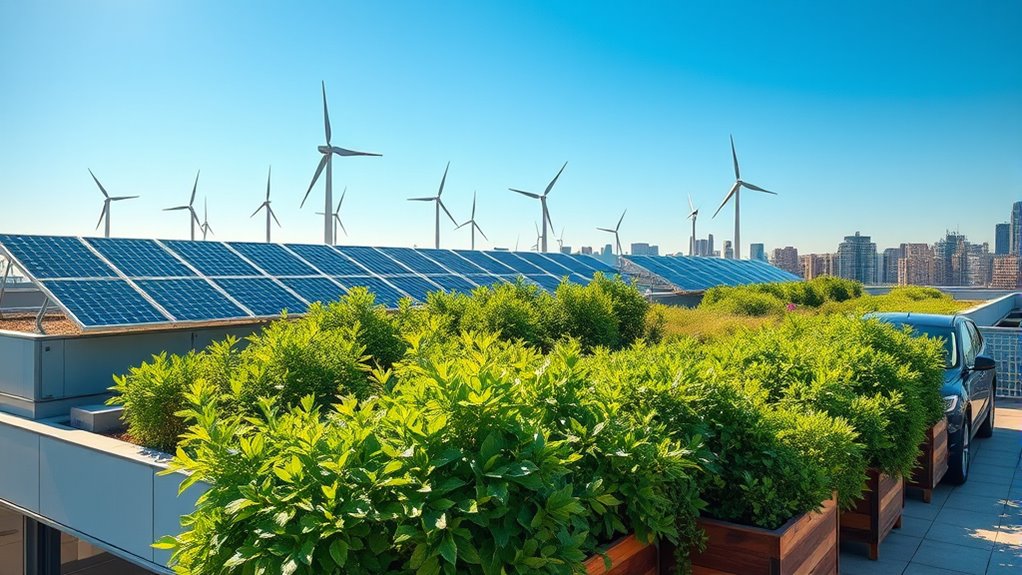

Green tech innovations are making a real difference for the environment. Advances in solar and wind power boost renewable energy efficiency, while electric vehicles and smart grids help reduce emissions and maximize energy use. Recycling tech and eco-friendly building materials lower waste and conserve resources. Data and AI tools monitor ecosystems and predict natural disasters, supporting conservation efforts. Keep exploring to discover how these technologies are shaping a sustainable future for everyone.
Key Takeaways
- Advances in solar and wind technologies increase renewable energy efficiency, reducing reliance on fossil fuels and lowering greenhouse gas emissions.
- Smart grids and real-time monitoring optimize energy use, enhance grid stability, and facilitate integration of renewable sources.
- Recycling innovations utilizing AI, sensors, and chemical processes improve waste management and promote circular resource use.
- Electric vehicles and vehicle-to-grid tech expand clean transportation options, decreasing transportation-related pollution.
- Data analytics, satellite monitoring, and climate models enable proactive environmental conservation and disaster preparedness.
Solar Power Breakthroughs and Advancements

Have solar power technologies truly reached their full potential? Not quite. Recent breakthroughs have markedly boosted efficiency, allowing you to generate more energy from smaller panels. Perovskite solar cells, for example, now promise higher conversion rates and lower manufacturing costs, making solar installations more affordable. Flexible and lightweight panels give you new installation options, even on curved surfaces or portable devices. Bifacial panels, capturing sunlight from both sides, increase energy output without extra space. Advances in energy storage also mean you can store excess power for later use more effectively. Additionally, ongoing research into solar cell materials continues to drive improvements in durability and performance. Innovations like energy storage solutions are crucial for making solar power a reliable energy source. Cost reduction strategies are also making solar more accessible for widespread adoption. These innovations collectively push solar technology closer to becoming a primary energy source, making it more accessible and practical for everyday use. The future of solar power looks brighter than ever, especially with ongoing developments in renewable energy technologies.
Wind Energy: From Turbines to Community Projects
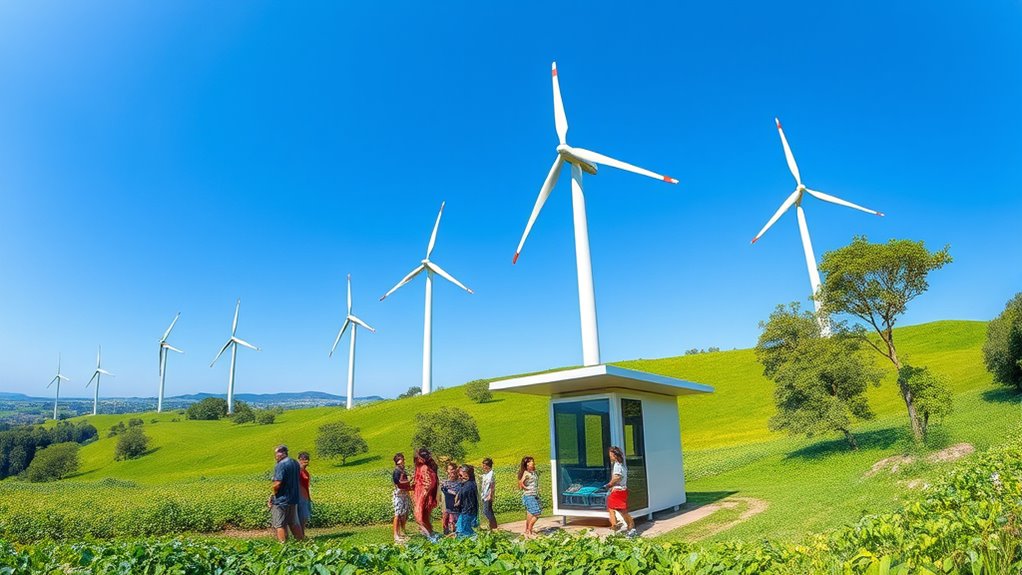
Did you know that wind energy is evolving from large, distant turbines to community-driven projects that bring clean power directly to neighborhoods? Smaller, local turbines now harness wind on a community level, making clean energy accessible and affordable. These projects often involve residents, reducing reliance on fossil fuels and lowering carbon footprints. Visualize these projects with this table:
| Small Turbines | Community Gardens | Local Power Stations |
|---|---|---|
| Installed on rooftops | Shared shared spaces | Combined local energy |
| Power nearby homes | Shared benefits | Reduce transmission loss |
| Encourage participation | Foster neighborhood pride | Support local economy |
This shift empowers communities, making renewable energy tangible and immediate, transforming neighborhoods into eco-friendly hubs. Distributed generation allows for more resilient and localized energy production, further supporting sustainable development. Additionally, the growth of community-based projects fosters greater public engagement and awareness of renewable energy benefits. Moreover, the advancement of energy decentralization contributes to a more robust and adaptable energy infrastructure. Furthermore, integrating local renewable resources ensures that energy solutions are tailored to specific community needs, enhancing overall effectiveness.
Electric Vehicles and Sustainable Transportation Solutions

Ever wondered how transportation is evolving to become more sustainable? Electric vehicles (EVs) are leading the charge, offering a cleaner alternative to traditional gas-powered cars. You can now choose EVs with longer ranges and faster charging times, making them more practical for daily use. Many cities are expanding charging infrastructure, encouraging more people to switch. Beyond personal cars, sustainable transportation includes e-bikes, scooters, and shared mobility services, reducing overall emissions. Innovations like vehicle-to-grid technology allow EVs to support the power grid, improving energy efficiency. Additionally, renewable energy sources are powering these vehicles, further decreasing their environmental impact. Proper ventilation considerations in charging stations and vehicles help ensure safety and optimal performance. These solutions not only lower your carbon footprint but also decrease air pollution in urban areas. As technology advances, electric and sustainable transportation options will become more accessible, transforming how you commute and travel responsibly. Furthermore, incorporating clean energy integration can optimize the environmental benefits of these transportation solutions, making a meaningful difference for our planet. To maximize these benefits, ongoing technological advancements continue to improve the affordability and efficiency of sustainable transportation options. Embracing smart grid technologies can also enhance the management of renewable energy for transportation needs, further boosting sustainability efforts.
Smart Grids: Enhancing Energy Efficiency and Management

Smart grids let you monitor energy use in real time, helping you identify areas to save. They also use load balancing strategies to prevent overloads and optimize supply. By integrating renewable sources, smart grids make your energy management more efficient and sustainable. Additionally, cutting-edge technologies enable smarter diagnostics and maintenance, further enhancing grid reliability and efficiency. These innovations contribute to sustainable energy practices, supporting long-term environmental health. Moreover, advanced monitoring systems provide detailed insights that help optimize overall energy consumption and reduce waste.
Real-Time Energy Monitoring
How can real-time energy monitoring transform the way you manage power consumption? By giving you instant data on how much energy you’re using, it helps you identify waste and optimize usage. Smart meters and connected devices provide real-time feedback, so you can make immediate adjustments—like turning off unused appliances or shifting usage to off-peak hours. This transparency enables you to see the direct impact of your actions, encouraging more sustainable habits. Additionally, real-time monitoring allows utility providers to detect issues quickly, reducing outages and improving overall grid reliability. With continuous insights, you become more aware of your energy footprint, empowering you to make smarter choices that benefit both your wallet and the environment. This technology makes energy management more precise, efficient, and environmentally friendly. Incorporating high contrast ratios in your energy data displays can improve readability and ensure you don’t miss critical information. Furthermore, as smart grid technologies evolve, they facilitate better integration of renewable energy sources, further supporting environmental sustainability. The integration of advanced sensors enhances the accuracy and responsiveness of energy data collection, leading to more effective management and reducing environmental impact.
Load Balancing Strategies
Load balancing strategies are essential for optimizing the flow of electricity across the grid, ensuring that supply matches demand efficiently. By managing how energy is distributed, these strategies prevent overloads and reduce waste. Smart grids utilize advanced technologies like real-time data, automated controls, and predictive analytics to balance loads dynamically. You can benefit from these systems through improved reliability and cost savings. Key approaches include:
- Distributed generation to diversify sources
- Demand response programs to shift consumption
- Automated switching to reroute power
- Peak shaving to reduce stress during high demand
- Integration of energy storage for stability
- Incorporating herbal infusion tools and techniques can also enhance energy management by supporting sustainable practices and reducing reliance on traditional power sources. Additionally, ongoing research into innovative materials and methods is vital for advancing renewable energy integration and achieving long-term efficiency. Exploring load forecasting models can further improve the precision of load balancing efforts, leading to more resilient energy systems. Implementing comprehensive grid monitoring systems is crucial for real-time detection and response to potential issues, thereby maintaining system stability.
Renewable Integration Solutions
Integrating renewable energy sources into the grid requires advanced management tools to handle their variability and guarantee reliable supply. Smart grids play a vital role here, using real-time data and automation to balance supply and demand efficiently. They monitor energy production from solar, wind, and other renewables, adjusting flow instantly to prevent overloads or shortages. With two-way communication between utilities and consumers, you can optimize energy use, reduce waste, and lower costs. Smart grids also facilitate the integration of energy storage solutions, smoothing out fluctuations in renewable generation. By implementing these technologies, you help create a resilient, sustainable energy system that minimizes environmental impact while meeting your needs reliably and efficiently.
Innovative Recycling Technologies and Waste Reduction
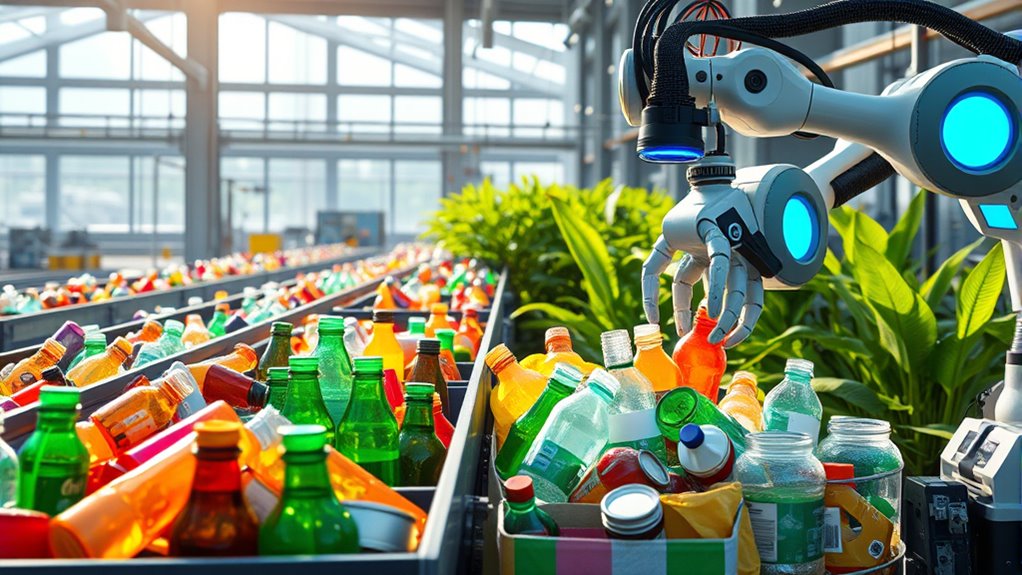
You can explore how advanced material sorting systems improve recycling efficiency by accurately separating waste streams. Chemical recycling breakthroughs turn plastics back into raw materials, reducing landfill waste. Waste-to-energy technologies also offer innovative ways to convert residual waste into usable power, minimizing environmental impact.
Advanced Material Sorting
Advanced material sorting is transforming recycling processes by employing innovative technologies that accurately identify and separate different waste streams. These systems use techniques like AI, near-infrared sensors, and robotics to enhance efficiency and purity of recyclables. You benefit from faster processing times and higher recovery rates, reducing contamination and waste. This precision allows recycling facilities to sort materials more effectively, minimizing landfill contributions and conserving resources. You’ll see less manual labor and fewer errors, leading to cost savings and environmental benefits. Here are some key features:
- AI-powered image recognition for accurate sorting
- Near-infrared sensors for material identification
- Robotic arms for precise separation
- Real-time data analytics for process optimization
- Automated systems reducing manual handling
Advanced sorting technology helps you contribute to a cleaner, more sustainable environment.
Chemical Recycling Breakthroughs
Recent breakthroughs in chemical recycling are revolutionizing waste reduction by converting plastics and other materials into their original chemical components. Instead of just shredding or melting waste, you can now break down polymers at the molecular level, enabling true material recovery. These advanced processes, like depolymerization and solvolysis, allow plastics to be recycled repeatedly without quality loss. This reduces reliance on virgin resources and minimizes landfill overflow. Chemical recycling also helps tackle contaminated plastics that traditional methods struggle with, making recycling more efficient and widespread. As a result, you play a part in creating a circular economy, where waste becomes a resource rather than trash. These innovations are not only cutting-edge but also crucial for decreasing environmental impact and promoting sustainable practices across industries.
Waste-to-Energy Technologies
Building on the progress in chemical recycling, Waste-to-Energy (WTE) technologies offer a powerful way to reduce landfill volume while generating usable power. These systems convert non-recyclable waste into electricity, heat, or fuel, making waste management more sustainable. By doing so, you can lower greenhouse gas emissions and lessen reliance on fossil fuels. WTE plants also help recover valuable materials from waste streams and decrease the need for new landfills.
- Reduce landfill overflow
- Generate clean energy
- Lower greenhouse gases
- Recover recyclable materials
- Support circular waste management
With these innovations, you play a role in transforming waste into a resource, making your community greener and more resilient. WTE is a crucial piece of the puzzle for a sustainable future.
Green Building Materials and Eco-Friendly Construction

Have you ever wondered how construction can become more sustainable without sacrificing quality? Green building materials make this possible. You can choose recycled steel, bamboo, or hempcrete, which reduce environmental impact and enhance insulation. These materials often require less energy to produce and generate fewer emissions. Using eco-friendly construction techniques like modular and prefabricated building methods also cuts waste and speeds up project timelines. You’ll find that integrating solar panels and green roofs further boosts energy efficiency. By prioritizing sustainable materials and practices, you help conserve natural resources, lower energy bills, and create healthier living environments. This approach not only benefits the planet but also ensures durable, cost-effective buildings for the long term.
The Role of Data and AI in Environmental Conservation

How can data and AI transform environmental conservation efforts? They enable you to monitor ecosystems, predict climate changes, optimize resource use, and track wildlife. With these tools, you can make data-driven decisions that improve sustainability. Here are some ways they boost conservation:
- Analyzing satellite images for deforestation detection
- Tracking animal migration patterns in real-time
- Predicting natural disasters to prepare communities
- Optimizing renewable energy deployment
- Identifying pollution sources quickly and accurately
Frequently Asked Questions
How Do Green Tech Innovations Impact Local Economies?
Green tech innovations boost your local economy by creating new jobs and attracting investments. When you support renewable energy projects or sustainable businesses, you help stimulate economic growth in your community. These technologies often lead to lower energy costs and improved infrastructure, benefiting residents and businesses alike. By embracing green tech, you contribute to a more resilient economy, fostering innovation and ensuring long-term prosperity for your local area.
What Are the Challenges in Scaling Green Technology Globally?
Oh, the joy of scaling green tech globally—it’s like trying to herd cats with a spreadsheet. You face challenges like high costs, lack of infrastructure, and inconsistent policies. Plus, some countries prioritize profits over planet, making cooperation tough. You’ll also encounter technological gaps and resistance from industries rooted in old ways. But hey, with enough persistence, maybe we’ll turn this eco-challenge into a green victory.
How Can Consumers Contribute to Environmental Sustainability Through Technology?
You can contribute to environmental sustainability by choosing eco-friendly tech products and reducing your energy consumption. Use smart devices to monitor and cut down on wasteful energy use, support companies that prioritize green innovations, and opt for renewable energy sources when possible. Share your eco-conscious choices with others, and advocate for policies that promote green technology. Your daily actions, powered by technology, make a meaningful difference for the environment.
What Policies Support the Adoption of Green Tech Solutions?
Policies like government incentives, tax credits, and grants encourage you to adopt green tech solutions. Regulations that set emission standards and promote renewable energy push industries to innovate and invest in sustainable options. By supporting policies that prioritize environmental goals, you can help accelerate the shift to cleaner technologies. Stay informed about local and national initiatives, and advocate for policies that make green tech more accessible and affordable for everyone.
How Do Green Technologies Address Climate Change Mitigation?
Think of green technologies as your tools to tame the wildfire of climate change. They cut emissions by harnessing renewable energy, like solar and wind, and improve efficiency in industries and homes. By adopting these innovations, you actively reduce your carbon footprint, helping to cool the Earth’s fever. Your choices power a cleaner future, turning your everyday actions into a essential part of the global effort to mitigate climate change.
Conclusion
As you explore these green tech innovations, remember you’re planting seeds for a sustainable future. Like a compass guiding us through uncharted waters, technology illuminates the path toward environmental harmony. Embracing these advancements, you become part of a powerful ripple effect—turning small actions into waves of change. Together, you and technology can transform our planet into a thriving, greener world where hope blossoms amidst innovation.