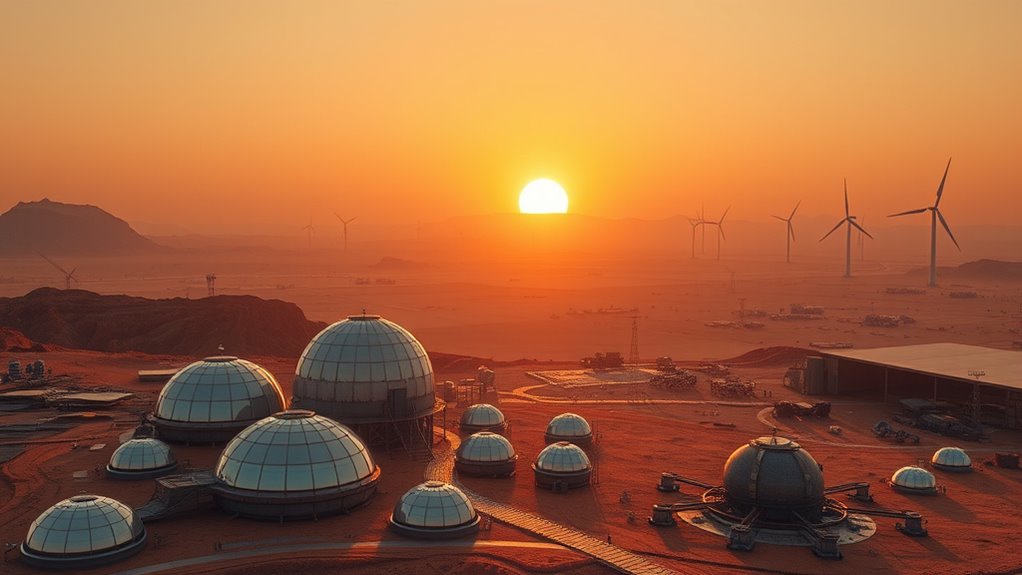

Building a colony on Mars requires overcoming key tech challenges like protecting yourself from high radiation levels through underground habitats and advanced shielding, managing toxic soil with soil cleanup techniques, and counteracting the effects of low gravity on your muscles and bones. You’ll need reliable power sources, such as nuclear reactors combined with renewable energy, and habitats designed to withstand dust storms and extreme temperatures. To discover more about these innovative solutions, keep exploring how these challenges are being addressed.
Key Takeaways
- Developing durable, radiation-resistant habitats with underground shielding and climate control to withstand Mars’ harsh environment.
- Creating dust-resistant equipment and solar panels, alongside storm mitigation systems, to ensure reliability amidst frequent dust storms.
- Implementing advanced life support systems for soil detoxification, resource recycling, and maintaining human health in low gravity.
- Ensuring reliable power sources, such as nuclear reactors and energy storage, resilient to environmental and weather disruptions.
- Securing robust cybersecurity and health monitoring to protect data, support medical needs, and enable autonomous colony operations.
Protecting Astronauts From High Radiation Levels
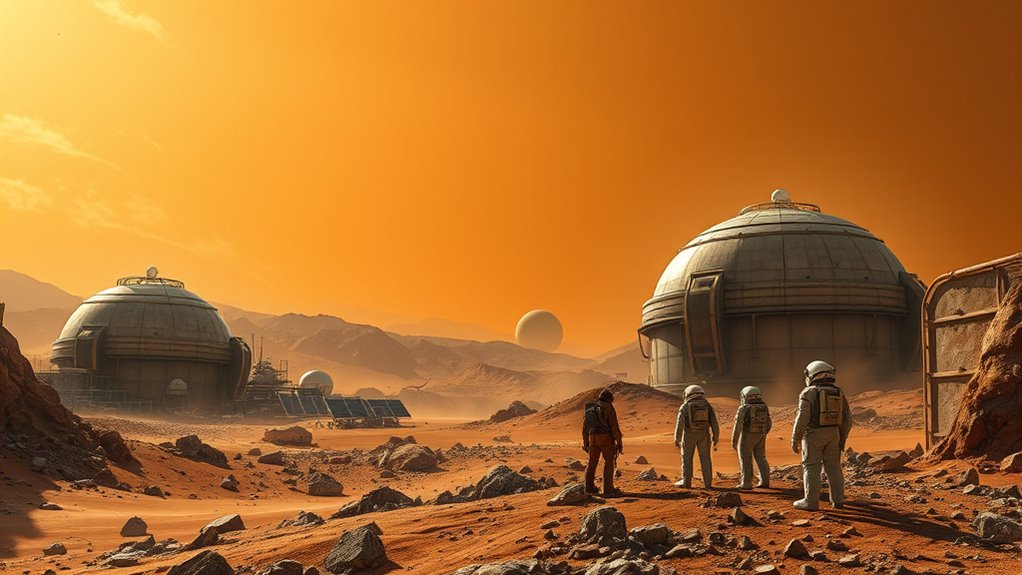
How can we effectively shield astronauts from the intense radiation on Mars? You’ll need to rely on multiple strategies to protect your crew. Building habitats underground or partially underground offers natural shielding from cosmic and solar radiation. Using local regolith as a protective barrier is another effective method; you can cover habitats with several meters of soil to reduce exposure. Advanced spacecraft materials can also help, providing radiation-resistant walls and gear. Incorporating lightweight, high-density materials into construction can cut radiation levels inside living spaces. Continuous monitoring of radiation exposure guarantees safety, allowing quick adjustments or evacuations if needed. Additionally, developing robust shielding technologies is crucial for long-term missions, as they can adapt to changing radiation levels and enhance overall safety. Employing adaptive radiation shielding systems that respond to fluctuating radiation can further improve protection. Combining these approaches—underground habitats, regolith shielding, and innovative materials—maximizes protection, enabling astronauts to survive and work on Mars despite its harsh radiation environment. Furthermore, ongoing research into radiation detection devices helps scientists better understand and mitigate exposure risks during long missions. For example, innovations in material science can lead to the development of more effective shielding solutions tailored to space environments.
Managing Toxic Soil and Regolith for Sustainability
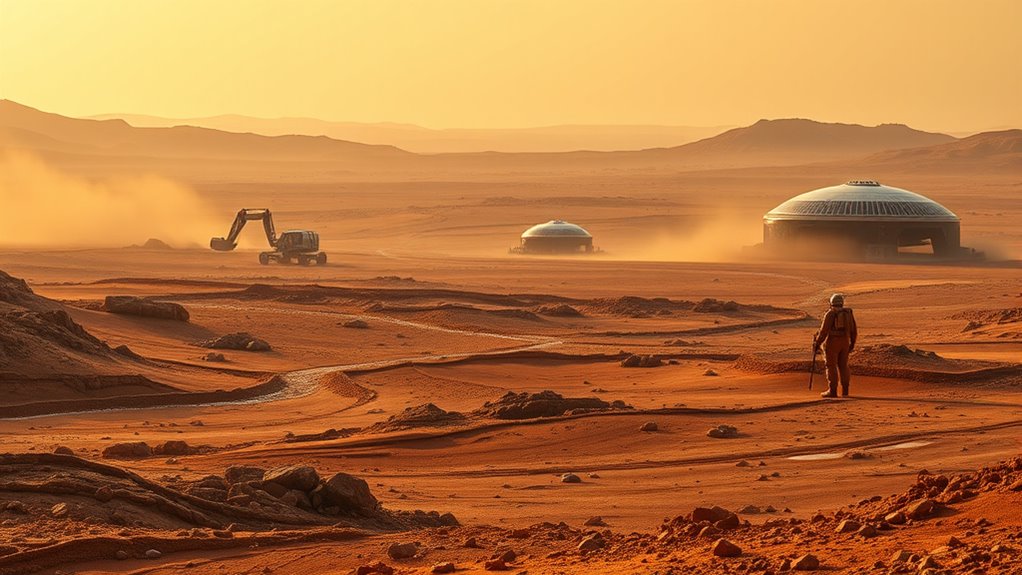
Managing the toxic soil and regolith on Mars is essential for establishing a sustainable presence. The soil contains perchlorates that threaten human health and disrupt agriculture. You’ll need effective methods to neutralize this soil, such as chemical washes or bacteria that break down harmful compounds. Microbial treatments can help make the soil safer for planting, while chemical processing removes toxins directly. Dust storms spread these particles, so you’ll also require air filtration systems and protective gear for workers. Developing soil remediation techniques ensures safe cultivation of crops and construction of habitats. Without proper management, toxic soil could hinder food production and compromise habitat integrity. Additionally, employing Indigenous knowledge of natural remedies can inspire sustainable and culturally respectful approaches to soil detoxification. Understanding the chemical composition of Martian soil is crucial for designing effective treatment methods. Conducting thorough soil analysis helps identify specific contaminants and tailor remediation strategies accordingly. Mastering regolith detoxification is vital for transforming Mars soil into a resource that supports sustainable living, especially since bioremediation techniques offer eco-friendly solutions for large-scale detoxification. Reliable whole-home backup power solutions can also provide energy security during critical operations.
Addressing the Effects of Low Gravity on Human Health
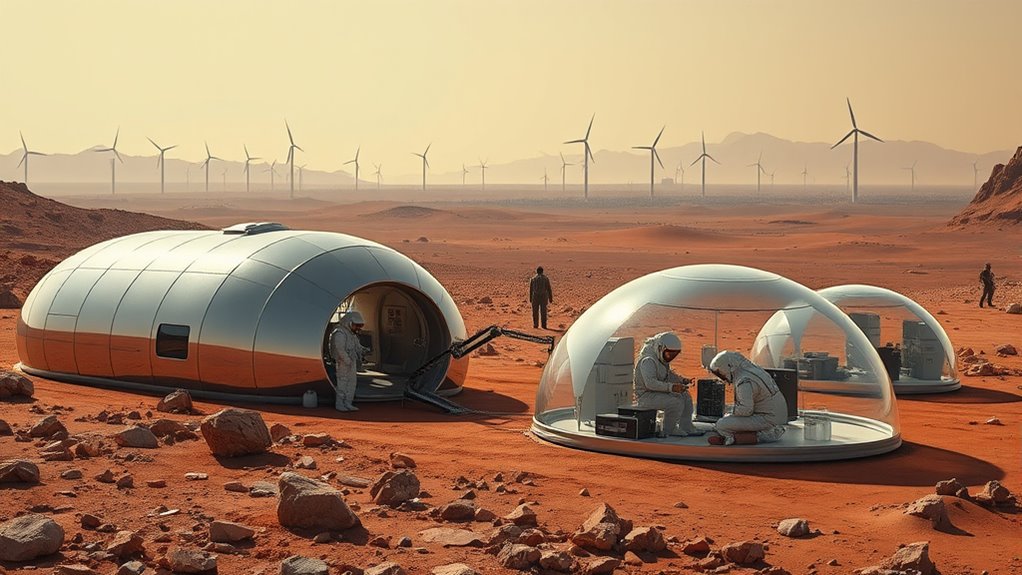
You’ll need to tackle muscle atrophy and bone density loss caused by Mars’s low gravity. Without proper strategies, your crew could experience significant health setbacks over time. Implementing daily exercise routines and innovative countermeasures is essential to keep everyone healthy and functioning. Incorporating juice extraction techniques such as resistance training with juice-fueled energy boosts may also support recovery and vitality during long missions.
Muscle Atrophy Risks
The low gravity environment on Mars poses a significant risk of muscle atrophy for astronauts. Without the constant resistance of Earth’s gravity, your muscles weaken and shrink over time. To counteract this, you’ll need a rigorous exercise routine, including resistance training and aerobic workouts. Technologies like centrifuges and advanced exercise devices are being developed to simulate gravity’s effects. Here’s a comparison of key mitigation strategies:
| Strategy | Purpose |
|---|---|
| Resistance exercise | Maintain muscle strength and mass |
| Artificial gravity habitats | Provide gravity-like resistance |
| Chemical agents | Potentially stimulate muscle growth |
| Regular physical activity | Prevent muscle deconditioning |
Implementing these measures is vital to preserve your health during extended Mars missions. Additionally, ongoing research into muscle atrophy prevention aims to develop more effective countermeasures for long-duration spaceflight.
Bone Density Loss
Bone density loss is a major health concern for astronauts on Mars due to the planet’s low gravity. You’ll experience accelerated bone demineralization, risking fractures and long-term weakness. To combat this, researchers focus on three main strategies:
- Implementing daily weight-bearing exercises to stimulate bone growth.
- Developing artificial gravity environments through centrifuges or rotating habitats.
- Exploring pharmaceutical options like bisphosphonates to slow bone loss.
While these methods show promise, they’re not foolproof. The low gravity impacts your skeletal system, and ongoing research aims to find the most effective solutions. Maintaining bone health will require a combination of physical activity, innovative habitat design, and medical interventions. Understanding the effects of low gravity on the human body is essential for developing effective countermeasures. For example, utilizing exercise protocols specifically designed to target bone preservation can significantly reduce deterioration. Additionally, proper nutrition rich in calcium and vitamin D plays a crucial role in maintaining bone density. Monitoring bone health through advanced imaging techniques can help detect early signs of deterioration and guide timely interventions. Incorporating nutritional strategies that support bone maintenance has also shown potential in mitigating loss. Addressing this challenge is vital for your long-term survival on Mars.
Countermeasure Strategies
How can we effectively counteract the health risks posed by Mars’s low gravity? You’ll need a combination of strategies to maintain your health. Regular exercise is vital; astronauts use resistance training and cardiovascular workouts to slow muscle atrophy and bone loss. Centrifugal gravity simulators could help simulate Earth-like gravity temporarily. Researchers are exploring artificial gravity habitats, though they’re not yet practical for large-scale use. Nutrition also plays a role, with diets rich in calcium and vitamin D to support bone health. Monitoring your health through continuous assessments helps catch issues early. Incorporating insights from pool hydraulics and water chemistry can inform the development of advanced habitat systems that support life support and health monitoring in extraterrestrial environments. Additionally, advances in AI cybersecurity are crucial to protect sensitive health data and ensure secure communication systems in isolated habitats. Developing bioregenerative life support systems that recycle waste and produce fresh resources can further sustain long-term human health in space. Moreover, research into low-gravity physiology is essential to better understand how the human body adapts over extended periods and to develop more effective countermeasures. Investigations into muscle and bone adaptation can help identify targeted therapies to mitigate deterioration in low-gravity environments.
Overcoming the Challenges of Harsh Climate and Dust Storms
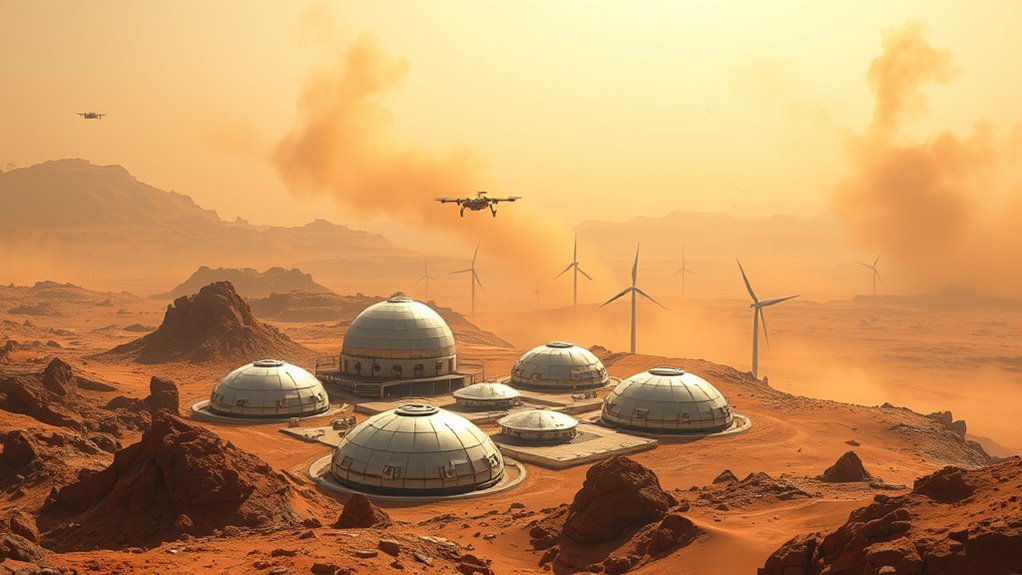
To survive the extreme cold and frequent dust storms on Mars, you’ll need strong habitat insulation and sealing techniques. Designing dust-resistant equipment is vital to keep systems operational during storms. Implementing storm impact mitigation strategies guarantees your colony remains safe and functional despite these harsh conditions. Incorporating ventilation considerations into your habitat design can help manage dust infiltration and maintain breathable air during storms. Additionally, integrating smart home technology such as automated air filtration systems can further enhance dust management and ensure optimal indoor air quality. Incorporating dust filtration systems into habitat infrastructure is essential for long-term health and operational efficiency in the Martian environment.
Habitat Insulation Strategies
Have you considered how the extreme temperatures and relentless dust storms on Mars challenge habitat design? You need effective insulation to maintain internal climate stability. First, use multi-layered wall systems with vacuum or aerogel insulation to minimize heat transfer. Second, incorporate reflective surfaces and coatings to deflect solar radiation and reduce heating or cooling demands. Third, seal all entry points tightly and employ airtight barriers to prevent dust infiltration. These strategies help maintain a comfortable environment despite external fluctuations. Additionally, integrating passive solar design features can optimize heat retention during cold periods. Combining advanced materials with robust sealing ensures your habitat remains insulated against Mars’ temperature swings and dust storms, safeguarding your crew’s safety and comfort in this harsh environment.
Dust-Resistant Equipment Design
Designing equipment that can withstand Mars’ relentless dust storms is essential for mission success. Dust can infiltrate gear, reducing efficiency and causing failures. You need sealed and dust-proof enclosures for sensitive electronics and moving parts. Filters and protective coatings help prevent dust buildup on solar panels, sensors, and machinery. Use durable, abrasion-resistant materials that tolerate fine particles and temperature extremes. Regular maintenance becomes indispensable to keep equipment operational during storms. Incorporate self-cleaning systems or electrostatic dust repulsion methods to minimize manual cleaning. Lightweight, flexible designs allow components to adapt to movement and vibration. Ensuring dust resistance not only prolongs equipment lifespan but also maintains reliable communication, power generation, and scientific operations—crucial for long-term colony sustainability on Mars.
Storm Impact Mitigation
Harsh climate conditions and frequent dust storms pose significant threats to a Mars colony, often disrupting operations and damaging equipment. To mitigate these impacts, you need to focus on three key strategies.
- Seal habitats tightly with advanced insulation and dust-proof materials, preventing infiltration during storms.
- Design equipment with dust-resistant features and incorporate automatic cleaning systems to maintain functionality.
- Establish early warning systems and storm tracking to prepare and safeguard critical assets.
These measures ensure continuous operation despite the planet’s extreme environment. You’ll also develop protocols for storm-related power management and communication backups, reducing vulnerability during prolonged storms. By integrating these approaches, you create a resilient colony capable of withstanding Mars’s relentless dust and climate challenges.
Developing Reliable Power Generation and Storage Solutions
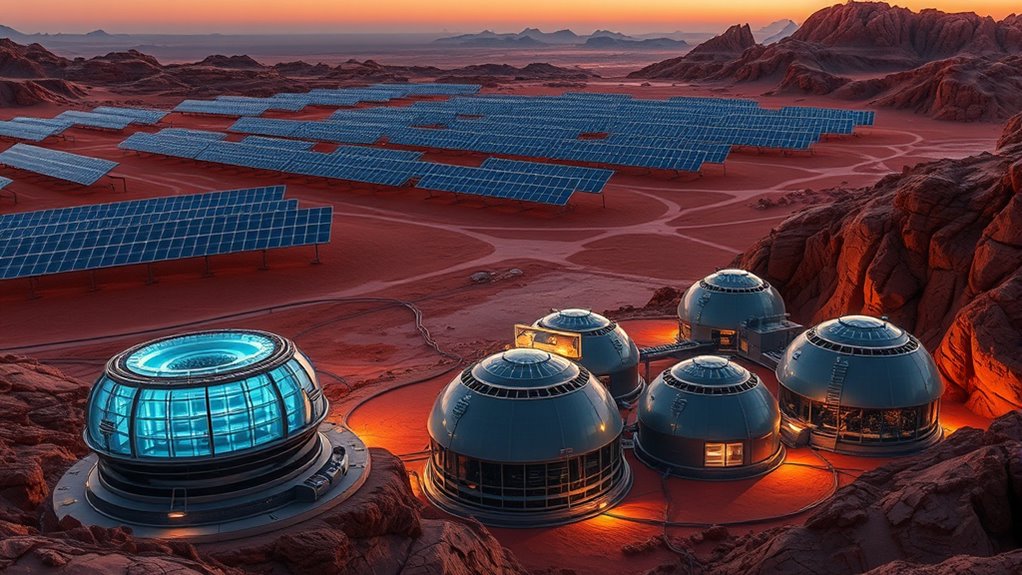
How can we guarantee a reliable power supply on Mars amidst its challenging environment? You’ll need to optimize solar panels for efficiency, ensuring they’re dust-resistant and easy to clean, since dust storms can block sunlight for weeks. Since solar alone isn’t enough, nuclear fission reactors offer a steady, dependable source that operates regardless of weather or day-night cycles. Developing compact, safe reactors is critical. To store energy, you’ll rely on advanced batteries and fuel cells that can hold power through long storms or night periods. Redundancy is essential; your power systems must adapt to unpredictable conditions. By integrating renewable and nuclear sources with robust storage, you’ll create a resilient energy infrastructure capable of supporting a sustainable Mars colony.
Ensuring Life Support Systems and Food Production
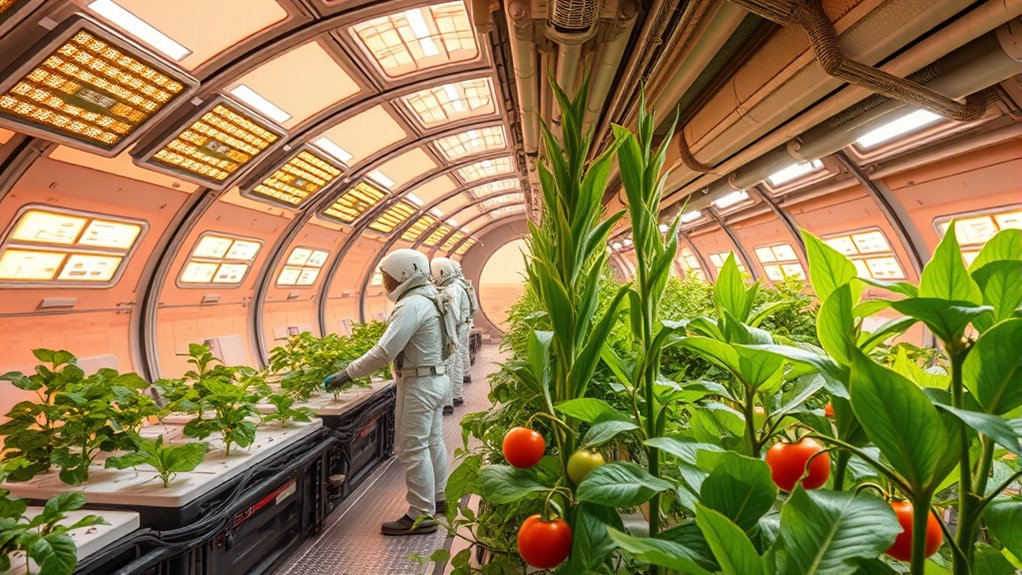
Ensuring a reliable life support system and sustainable food production on Mars requires integrating advanced recycling technologies with resilient agricultural methods. First, you need closed-loop systems that recycle air, water, and waste efficiently. These systems include water reclamation, CO2 scrubbing, and oxygen generation to sustain human life. Second, you must develop resilient food production methods like hydroponics and aeroponics, which thrive without soil and can be tailored to Martian conditions. Third, crop selection is crucial—choose high-yield, nutritious plants that adapt well to low light and temperature fluctuations. By combining these elements, you create a self-sufficient environment that minimizes resupply needs, maintains health, and guarantees long-term habitability on Mars.
Creating Habitats That Withstand the Martian Environment
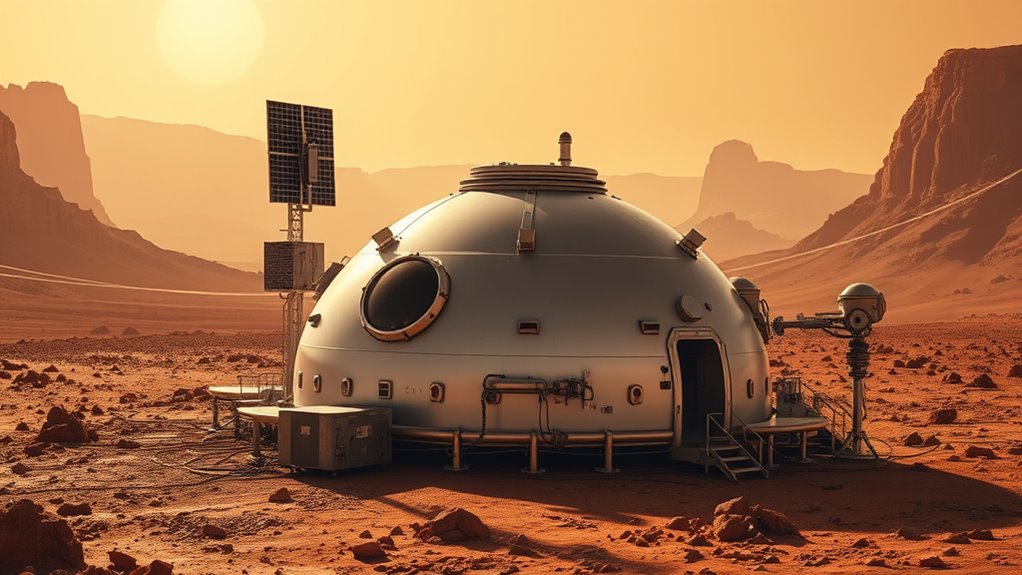
Designing habitats capable of withstanding the Martian environment is essential for long-term human presence. You must create structures that resist extreme temperatures, dust storms, and high radiation levels. Using thick walls made from regolith-based materials or underground placement offers protection against radiation and temperature swings. Sealing habitats tightly prevents dust infiltration, which can damage equipment and compromise air quality. Incorporating insulation and heating systems maintains livable temperatures. To address radiation exposure, you might build underground or cover habitats with local soil for natural shielding. Ensuring structural integrity against dust storms and temperature extremes requires robust materials and sealing techniques. Combining these strategies creates safe, durable habitats where humans can thrive despite Mars’s harsh conditions.
Frequently Asked Questions
How Will We Address Psychological Challenges of Long-Term Isolation on Mars?
You can address psychological challenges on Mars by establishing strong communication with loved ones and Earth, creating engaging routines, and providing private spaces for relaxation. Implement virtual reality tools to simulate Earth environments and social interactions. Regular mental health check-ins and access to counseling support help manage stress. Building a supportive community among crew members fosters camaraderie. Prioritizing these strategies keeps your mind resilient during long periods of isolation.
What Methods Will Ensure Sustainable Water Supply for a Martian Colony?
Imagine a Martian oasis, where water flows endlessly. You’ll rely on recycling systems that reclaim every drop of water from air, waste, and even sweat. Advanced filtration and purification keep water safe and drinkable. You’ll also harvest ice from beneath the surface, melting it for use. These methods form a closed-loop, ensuring your colony stays hydrated and sustainable, even amidst the red planet’s harsh environment.
How Can We Efficiently Transport Materials and Personnel Between Earth and Mars?
You can efficiently transport materials and personnel between Earth and Mars by using reusable rocket systems like SpaceX’s Starship, which reduces costs and improves turnaround times. Investing in advanced propulsion technologies, such as ion thrusters or nuclear thermal engines, can shorten travel durations. Establishing regular launch schedules and optimized cargo modules also guarantees reliable, cost-effective deliveries, making sustained Mars missions more practical and efficient for ongoing colonization efforts.
What Strategies Will Mitigate the Impact of Martian Dust on Equipment Longevity?
You can mitigate dust impact by designing equipment with dust-resistant coatings and seals, ensuring they stay protected during storms. Regular cleaning with air filtration systems prevents buildup, while deploying robotic cleaners or self-cleaning surfaces reduces maintenance. Using durable, dust-repellent materials extends equipment lifespan. These strategies, combined with habitat sealing and air filtration, help maintain functionality, reducing costly repairs and ensuring long-term operations despite the harsh Martian environment.
How Will We Develop Scalable Medical Facilities for Emergencies on Mars?
You’ll need to develop modular, scalable medical facilities equipped with telemedicine links to Earth specialists. Use 3D printing for rapid repairs and custom equipment, and incorporate autonomous robots for routine tasks. Stockpile essential medicines and create adaptable emergency protocols. Train all crew members in basic and advanced medical procedures, guaranteeing they can handle emergencies independently. This approach ensures readiness and flexibility in the face of unforeseen health crises on Mars.
Conclusion
Building a colony on Mars demands innovation and resilience. Imagine designing a habitat that shields you from radiation, recycles waste, and sustains life despite dust storms and low gravity. Just like the International Space Station adapted to space’s challenges, your solutions must evolve with the environment. Success depends on overcoming these hurdles, proving that with determination and ingenuity, establishing a human presence on Mars isn’t just a dream — it’s within reach.