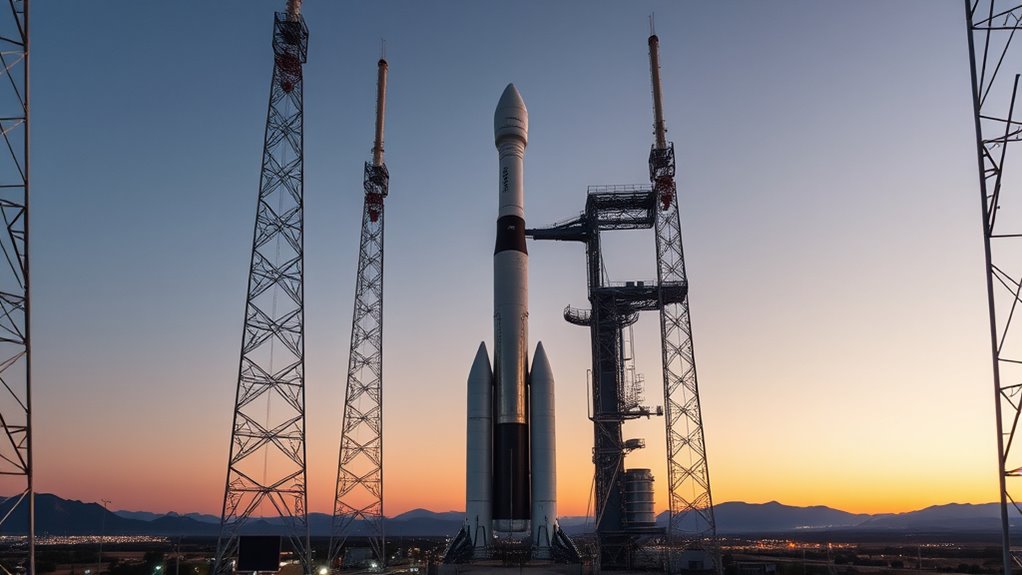

SpaceX and other innovators are transforming space travel with reusable rockets like Starship that lower costs and boost efficiency. Advances in propulsion, autonomous navigation, and in-situ resource utilization help make Mars missions more feasible. These technologies improve safety, reduce payload weight, and enable longer stays. Communication systems around Mars ensure reliable contact. If you want to see how these breakthroughs are shaping our journey to Mars, keep exploring the latest space innovations.
Key Takeaways
- Reusable rocket technology, pioneered by companies like SpaceX, significantly reduces launch costs and accelerates Mars exploration efforts.
- Starship’s fully reusable design and high payload capacity enable fewer missions and larger cargo loads for Mars colonization.
- Advanced materials, manufacturing techniques, and next-generation engines improve spacecraft resilience, efficiency, and reduce travel times to Mars.
- In-situ resource utilization (ISRU) systems allow harvesting local Martian resources, supporting sustainability and reducing mission costs.
- Innovations in communication technology and satellite networks enhance data transmission, ensuring reliable contact during deep space missions.
Reusable Rocket Technology: Revolutionizing Cost and Efficiency
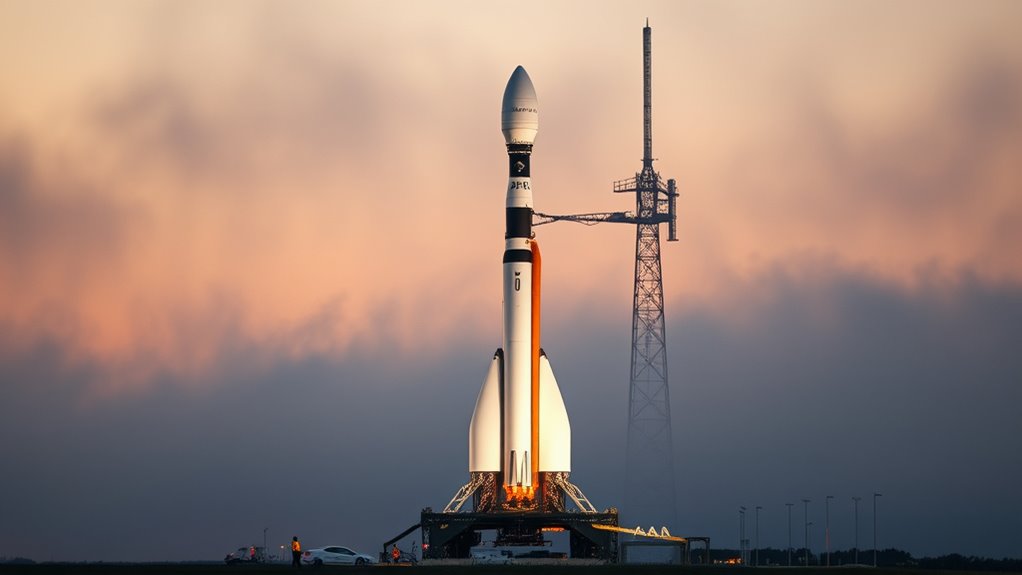
Have you ever wondered how space travel is becoming more affordable and sustainable? Reusable rocket technology is a game-changer. Instead of discarding rockets after each launch, companies like SpaceX design boosters that return to Earth intact. This innovation drastically cuts costs because building new rockets for every mission is expensive. By refurbishing and reusing components, launch providers save millions per flight. The process involves controlled landings or drone ship recoveries, making launches more efficient. This approach not only reduces waste but also accelerates the pace of space exploration. As reusability becomes standard, space missions grow more feasible, opening doors for broader scientific research and commercial activities beyond Earth. European cloud solutions are also contributing to this revolution by providing secure and energy-efficient data infrastructure for space agencies. It’s a significant step toward making space travel sustainable and accessible.
Starship: Pioneering Interplanetary Travel
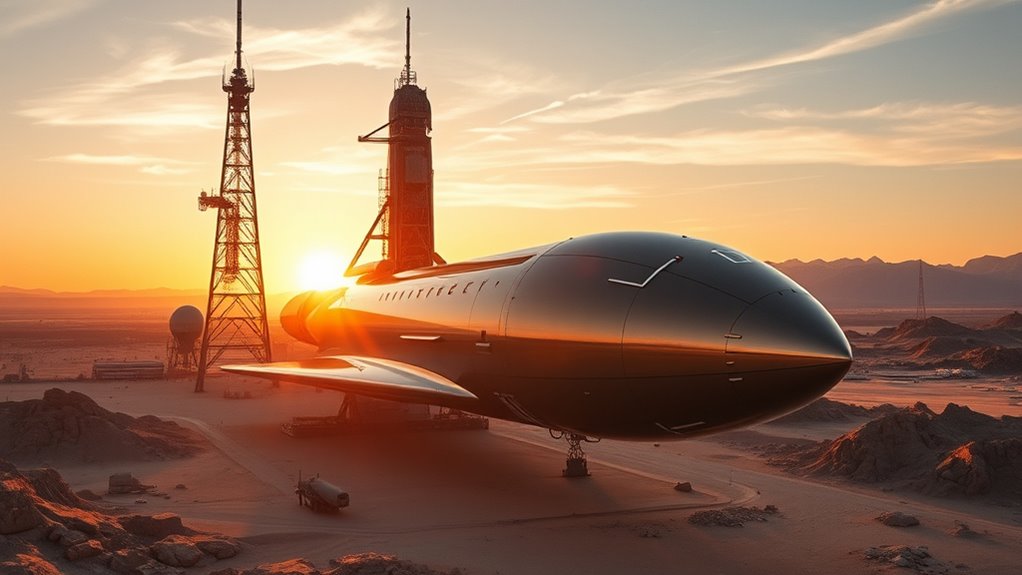
Starship’s reusable design reduces costs and speeds up space travel, making interplanetary missions more feasible. Its massive payload capacity allows it to carry equipment and supplies needed for long journeys and building colonies. With these innovations, space travel becomes more cost-effective and accessible than ever before. Additionally, advancements in cost reduction techniques are further enhancing the affordability of space exploration initiatives.
Reusable Rocket Design
How does SpaceX’s Starship revolutionize reusable rocket design for interplanetary travel? By fully reusing its entire structure, including the engines and payload bay, Starship reduces costs and turnaround times profoundly. Its stainless-steel construction withstands multiple launches and re-entries, enabling rapid reuse without extensive refurbishment. The design emphasizes simplicity—fewer parts, quick inspections—making turnaround faster. The engines, Raptor engines, are designed for multiple flights, further lowering expenses. This reusability isn’t just about saving money; it’s about creating a reliable system that can sustain frequent trips to Mars and beyond. The approach also relies on advanced monitoring systems to ensure safety and performance throughout each mission cycle. You can see how this approach shifts the paradigm from single-use rockets to a sustainable, scalable platform ready to support our interplanetary ambitions. It’s a game-changer for space travel, setting new standards for efficiency and longevity. Additionally, connected equipment and apps play a vital role in monitoring and maintaining the health of the rocket systems during operations. Incorporating innovative materials further enhances durability and performance, making the entire system more resilient to the harsh conditions of space travel. Moreover, the integration of advanced manufacturing techniques allows for more efficient production and customization of components, accelerating development cycles. This comprehensive focus on sustainable design principles helps ensure the long-term viability of space missions.
Massive Payload Capacity
Building on Starship’s groundbreaking reusability, its massive payload capacity pushes the boundaries of what’s possible for interplanetary missions. With the ability to carry over 100 metric tons to low Earth orbit, it drastically reduces the number of launches needed for a Mars mission. This means you can transport large equipment, scientific instruments, and supplies in a single trip, streamlining mission planning. Its design allows for the deployment of habitats, rovers, and life support systems vital for long-term exploration. The high payload capacity also opens doors for more ambitious projects, like cargo resupply or even building infrastructure on Mars. Fundamentally, Starship’s capacity transforms what you can achieve in space, making sustained interplanetary travel more feasible than ever before. Advancements in space technology continue to expand possibilities for exploration beyond Earth, especially with innovations in payload capacity, which is a crucial factor in achieving interplanetary travel goals. Additionally, ongoing developments in reusability contribute significantly to reducing costs and increasing mission frequency. These innovations are supported by cutting-edge engineering, ensuring the reliability and efficiency needed for long-term missions.
Cost-Effective Space Travel
Thanks to its innovative design and reusability, Starship considerably reduces the costs associated with space travel. By refurbishing and reusing the entire vehicle, you eliminate the need to build a new rocket for each mission, cutting expenses dramatically. Starship’s stainless steel construction not only withstands harsh conditions but also lowers manufacturing costs. Its ability to carry large payloads means fewer launches are needed to deliver supplies and equipment, saving money in the long run. SpaceX’s focus on mass production and streamlined manufacturing processes further drive down costs. As a result, space travel becomes more accessible and sustainable, opening the door for broader exploration efforts. This approach pushes us closer to making interplanetary travel a reality, all while keeping expenses in check. Additionally, advanced manufacturing techniques like 3D printing help further reduce production costs and accelerate development. The integration of reusable rocket technology is a game-changer in reducing launch costs and increasing mission frequency. Incorporating cost-effective materials such as stainless steel also contributes to the overall reduction in manufacturing expenses and enhances vehicle durability. Moreover, understanding the reliance on cloud services used in mission control and data analysis underscores the importance of resilient technology infrastructure in space endeavors. Furthermore, leveraging automated manufacturing processes helps optimize production efficiency and quality control in large-scale space vehicle fabrication.
Advanced Propulsion Systems for Mars Missions
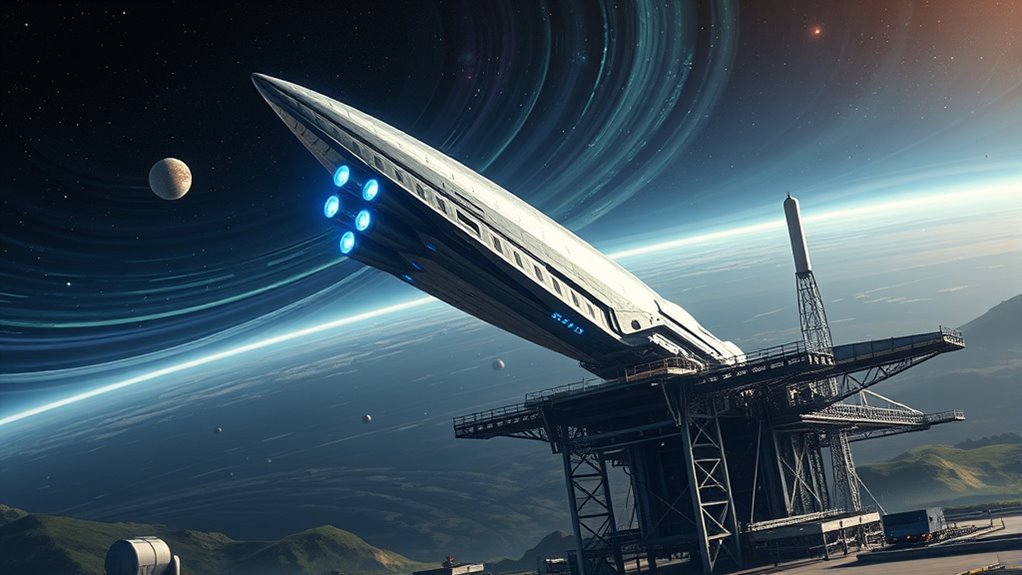
You’ll see how next-generation rocket engines can drastically reduce travel time to Mars. Innovations in fuel efficiency are making long-duration missions more feasible and sustainable. These advancements could transform our approach to interplanetary travel and exploration. Enhanced propulsion technology is also being integrated into writing tools to help improve clarity and readability. Additionally, developing reliable power systems is crucial for supporting the infrastructure needed on Mars for future missions.
Next-Generation Rocket Engines
How can next-generation rocket engines revolutionize Mars missions? These engines promise higher thrust, greater efficiency, and faster travel times. Innovations like nuclear thermal propulsion could markedly cut the journey duration, reducing exposure to space radiation and life support demands. Electric propulsion systems, such as ion thrusters, offer continuous, efficient thrust over long distances, enabling more payload delivery. Advanced engines also open doors for reusable designs, lowering costs and increasing mission frequency. With stronger materials and smarter engineering, these engines will handle the extreme conditions of deep space travel more reliably. Ultimately, next-generation rocket engines will make Mars missions more feasible, safer, and economically viable, paving the way for sustained human presence on the Red Planet.
Fuel Efficiency Innovations
Innovations in fuel efficiency are transforming propulsion systems for Mars missions by enabling spacecraft to travel farther with less propellant. You’ll see advanced engines, like ion thrusters and solar-electric propulsion, that use electricity to generate thrust more efficiently than traditional chemical rockets. These systems reduce fuel mass, allowing more cargo or scientific instruments onboard. You might also utilize reusable engines that cut down on fuel needs by enabling multiple launches and landings. Researchers are developing new propellants and optimizing engine designs to maximize efficiency. As a result, your spacecraft can reach Mars faster and with less fuel, saving costs and expanding mission possibilities. These innovations are key to making human exploration of Mars more feasible, sustainable, and cost-effective.
Life Support and Habitation Innovations
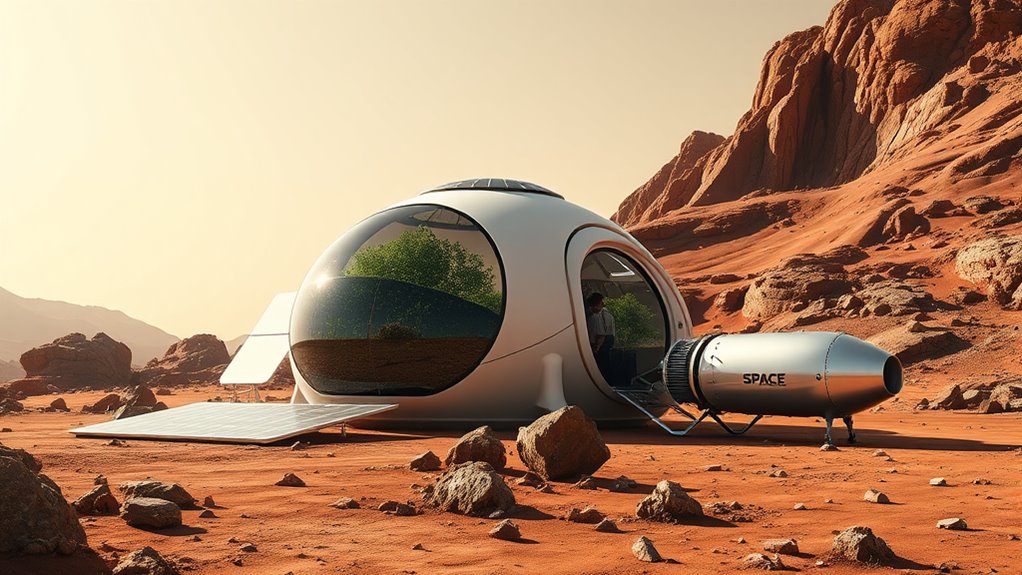
Advancements in life support and habitation systems are essential for ensuring astronauts can survive and thrive during extended space missions. Modern systems continuously recycle air and water, reducing the need for resupply from Earth. You benefit from improved filtration technologies that remove contaminants and maintain safe environmental conditions. Innovative habitats feature better insulation and radiation shielding, providing protection against space radiation and temperature fluctuations. Compact, modular designs allow you to customize your living space for comfort and efficiency. Automated life support systems minimize manual interventions, freeing you to focus on scientific tasks. Researchers are also developing bioregenerative systems, such as algae-based air regeneration, to create more sustainable environments. Filtration technologies play a crucial role in ensuring clean air by removing particles and harmful gases. Additionally, ongoing research into life support system automation aims to reduce crew workload and improve system reliability. These innovations make long-duration missions feasible and improve your overall quality of life in space. Furthermore, integrating advanced monitoring systems helps detect and address potential environmental hazards before they impact crew safety. Continuous improvements in environmental control are also helping to optimize habitat conditions and enhance crew comfort.
In-Situ Resource Utilization: Making Mars Self-Sufficient
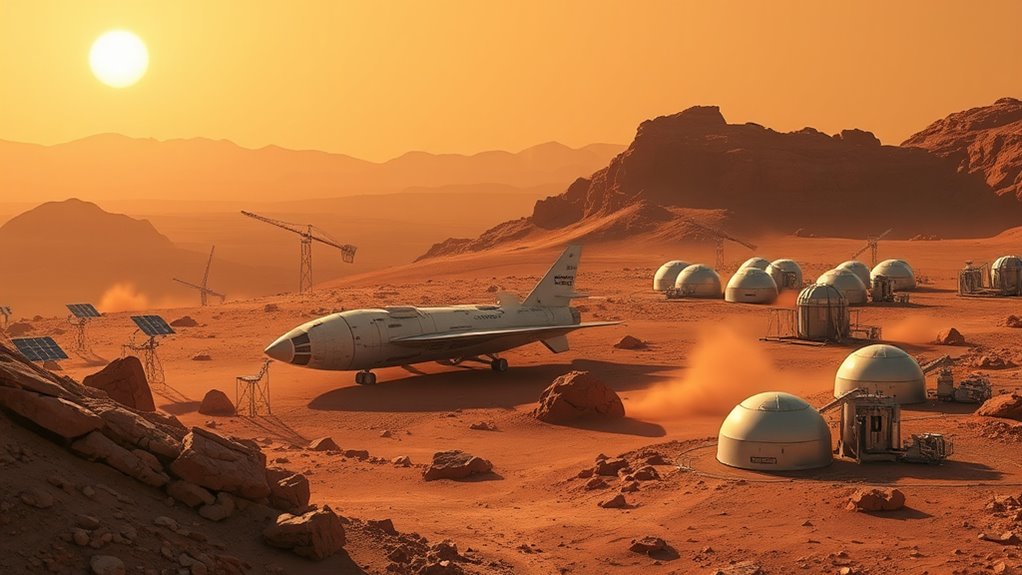
Have you ever wondered how future Mars missions will sustain themselves? In-situ resource utilization (ISRU) makes this possible by turning local materials into essentials like water, oxygen, and fuel. Instead of relying on supplies from Earth, you’ll see tech that harvests water from the Martian soil or atmosphere. You can also convert carbon dioxide in the atmosphere into oxygen for breathing and fuel for rockets. This approach drastically reduces payload weight and costs, making long-term missions feasible. Companies like SpaceX are developing systems that can process Martian resources on-site, allowing astronauts to stay longer and explore deeper. By making Mars self-sufficient, ISRU transforms it from a distant outpost into a sustainable colony, paving the way for future exploration and even potential colonization.
Satellite and Communication Advances for Deep Space
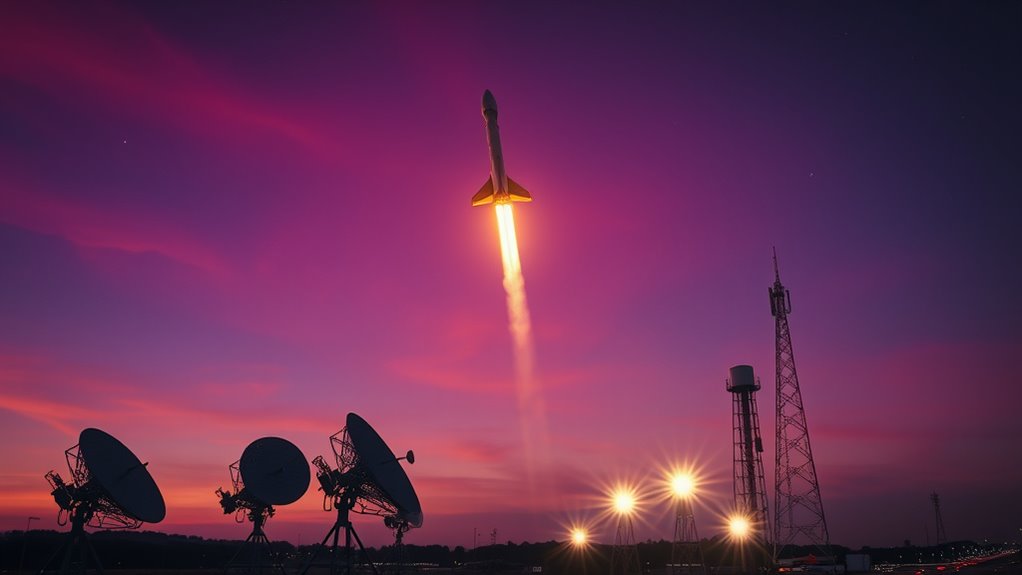
As humanity pushes further into deep space, satellites and communication systems play a crucial role in maintaining contact with explorers and robotic missions beyond Earth’s orbit. Advances in high-frequency radio technology and laser communication are drastically increasing data transmission speeds, reducing latency, and enabling real-time control. Deep space antennas, like NASA’s Deep Space Network, are evolving with larger dishes and more precise aiming to support distant spacecraft. These improvements allow for more reliable connections, even across millions of miles. Satellite constellations around Mars and other celestial bodies are also being developed to facilitate local communication networks. Together, these innovations ensure that mission teams stay connected, data flows smoothly, and operational challenges are addressed promptly, keeping humanity well-informed as we venture deeper into the cosmos.
Autonomous Navigation and Robotics in Space Exploration
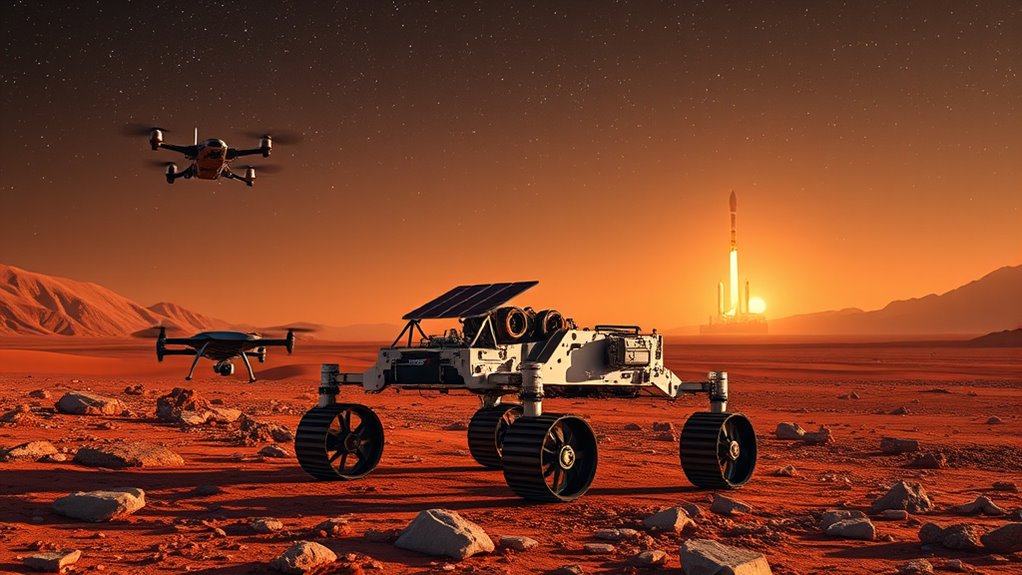
With communication systems becoming faster and more reliable, space explorers can now rely on autonomous navigation and robotics to operate more independently. These technologies allow spacecraft and rovers to make real-time decisions without waiting for instructions from Earth, saving valuable time during critical missions. Advanced sensors and AI enable robots to map terrain, identify obstacles, and adapt to unexpected conditions on the fly. For example, Mars rovers like Perseverance use autonomous driving systems to traverse difficult landscapes efficiently. Robotics also handle hazardous tasks, such as sample collection or equipment maintenance, reducing risks to human crews. This independence accelerates exploration, enhances safety, and expands our capabilities to explore distant planets and moons with fewer delays.
Fuel and Energy Storage Solutions for Long-Duration Missions
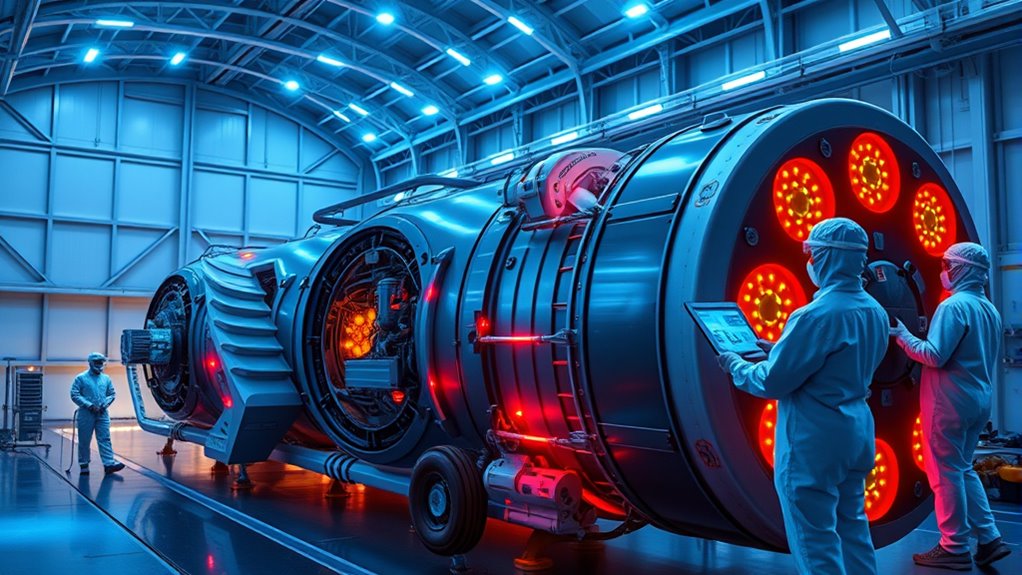
How can spacecraft sustain power during long-duration missions far from Earth? The answer lies in advanced fuel and energy storage solutions. First, high-capacity batteries, like lithium-ion or solid-state, store energy efficiently for continuous power. Second, solar panels, optimized for space, generate electricity from sunlight, even in deep space. Third, fuel cells combine stored hydrogen and oxygen to produce electricity on demand, providing reliable backup power. These systems work together to ensure your spacecraft remains operational during extended journeys. Innovations include lightweight, durable batteries and more efficient solar arrays that maximize energy capture. As missions grow longer, these solutions will become even more crucial, enabling sustained operations and supporting critical systems during the voyage to Mars and beyond.
Collaborations and Future Visions for Human Settlement on Mars
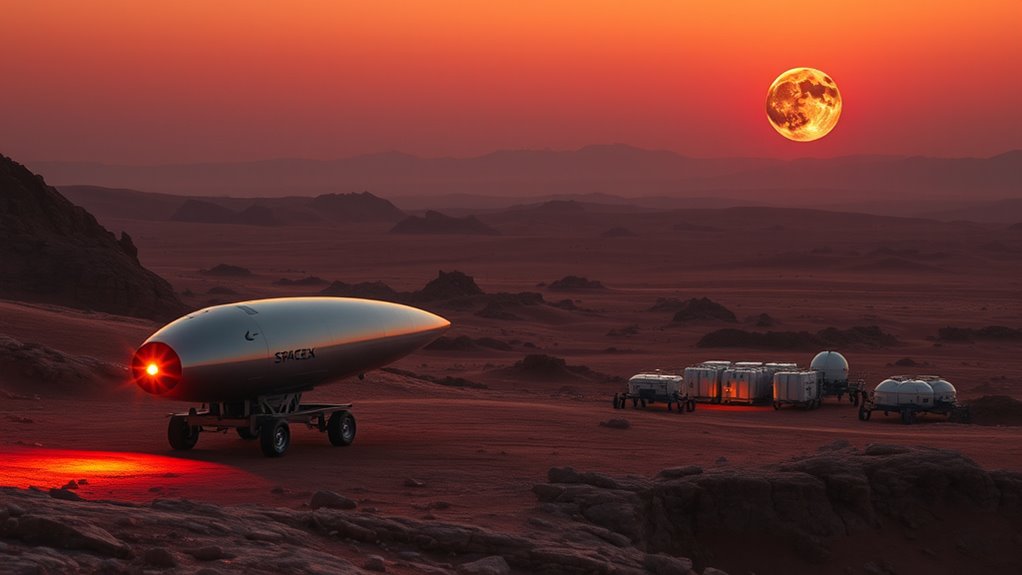
Achieving human settlement on Mars requires unprecedented international collaboration and innovative partnerships. You’ll see agencies like NASA, private companies such as SpaceX, and international space organizations working together to share knowledge, resources, and technology. These collaborations aim to develop life support systems, sustainable habitats, and efficient transportation methods. The future visions involve creating self-sustaining colonies that can produce food, water, and energy locally. You’ll also witness efforts to establish governance frameworks and safety protocols for long-term missions. These partnerships not only accelerate technological advancements but also spread the financial risk. By combining efforts, you’ll see a unified push toward making Mars livable, transforming science fiction into reality. The journey to human settlement on Mars depends on your support for these collaborative, forward-thinking initiatives.
Frequently Asked Questions
What Are the Biggest Technical Challenges in Achieving Sustainable Mars Colonization?
You face major challenges like developing reliable life support systems that can operate for years, creating sustainable habitats resistant to harsh conditions, and ensuring a constant supply of food, water, and oxygen. You also need advanced propulsion for efficient travel, radiation protection to shield inhabitants, and solutions for communication delays. Overcoming these obstacles requires innovative tech and careful planning, but with determination, you can make Mars colonization a reality.
How Do Space Agencies Plan to Address Psychological and Health Issues for Astronauts?
You’ll face psychological and health challenges during space missions, but agencies plan to tackle these by providing mental health support, virtual communication with loved ones, and tailored exercise routines. They also develop advanced medical kits and monitor astronauts closely to catch health issues early. Training prepares you for isolation and stress, while onboard recreational activities help maintain morale. These strategies aim to keep you healthy and mentally resilient throughout your mission.
What Legal and Ethical Considerations Surround Extraterrestrial Resource Utilization?
Legal and ethical limits lie in lunar landings and lunar labors. You must consider cosmic constraints, ensuring that space isn’t exploited, but shared. Property rights, environmental ethics, and international treaties shape your decisions. Responsible resource use demands respecting extraterrestrial environments, avoiding contamination, and fostering fairness among nations. You’re tasked with balancing innovation with integrity, ensuring that space’s vast resources benefit humanity without crossing ethical boundaries or creating conflicts.
How Will International Cooperation Influence Mars Exploration and Settlement Efforts?
International cooperation will be vital for your Mars exploration and settlement efforts. It fosters shared expertise, resources, and technology, helping you overcome challenges more efficiently. Working with multiple countries ensures you abide by global agreements, avoid conflicts, and promote peaceful exploration. By collaborating, you benefit from diverse perspectives, enhance safety, and accelerate progress, making your journey to Mars more sustainable and successful.
What Innovations Are Needed to Ensure Long-Term Human Safety on Mars?
Think of Mars as uncharted territory, much like early explorers faced with unknown seas. To keep you safe long-term, you’ll need innovations like advanced life support systems that recycle water and air, radiation shielding to protect against cosmic rays, and adaptable habitats that can withstand harsh conditions. Developing autonomous medical systems and robust energy solutions will be essential, ensuring you can survive and thrive far from Earth.
Conclusion
You see how innovation drives us forward, how reusable rockets cut costs and expand possibilities, how advanced systems propel us toward Mars, how life support and habitats sustain us, how in-situ resource utilization makes us self-reliant, how communication and robotics enhance our reach, and how collaborations shape our future. Together, these breakthroughs fuel our journey, inspire our dreams, and bring us closer to making humanity a multiplanetary species. The future of space exploration starts now, and you are part of it.