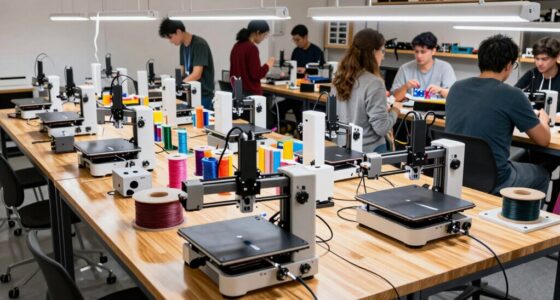

Enclosures matter in 3D printing because they create a stable environment that boosts your print quality and safety. By trapping heat, they help prevent warping, cracking, and layer separation, especially with sensitive materials like ABS or nylon. They also reduce fumes, noise, and temperature fluctuations, making your workspace safer and more reliable. Choosing the right enclosure enhances your results and efficiency. Keep exploring to discover how enclosure features can take your printing to the next level.

Get the latest gadgets delivered free — and shop member deals
- Fast, free delivery on millions of items
- Access to Prime Big Deal Days deals on October 6–7
- Prime Video, Amazon Music and more included
Key Takeaways
- Enclosures create a controlled environment, reducing external influences that can affect print quality.
- They help maintain consistent internal temperatures, preventing warping and improving layer adhesion.
- Proper enclosures improve safety by managing fumes and volatile materials during printing.
- Transparent enclosures allow monitoring without disrupting temperature stability.
- They extend filament options by providing a stable environment for sensitive or high-temperature materials.
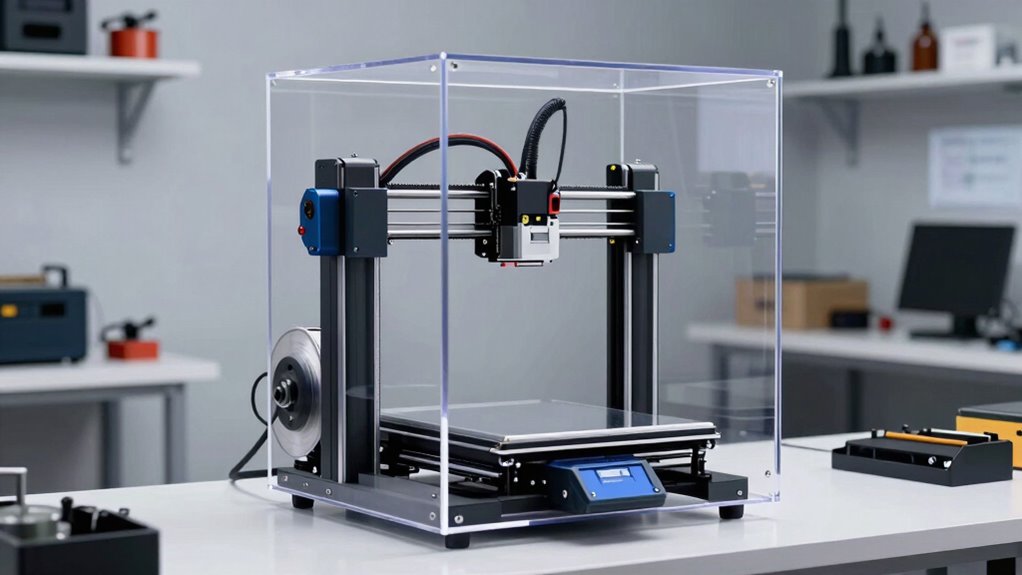
Enclosures in 3D printing have become crucial for achieving high-quality, reliable prints, especially when working with temperature-sensitive materials. They create a controlled environment that minimizes external influences, guaranteeing your prints stay consistent and accurate. When you choose to add an enclosure, you’re making a strategic decision to improve your overall printing process. Material selection for the enclosure plays an essential role in its effectiveness. You want materials that can withstand high temperatures, resist warping, and prevent heat loss. Common options include acrylic, polycarbonate, or even metal for industrial setups. The right material helps maintain a stable temperature inside, reducing the risk of warping, cracking, or layer separation. Additionally, the enclosure can help contain heat loss, further stabilizing the internal environment. Temperature control is the core benefit of using an enclosure. When your 3D printer operates in an open environment, external air currents can cause fluctuations in temperature, which often lead to print defects. An enclosure traps heat around your print, allowing for more precise temperature regulation. This stability is especially critical when printing with materials like ABS, nylon, or other filament types sensitive to temperature variations. With a well-designed enclosure, you can set a target temperature and keep it steady, even if the room’s temperature fluctuates. Some enclosures come with built-in fans, heaters, or temperature sensors, giving you greater control over the environment. This level of control reduces warping, improves layer adhesion, and results in smoother finishes. Incorporating temperature regulation technology within the enclosure can further enhance your print quality by maintaining consistent conditions throughout the printing process. Proper airflow management inside the enclosure helps prevent the buildup of fumes and maintains a safe environment during printing, which is especially important for handling volatile materials. Considering material properties when designing your enclosure ensures optimal performance and durability. Thinking about material selection and temperature control together highlights how enclosures optimize your printing results. For example, a transparent acrylic enclosure lets you monitor your print without opening it, maintaining temperature stability. Meanwhile, adding a heater or fan to the enclosure can fine-tune the internal climate, further reducing the risk of print failures. As you become more experienced, you’ll notice that an enclosure not only improves print quality but also extends your filament options. Some materials require higher or more consistent temperatures to print correctly, and the enclosure provides the stable environment needed for successful results. In the end, investing in an enclosure isn’t just about keeping dust out or reducing noise—it’s about controlling the environment your printer works in. By carefully selecting the right materials for the enclosure and implementing effective temperature control measures, you set yourself up for more reliable, professional-quality prints. This combination ensures your 3D printing process is efficient, repeatable, and capable of handling even the most demanding materials.
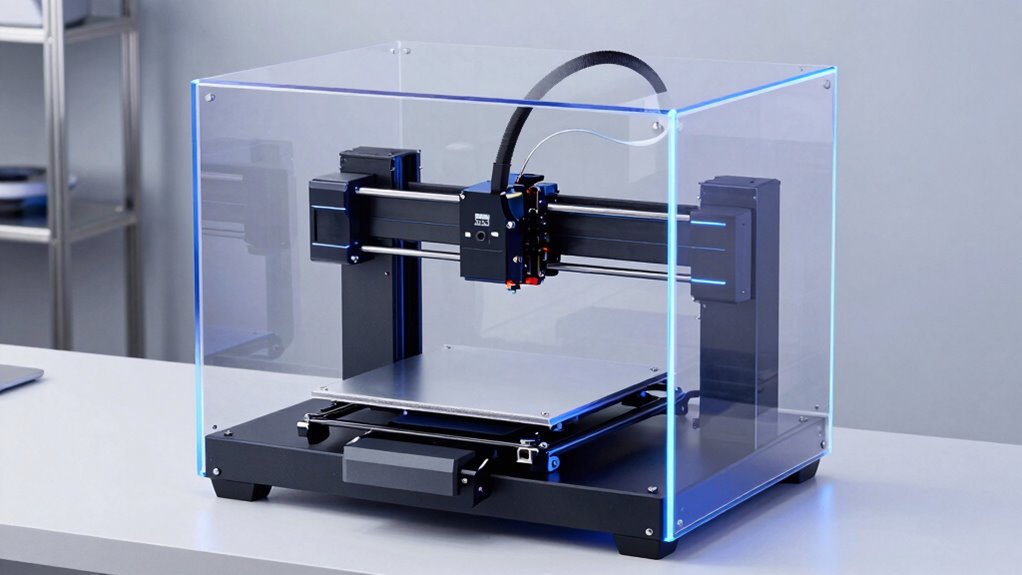
3D printer enclosure with temperature control
As an affiliate, we earn on qualifying purchases.
As an affiliate, we earn on qualifying purchases.
Frequently Asked Questions
How Do Enclosures Affect Print Speed?
Enclosures can slow down print speed because they help maintain temperature stability, reducing warping and layer adhesion issues. They also improve airflow management, which prevents drafts and temperature fluctuations. While this might seem like a drawback, the more consistent environment allows you to print at higher quality with fewer errors. So, even if it slightly affects speed, an enclosure ultimately helps you achieve better, more reliable prints.
Can Enclosures Be Used for All 3D Printer Models?
Enclosures can be used for many 3D printer models, but not all. Like a suit tailored to fit, an enclosure suits printers with an open frame design better, providing enclosed safety and temperature stability. If your printer has a closed or specialized structure, an enclosure might not be compatible or could require modifications. Always check your model’s specifications before investing in an enclosure to guarantee proper fit and safety.
What Materials Are Best for DIY Enclosures?
For DIY enclosures, you should choose materials that balance durability and aesthetic appeal. Acrylic and polycarbonate are excellent because they’re strong, durable, and offer clear visibility, so you can monitor your print easily. Wood or MDF can be good for a more aesthetic look and are easy to customize, but they may require additional insulation. Consider your environment and needs to select the best material for your enclosure.
Do Enclosures Improve Print Quality With Specific Filaments?
Of course, enclosures magically transform your print quality with specific filaments—unless they don’t. Filament compatibility hinges on enclosure design, ensuring proper temperature control and airflow. If your enclosure’s a poorly ventilated box, don’t bother; it’ll only frustrate your prints. But a well-crafted enclosure keeps heat steady, reduces warping, and makes even the trickiest filaments behave. So, yes, a good enclosure can seriously elevate your print game—if it’s designed right.
How Do Enclosures Impact Energy Consumption?
Enclosures reduce energy consumption by providing thermal insulation, which helps maintain consistent temperature stability inside your 3D printer. By minimizing heat loss, they allow your heater to work less, using less power overall. This not only lowers energy costs but also guarantees more reliable prints. Additionally, stable temperatures prevent warping and improve print quality, making your 3D printing process more efficient and environmentally friendly.
As an affiliate, we earn on qualifying purchases.
Conclusion
Enclosures in 3D printing aren’t just optional—they remarkably boost your success rate. By controlling temperature and reducing drafts, they improve print quality and safety. Did you know that printers with enclosures experience up to 40% fewer failed prints? That’s a huge saving of time and material. So, investing in an enclosure isn’t just about convenience; it’s about mastering your craft and ensuring consistent, high-quality results every time you press “print.”
3D printer enclosure with built-in fan and heater
As an affiliate, we earn on qualifying purchases.
As an affiliate, we earn on qualifying purchases.
transparent 3D printer enclosure for ABS
As an affiliate, we earn on qualifying purchases.
As an affiliate, we earn on qualifying purchases.
Evergreen bestsellers Picks
bestsellers
As an affiliate, we earn on qualifying purchases.