
TL;DR

Get the latest gadgets delivered free with Prime
- Fast, free delivery on millions of items
- Prime Video, Amazon Music and more included
- Member-only deals all year
ScabShack has published a nostalgic essay arguing that modern game systems should bring back the distinctive save-file screens associated with sixth-generation consoles. The piece recalls the Dreamcast, GameCube, PlayStation 2 and original Xbox, but it is commentary, not an announcement of a platform change.
ScabShack has published an essay arguing that modern game systems should bring back the distinctive save-file screens of the Dreamcast, GameCube, PlayStation 2 and original Xbox. The piece is a nostalgic opinion article, not a report of a console maker changing its interface; its case is that game-specific icons and menus gave routine save management a personality that today’s cover-art displays often lack.
The essay, titled “Bring Back the Cool Save File Screens,” describes how players on several sixth-generation consoles browsed memory cards or storage menus to find and manage game saves. Rather than showing only a generic list, those menus used small pictures, figures or models associated with the games. The writer says that deleting or copying a save could mean encountering a miniature piece of the game itself.
Its examples are specific to each platform. The Dreamcast placed save icons against a background of water and clouds, while the GameCube displayed floating cubes above a dark grid. On the PS2, saves appeared as 3D models or other game-related images; the essay points to Dragon Quest 8’s slime, Sonic characters and God of War’s Blades of Chaos. The original Xbox is recalled for its green, honeycomb-like interface and circular save icons.
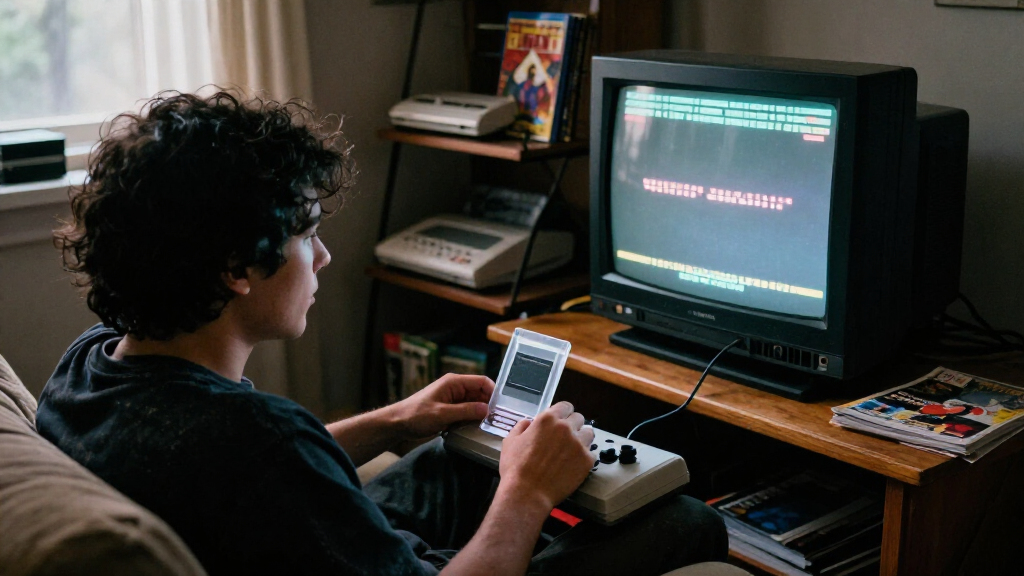
The article also highlights the Dreamcast’s VMU, a memory-card device with its own screen. According to the essay, some games used it to show information such as a map or health, and titles including Sonic Adventure 2 offered downloadable mini-games connected to Chao. These recollections support the author’s broader point about the era’s hardware and interface design, but the piece does not provide a proposal from a console manufacturer or evidence of a planned return.
The argument centers on a modest but frequent part of playing games: finding, copying and deleting saves. A save menu is not the game itself, yet the essay suggests that platform interfaces once extended a title’s identity beyond play. A recognizable character or object could make a storage screen feel connected to a game rather than like an ordinary file manager.
That distinction matters to players who value interface design and platform personality, as well as to developers deciding how games appear across system menus. The essay does not show that players broadly want such a feature or that modern consoles could implement it in the same way. It offers a personal case for more visual specificity, at a time when, in the author’s account, save listings commonly use game cover art.
The piece also ties the appeal to physical memory cards and the limits of older hardware. Managing separate cards made the storage interface visible as part of console use. Modern systems handle saves differently, so any revival would be a design choice rather than a simple return to the old technical setup.
Products Worth Considering

Logitech MX Master 4 for Mac, Ergonomic Bluetooth Mouse with Haptic Feedback, Ultra-Fast Scrolling, USB-C Charging, for MacOS, iPadOS, Windo

Samsung 27-Inch Odyssey QD-OLED G8 4K 240Hz Gaming Monitor

DJI Osmo Mobile 7P with Mic Mini TX (Infinity Black) Gimbal Stabilizer
As an affiliate, we earn on qualifying purchases.
How Four Consoles Styled Saves
The essay looks back at consoles commonly grouped as the sixth generation, including Sega’s Dreamcast, Nintendo’s GameCube, Sony’s PlayStation 2 and Microsoft’s original Xbox. Their approaches differed: the Dreamcast and GameCube used animated or spatial backgrounds; the PS2 emphasized three-dimensional save representations; and the Xbox had a green visual language that extended into its storage interface.
The author contrasts those designs with current menus, which the essay characterizes as showing game cover art for saves. That comparison is the writer’s observation, not a platform-by-platform survey. The source does not document how every current system displays save data, or assess differences among consoles and software versions.
For the essay’s argument, the VMU is more than a visual example. Its small display could function alongside a game, and some software used it for supplementary activities. The author recalls raising and trading Chao through Sonic Adventure 2’s VMU features, and a creature-raising activity associated with Zombie Revenge. These examples illustrate the writer’s affection for hardware that made saving and managing game data feel more tangible.
““But sometimes I wish we still had these small treasures buried inside of our memory cards or devices.””
— Aaron, the ScabShack essay’s author
No Console Change Is Announced
No new product, policy or software update is reported in the source material. It does not identify a console maker, developer or platform holder planning to restore game-specific save icons, nor does it cite audience research showing how widely players share the author’s preference.
The essay also does not compare current save interfaces in detail or discuss technical requirements for adding bespoke icons across different platforms. Its examples and judgments are presented as personal recollection and opinion. Whether manufacturers will respond to this kind of appeal remains unknown.
Whether Designers Revive Save Art
There is no announced milestone or follow-up product for readers to track. The immediate development is the publication of ScabShack’s essay; any broader response would depend on discussion among players and decisions by console makers or game developers.
A future system could choose to offer more distinctive save artwork or animations, but the source makes no claim that one is in development. Until a company announces such a feature, the call to bring back these screens remains an editorial appeal, grounded in the author’s memories of sixth-generation consoles.
Key Questions
Did a console maker announce new save-file screens?
No. The source is a ScabShack essay expressing a design preference; it reports no announced change by a console maker.
Which consoles does the essay discuss?
It recalls the Dreamcast, GameCube, PlayStation 2 and original Xbox, focusing on how each represented saves in its system menus.
What made the older save screens distinctive?
The essay describes game-related icons, characters and 3D models, set within console-specific menu designs. The author argues that these details made save management more visually connected to the games.
Was the Dreamcast VMU only a memory card?
Not according to the essay. It says the VMU had its own screen and could show game information or run downloadable mini-games for certain titles.
Is there evidence that players broadly want this feature?
The source provides the author’s personal view and memories, not polling or other evidence of wider player demand. Broader interest is unclear.
Source: hn