For most homes with pets, I’d start with the Shark AV2501AE: its LiDAR navigation and XL HEPA self-empty base make it a strong all-around choice for regular fur pickup with less hands-on emptying. The Roborock Q7 M5+ stands out for buyers who want a self-emptying dock and app-based navigation, while the iRobot Roomba Max 715 Pet is aimed squarely at pet owners who want an AutoEmpty dock. The main tradeoffs are between hands-off maintenance, floor coverage, and the extra complexity of mop combos. A robot vacuum can help manage everyday shedding, but it does not replace occasional deep cleaning or grooming. Read on for the full comparison and advice on choosing for your floors, pets, and routine.

Get the latest gadgets delivered free with Prime
- Fast, free delivery on millions of items
- Prime Video, Amazon Music and more included
- Member-only deals all year
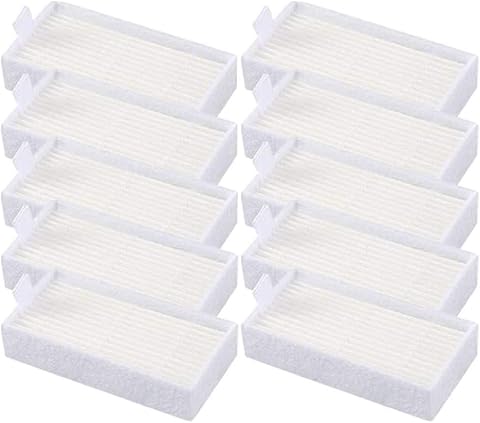
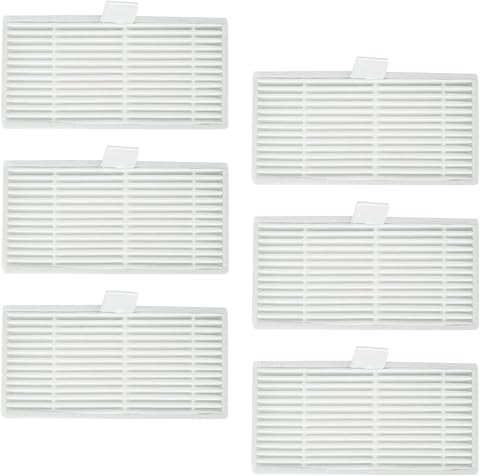
Complete the kit

Key Takeaways
- Navigation and bin capacity separate the leading picks. The Shark AV2501AE pairs LiDAR mapping with an XL self-empty base, while simpler models such as the ILIFE V2 leave more of the planning and emptying to you.
- A self-empty dock matters most when shedding is frequent. The Shark AV2501AE, Shark AI Ultra, Roborock Q7 M5+, and Tikom L8000 Plus all include self-emptying setups, but dock capacity and design differ.
- Suction claims do not tell the whole pet-hair story. Brush design, hair-wrap maintenance, floor type, and repeated coverage can matter as much as a high Pa figure.
- Mop combos suit mixed hard floors, not every pet household. Models such as the eufy E25 add wet cleaning, but owners should weigh mop upkeep and pet-related messes against the benefit.
- The lineup has distinct complexity levels. Basic vacuum-only options like the ILIFE V2 are simpler to operate, while LiDAR mapping, app controls, and auto-empty docks offer more convenience with more setup and maintenance.
| Shark Navigator Robot Vacuum with 30-Day Self-Empty Base, White (AV2110S) |  | Best for Tangle-Prone Pet Hair | Navigation: LiDAR SmartPath | Recommended surfaces: Carpet and hard floors | Self-empty base: Bagless; holds up to 30 days of debris | VIEW LATEST PRICE | See Our Full Breakdown |
| Azomabox Robot Vacuum and Mop with 8000Pa Suction and Self-Emptying Station |  | Best for Long Hands-Free Runs | Suction power: 8000Pa | Navigation: LiDAR 2.0 | Self-empty station: 2.6L; claimed hands-free cleaning up to 70 days | VIEW LATEST PRICE | See Our Full Breakdown |
| Shark AV2501AE AI Robot Vacuum with XL HEPA Self-Empty Base |  | Best for Pet Hair and Allergens | Navigation: 360° LiDAR with Matrix Clean Navigation | Filtration: HEPA; stated to capture 99.97% of allergens | Self-empty capacity: Bagless base; up to 60 days of debris | VIEW LATEST PRICE | See Our Full Breakdown |
| ROPVACNIC S1 Robot Vacuum and Mop Combo |  | Best for Tangle-Averse Hard-Floor Homes | Suction power: 5200Pa | Recommended surfaces: Hardwood floors and low-pile carpets | Hair collection: Brush-free design with dual side brushes | VIEW LATEST PRICE | See Our Full Breakdown |
| E8S Robot Vacuum and Mop with 6500Pa Suction and Gyro Navigation |  | Best for Adjustable Cleaning on a Long Runtime | Maximum suction: Up to 6500Pa | Suction modes: Eco 800Pa, Standard 1600Pa, Strong 3000Pa, Max 6500Pa | Runtime: Up to 200 minutes in Eco mode | VIEW LATEST PRICE | See Our Full Breakdown |
| Airzeen Q20 Ultra Bagless Robot Vacuum and Mop |  | Best Bagless Self-Emptying Pick | Maximum suction: 6,000 Pa | Navigation: LiDAR mapping; up to 5 maps | Cleaning functions: Vacuum, sweep, mop, and self-empty | VIEW LATEST PRICE | See Our Full Breakdown |
| eufy E25 Robot Vacuum and Mop Combo with HydroJet Roller Mop |  | Best Hands-Off Mop Care | Maximum suction: 20,000 Pa | Mop system: HydroJet roller; refreshed twice per second | Station functions: Dust emptying, mop washing and drying, water refilling | VIEW LATEST PRICE | See Our Full Breakdown |
| Shark AI Ultra Robot Vacuum with 60-Day Self-Emptying Base (AV2511AE) |  | Best for Pet Hair on Mixed Floors | Model: AV2511AE | Navigation: 360° LiDAR with object detection and home mapping | Runtime: Up to 90 minutes | VIEW LATEST PRICE | See Our Full Breakdown |
| Roborock Robot Vacuum and Mop with LiDAR Navigation and 10,000 Pa Suction |  | Best for Mapped Multiroom Cleaning | Suction power: 10,000 Pa | Navigation: LiDAR | Dock dust bag: 2.7 L | VIEW LATEST PRICE | See Our Full Breakdown |
| Tikom G8000 Max Robot Vacuum and Mop Combo |  | Best Simple Long-Runtime Pick | Suction power: 5,000 Pa | Dustbin capacity: 450 ml | Water tank capacity: 300 ml | VIEW LATEST PRICE | See Our Full Breakdown |
| Roborock Q7 M5+ Robot Vacuum and Mop with Self-Emptying Dock |  | Best for High-Suction Hair Pickup | Suction power: 10,000 Pa | Navigation: PreciSense LiDAR | Dust bag capacity: 2.7 liters | VIEW LATEST PRICE | See Our Full Breakdown |
| ILIFE V2 Robot Vacuum Cleaner |  | Best Simple Pick for Hard Floors | Dimensions: 12.2 × 12.2 × 2.99 inches | Weight: 3.21 kg | Dustbin capacity: 300 ml | VIEW LATEST PRICE | See Our Full Breakdown |
| Tikom L8000 Plus Robot Vacuum and Mop with Self-Emptying Base |  | Best for Multi-Floor Homes | Maximum suction: 6,000 Pa | Navigation: 360° LiDAR | Saved floor maps: Up to 5 | VIEW LATEST PRICE | See Our Full Breakdown |
| UMMUND T13S Robot Vacuum and Mop Combo, 8000 Pa |  | Best for Flexible Controls | Maximum suction power: 8,000 Pa | Battery capacity: 2,600 mAh | Runtime: Up to 160 minutes in quiet mode; 100 minutes in standard mode; 70 minutes in maximum mode | VIEW LATEST PRICE | See Our Full Breakdown |
| iRobot Roomba Max 715 Pet Robot Vacuum with AutoEmpty Dock |  | Best Premium Pick for Pet Hair | Suction power: 30,000 Pa | Brushes: Dual anti-tangle rubber brushes and edge-sweeping brush | Hands-free operation: Up to 90 days | VIEW LATEST PRICE | See Our Full Breakdown |
| robot vacuums for pet hair | Navigation | Controls |
|---|---|---|
| Shark Navigator Robot Vacuum w | LiDAR SmartPath | App control; Alexa and Google Voice compatibility |
| Azomabox Robot Vacuum and Mop | LiDAR 2.0 | App, Alexa, Google Assistant, buttons, and voice control |
| Shark AV2501AE AI Robot Vacuum | 360° LiDAR with Matrix Clean Navigation | App and voice control; compatible with Amazon Echo and Google Home |
| ROPVACNIC S1 Robot Vacuum and | — | App, remote, touchpad, and voice |
| E8S Robot Vacuum and Mop with | Gyro inertial navigation | — |
| Airzeen Q20 Ultra Bagless Robo | LiDAR mapping; up to 5 maps | App, button, Alexa, and Google Assistant |
| eufy E25 Robot Vacuum and Mop | — | — |
| Shark AI Ultra Robot Vacuum wi | 360° LiDAR with object detection and home mapping | SharkClean app, Amazon Alexa, and Google Assistant |
| Roborock Robot Vacuum and Mop | LiDAR | — |
| Tikom G8000 Max Robot Vacuum a | — | App, remote, voice, and button |
| Roborock Q7 M5+ Robot Vacuum a | PreciSense LiDAR | — |
| ILIFE V2 Robot Vacuum Cleaner | — | Remote control and one-touch button |
| Tikom L8000 Plus Robot Vacuum | 360° LiDAR | — |
| UMMUND T13S Robot Vacuum and M | — | Tuya Smart app, remote, buttons, and voice control |
| iRobot Roomba Max 715 Pet Robo | ClearView Pro LiDAR with 3D mapping | — |
More Details on Our Top Picks
Shark Navigator Robot Vacuum with 30-Day Self-Empty Base, White (AV2110S)
The Navigator is a strong fit for homes where shedding hair wraps around ordinary brushrolls: its self-cleaning, anti-hair-wrap brushroll is built to reduce that maintenance. LiDAR SmartPath maps rooms and cleans in orderly rows, which gives it a more systematic approach than the gyro-guided E8S. Its bagless base can hold up to 30 days of debris, so daily pet-hair pickup does not mean daily bin emptying. The tradeoff is less storage than the AV2501AE’s 60-day base, and the 0.21-quart onboard bin is small if debris needs to be collected before returning to the dock. I’d choose this Shark for routine hair control and mapped cleaning, but not when longer intervals between base emptying or stronger allergen filtration are the priority.
Pros:- Self-cleaning anti-hair-wrap brushroll is designed to reduce hair tangles.
- LiDAR SmartPath cleans rooms in orderly rows.
- Bagless base holds up to 30 days of debris.
- App supports schedules, targeted cleaning, no-go zones, and recharge-and-resume.
Cons:- The 0.21-quart onboard dustbin is small when debris must be collected before docking.
- Its stated base capacity is shorter than the AV2501AE’s 60-day capacity.
- Voice control is limited to Amazon Alexa and Google Voice.
Best for: Pet owners with shedding dogs or cats who want mapped, scheduled cleaning and a brushroll designed to resist hair tangles.
Not ideal for: Households that want HEPA filtration or the longest possible interval between emptying the base; the AV2501AE offers a larger stated capacity and HEPA filtration.
- Navigation:LiDAR SmartPath
- Recommended surfaces:Carpet and hard floors
- Self-empty base:Bagless; holds up to 30 days of debris
- Brushroll:Self-cleaning with anti-hair wrap
- Battery life:120 minutes
- Dustbin capacity:0.21 quarts
- Controls:App control; Alexa and Google Voice compatibility
Our verdict“Choose the Navigator for mapped daily pet-hair pickup with a tangle-conscious brushroll, but pick the AV2501AE if HEPA filtration and longer base capacity matter more.”
Azomabox Robot Vacuum and Mop with 8000Pa Suction and Self-Emptying Station
The Azomabox is the strongest choice here for owners who want pet-hair pickup paired with less frequent bin maintenance: its 2.6L self-emptying station is claimed to support up to 70 days of hands-free cleaning. 8000Pa suction and LiDAR mapping give it a more capable, more automated profile than the ROPVACNIC S1, which has lower stated suction and no listed self-emptying station. It can also mop sealed hard floors while vacuuming, with three water-flow settings for basic control over moisture. That combination does not make it a specialist carpet cleaner, and the long hands-free estimate will vary with how much hair and debris a household produces. I’d shortlist it for busy, mixed-floor homes, but skip it if mopping untreated floors or relying on a fixed 70-day interval is the plan.
Pros:- 8000Pa stated suction is suited to collecting everyday pet hair and debris.
- 2.6L self-emptying station is claimed to support up to 70 days of hands-free cleaning.
- LiDAR 2.0 supports mapped cleaning and no-go zones.
- Vacuuming and mopping can run together, with three adjustable water-flow levels.
Cons:- Mopping is intended for sealed hard floors, limiting where the water tank can be used.
- The 70-day hands-free claim may be shorter in homes with heavy shedding.
- A vacuum-and-mop combo is less targeted than a pet-hair-only setup for carpet-heavy homes.
Best for: Busy pet-owning households with sealed hard floors and mixed flooring that want strong stated suction, mapping, mopping, and fewer trips to empty the station.
Not ideal for: Buyers who need a verified long interval regardless of shedding, or who want to mop unsealed floors; the mopping system is intended for sealed hard floors and its 70-day claim depends on use.
- Suction power:8000Pa
- Navigation:LiDAR 2.0
- Self-empty station:2.6L; claimed hands-free cleaning up to 70 days
- Runtime:180 minutes
- Water tank:270ml
- Water flow:Three adjustable levels
- Controls:App, Alexa, Google Assistant, buttons, and voice control
- Map storage:Up to 5 maps
Our verdict“Pick the Azomabox for mapped pet-hair cleaning and reduced bin maintenance in a mixed-floor home, provided its mopping stays on sealed hard surfaces.”
Shark AV2501AE AI Robot Vacuum with XL HEPA Self-Empty Base
For homes where pet hair and airborne allergens are both concerns, the AV2501AE has the clearest advantage in this group: its HEPA filtration is stated to capture 99.97% of allergens, and its bagless base holds up to 60 days of debris. 360° LiDAR with Matrix Clean Navigation maps rooms and directs systematic passes across carpet and hard floors. Compared with the Navigator, it doubles the stated base capacity and adds HEPA filtration, making it the better match for longer periods between emptying and allergy-conscious households. The tradeoffs are a single listed power level, which offers no stated suction adjustment, and a narrow 5.67-inch cleaning path that may mean more passes across open areas. I’d favor it over the Navigator when filtration and base capacity lead the decision, not when adjustable cleaning is essential.
Pros:- HEPA filtration is stated to capture 99.97% of allergens.
- Bagless self-empty base holds up to 60 days of debris.
- 360° LiDAR and Matrix Clean Navigation support systematic mapped cleaning.
- Designed for both carpet and hard floors, with Alexa and Google Home compatibility.
Cons:- Only one power level is listed, limiting adjustment for different surfaces.
- The 5.67-inch cleaning path may require more passes across large areas.
- Its longer base capacity does not remove the need to maintain the robot and filter.
Best for: Pet owners who want a bagless self-emptying robot with stated HEPA allergen capture for homes with carpet and hard floors.
Not ideal for: Buyers who need multiple suction settings or want faster coverage across large open rooms; this model lists one power level and a 5.67-inch cleaning path.
- Navigation:360° LiDAR with Matrix Clean Navigation
- Filtration:HEPA; stated to capture 99.97% of allergens
- Self-empty capacity:Bagless base; up to 60 days of debris
- Recommended surfaces:Carpet and hard floors
- Battery life:120 minutes
- Cleaning path width:5.67 inches
- Power levels:1
- Controls:App and voice control; compatible with Amazon Echo and Google Home
Our verdict“Choose the AV2501AE if pet hair and allergen capture matter more than adjustable power or quick coverage of wide rooms.”
ROPVACNIC S1 Robot Vacuum and Mop Combo
The ROPVACNIC S1 takes a different route to pet-hair maintenance: its brush-free design and dual side brushes are intended to collect hair with less tangling, rather than relying on a self-cleaning roller like the Shark Navigator. It also vacuums and mops, with four-stage water adjustment for hard floors and three suction levels for changing cleaning needs. That makes it a flexible option for homes with shedding pets and mostly hard flooring, but its stated surface recommendation limits carpet use to low pile. Unlike the Azomabox, it has no listed self-emptying station, so owners should expect more direct dustbin maintenance. I’d choose it for a simple vacuum-and-mop routine on hard floors, not for deep carpet coverage or households seeking long hands-free intervals.
Pros:- Brush-free design is intended to reduce pet-hair tangles.
- Combines vacuuming with adjustable mopping for hard floors.
- Three suction levels allow some adjustment to cleaning needs.
- Supports app, remote, touchpad, and voice control.
Cons:- Recommended for low-pile carpets, limiting use in carpet-heavy homes.
- No self-emptying station is listed, unlike the Azomabox and Shark options.
- The product data does not provide a dustbin capacity.
Best for: Pet owners with mostly hardwood or other hard floors who want a brush-free vacuum-and-mop robot and several ways to control it.
Not ideal for: Homes with medium- or high-pile carpet, or owners who want a self-emptying dock; its carpet recommendation is limited to low pile and no self-emptying station is listed.
- Suction power:5200Pa
- Recommended surfaces:Hardwood floors and low-pile carpets
- Hair collection:Brush-free design with dual side brushes
- Suction levels:3
- Water adjustment:Four-stage
- Battery life:120 minutes
- Controls:App, remote, touchpad, and voice
- Voice compatibility:Amazon Echo and Google Home
Our verdict“Pick the ROPVACNIC S1 for tangle-conscious pet-hair pickup and mopping on mostly hard floors, but skip it if you need broad carpet coverage or automatic bin emptying.”
E8S Robot Vacuum and Mop with 6500Pa Suction and Gyro Navigation
The E8S suits pet owners who prefer choosing the cleaning strength themselves: it offers four suction levels up to 6500Pa, from an 800Pa Eco setting to Max, plus up to 200 minutes of runtime in Eco mode. That flexibility is a contrast with the AV2501AE, which lists only one power level, but the E8S uses gyro inertial navigation rather than LiDAR. Its zigzag, spot, and edge modes provide useful basic coverage, though the product data does not describe room mapping or no-go zones. The 200-minute figure also applies to Eco mode, not necessarily stronger settings. Vacuuming and mopping share a 300ml dustbin and 200ml water tank setup, and app use requires 2.4GHz Wi-Fi. I’d pick it for adjustable everyday cleaning, not for mapped, hands-off pet-hair management.
Pros:- Four suction settings provide more adjustment than the AV2501AE’s single listed power level.
- Up to 200 minutes of runtime in Eco mode.
- Includes zigzag, spot, and edge cleaning modes.
- Vacuuming and mopping with app, remote, and Google Assistant voice control.
Cons:- Gyro navigation is less feature-rich than the LiDAR mapping listed for the Shark and Azomabox models.
- The 200-minute runtime applies to Eco mode; maximum suction will affect runtime.
- App operation requires 2.4GHz Wi-Fi.
Best for: Pet owners in smaller or straightforward homes with hard floors and low-pile carpet who want selectable suction, multiple control methods, and long Eco-mode runtime.
Not ideal for: Buyers who need LiDAR mapping, no-go zones, a self-emptying station, or dependable long runtime at maximum suction; those features are not listed for this model.
- Maximum suction:Up to 6500Pa
- Suction modes:Eco 800Pa, Standard 1600Pa, Strong 3000Pa, Max 6500Pa
- Runtime:Up to 200 minutes in Eco mode
- Navigation:Gyro inertial navigation
- Dustbin capacity:300ml
- Water tank capacity:200ml
- Cleaning modes:Zigzag, Spot, and Edge
- Wi-Fi compatibility:2.4GHz only
Our verdict“Choose the E8S for adjustable suction and long Eco-mode cleaning in a simple layout, but look to the LiDAR-equipped options for mapped pet-hair coverage.”
Airzeen Q20 Ultra Bagless Robot Vacuum and Mop
The Q20 Ultra makes the most sense for pet owners who want scheduled cleanup without buying replacement dust bags. Its reusable bagless dust cup sets it apart from the eufy E25 and Roborock model, both of which use dock dust bags. LiDAR mapping for up to five floors and recharge-and-resume support repeatable cleaning across a multi-level home, while the 6,000 Pa suction and low-pile carpet support suit homes with hard floors and modest carpet coverage. The tradeoff is that carpet cleaning takes extra attention: you must remove the mop holder first. Its 150-minute ECO runtime is longer than the Shark AI Ultra’s listed 90 minutes, but the Airzeen offers fewer pet-hair-specific brush details than Shark’s self-cleaning brushroll. Choose it for bag-free maintenance, not the most hands-off carpet routine.
Pros:- Reusable bagless dust cup avoids replacement dust bags.
- LiDAR mapping can save up to five floor plans.
- Up to 150 minutes in ECO mode with automatic recharge and resume.
- Combines vacuuming, sweeping, mopping, and self-emptying.
Cons:- Mop holder must be removed before carpet cleaning.
- Sponge filter and unspecified brush design offer fewer stated pet-hair details than the Shark AI Ultra.
- Connects only to 2.4 GHz Wi-Fi.
Best for: Pet owners with mostly hard floors or low-pile rugs who want mapped cleaning and a reusable, bagless self-emptying cup.
Not ideal for: Homes with substantial carpet coverage or anyone who wants to leave the mop attachment on between floor types.
- Maximum suction:6,000 Pa
- Navigation:LiDAR mapping; up to 5 maps
- Cleaning functions:Vacuum, sweep, mop, and self-empty
- Dust cup:Reusable, bagless
- Runtime:Up to 150 minutes in ECO mode
- Surfaces:Hard floors and low-pile carpet
- Controls:App, button, Alexa, and Google Assistant
- Wi-Fi:2.4 GHz
Our verdict“Choose the Q20 Ultra if you want bagless mapped cleaning for pet hair on hard floors and can manage its mop attachment around carpet.”
eufy E25 Robot Vacuum and Mop Combo with HydroJet Roller Mop
The E25 is the strongest fit here for pet owners who want the robot to handle mop upkeep as well as floor cleanup. Its all-in-one station empties dust, washes and dries the roller, and refills water; the HydroJet system refreshes the mop twice per second, reducing the chance of spreading collected grime across hard floors. For pet hair, anti-tangle brushes and 20,000 Pa suction give it a more hair-focused setup than the Airzeen Q20 Ultra, though the Q20’s reusable bagless cup avoids ongoing dust-bag use. The E25 also maps up to five floor plans and supports carpets, but its 10.8 mm mop lift may not clear every rug reliably. Its station and multi-step mop system add convenience at the cost of more equipment to accommodate, and its 2.4 GHz-only Wi-Fi limits network compatibility.
Pros:- 20,000 Pa maximum suction paired with anti-tangle brushes.
- Station automatically empties dust, washes and dries the mop, and refills water.
- HydroJet roller refreshes with clean water twice per second.
- Laser-guided mapping stores up to five floor plans.
Cons:- 2.4 GHz Wi-Fi only.
- The 10.8 mm mop lift may not clear thicker rugs.
- The all-in-one station takes more space and adds more components than the Airzeen Q20 Ultra’s bagless setup.
Best for: Pet households with mixed flooring that want strong hair pickup and a dock that washes, dries, and refills the mop automatically.
Not ideal for: Buyers who prefer a compact, simple vacuum-only setup, need broader Wi-Fi compatibility, or have rugs requiring more than 10.8 mm of mop clearance.
- Maximum suction:20,000 Pa
- Mop system:HydroJet roller; refreshed twice per second
- Station functions:Dust emptying, mop washing and drying, water refilling
- Dust bag capacity:3 L
- Mop drying:Hot air at 50°C
- Runtime:125 minutes
- Mapping:Laser-guided; stores up to 5 floor plans
- Mop lift and threshold climbing:10.8 mm mop lift; 21 mm threshold climbing
- Wi-Fi:2.4 GHz only
Our verdict“Pick the E25 if you want a high-suction pet-hair cleaner with unusually automated mop maintenance and have room for its station.”
Shark AI Ultra Robot Vacuum with 60-Day Self-Emptying Base (AV2511AE)
For homes where pet hair settles on both rugs and hard floors, the Shark AI Ultra puts the emphasis on vacuuming rather than adding a mop. Its self-cleaning brushroll is designed to help prevent hair wrap, a direct advantage for frequent shedding, and its bagless base holds up to 60 days of debris. That makes it a more pet-hair-specific choice than the mopping-focused eufy E25, while the E25 is better equipped for washing hard floors and automating mop care. Shark’s 360° LiDAR mapping, object detection, and precision grid pattern support planned whole-home coverage, with recharge-and-resume for larger spaces. The main compromise is its listed runtime of up to 90 minutes, shorter than the 150 minutes stated for the Airzeen Q20 Ultra and Tikom G8000 Max. It also lacks a mop, so dried paw marks need separate cleanup.
Pros:- Self-cleaning brushroll is designed to reduce hair wrap.
- Bagless base holds up to 60 days of dirt and debris.
- 360° LiDAR mapping includes object detection and home mapping.
- Recharge-and-resume supports cleaning beyond a single charge.
Cons:- Up to 90 minutes of runtime is shorter than the Airzeen Q20 Ultra and Tikom G8000 Max.
- No mopping function for paw prints or other hard-floor messes.
- Base dimensions are not provided, making placement planning harder.
Best for: Pet owners with carpet and hard floors who prioritize hair pickup, a tangle-reducing brushroll, and a bagless self-emptying base.
Not ideal for: Buyers who want one robot to vacuum and mop, or need a longer listed runtime for large homes.
- Model:AV2511AE
- Navigation:360° LiDAR with object detection and home mapping
- Runtime:Up to 90 minutes
- Self-emptying capacity:Up to 60 days of dirt and debris
- Brushroll:Self-cleaning
- Cleaning pattern:Precision grid
- Controls:SharkClean app, Amazon Alexa, and Google Assistant
- Surfaces:Carpets and hard floors
Our verdict“Choose the Shark AI Ultra if pet hair on carpets and hard floors matters more than having a built-in mop.”
This Roborock suits pet owners who want strong vacuuming plus a restrained, adjustable mop routine across several rooms. LiDAR navigation and 10,000 Pa suction give it a more capable mapped-cleaning profile than the Tikom G8000 Max, whose 5,000 Pa suction is paired with basic anti-collision and anti-fall sensors. Its dock uses a 2.7 L dust bag advertised for 7–9 weeks between changes, and JawScrapers and an anti-tangle side brush address hair maintenance. Compared with the Shark AI Ultra, Roborock adds mopping and three water-flow settings, but the Shark’s self-cleaning brushroll is the more clearly specified hair-wrap feature. The advertised time between bag changes will vary with shedding and cleaning frequency, and this model requires 2.4 GHz Wi-Fi. It fits buyers who want mapped coverage, not those seeking a fully hands-off mop-washing station like the eufy E25.
Pros:- 10,000 Pa suction for carpet and edge pickup.
- LiDAR supports mapped room coverage.
- JawScrapers main brush and anti-tangle side brush are designed to manage hair.
- Self-emptying dock has a 2.7 L bag and three water-flow settings.
Cons:- The 7–9 week interval between bag changes is advertised and will vary with use.
- 2.4 GHz Wi-Fi only.
- No automatic mop washing or drying station is specified, unlike the eufy E25.
Best for: Pet owners in multiroom homes who want LiDAR-guided vacuuming, adjustable mopping, and a dock that reduces frequent dust-bag changes.
Not ideal for: Buyers who need an included mop-washing station, broader Wi-Fi support, or a bagless dust dock.
- Suction power:10,000 Pa
- Navigation:LiDAR
- Dock dust bag:2.7 L
- Advertised time between emptying:7–9 weeks
- Cleaning modes:Vacuuming and mopping
- Water flow settings:3
- Brushes:JawScrapers main brush and anti-tangle side brush
- Connectivity:2.4 GHz Wi-Fi
Our verdict“Choose this Roborock for mapped pet-hair cleanup with adjustable mopping, but select the eufy E25 if automatic mop care is a priority.”
Tikom G8000 Max Robot Vacuum and Mop Combo
The G8000 Max is the straightforward choice for pet owners who want a long cleaning run and basic vacuum-and-mop coverage without a self-emptying dock. Its up to 150 minutes of runtime matches the Airzeen Q20 Ultra’s listed ECO runtime, but Tikom relies on anti-collision and anti-fall sensors rather than the Airzeen’s LiDAR maps. That makes the Tikom simpler on navigation, while the Q20 is the stronger fit for repeatable room-by-room cleaning. A 450 ml dustbin and 300 ml water tank let it vacuum and mop in one pass, and the 2.99-inch profile can reach under some low furniture. For pet hair, though, its 5,000 Pa suction is below the Roborock’s 10,000 Pa and no anti-tangle brush is specified. The lack of a self-emptying base also means more direct bin maintenance than Shark or Roborock.
Pros:- Up to 150 minutes of battery life with automatic recharging.
- Can vacuum and mop together using a 450 ml dustbin and 300 ml water tank.
- 2.99-inch profile fits under some furniture.
- App, remote, voice, and button controls with four cleaning modes.
Cons:- 5,000 Pa suction is lower than the Roborock’s 10,000 Pa and eufy E25’s 20,000 Pa.
- No self-emptying dock, so pet hair must be cleared from the robot’s bin.
- Anti-collision and anti-fall sensors are less map-focused than the Airzeen Q20 Ultra’s LiDAR navigation.
Best for: Pet owners in smaller or simpler homes who want a low-profile combo cleaner, long stated runtime, and multiple control options.
Not ideal for: Homes with heavy shedding, complex multiroom layouts, or buyers who want mapped navigation and automatic bin emptying.
- Suction power:5,000 Pa
- Dustbin capacity:450 ml
- Water tank capacity:300 ml
- Battery life:Up to 150 minutes
- Cleaning modes:Spot, edge, zig-zag, and manual
- Dimensions:12.6 × 12.6 × 3 in
- Controls:App, remote, voice, and button
- Sensors:Anti-collision and anti-fall
- Filter:HEPA
Our verdict“Pick the G8000 Max for a long-running, low-profile vacuum-and-mop combo in a simpler home, not for advanced hair management or hands-off emptying.”
Roborock Q7 M5+ Robot Vacuum and Mop with Self-Emptying Dock
The Roborock Q7 M5+ suits pet owners who want strong vacuuming plus a mop for hard-floor upkeep. Its 10,000 Pa suction gives it a higher stated ceiling than the Tikom L8000 Plus, while LiDAR navigation helps it follow mapped routes rather than rely on loose, wandering passes. The anti-tangle brush design and self-emptying dock also reduce routine hair cleanup, and adjustable water flow adds flexibility for sealed floors. Its 2.7-liter bag is advertised for up to 7–9 weeks, but actual intervals depend on shedding and cleaning frequency. Compared with the simpler ILIFE V2, this is a more automated, feature-rich choice; the tradeoff is greater reliance on app setup, including 2.4 GHz-only Wi-Fi.
Pros:- 10,000 Pa stated suction for picking up pet hair and debris
- Anti-tangle brush design and self-emptying dock reduce routine maintenance
- LiDAR navigation supports mapped cleaning paths
- Vacuuming and mopping with adjustable water flow
Cons:- Connects only to 2.4 GHz Wi-Fi
- Advertised 7–9-week bag interval varies with pet hair and cleaning frequency
- Mopping adds setup and upkeep beyond a vacuum-only model such as the ILIFE V2
Best for: Pet households with mixed hard floors and carpets that want mapped cleaning, strong stated suction, and less frequent bin emptying.
Not ideal for: Households whose Wi-Fi setup is 5 GHz-only, or buyers who want a vacuum-only robot with minimal app features.
- Suction power:10,000 Pa
- Navigation:PreciSense LiDAR
- Dust bag capacity:2.7 liters
- Advertised self-emptying interval:Up to 7–9 weeks
- Battery life:150 minutes
- Cleaning path width:12.8 inches
- Wi-Fi compatibility:2.4 GHz only
- Noise level:65 dB
Our verdict“Choose the Q7 M5+ if strong stated suction, mapped routes, and a self-emptying dock matter more than simple setup or vacuum-only operation.”
ILIFE V2 Robot Vacuum Cleaner
The ILIFE V2 is the straightforward choice for pet owners who mainly need help with hair, crumbs, and dirt on hard floors or low-pile carpet. Its tangle-free suction targets a common pet-hair nuisance, while the 2.99-inch profile can reach under some low furniture. Remote and one-touch controls avoid the Wi-Fi setup required by the Roborock Q7 M5+ and Tikom L8000 Plus, though that simplicity comes with fewer mapping and customization features. The V2 offers auto, spot, and edge modes, scheduled cleaning, and automatic return to its dock, but its 300 ml dustbin is modest for homes with heavy shedding. It also has only one power level, so it cannot adjust suction to suit different messes.
Pros:- Tangle-free suction is suited to pet hair
- Slim 2.99-inch profile can reach beneath low furniture
- Remote control and one-touch operation do not require Wi-Fi
- Scheduled cleaning and automatic return to the charging dock
Cons:- 300 ml dustbin needs more frequent emptying than self-emptying models such as the Tikom L8000 Plus
- One power level offers no suction adjustment
- Listed for hard floors and low-pile carpet rather than broader carpet needs
Best for: Pet owners in smaller homes with mostly hard floors or low-pile rugs who want scheduled cleaning without app or Wi-Fi setup.
Not ideal for: Homes with thick carpet, heavy daily shedding, or a need for mapped room-by-room cleaning and a self-emptying dock.
- Dimensions:12.2 × 12.2 × 2.99 inches
- Weight:3.21 kg
- Dustbin capacity:300 ml
- Runtime:Up to 120 minutes
- Cleaning modes:Auto, spot, and edge
- Controls:Remote control and one-touch button
- Filter type:Sponge
- Noise level:69 dB
Our verdict“Pick the V2 for uncomplicated, scheduled pet-hair cleanup on hard floors, but choose a mapped self-emptying model for heavier shedding or more varied flooring.”
Tikom L8000 Plus Robot Vacuum and Mop with Self-Emptying Base
The Tikom L8000 Plus is the most adaptable pick here for pet owners who need to manage several mapped floors. Its 360° LiDAR stores up to five floor maps, a practical advantage over the Roborock Q7 M5+, whose provided specs do not list multi-floor map storage. A 3-liter self-emptying bag, recharge-and-resume cleaning, and app or voice controls help cover larger homes with less hands-on attention. Its stated suction tops out at 6,000 Pa, below the Roborock’s 10,000 Pa and the iRobot Roomba Max 715’s 30,000 Pa, so buyers focused on maximum stated suction may prefer those alternatives. The mop also needs attention around carpets: remove its holder or set a no-go zone to prevent dampening them. The 150-minute figure applies only in gentle suction mode.
Pros:- LiDAR navigation stores maps for up to five floors
- 3-liter self-emptying dustbag reduces frequent bin handling
- App and voice controls support scheduling, room selection, and no-go zones
- Automatically recharges and resumes cleaning
Cons:- Maximum stated suction of 6,000 Pa is below the Roborock Q7 M5+ and iRobot Roomba Max 715
- Mop holder must be removed or carpet areas blocked to avoid wetting carpets
- Up to 150 minutes of runtime is specified only for gentle suction mode
Best for: Pet owners with multiple floors who want saved maps, self-emptying, and app-based room selection across a larger home.
Not ideal for: Buyers prioritizing the highest stated suction or a mop setup that can pass near carpet without manual adjustment.
- Maximum suction:6,000 Pa
- Navigation:360° LiDAR
- Saved floor maps:Up to 5
- Dustbag capacity:3 liters
- Battery life:Up to 150 minutes
- Suction levels:3
- Water flow settings:3
- Wi-Fi compatibility:2.4 GHz and 5 GHz
- Filter:HEPA
Our verdict“Choose the L8000 Plus if your pet-hair cleanup spans several floors and saved maps matter more than maximum stated suction.”
UMMUND T13S Robot Vacuum and Mop Combo, 8000 Pa
The UMMUND T13S gives pet owners several ways to start and schedule cleaning: Tuya Smart app, remote, onboard buttons, and voice control. It vacuums and mops hard floors at the same time, with separate water and dust tanks, so it can collect stray hair while refreshing suitable floors. Its 8,000 Pa maximum suction sits between the Tikom L8000 Plus’s 6,000 Pa and the Roborock Q7 M5+’s 10,000 Pa on paper, though the supplied details do not specify a self-emptying dock. Runtime also changes with power: the 160-minute maximum is for quiet mode, falling to 70 minutes at maximum suction. Compared with the simpler ILIFE V2, the T13S offers more control and mopping, but its 2.4 GHz Wi-Fi and Bluetooth setup may not suit every network.
Pros:- Vacuuming and mopping can run simultaneously
- Up to 8,000 Pa maximum suction with multiple levels
- App, remote, button, and voice controls offer several operating options
- Returns to its charging dock when the battery is low
Cons:- Maximum-suction runtime is listed at 70 minutes, well below the 160-minute quiet-mode figure
- Wi-Fi support is limited to 2.4 GHz, with Bluetooth also used for connectivity
- No self-emptying dock is specified, unlike the Tikom L8000 Plus
Best for: Pet owners with hard floors who want simultaneous vacuuming and mopping plus app, remote, and voice-control options.
Not ideal for: Homes with extensive carpet, buyers who need a self-emptying dock, or households that rely on 5 GHz-only Wi-Fi.
- Maximum suction power:8,000 Pa
- Battery capacity:2,600 mAh
- Runtime:Up to 160 minutes in quiet mode; 100 minutes in standard mode; 70 minutes in maximum mode
- Dust and water tank capacity:370 ml
- Dimensions:12.13 × 12.13 × 3.23 inches
- Cleaning modes:Auto, spot, and edge
- Controls:Tuya Smart app, remote, buttons, and voice control
- Connectivity:2.4 GHz Wi-Fi and Bluetooth
Our verdict“Pick the T13S for flexible controls and combined hard-floor cleaning, but skip it if long high-power runs or self-emptying are priorities.”
iRobot Roomba Max 715 Pet Robot Vacuum with AutoEmpty Dock
The iRobot Roomba Max 715 Pet is the premium-focused option for homes where hair pickup and obstacle handling outrank mopping. Its dual anti-tangle rubber brushes are purpose-built to limit hair wrapping, while automatic carpet boost and dirt detection direct extra cleaning toward tougher areas. ClearView Pro LiDAR mapping and PrecisionVision AI obstacle avoidance add a more guided approach than the ILIFE V2’s basic cleaning modes. The AutoEmpty dock is advertised for up to 90 days of hands-free operation, longer than the Roborock Q7 M5+’s stated 7–9-week interval, though bag replacement remains an ongoing task. Unlike the Roborock and Tikom combos, this Roomba is presented as a vacuum rather than a mop-and-vacuum solution. Its smart controls also depend on a compatible app or device.
Pros:- Dual anti-tangle rubber brushes are designed to reduce pet-hair wrapping
- Automatic carpet boost and dirt detection target messier areas
- LiDAR mapping and AI obstacle avoidance support more directed cleaning
- AutoEmpty dock is advertised for up to 90 days of hands-free operation
Cons:- Does not include the mopping function found on the Roborock Q7 M5+ and Tikom L8000 Plus
- Dock bag still requires replacement, about four times per year per the supplied product details
- Some app and voice features require a compatible app or device
Best for: Pet households with carpet and hard floors that want anti-tangle brushes, targeted carpet cleaning, obstacle avoidance, and long intervals between dock-bag changes.
Not ideal for: Buyers who want mopping, prefer to avoid replacement dock bags, or need smart controls without a compatible app or voice device.
- Suction power:30,000 Pa
- Brushes:Dual anti-tangle rubber brushes and edge-sweeping brush
- Hands-free operation:Up to 90 days
- Navigation:ClearView Pro LiDAR with 3D mapping
- Obstacle avoidance:PrecisionVision AI
- Dirt detection:Advanced Dirt Detect
- Dock:AutoEmpty dock with odor-control AllergenLock bag
- Smart features:App scheduling, no-go zones, suction adjustment, and voice control
Our verdict“Choose the Roomba Max 715 if pet hair, carpet response, and obstacle avoidance matter more than mopping or avoiding replacement dock bags.”
How We Picked
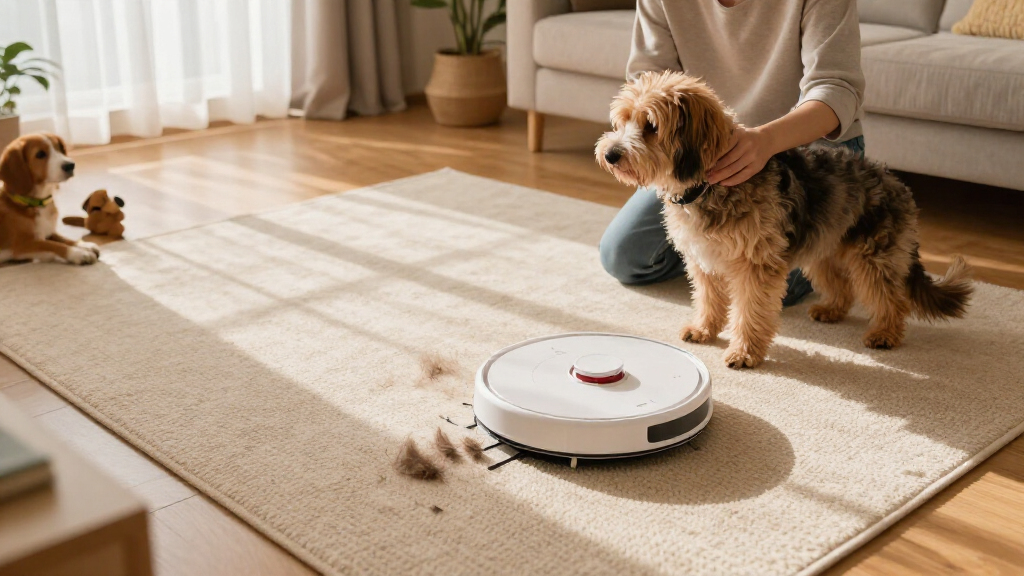
I compared these 15 models around the jobs that matter in a pet home: collecting loose fur from carpets and hard floors, navigating around furniture and pet gear, holding debris between cleanings, and managing the upkeep that comes with brushes, filters, docks, and mop parts. I also weighed whether features such as LiDAR, self-emptying, and mopping solve a likely household problem or add complexity without a clear benefit. Suction figures were treated as one data point rather than a guarantee of pet-hair pickup.
The ranking favors useful everyday coverage and reduced maintenance over a long feature list. Models with mapping and self-emptying earn an advantage for homes with regular shedding, while simpler or lower-cost designs remain relevant for smaller spaces and lighter messes. I placed mop combos according to how well their added floor-care function fits alongside vacuuming, not as a substitute for strong fur management. Because brush construction, carpet performance, and dock capacity can vary by exact configuration, buyers should check the specifications for the version they plan to purchase.
Factors to Consider When Choosing Robot Vacuums For Pet Hair
Choosing a robot vacuum for pet hair is less about chasing the biggest suction number and more about matching the machine to your floors, shedding level, and tolerance for upkeep. I’d make these decisions before comparing app features or add-ons.
Match the brush system to your pet’s coat and your floors
Long hair and fine undercoat can wrap around rollers, while short fur may spread across broad areas and settle into carpet. Check whether the brush can be removed and cleaned easily; a tool-free roller is helpful if you expect frequent tangles. Carpeted rooms usually need stronger agitation and repeated coverage, while hard floors place more emphasis on collecting fur without scattering it. Don’t assume a high suction figure guarantees effective pickup if the brush design is a poor match for your home. If shedding is heavy, plan for regular brush checks even with an auto-empty dock. A robot reduces routine fur buildup, but it cannot remove every strand packed deep into carpet.
Choose mapping based on your floor plan, not novelty
LiDAR and other mapping systems can help a robot clean rooms in orderly paths and return to missed areas, which is useful in larger or multi-room homes. In a small open space, simpler navigation may be adequate and can mean fewer app settings to learn. Think about the obstacles that actually interrupt cleaning: pet bowls, cords, toys, and narrow furniture gaps. A map is useful only if the robot can pass through doorways and reach the zones where fur collects. Check whether the model supports room selection or no-go zones if you need to protect feeding areas. For an irregular home, a little planning flexibility may matter more than a headline suction number.
Treat self-emptying as a maintenance tradeoff
An auto-empty dock reduces how often you handle the robot’s small onboard bin, a real convenience when pets shed daily. It does not make the machine maintenance-free: docks may need bags or filter care, and hair can still collect around the robot’s brushes and wheels. Bagless stations avoid replacement bags but still require debris disposal and cleaning. Consider where the dock will sit, whether there is room to access it, and whether its emptying noise will bother household members or pets. A larger stated capacity can extend time between emptying, but actual intervals depend on how much fur and debris the vacuum collects. If you prefer minimal upkeep, compare the whole cleaning routine rather than focusing only on the dock.
Decide whether mopping solves a real household problem
A vacuum-and-mop combo can help with everyday dust or paw marks on hard floors, but it adds pads, tanks, and cleaning steps. It is not a substitute for vacuuming fur from rugs or removing sticky messes by hand. Homes with mostly carpet may get little benefit from paying for a mop function, while mixed-floor homes may appreciate having both tasks in one device. Check how the robot handles carpets when a mop attachment is installed, and whether the system lifts or otherwise avoids wetting rugs. Pet accidents also call for careful cleanup before a robot runs; automated mopping is not a safe way to deal with them. Choose a combo only if you are willing to maintain its wet-cleaning parts.
Plan around pet routines and household safety
Robots work best when floors are reasonably clear, so consider whether toys, cables, water bowls, or loose pet bedding are common in your rooms. Scheduling cleaning while pets are elsewhere may reduce interruptions and stress, especially for animals that are wary of moving machines. If your pet has long fur, inspect the brush and wheels more often than the suggested routine for a low-shedding home. Check filter availability and replacement guidance if dander is a concern, and avoid assuming that any filter makes a device a medical-grade air cleaner. A robot also needs an accessible route back to its dock, so a crowded corner can undermine the convenience of self-emptying. These practical details often matter more than an extra app feature.
Pay for convenience only when it offsets real work
Self-emptying, room mapping, and mop functions can reduce chores, but each adds cost, space needs, or upkeep. The strongest case for a more capable model is a larger home, frequent shedding, or a schedule that leaves little time for daily cleaning. For a small apartment or a pet that sheds lightly, a basic vacuum may cover the essential job without a complex dock. Compare the ongoing needs too: replacement bags, filters, brushes, mop pads, and access to support can shape ownership more than the initial feature list. Avoid buying a mop combo simply because it bundles more functions if your main problem is fur on carpet. The right level of automation is the one you will actually use and maintain.
Frequently Asked Questions
Is a robot vacuum with the highest suction rating always best for pet hair?
No. Suction is only one part of pickup, alongside brush design, airflow, navigation, and how well the robot reaches fur on your particular flooring. A strong rating may help on some surfaces, but hair can still wrap around a roller or remain embedded in carpet. Check brush-cleaning access and carpet suitability before prioritizing a Pa figure. For a home with mostly hard floors, orderly coverage and edge access may matter just as much. Treat manufacturer suction claims as a comparison point, not a stand-alone result.
Do I need a self-emptying dock if my pet sheds every day?
It can reduce how often you empty the robot’s onboard bin, which is useful when fur fills it quickly. The dock does not eliminate routine care: you still need to check rollers, wheels, filters, and the station itself. A self-emptying model makes the most sense if you run frequent cleaning cycles or want less direct contact with collected debris. For a small home or light shedding, emptying a basic robot may be a manageable tradeoff. Compare dock capacity and its bag or bagless maintenance before deciding.
Will a robot vacuum pick up pet hair from rugs and carpet?
Many can collect surface hair from rugs and carpet, but results depend on pile height, brush action, suction, and whether the robot can cross the rug edge. Deeply embedded fur may still call for a conventional vacuum with stronger agitation. Check the model’s carpet guidance and look for a brush that is practical to clean when hair wraps around it. Thick or shaggy rugs can also impede movement or trap a robot. If carpet makes up most of your home, prioritize carpet-focused cleaning over an added mopping feature.
Is a robot vacuum and mop combo a good fit for homes with pets?
It can be useful on hard floors when you want routine dust pickup alongside light mopping, but the wet-cleaning parts add work. You will need to clean or replace pads and manage the water system, and the mop function does not improve fur pickup on carpet. Pet bowls, wet food, and accidents also require attention before the robot runs. Check how the model avoids rugs during mopping and whether you can run vacuuming without attaching the mop. Choose a combo when hard-floor maintenance is a regular need, not just because the feature is included.
Should I choose a simple robot or one with LiDAR and app controls?
A simpler model can be easier to set up and may suit a small, open floor plan with few obstacles. LiDAR mapping and app controls are more useful when you want room-by-room cleaning, repeatable routes, or ways to avoid pet feeding areas. Those features can take time to configure and do not guarantee that every obstacle will be handled well. Consider the layout and your willingness to manage settings before paying for more automation. If you mainly want scheduled cleaning in one clear room, simplicity may be the better fit.
Conclusion
For a balanced mix of pet-hair convenience and navigation, I’d choose the Shark AV2501AE as the best overall pick, especially for homes that benefit from an XL HEPA self-empty base and LiDAR mapping. For a value-focused choice, compare the Tikom L8000 Plus or Roborock Q7 M5+ against your needs for mapping, a dock, and mop functionality rather than paying for features you will not use. Buyers who want a premium pet-oriented option should look closely at the iRobot Roomba Max 715 Pet and its AutoEmpty dock. Beginners with a small, straightforward space may prefer the simpler ILIFE V2, while mixed hard-floor households can prioritize a combo such as the eufy E25. If heavy shedding is your main concern, favor easy brush maintenance and frequent coverage over the biggest suction claim.