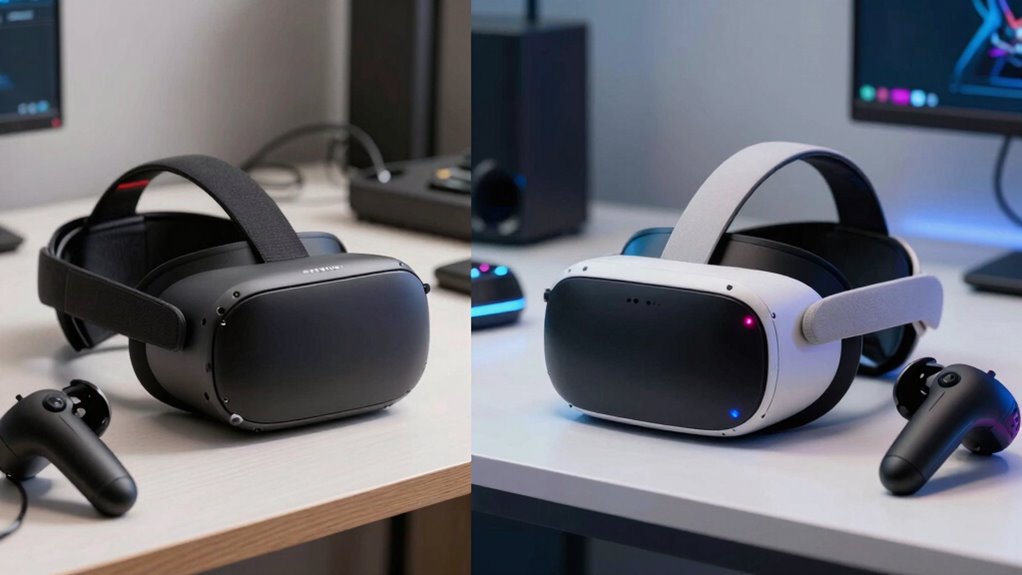
The main differences between entry-level and premium VR are in quality, comfort, and immersion. Entry-level headsets are more affordable and easier to set up but often have limitations like lower visuals and less accurate tracking. Premium systems offer better optics, smoother visuals, and more realistic tracking, making long sessions more comfortable. If you want to know how these factors impact your experience, keep exploring what sets them apart in detail.

Get the latest gadgets delivered free — and shop member deals
- Fast, free delivery on millions of items
- Access to Prime Big Deal Days deals on October 6–7
- Prime Video, Amazon Music and more included
Key Takeaways
- Premium VR offers higher resolution, wider field of view, and better optics for enhanced visual clarity and immersion.
- Entry-level headsets are more affordable but often sacrifice comfort, tracking accuracy, and visual quality.
- Premium systems feature advanced sensors and tracking technology, reducing motion sickness and improving natural movement.
- Comfort and ergonomics are superior in premium headsets, allowing longer, more comfortable VR sessions.
- Overall experience quality depends on hardware optimization, balancing immersive visuals with user comfort.

Virtual reality has become more accessible, but not all VR experiences are created equal. When you’re exploring the world of VR, you’ll quickly notice that the quality of your experience depends heavily on the device you choose. Entry-level VR headsets are generally more affordable and easier to set up, but they often come with limitations that can affect your overall enjoyment. One of the biggest issues you might face is motion sickness, which can ruin your immersion if the hardware isn’t optimized to minimize it. With lower-end headsets, you might notice latency or lag that causes your brain to struggle with the visual input, leading to discomfort or nausea. User comfort becomes a notably concern here; cheaper devices often have less ergonomic designs, resulting in fatigue after even short periods of use. You might find the straps uncomfortable or the headset too heavy, which can distract you from your experience. Additionally, lower-end devices often lack the optimized hardware needed to deliver smooth and consistent visuals, further contributing to discomfort. The importance of hardware quality in VR is crucial for ensuring a seamless experience and reducing adverse effects. Proper hardware components can also impact the tracking accuracy, making your virtual movements feel more natural and responsive. Furthermore, the integration of advanced sensors can significantly improve the overall realism of the experience, especially in fast-paced or precise tasks.
On the other hand, premium VR systems are designed with user comfort in mind. They typically feature lightweight, balanced headsets with adjustable straps that fit a variety of head shapes and sizes, reducing fatigue during extended sessions. These devices are built with higher-quality optics and better tracking technology, which considerably cuts down on motion sickness. The smoother, more precise movements help your brain reconcile what you see with how your body feels, creating a more natural experience. The improved refresh rates and low latency in high-end headsets also contribute to fewer motion-related issues, letting you focus on what matters—whether it’s gaming, virtual tourism, or professional applications. Additionally, advanced tracking systems further enhance the realism and immersion of premium VR hardware, making for a more engaging experience. You’ll notice that premium VR hardware often includes features like wider fields of view and higher resolution displays, which enhance immersion and reduce eye strain. The comfort factor becomes even more critical during long sessions, especially if you’re using VR for work or extended entertainment. Investing in a premium device means you’re less likely to encounter the discomfort and motion sickness that can accompany lower-quality headsets, making your virtual adventures more enjoyable and less taxing on your body. Ultimately, the difference between entry-level and premium VR isn’t just about better graphics or more features; it’s about how comfortable you feel and how seamlessly you can immerse yourself without feeling ill or distracted. The right choice depends on how serious you are about VR and how much you value a smooth, comfortable experience.
As an affiliate, we earn on qualifying purchases.
Frequently Asked Questions
How Long Do Entry-Level VR Headsets Typically Last?
Entry-level VR headsets usually last around 1 to 2 years, depending on usage and care. If you opt for budget options, durability concerns might arise, especially with frequent use or rough handling. To extend their lifespan, handle them gently, keep them clean, and store them properly. While they’re affordable, don’t expect them to endure heavy wear and tear as long as premium models, which are built for longer-lasting performance.
Can Premium VR Headsets Be Used for Professional Work?
Absolutely, premium VR headsets open doors to professional applications, much like a key unveiling new chambers of creativity. You’ll find they excel in software compatibility, ensuring seamless integration with specialized tools. These headsets offer higher resolution, better tracking, and comfort, making them ideal for design, training, or virtual meetings. If you want a device that elevates your work experience, investing in a premium VR headset can truly transform your workflow.
Are There Any Health Risks Associated With High-End VR Devices?
High-end VR devices can pose health concerns, especially if you experience motion sickness or eye strain. You might feel dizziness, headaches, or discomfort after extended use. To minimize risks, take regular breaks, adjust the fit properly, and start with shorter sessions. If you have existing health issues like migraines or vision problems, consult a doctor before using premium VR headsets. Staying mindful of your body’s signals helps *guarantee* safe, enjoyable VR experiences.
Do Premium VR Headsets Require More Maintenance?
Premium VR headsets do require more maintenance, but it’s manageable. You’ll need to check the lenses and clean them regularly to prevent smudges that affect your experience. While some may worry about durability concerns, higher-end models are built with better materials, making them more resistant to wear and tear. Maintenance frequency might be slightly higher, but with proper care, your device stays in top shape, offering consistent performance.
How Compatible Are Premium VR Headsets With Existing Gaming Systems?
Premium VR headsets generally offer excellent hardware compatibility with major gaming systems like PCs and consoles, guaranteeing smooth integration. They typically support popular VR platforms and software, making setup straightforward. However, some models might require specific hardware or software updates to optimize performance. You should check the headset’s compatibility list and software requirements to guarantee seamless integration with your existing gaming system before making a purchase.
entry-level VR headset for beginners
As an affiliate, we earn on qualifying purchases.
As an affiliate, we earn on qualifying purchases.
Conclusion
So, whether you’re just starting out or ready to elevate your VR experience, understanding the differences helps you make smarter choices. Did you know that premium VR headsets can deliver up to 120Hz refresh rates, offering smoother visuals compared to entry-level options? That’s a huge jump in immersion. Investing wisely means you get better graphics, comfort, and performance, making every virtual moment more exciting. Choose what fits your needs, and get ready to explore worlds like never before.
VR headset with high resolution and wide field of view
As an affiliate, we earn on qualifying purchases.
As an affiliate, we earn on qualifying purchases.
comfortable VR headsets for long sessions
As an affiliate, we earn on qualifying purchases.
As an affiliate, we earn on qualifying purchases.
Fall Picks
fall essentials
As an affiliate, we earn on qualifying purchases.