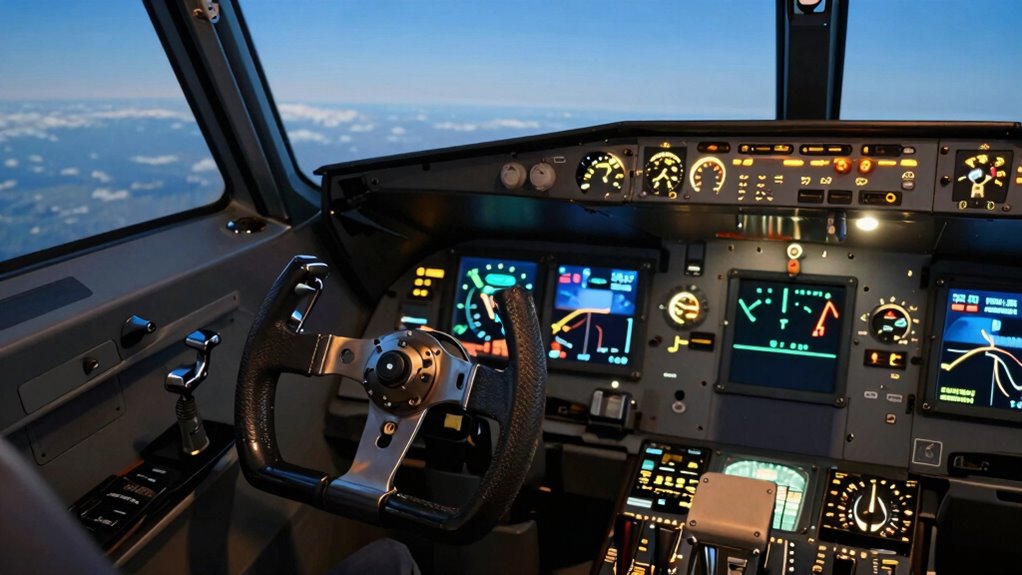

You become passionate about flight sim hardware because it offers an immersive, customizable experience that mimics real flying. You can build a cockpit with high-fidelity controls, personalize it to your preferences, and improve your technical skills in system setup and troubleshooting. This hobby combines creativity with technical mastery, making every upgrade or adjustment rewarding. If you keep exploring, you’ll discover how this hobby blends realism, skill development, and endless possibilities for aviation enthusiasts.

Get the latest gadgets delivered free with Prime
- Fast, free delivery on millions of items
- Prime Video, Amazon Music and more included
- Member-only deals all year
Key Takeaways
- The desire for immersive realism drives enthusiasts to invest in high-fidelity cockpit setups.
- Customization options allow users to tailor hardware to personal preferences and enhance engagement.
- Technical skills required for setup and calibration foster a dedicated, skill-based hobby community.
- Building and improving hardware encourages creativity and continuous learning among enthusiasts.
- The hobby offers a cost-effective way to experience aviation passion with authentic simulation experiences.
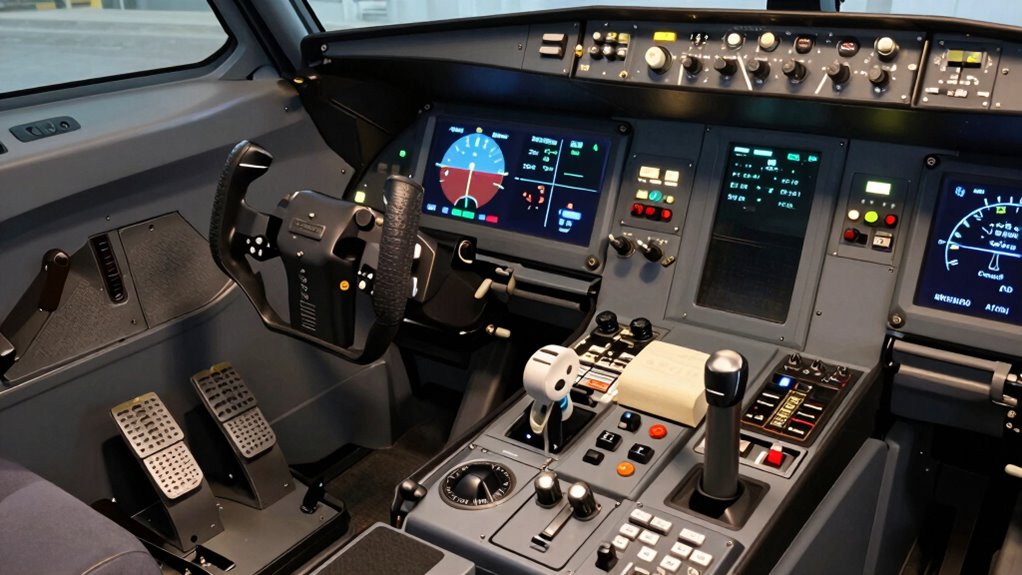
Have you ever wondered how dedicated enthusiasts bring the thrill of flying right into their homes? It’s all about creating an immersive experience that rivals real cockpit environments, and that’s where flight sim hardware truly shines. The virtual cockpit is the cornerstone of this hobby, allowing you to step into a digital replica of an airplane’s controls. With high-fidelity displays, realistic instrument panels, and functional controls, you can simulate complex flight scenarios with impressive accuracy. This setup isn’t just about visual fidelity; it’s about feeling like you’re truly in the pilot’s seat, making every maneuver feel authentic. The virtual cockpit transforms a simple screen into a cockpit environment, heightening your sense of immersion and making every flight more engaging.
Creating immersive virtual cockpits transforms flight simulation into a realistic, engaging flying experience at home.
But what makes this hobby even more appealing is hardware customization. Enthusiasts aren’t content with off-the-shelf solutions; they often tweak and build their setups to match their preferences. Whether it’s installing custom buttons, modifying the yoke for better grip, or upgrading pedals for more precise control, hardware customization allows you to tailor your experience. You get to choose the quality of materials, the number of controls, and even how they’re arranged, ensuring your setup matches your flying style. This hands-on approach makes the hobby deeply personal and rewarding, as each adjustment brings you closer to a perfect flying experience. Plus, the process of customizing hardware gives you a sense of achievement, making every flight session a reflection of your effort and dedication. Additionally, the availability of customizable hardware enables enthusiasts to expand and refine their setups over time, further enhancing the realism and functionality of their simulators. Developing a solid understanding of hardware integration is also key to creating a seamless and reliable setup. Moreover, learning about system calibration helps ensure that controls respond accurately, enhancing the overall realism and control fidelity.
The appeal of this hobby also lies in the technical challenge it offers. Building and fine-tuning a virtual cockpit requires a good understanding of both aviation principles and hardware integration. You learn to calibrate controls, troubleshoot issues, and optimize system performance—all skills that enhance your overall flying proficiency. As you grow more confident, you might even dive into creating your own custom panels or integrating plugins to expand functionality. This blend of technical skill, creativity, and passion keeps the hobby fresh and engaging. Moreover, engaging with hardware calibration fosters problem-solving skills and a deeper understanding of system mechanics, making the experience even more rewarding.
Ultimately, flight sim hardware has become a serious hobby because it combines realism, customization, and technical mastery. It’s not just about playing a game; it’s about crafting a personalized, immersive environment that lets you pursue your love of flying from your own home. Whether you’re a casual enthusiast or a dedicated pilot-in-training, this hobby offers endless opportunities to learn, experiment, and experience the thrill of flight without ever leaving the ground.
Products Worth Considering

DJI Mini 5 Pro Fly More Combo with DJI RC 2

Amazon Kindle Scribe (64GB) with Premium Pen, Metallic Jade

Sony WH-1000XM5 Premium Noise Cancelling Wireless Headphones, Midnight Blue
As an affiliate, we earn on qualifying purchases.
Frequently Asked Questions
What Are the Most Affordable Flight Sim Hardware Options for Beginners?
For affordable flight sim hardware, start with a good joystick and throttle quadrant, which are essential for control and realism. Look for budget-friendly options like Logitech or Thrustmaster. Adding a VR headset enhances immersion without breaking the bank. These setups provide a solid experience for beginners, offering good control and visual engagement while keeping costs reasonable, making your first steps into flight simming exciting and accessible.
How Much Does a Professional-Grade Flight Sim Setup Cost?
A professional-grade flight sim setup can cost you a pretty penny—anywhere from $10,000 to over $50,000. You’ll want a realistic virtual cockpit and possibly a motion platform to mimic real flying. High-end controls, immersive displays, and precise pedals add to the bill. But if you’re ready to go all-in, this gear transforms your experience from a hobby to a serious simulation adventure, truly hitting all the right notes.
Are There Specific Hardware Brands Preferred by Serious Flight Sim Enthusiasts?
Serious flight sim enthusiasts often prefer brands like Logitech, Thrustmaster, and FlightLink, due to their reliable performance and quality. You might develop brand loyalty based on your experience, leading to consistent choices. Additionally, these brands support accessory customization, allowing you to tailor controls to your preferences. This focus on customization and trusted brands helps you enhance realism and immersion in your flight simulation experience.
Can Flight Sim Hardware Improve Real-World Flying Skills?
Think of flight sim hardware as a bridge connecting your virtual cockpit to real-world transfer. It sharpens your skills by mimicking actual aircraft controls, making your reactions more instinctive. While it doesn’t replace real flying, it enhances your understanding of procedures and cockpit layout. You’ll find yourself more confident and prepared, with muscle memory and situational awareness improving through consistent practice—turning virtual training into tangible flying expertise.
What Are the Common Challenges When Setting up Flight Sim Hardware?
When setting up flight sim hardware, you often face challenges like ensuring proper hardware calibration, which is essential for realistic responses. Virtual reality adds another layer of complexity, requiring you to adjust headsets for comfort and clarity. You might also struggle with configuring multiple controls to work seamlessly together. Patience and thorough testing are key, as these issues can hinder your immersive experience and flying accuracy until resolved.
Conclusion
You might be surprised to learn that the flight simulation market is expected to grow at a CAGR of over 8% through 2027, showing just how dedicated enthusiasts are. As you explore this hobby, you’ll find it’s more than just a game—it’s a passion that combines tech, skill, and community. Whether you’re upgrading your controls or sharing your flights online, knowing this statistic highlights how seriously this hobby is taking off, making every flight more exciting.