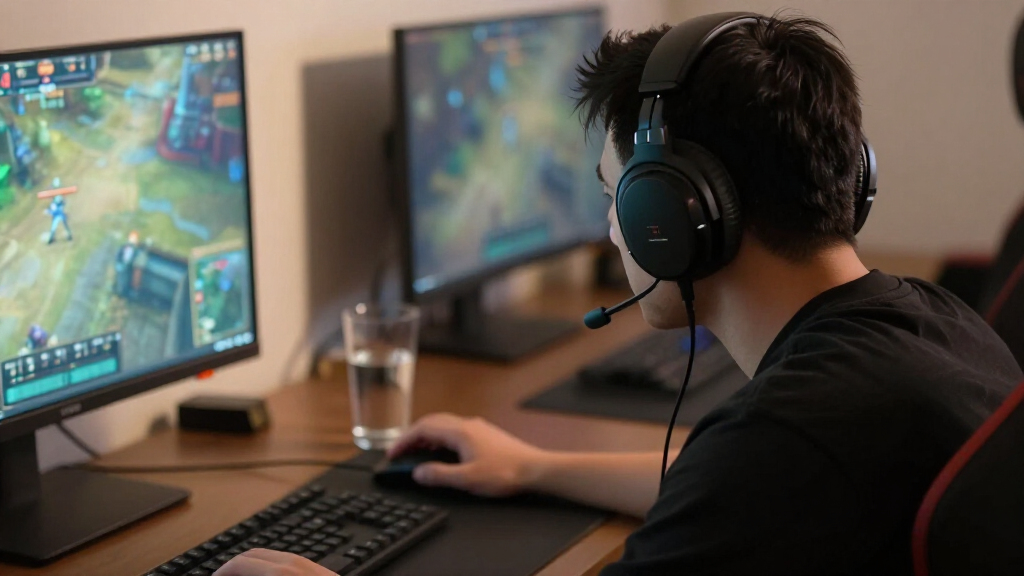

Set up a wireless gaming headset by connecting it to a compatible PC or console, choosing it as the audio and microphone device, and testing both before play. This guide is for first-time headset users and anyone replacing a wired headset. Most setups take 15-30 minutes; the exact connection steps depend on whether your headset uses a USB transmitter, Bluetooth, or a console-specific wireless link.

Get the latest gadgets delivered free — and shop member deals
- Fast, free delivery on millions of items
- Access to Prime Big Deal Days deals on October 6–7
- Prime Video, Amazon Music and more included

SteelSeries Arctis Nova 5 Wireless Multi-System Gaming Headset
- ✔ Connectivity: 2.4 GHz wireless and Bluetooth 5.3
- ✔ Battery life: Up to 60 hours
- ✔ Fast charging: 15 minutes provides up to 6 hours of use

Turtle Beach Stealth 600 Wireless Gaming Headset
- ✔ Connectivity: 2.4 GHz wireless and Bluetooth
- ✔ Bluetooth version: Conflicting information: 5.2 in specifications and 5.4 elsewhere in the description
- ✔ Drivers: 50 mm Nanoclear

NUBWO G06 Wireless Gaming Headset with Microphone, 100-Hour Battery, 2.4GHz, Bluetooth 5.3, and Wired Modes
- ✔ Wireless connectivity: 2.4 GHz wireless and Bluetooth 5.3
- ✔ Wired connectivity: 3.5mm
- ✔ Battery capacity: 1200mAh
Difficulty: Beginner | Time: 15-30 minutes
What You’ll Need
Tools & Materials:
- Wireless gaming headset and its charging cable
- USB wireless transmitter or receiver, if supplied
- PC, PlayStation, Xbox, Nintendo Switch, or other supported device
- Internet access for optional firmware or system updates
Knowledge:
- Basic ability to open audio or controller settings on your device
- Ability to identify the headset model and check its connection type
Check the headset manual or manufacturer’s support page for supported devices before setup. A headset that works over USB wireless on a PC or PlayStation may not support that connection on Xbox. Bluetooth support also varies by console, and Bluetooth audio may add delay or fail to support microphone chat. Charge the headset before testing, and keep its transmitter nearby.
SteelSeries Arctis Nova 5 Wireless Multi-System Gaming Headset
The Arctis Nova 5 Wireless is our best overall choice because it brings the core features of a flexible gaming headset together without relying on one unusually high battery claim. It supports 2.4 GHz wireless and Bluetooth 5.3, making it suited to gaming on a compatible system while also pairing with a phone or tablet. Its stated battery life is up to 60 hours, and a 15-minute charge is specified to provide up to six hours of use—useful when a headset needs a quick top-up before a session.Compared with the Turtle Beach Stealth 600, SteelSeries offers less stated battery endurance but clearer fast-charge information and a retractable microphone rather than a flip-to-mute boom. The NUBWO G06 adds a wired fallback; the Nova 5 instead emphasizes broad wireless compatibility across PC, PlayStation, Switch, Meta Quest, and mobile devices. Its customizable game audio presets are the strongest reason to choose it, although some presets require the companion app. Buyers who want a simpler setup with fewer software-dependent adjustments may prefer the Stealth 600. We also would not choose this model solely for its microphone specifications: the listed ClearCast 2.X details are useful context, but fit, voice preferences, and device setup still matter.
Pros:
- Combines 2.4 GHz wireless with Bluetooth 5.3
- Up to 60 hours of stated battery life and specified fast charging
- Compatible with PC, PlayStation, Switch, Meta Quest, and mobile devices
- Retractable microphone and customizable game audio presets
Cons:
- Some audio presets require the companion app
- Its stated battery life is shorter than the Turtle Beach and NUBWO claims
- No 3.5mm wired connection is listed
Best for: Players who use several compatible gaming and mobile devices and want wireless flexibility, fast charging, and configurable game audio.
Not ideal for: Buyers who prioritize the longest stated battery life, want a wired fallback, or prefer to avoid companion-app-dependent presets.
Bottom line: Choose the Arctis Nova 5 for the most balanced combination of wireless gaming, cross-device support, fast charging, and adjustable audio.
“Choose the Arctis Nova 5 for the most balanced combination of wireless gaming, cross-device support, fast charging, and adjustable audio.”
Turtle Beach Stealth 600 Wireless Gaming Headset
The Turtle Beach Stealth 600 is a strong alternative for players who want long stretches between charges and a headset designed with comfort details in mind. Its listed battery life reaches up to 80 hours, and quick charge is included in the description. That endurance claim places it ahead of the SteelSeries Nova 5 on paper, while the memory-foam cushions and glasses-friendly design address a comfort issue that can affect long gaming sessions.Like the SteelSeries, the Stealth 600 pairs 2.4 GHz wireless with Bluetooth, and its 50 mm Nanoclear drivers, four EQ presets, and 10-band EQ offer ways to shape audio. The tradeoff is that some audio and microphone customization requires the Swarm II app, so it is not the clearest pick for buyers who want all adjustments available without software. Its flip-to-mute microphone with AI noise reduction makes muting straightforward, but the provided product information conflicts on the Bluetooth version, listing 5.2 in the specifications and 5.4 elsewhere. That uncertainty is worth checking before purchase. Compared with the NUBWO G06, Turtle Beach has a clearer comfort emphasis and does not call out the same Xbox Series wired-only limitation, while the NUBWO adds a 3.5mm connection.
Pros:
- Up to 80 hours of stated battery life with quick charge
- Supports 2.4 GHz wireless and Bluetooth
- Memory-foam cushions include glasses-friendly design
- Flip-to-mute microphone with AI noise reduction
Cons:
- Product information conflicts on whether Bluetooth is version 5.2 or 5.4
- Some audio and microphone customization requires the Swarm II app
- No 3.5mm wired mode is listed
Best for: Players who wear glasses, value long stated battery life, and want one headset for compatible console, PC, and mobile use.
Not ideal for: Buyers who require a clearly verified Bluetooth version or want EQ and microphone customization without using a companion app.
Bottom line: Pick the Stealth 600 when comfort and long stated battery life matter more than wired fallback or app-free customization.
“Pick the Stealth 600 when comfort and long stated battery life matter more than wired fallback or app-free customization.”
NUBWO G06 Wireless Gaming Headset with Microphone, 100-Hour Battery, 2.4GHz, Bluetooth 5.3, and Wired Modes
The NUBWO G06 makes the most sense for buyers who want connection flexibility above all else. It supports 2.4 GHz wireless, Bluetooth 5.3, and 3.5mm wired audio, giving it a fallback option the SteelSeries and Turtle Beach listings do not specify. The G06 can also connect to a gaming device and a smartphone simultaneously, which may suit players who want to keep phone calls accessible without abandoning a gaming session.Its stated battery life reaches up to 100 hours, the longest claim in this comparison, but we should treat that as a manufacturer figure rather than a guaranteed result. The same caution applies to the product’s zero-latency claim. The decisive limitation is platform-specific: Xbox Series support is wired only, so buyers on that console do not get the same wireless flexibility described for other compatible devices. That makes it less compelling than the Stealth 600 for an Xbox-focused wireless setup and less rounded than the Nova 5 for multi-system wireless use. The 50 mm drivers and multiple connection modes create a practical feature set, but buyers should confirm their exact device and intended connection before choosing it.
Pros:
- Offers 2.4 GHz wireless, Bluetooth 5.3, and 3.5mm wired modes
- Up to 100 hours of manufacturer-stated battery life
- Can connect to a gaming device and smartphone simultaneously
- Supports multiple listed consoles, computers, and mobile devices
Cons:
- Xbox Series support is limited to 3.5mm wired mode
- Battery-life and zero-latency statements are manufacturer claims
- The supplied feature list gives less detail on comfort and audio customization than the other picks
Best for: Players using compatible PS, PC, Switch, or mobile devices who want Bluetooth, 2.4 GHz, and a 3.5mm wired fallback.
Not ideal for: Xbox Series players seeking wireless play, or buyers who need battery and latency claims to be independently established.
Bottom line: Choose the G06 for its three connection modes and wired backup, but skip it if you need wireless Xbox Series compatibility.
“Choose the G06 for its three connection modes and wired backup, but skip it if you need wireless Xbox Series compatibility.”
As an Amazon Associate we earn from qualifying purchases.
Before You Start
Locate the headset’s power, pairing, and microphone-mute controls, then identify the connection method recommended for your device. If the headset has a USB transmitter, use that transmitter rather than assuming ordinary Bluetooth will work. Charge the headset or connect its charging cable if the battery is low. Turn off other nearby audio devices that could be selected by mistake, and save any open game before changing system audio settings.
Step-by-Step Instructions
Step 1: Check compatibility and connection method
Find your headset’s model number on the headband, ear cup, packaging, or companion app. Check the manufacturer’s compatibility list for your exact computer or console model. Confirm whether setup requires a USB transmitter, a console-specific wireless adapter, Bluetooth, or a supported wired connection. Follow the connection method listed for your device; do not assume all wireless methods work on every console.
Tip: If the headset includes a USB transmitter, check for a platform switch or pairing button on it. Set it to the platform you are using before connecting it.
Check: You know which connection method the manufacturer supports for your device and have the matching transmitter or adapter.
Step 2: Charge the headset
Connect the headset to a powered USB port or its supplied charger. Charge it for the period shown in the manual, or until its indicator shows a full charge. If the headset can be used while charging, keep the cable clear of your chair and controls so it cannot snag during play.
Tip: A flashing light can mean charging, pairing, or a low battery depending on the model. Check the manual rather than relying on color alone.
Check: The headset powers on and reports a usable battery level or charging status.
Step 3: Connect the transmitter or pair Bluetooth
For a USB transmitter, plug it directly into a supported USB port on the PC or console. Turn on the headset and wait for the transmitter and headset indicators to show a connection. For Bluetooth, open the device’s Bluetooth settings, put the headset into pairing mode using the manual’s instructions, and select its name from the available-device list. Complete any confirmation prompt.
Tip: Keep the headset close to the transmitter while pairing. Avoid connecting through a USB hub during initial setup; some hubs do not provide a stable connection or enough power.
Check: The device reports the headset as connected, or the headset and transmitter show their connected status. If pairing fails, remove an old saved pairing and try again.
Step 4: Select the headset for game audio
Open the PC’s sound settings or the console’s audio settings. Choose the headset as the output device for game or system audio. If the headset appears as separate game and chat devices, select the game or main audio output for playback. Apply the change, then play a system sound or open a game with a clear audio cue.
Tip: Close and reopen a game if it continues using the audio device that was active when the game started.
Check: Game or system sound comes through the headset, and the built-in speakers or television no longer carry that sound unless you have deliberately enabled both outputs.
Step 5: Set up the microphone and chat output
In the same audio settings, select the headset microphone as the input device. If your device has separate voice-chat output settings, choose the headset for chat as well. Unmute the headset’s microphone, lower the headset volume to a comfortable level, and adjust microphone level or input sensitivity so ordinary speech registers without clipping. Check that console or game privacy settings permit voice chat.
Tip: Some headset microphones mute when the boom is raised or a button is pressed. Check the mute indicator before changing software settings.
Check: The microphone input meter responds when you speak, and a test recording or voice-chat preview plays back your voice clearly.
Step 6: Balance game and chat audio
Open the headset’s companion app or the device’s audio mixer if available. Set game and chat levels separately, then adjust the headset’s master volume. Start at a moderate level and make small changes while listening to both a game sound and a voice-chat sample. Leave audio enhancements, surround modes, or equalizer presets at their default settings until the basic connection works.
Tip: If voices are too quiet but game audio is loud, adjust the chat balance or voice-chat output instead of raising the master volume until everything is too loud.
Check: You can hear game effects and spoken chat at comfortable levels, and you can still hear important sounds without setting the headset to maximum volume.
Step 7: Test the setup during a short session
Launch a game or voice-chat test and listen for sound on both sides of the headset. Speak at a normal volume and ask a chat partner to confirm that your voice is clear. Move a few steps around your usual play area to check for dropouts, then return near the transmitter if the connection becomes unstable. Test the mute control and confirm that muting stops your voice from reaching chat.
Tip: Do this test before a match or call where you cannot easily pause. Keep the transmitter in an open USB port with as few obstructions as practical.
Check: Game audio remains steady, chat participants hear you clearly, the mute control works, and the headset stays connected from your normal seating position.
Common Mistakes to Avoid
- Using Bluetooth when the device requires the headset’s USB transmitter or does not support Bluetooth audio. — Check the manufacturer’s compatibility instructions for the exact device and use the listed connection method. Do not treat Bluetooth and USB wireless as interchangeable.
- Leaving the computer or console set to its speakers or television after connecting the headset. — Select the headset explicitly as both the audio output and microphone input. If the game uses a separate device setting, check that setting too.
- Troubleshooting software settings while the headset or microphone is physically muted. — Check the headset’s mute button, boom position, power, and transmitter connection before changing input levels or reinstalling software.
- Setting the master volume too high to compensate for unbalanced game and chat levels. — Adjust game-to-chat balance and app-specific voice levels first, then set the master volume to a comfortable listening level.
Troubleshooting
Problem: The headset does not appear in the device’s audio settings.
Solution: Confirm that the headset is powered on, charged, and paired with its transmitter. Unplug and reconnect the transmitter directly to a supported USB port, then restart the headset. Check the manual for a platform switch or pairing procedure, and confirm that your device supports the headset’s connection method.
Problem: The headset connects, but game sound still comes from the television or speakers.
Solution: Set the headset as the system’s output device and check the game’s own audio output setting. Close and reopen the game after changing the output. If the headset has separate game and chat channels, choose the game channel for playback.
Problem: Other people cannot hear you, or your voice sounds very quiet.
Solution: Unmute the headset, lower or reposition a flip-up microphone if required by its design, and select the headset microphone as the input. Check system and game privacy permissions, then speak while watching the input meter. Raise microphone level gradually if the meter barely moves.
Problem: Audio cuts out, crackles, or has noticeable delay.
Solution: Move the headset closer to the transmitter and place the transmitter in an open USB port away from obstructions. Disconnect unused Bluetooth devices, try another supported USB port, and charge the headset. For games, use the recommended USB wireless link rather than Bluetooth when the headset supports both.
What Success Looks Like
The setup is working when the headset stays connected, game audio plays through it without dropouts from your normal seating position, the microphone meter responds to your speech, and another person can hear you clearly. The mute control should stop your voice from reaching chat, and game and chat levels should be comfortable without maximum volume.
Next Steps
Save your preferred game-to-chat balance in the headset app or device profile if that option is available. Disconnect and store the headset according to its manual, and charge it before the next long session. Repeat the audio and microphone test after changing devices, updating system software, replacing a transmitter, or noticing new connection problems. If the headset remains unrecognized after following its model-specific pairing instructions, contact the manufacturer with the model number and device details.
Frequently Asked Questions
Can I use any wireless gaming headset with any console?
No. Compatibility depends on the headset’s transmitter, wireless protocol, and console. Check the manufacturer’s supported-device list for the exact headset and console before buying or setting it up.
Should I connect a gaming headset through Bluetooth or its USB transmitter?
Use the connection method recommended for your device. A USB transmitter is often the right choice for compatible gaming systems and can provide a more suitable gaming connection. Bluetooth may not support console audio or microphone chat, and it can add delay.
Why can I hear the game but not talk to other players?
Audio output and microphone input are configured separately. Select the headset microphone as the input device, check its physical mute control, and confirm that the game and system allow voice chat.
Do I need to install a companion app?
Not always. Basic audio may work without an app, but the manufacturer’s software can provide firmware updates, equalizer settings, microphone controls, or game-chat balance. Install it only from the manufacturer’s official source and follow its model-specific instructions.
Halloween Picks
halloween
As an affiliate, we earn on qualifying purchases.