
VR gaming immerses you directly into digital worlds, making you feel like you’re really there. It tracks your movements in real time, so actions happen naturally and realistically. With augmented reality, digital elements blend seamlessly into your physical environment, adding more dynamic gameplay. Haptic feedback makes interactions feel tactile, while your physical movements increase engagement and create a more authentic experience. If you keep exploring, you’ll discover even more ways VR transforms how you play and feel connected to virtual worlds.

Get the latest gadgets delivered free with Prime
- Fast, free delivery on millions of items
- Prime Video, Amazon Music and more included
- Member-only deals all year
Key Takeaways
- VR gaming immerses players directly into digital worlds, creating a stronger sense of presence than traditional screens.
- It overlays digital elements onto real environments, blending physical and virtual spaces through augmented reality.
- Haptic feedback provides tactile sensations, making interactions feel more realistic and engaging.
- Active participation requires physical movements, enhancing physical involvement and natural social interactions.
- Technological advancements improve hardware comfort, realism, and accessibility, bridging the gap between virtual and real experiences.
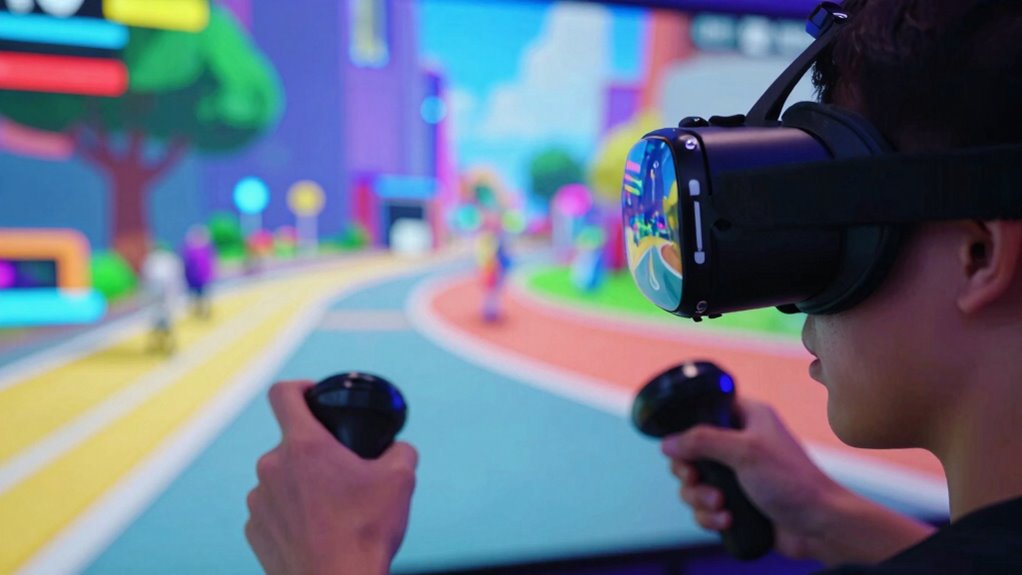
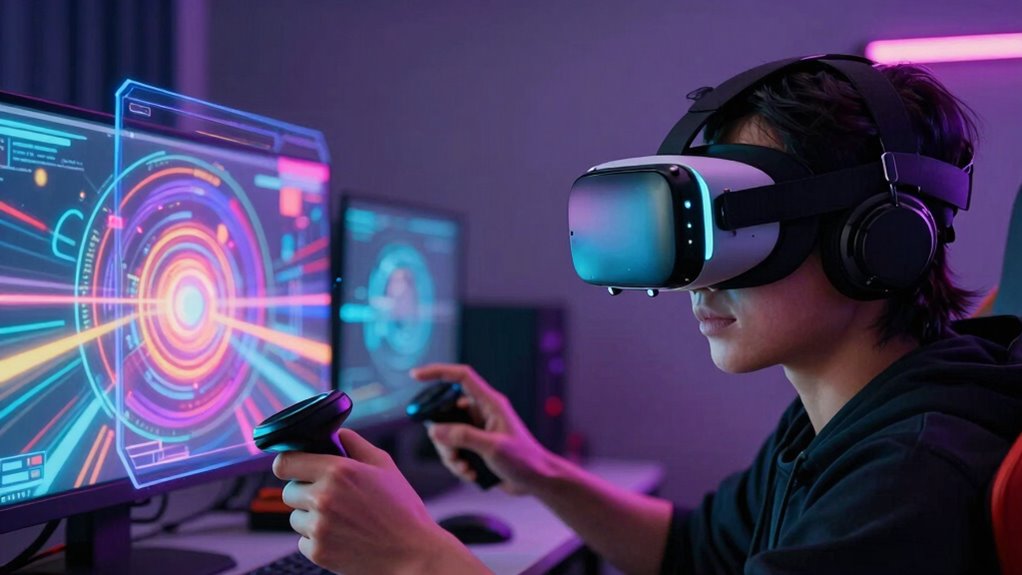
Virtual reality gaming has transformed the way you experience digital worlds by immersing you directly into the action. Instead of simply watching a screen, you become part of the environment, feeling as if you’re truly inside the game. This heightened sense of presence is what sets VR apart from traditional gaming, where you usually control a character from a distance. In VR, your movements are tracked in real-time, allowing you to look around, reach out, and interact naturally with the virtual space. This creates a level of engagement that’s hard to match with standard controllers or keyboard and mouse setups.
VR gaming immerses you directly into the action, making interactions feel natural and highly engaging.
What really makes VR gaming stand out is its integration of augmented reality elements. Unlike traditional gaming, which mostly involves viewing digital content on a flat screen, augmented reality overlays digital elements onto your real-world surroundings. This blending of physical and virtual environments makes gameplay more dynamic and personalized. Imagine battling virtual enemies that appear right in your living room or solving puzzles that require you to physically move objects in your space. Augmented reality enhances immersion by making the game feel more tangible, blurring the line between the virtual and real worlds. Additionally, the use of augmented reality technology further bridges the gap between gaming and real life, increasing the sense of authenticity.
Another key feature that elevates VR gaming is haptic feedback. When you interact with objects or feel impacts within the game, haptic feedback provides tactile sensations through specialized controllers or wearable devices. It’s like getting a gentle buzz or a firm push that corresponds precisely to what’s happening on the screen. This sensory input deepens your connection to the game, making actions like grabbing, hitting, or feeling textures more realistic. With haptic feedback, you don’t just see or hear the action—you actually feel it, which amplifies immersion and makes the experience more convincing. The integration of sensory input through these devices is vital in making the virtual environment feel authentic.
Compared to traditional gaming, VR demands more active participation. You’re not just pressing buttons or moving a cursor; you’re physically moving your body, turning your head, and sometimes even leaning or crouching. This physical involvement makes gameplay more engaging and can even provide a subtle workout. Additionally, the social aspect shifts because VR allows for more natural interactions with other players, who are represented in the virtual space as avatars, often enhancing the sense of presence and shared experience. Understanding the technology behind these features highlights how VR creates a more immersive gaming experience that actively involves your senses and body. Furthermore, advances in virtual reality hardware continue to improve comfort and realism, making these experiences increasingly accessible to a wider audience.
VR gaming headset with motion tracking
As an affiliate, we earn on qualifying purchases.
As an affiliate, we earn on qualifying purchases.
Frequently Asked Questions
How Does VR Gaming Affect Physical Health Over Time?
VR gaming can impact your physical health over time by causing posture concerns and eye strain. As you immerse yourself in virtual worlds, poor posture may develop if you don’t stay mindful, leading to neck or back pain. Additionally, extended gameplay can strain your eyes, causing discomfort or headaches. To minimize these effects, take regular breaks, maintain proper posture, and adjust your headset for comfort.
What Are the Initial Costs to Start VR Gaming?
Starting VR gaming costs can be quite competitive. You’ll need a VR headset, which varies in price but is generally more affordable than you might expect, especially with options like Oculus Quest or HTC Vive. Beyond equipment affordability, the cost comparison shows initial expenses include a compatible PC or console. While some setups are pricier, many entry-level systems deliver immersive experiences without breaking the bank, making VR gaming more accessible than ever.
Can VR Gaming Be Played Socially With Friends?
Yes, VR gaming can be played socially with friends, offering virtual socialization and multiplayer experiences. You can join friends in shared virtual worlds, collaborate on missions, or compete in multiplayer games. Many VR platforms support online multiplayer, allowing you to connect with friends regardless of location. This immersive social aspect enhances the gaming experience, making it more interactive and engaging, and creates new ways to connect and have fun together.
Are There Age Restrictions for VR Gaming?
Yes, there are age restrictions for VR gaming, mainly due to safety concerns. Younger children might lack the physical coordination or awareness needed, increasing the risk of injury or discomfort. Manufacturers typically recommend VR for teens and older, emphasizing the importance of monitoring use. These restrictions aim to protect younger players from potential health issues or accidents, ensuring that VR gaming remains a safe and enjoyable experience for everyone.
How Does VR Gaming Impact Mental Health?
VR gaming impacts your mental health through virtual immersion and emotional engagement. While it can boost mood and reduce stress by providing immersive experiences, it may also cause feelings of disorientation or anxiety if overused or if you’re sensitive to intense stimuli. You should balance gameplay, take regular breaks, and be mindful of your emotional responses to guarantee VR enhances your mental well-being rather than detracts from it.
augmented reality gaming glasses
As an affiliate, we earn on qualifying purchases.
As an affiliate, we earn on qualifying purchases.
Conclusion
VR gaming is like stepping into a whole new world where you’re not just playing—you’re living the experience. It immerses you fully, making you feel as if you’re really there, unlike traditional games on screens. With motion controls and 360-degree views, every session becomes an adventure. Once you try VR, you’ll see it’s as if your gaming world has grown wings, transforming how you play and enjoy games forever.
As an affiliate, we earn on qualifying purchases.
As an affiliate, we earn on qualifying purchases.
Halloween Picks
halloween
As an affiliate, we earn on qualifying purchases.