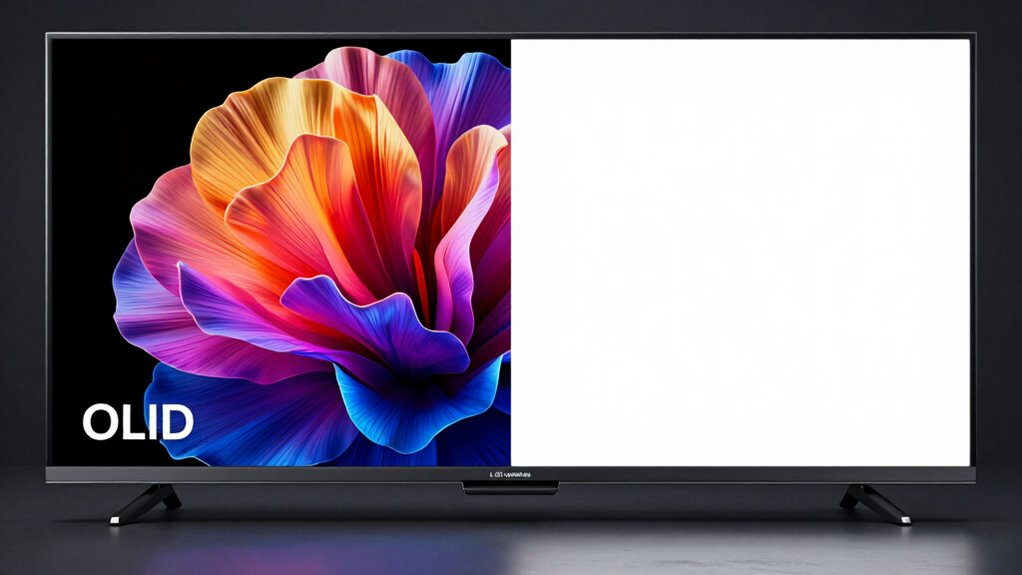

OLED displays deliver better picture quality with richer colors, deeper blacks, and more contrast because each pixel lights up individually. They’re great for dark scenes but can suffer from burn-in and tend to be more expensive. LED screens are more durable, cheaper upfront, and better for bright rooms or static images, but their picture quality isn’t as vibrant. If you want to know more about which one suits your needs, there’s more to discover below.

Get the latest gadgets delivered free with Prime
- Fast, free delivery on millions of items
- Prime Video, Amazon Music and more included
- Member-only deals all year
Key Takeaways
- OLED displays offer better contrast and deeper blacks because pixels emit their own light and can turn off completely.
- LED screens are generally more durable and cost less upfront, making them suitable for static images and bright environments.
- OLEDs consume less power with dark images, but may use more energy during bright scenes; LEDs have consistent power use regardless of content.
- OLEDs are prone to burn-in and image retention; LEDs do not suffer from these issues and have a longer lifespan.
- Choose OLED for superior image quality and vibrant visuals; choose LED for durability, static content, and budget-friendly options.

When choosing between OLED and LED displays, understanding their differences can profoundly impact your viewing experience. Both technologies have unique strengths and weaknesses that influence picture quality, energy use, and overall performance. If you’re someone who values color accuracy, OLEDs tend to excel because each pixel produces its own light, allowing for more precise control over color and contrast. This results in richer, more vibrant images, especially in darker scenes where OLED’s ability to turn off individual pixels creates true blacks. LED displays, on the other hand, rely on backlighting behind a liquid crystal panel, which can sometimes cause less accurate colors and grayish blacks, particularly if the backlight isn’t perfectly uniform.
OLEDs offer superior color accuracy and true blacks by individually lighting pixels, unlike LED displays’ backlit panels.
Power efficiency is another critical factor to consider. OLED screens generally consume less power when displaying darker images because black pixels are effectively turned off, reducing energy use. This means if most of what you watch involves dark scenes or you prefer a darker interface, OLEDs can save you some electricity. However, when displaying brighter content, OLEDs can draw more power than LEDs because each pixel is individually lit, which might lead to higher energy consumption overall. Conversely, LED displays, with their uniform backlighting, tend to be more power-efficient during bright scenes since the backlight remains consistent regardless of the image. This makes LED screens a practical choice if you often watch in well-lit environments or want a device with predictable power use.
In terms of longevity, LED displays usually have a longer lifespan because they don’t suffer from burn-in issues that OLEDs are susceptible to. Burn-in occurs when static images are left on the screen for extended periods, causing permanent ghost-like shadows. If you plan to use your display for static content like computer desktops or gaming HUDs, LED might be the safer option. Meanwhile, OLED technology has improved over the years, but you should still be aware of potential image retention if you use it heavily for static visuals. Additionally, the cost difference between OLED and LED displays can influence your decision, as OLEDs tend to be more expensive upfront but offer superior image quality.
Ultimately, your choice depends on what matters most to you. If you prioritize top-tier color accuracy, superior contrast, and better blacks, OLED offers a compelling experience. If you prefer a more energy-efficient display that handles static images better and has a longer lifespan, LED might suit you better. Both can deliver excellent viewing quality, but understanding these core differences helps you pick the right technology for your needs.
Frequently Asked Questions
Which Type Is More Energy-Efficient in Real-World Usage?
In real-world usage, LED screens typically consume less power than OLEDs, especially when displaying bright images, because LEDs are generally more energy-efficient. This lower power consumption reduces your environmental impact since less energy is used. If you’re concerned about saving energy and minimizing environmental effects, choosing LED might be better for everyday use, especially in bright settings. However, OLEDs offer superior contrast, which might influence your overall display choice.
How Do OLED and LED Screens Perform Outdoors?
You’ll find that OLED screens perform better outdoors because they typically offer higher screen brightness, making images clearer even in direct sunlight. Plus, OLEDs maintain better viewing angles, so you see accurate colors from various positions. LED screens can struggle with glare and reduced visibility outside, especially if their brightness isn’t high enough. So, if outdoor viewing is a priority, OLEDs generally give you a better experience.
Are OLED TVS More Prone to Screen Burn-In?
Yes, OLED TVs are more prone to screen burn-in, which can affect screen longevity over time. This happens because static images can leave permanent marks on OLED displays. While OLEDs offer superior picture quality, their higher manufacturing costs contribute to this vulnerability. To prevent burn-in, avoid static images for extended periods, and use screen savers. LED TVs generally have better resistance to burn-in, making them more durable for long-term use.
What Are the Differences in Color Accuracy?
Imagine gazing at a sunset—OLED TVs often deliver richer, more accurate colors because of their superior color calibration and wider color gamut. You’ll notice deeper reds and vibrant greens that pop naturally, unlike LED screens which can look slightly muted or less precise. With OLED, colors stay true from every angle, enhancing your viewing experience. So, if color accuracy matters, OLED’s your best choice.
Which Technology Has a Longer Lifespan?
LED screens generally have a longer lifespan than OLEDs because they’re more durable and less prone to burn-in issues. OLED technology, while offering superior color accuracy, has higher manufacturing costs and shorter screen durability due to organic materials that degrade over time. If longevity matters most to you, LED screens are the better choice, but if vibrant colors are your priority, OLEDs still shine despite their shorter lifespan.
Conclusion
So, when you choose between OLED and LED, picture yourself in a theater of vibrant colors and deep blacks or basking in bright, lively scenes. OLED offers the immersive, cinematic experience with its stunning contrast, while LED provides a dependable, bright display suited for well-lit rooms. Your decision shapes your visual journey—whether you crave the shadowy depths of a noir film or the crisp clarity of a sunny day. The choice is yours, and your eyes will thank you.
Fall Picks
fall essentials
As an affiliate, we earn on qualifying purchases.