🔍 Read the full analysis: How OpenAI And Cisco Are Bringing Shirudo To AI on ThorstenMeyerAI.com

Get the latest gadgets delivered free with Prime
- Fast, free delivery on millions of items
- Prime Video, Amazon Music and more included
- Member-only deals all year
TL;DR
OpenAI and Cisco have introduced Shirudo, an open-source runtime for applying temporary security protections to running Linux systems while teams prepare permanent patches. OpenAI says a Codex-generated eBPF shield blocked a Java4Shell exploit attempt against Elasticsearch without a restart in a controlled test; broader effectiveness and production readiness have not been established.
OpenAI and Cisco have introduced Shirudo, an open-source runtime intended to apply temporary security protections to running Linux systems while operators prepare and deploy permanent patches, as described in the original analysis. OpenAI says a controlled test used a protection generated by its Codex coding agent to block a Java4Shell exploit attempt against a running Elasticsearch service without restarting it; the companies have not provided independent results showing how well the approach works across other systems or attacks.
Shirudo is designed for the interval between identifying a vulnerability and safely installing a lasting fix. OpenAI says patch testing and deployment can take days or weeks, while a broad restriction on an operating-system operation may interfere with legitimate application behavior. The project calls its temporary protections shields: teams can observe a proposed shield’s effects, then an operator can approve it for enforcement while the service continues running.
The runtime uses eBPF, a Linux technology that allows small programs to run at selected points in the operating system. OpenAI and Cisco describe safeguards that include monitoring a shield before enforcement, signing and verifying shields before they are loaded, and using a Trusted Platform Module to support records of protections being added or removed. They also point to the Linux eBPF verifier and kernel security controls as part of the design.
In the example described by OpenAI, Codex generated a check for Java’s Base64 decoder and attached it to a running Elasticsearch process. The company says the check rejected malicious input during a Java4Shell exploit attempt while Elasticsearch continued operating. The project is released under the BSD 2-Clause license; its BPF programs are dual-licensed under BSD and GPL. The companies are inviting developers, security researchers and infrastructure operators to contribute to the runtime, shields and Linux and eBPF improvements.
Introducing Shirudo Temporary Linux security shields
Shirudo is an open-source runtime for applying temporary protections to running Linux systems while teams prepare patches. Its Java4Shell demonstration is a specific controlled test, not proof of broad production readiness.
The patching gap
Temporary shields aim to reduce exposure while a permanent fix is being prepared.
- Patch testing and deployment can take days or weeks.
- Broad operating-system blocks may disrupt legitimate requests.
- Teams can test a proposed shield while a service keeps running.
- An operator approves a shield before deployment.
How the runtime works
Shirudo uses eBPF programs attached to running Linux systems.
Agents can help investigate vulnerabilities and create proposed protections.
Teams can monitor a shield and validate its effects before deployment.
Operators approve deployment; signing, verification and TPM-supported records are part of the design.
What the demonstration showed
OpenAI describes one controlled Java4Shell test against a running Elasticsearch service.
Input check
Codex generated an eBPF shield that added a check to Java’s Base64 decoder.
Exploit attempt blocked
The shield rejected malicious input while Elasticsearch continued running without a restart.
Open-source participation
OpenAI and Cisco invite developers, security researchers and infrastructure operators to contribute.
Temporary Protection During Patch Delays
Shirudo addresses a practical security problem: a team may know that a system is vulnerable before it can test and roll out a permanent correction. A targeted, temporary safeguard could give operators another way to reduce exposure during that wait, particularly where taking a service offline or applying a broad restriction could disrupt normal operations.
The proposal also puts AI-generated code into a security workflow. OpenAI and Cisco say agents could help investigate vulnerabilities and develop and validate candidate shields, but operators remain responsible for approving deployment. That distinction matters: a shield that blocks legitimate inputs can cause outages, while one that fails to cover relevant behavior may not meaningfully reduce risk. The companies’ design goals and single demonstration do not establish how consistently those trade-offs can be managed in production.
Products Worth Considering

Amazon Kindle Paperwhite (2024) – 16GB, 7 Glare-Free Display, Waterproof
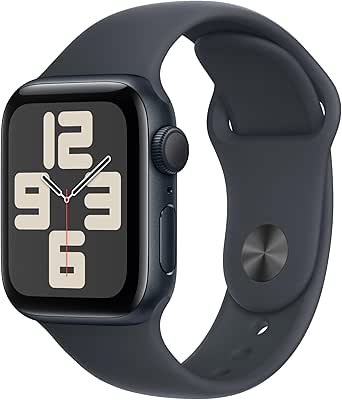
Apple Watch SE (2nd Generation) GPS 40mm Smartwatch with Midnight Aluminum Case and Midnight Sport Band (S/M)

Bose QuietComfort Ultra Headphones (2nd Gen), Wireless Noise Cancelling Over-Ear Headphones, Driftwood Sand
As an affiliate, we earn on qualifying purchases.
How Shirudo Uses Linux eBPF
eBPF programs can be attached to selected points in a Linux system, allowing observation or targeted controls without changing application code in the same way as a conventional patch. Shirudo uses that mechanism to attach protections to running systems. OpenAI says a technical walkthrough presented at the Linux Plumbers Conference showed a shield being applied and verified on a target host.
The Java4Shell example is offered as a specific illustration of this approach: a check was placed at the input-handling path associated with the attempted exploit. OpenAI also describes possible future work on kernel and core-service hardening, narrower workload permissions, safer updates and recovery, and checks that help operators verify system state. Those are broader aims, not capabilities demonstrated by the Elasticsearch test.
What the Test Does Not Establish
The announcement describes one controlled Java4Shell test but gives no independent evaluations, full test methodology, performance measurements or results across a broader range of applications and workloads. It is not clear how shields would behave under varied production conditions, how often generated protections would need manual changes, or how teams should resolve conflicts between a shield and legitimate application behavior.
The companies describe signing, verification, operator approval and TPM-supported records, but the source does not explain how these controls would be administered across large fleets. It also does not establish that Shirudo is ready for broad production deployment. The scope and reliability of any protection will depend on further testing and the specific shield and system involved.
Testing and Contributions Ahead
OpenAI points interested users to a virtual-machine quickstart for signing, loading and verifying a test protection, as well as a self-guided lab from Isovalent. The companies are seeking contributions and feedback as developers and operators inspect the project and test its behavior.
The announcement also lists a technical deep-dive webinar for December 15, but does not state the year. Further testing, published methods and performance results would help clarify how well Shirudo works beyond the example and what deployment practices operators may need. No timeline for broader evaluations or production guidance is provided.
Key Questions
What is Shirudo?
Shirudo is an open-source runtime from OpenAI and Cisco for applying temporary security protections to running Linux systems while permanent patches are prepared and deployed.
What did the Java4Shell demonstration show?
OpenAI says a Codex-generated eBPF shield rejected malicious input during a Java4Shell exploit attempt against a running Elasticsearch service, which continued operating without a restart. The source describes a controlled test, not an independent assessment or evidence of protection across other attacks.
Does Shirudo replace security patches?
No. The project is described as providing temporary protections during patch delays. The announcement does not present shields as substitutes for permanent fixes.
Are Shirudo shields applied automatically?
The companies describe a process in which teams can monitor a proposed shield and an operator approves it before deployment. They do not provide details about how this approval process would work across large production fleets.
Is Shirudo proven ready for broad production use?
The available source does not establish broad production readiness. It reports one controlled example and provides no independent evaluation, performance measurements or wider workload results.
Primary source: OpenAI · via ThorstenMeyerAI.com