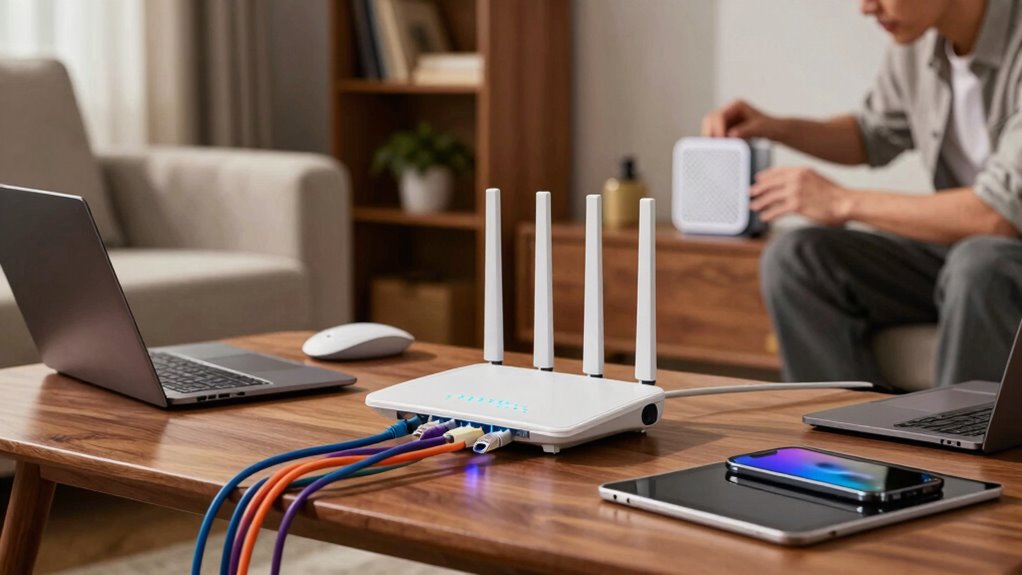

Wi-Fi 7 is driving you to rebuild your home network because it offers faster speeds, lower latency, and can handle more smart devices seamlessly. With better security features and advanced encryption, your data stays safer. Upscaling guarantees your network stays reliable as devices multiply and demand grows. Upgrading means optimizing your setup for future needs and better overall performance. Stay with us to discover how this upgrade can transform your connected home experiences.
Key Takeaways
- Wi-Fi 7 offers faster speeds and lower latency, prompting upgrades for improved device performance and seamless smart home integration.
- Enhanced security features in Wi-Fi 7 drive network rebuilds to protect personal data and prevent unauthorized access.
- Scalability of Wi-Fi 7 supports more connected devices, encouraging homeowners to upgrade infrastructure for future demands.
- Upgrading to Wi-Fi 7 enables smarter traffic management and better control over digital devices.
- Future-proofing with Wi-Fi 7 ensures reliable, secure, and high-performance networks as smart technology adoption grows.
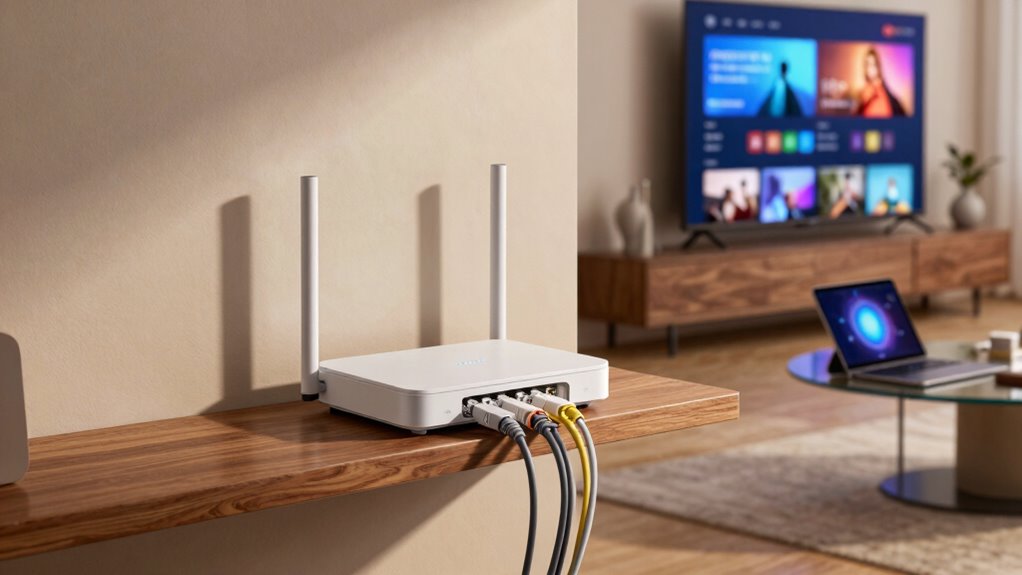
As Wi-Fi technology continues to evolve, Wi-Fi 7 promises to revolutionize home networks with faster speeds, lower latency, and greater capacity. This leap forward isn’t just about streaming 4K videos or gaming without lag; it fundamentally changes how your devices communicate and how secure that communication is. With an increasing number of smart devices in your home—smart thermostats, security cameras, voice assistants—the need for seamless integration becomes critical. Wi-Fi 7 provides the bandwidth and stability necessary to connect all these devices smoothly, reducing interference and guaranteeing that each device performs at its best. You’ll notice fewer disconnects and faster response times, making your smart home more reliable and intuitive.
Wi-Fi 7 enhances smart home connectivity with faster speeds, lower latency, and improved device stability for a more seamless experience.
But the upgrade isn’t solely about speed and device connectivity. Network security takes center stage with Wi-Fi 7. As your home network expands, so do the potential vulnerabilities. Hackers increasingly target smart devices, which can serve as entry points into your broader network. Wi-Fi 7 introduces advanced security protocols that help safeguard your data and prevent unauthorized access. Features like enhanced encryption and improved device authentication ensure that your personal information stays protected, even as you connect more gadgets. You won’t have to worry as much about security breaches because Wi-Fi 7’s architecture actively works to keep your network safe. Additionally, understanding the role of network security strategies can help you implement comprehensive safeguards for your connected devices. Being aware of metaphysical topics can also deepen your understanding of the interconnectedness of technology and personal well-being.
Rebuilding your home network with Wi-Fi 7 means more than just swapping out a router. It’s about optimizing your entire setup for future-proof performance. You’ll need to contemplate upgrading your existing devices or investing in new ones that support Wi-Fi 7, but the payoff is significant. Your network can handle more devices simultaneously without sacrificing speed, which is crucial as the number of connected gadgets keeps rising. Plus, the low latency features make your video calls clearer, your gaming sessions more responsive, and your smart home interactions more instantaneous. Upgrading also involves considering future network demands, which will likely grow as your home becomes more connected and smarter. Moreover, planning for network scalability ensures your setup remains efficient as technology advances. This transition also prompts you to think about network management. Wi-Fi 7 offers smarter ways to prioritize traffic—giving your work-from-home video conference or streaming session precedence over less critical activities. It’s an intelligent upgrade that empowers you to control your home’s digital environment more effectively. In essence, rebuilding your home network with Wi-Fi 7 isn’t just about embracing new tech; it’s about creating a secure, efficient, and highly integrated digital space tailored to your evolving needs.
As an affiliate, we earn on qualifying purchases.
Frequently Asked Questions
Will Wi-Fi 7 Require New Hardware or Can Existing Devices Upgrade?
Wi-Fi 7 will likely require new hardware for full compatibility, but some existing devices may get firmware updates to support it. You should check device compatibility first, as older gear might not handle the new technology without upgrades. Firmware updates can improve performance, but they won’t make your current hardware fully Wi-Fi 7 compatible. Upgrading your router might be necessary to experience the full benefits of Wi-Fi 7.
How Does Wi-Fi 7 Improve Security Compared to Previous Standards?
Imagine your home network as a fortress, with Wi-Fi 7 acting as its upgraded defenses. It enhances security through advanced encryption protocols, making hacking much harder. Plus, improved device compatibility means fewer vulnerabilities from outdated devices. This new standard creates a more secure environment, safeguarding your data and privacy more effectively than previous Wi-Fi versions, giving you peace of mind in today’s connected world.
What Is the Expected Timeline for Widespread Wi-Fi 7 Adoption?
You can expect widespread Wi-Fi 7 adoption within the next 2 to 3 years, as device compatibility improves and manufacturers release compatible products. As more devices support Wi-Fi 7, you’ll notice better signal range and faster speeds, especially in larger homes. Keep an eye on tech updates and router upgrades, since early adoption might be limited, but rapid growth will follow once the technology becomes mainstream.
Are There Any Health Concerns Associated With Wi-Fi 7 Signals?
You might worry about health myths surrounding Wi-Fi 7 signals, but there’s no cause for concern. These signals are similar in strength to previous Wi-Fi versions, and extensive research shows no proven health risks from exposure. Think of Wi-Fi signals as gentle breezes, not storms—so you can enjoy faster connections without fearing adverse health effects. Rest assured, your home’s signal strength remains safe and reliable with Wi-Fi 7.
How Will Wi-Fi 7 Impact Data Caps and Internet Service Plans?
Wi-Fi 7 will likely increase data consumption due to faster speeds and better streaming quality, which might lead internet providers to adjust service plans. You could see changes in service pricing as companies try to manage higher bandwidth demands. If you frequently stream or use multiple devices, your data caps could become more restrictive, prompting you to evaluate plans with higher data allowances or unlimited options.
As an affiliate, we earn on qualifying purchases.
Conclusion
As Wi-Fi 7 begins to reshape home networks, you might wonder what’s next. Will your devices keep up, or will you need to rethink your entire setup again? The future of connectivity is evolving faster than ever, and the next breakthrough could be just around the corner. Stay tuned—because what’s coming could change everything, and you won’t want to be left behind when it does. The next chapter is just about to unfold.
Wi-Fi 7 compatible smart home devices
As an affiliate, we earn on qualifying purchases.
As an affiliate, we earn on qualifying purchases.
As an affiliate, we earn on qualifying purchases.