
As phishing emails grow smarter with AI, it’s vital to spot the signs of convincing scams. Look for unnatural language, mismatched visuals, or suspicious links that lead to fake sites. Check sender addresses carefully and be wary of urgent requests or unexpected attachments. AI-generated messages often mimic real communication styles, making detection harder. Stay vigilant and pay attention to details—if you keep these tips in mind, you’ll better recognize and avoid sophisticated scams.

Get the latest gadgets delivered free — and shop member deals
- Fast, free delivery on millions of items
- Access to Prime Big Deal Days deals on October 6–7
- Prime Video, Amazon Music and more included
Key Takeaways
- Look for unnatural language, awkward phrasing, or inconsistent tone that may indicate AI-generated content.
- Check for visual red flags like blurry logos, mismatched fonts, or poorly integrated images.
- Verify sender email addresses and scrutinize suspicious links before clicking or providing information.
- Be cautious of generic greetings, urgent requests, or unfamiliar terminology in the message.
- Use AI-based filters and multi-factor authentication to help detect and prevent sophisticated scams.
The Rising Tide of Phishing Attacks and Their Impact
The rise of phishing attacks has become a pressing threat, with over 3.4 billion emails sent daily worldwide—accounting for 1.2% of all email traffic. These attacks have skyrocketed by 150% from 2019 to 2022 and continue to grow into 2025. Cybercriminals are becoming more sophisticated, using AI to craft convincing, personalized messages that bypass traditional filters. The impact is severe: organizations face an average data breach cost of nearly $5 million, and Business Email Compromise caused over $2.7 billion in losses in the U.S. alone in 2024. Phishing remains the leading cause of malware infections and data breaches, making it critical to stay vigilant. As these threats evolve, the need for awareness and better detection becomes more urgent than ever. Additionally, understanding the advanced technology behind these scams can help users recognize subtle signs of deception. Recognizing the evolving tactics employed by cybercriminals can also aid in developing more effective detection strategies.
How AI Is Revolutionizing Phishing Tactics
AI is transforming phishing by enabling attackers to craft highly convincing, personalized messages that are difficult to detect. With AI-generated content, scammers can create realistic emails and even deepfake voices for vishing scams, making their attacks more believable. As these tactics evolve, traditional defenses struggle to keep up with the sophistication AI brings to cybercrime. Additionally, the use of advanced digital asset management techniques by cybercriminals further complicates detection and response efforts. The integration of generative AI in entertainment also inspires new methods for creating deceptive multimedia content used in scams. The increasing use of anti-phishing tools that leverage machine learning highlights the ongoing arms race between scammers and cybersecurity professionals. Moreover, evolving sound manipulation techniques can generate authentic-sounding audio, increasing the risk of successful voice-based impersonation scams. Recognizing these developments, cybersecurity experts emphasize the importance of ongoing education and vigilance in defending against increasingly sophisticated phishing techniques.
AI-Generated Craftsmanship
As generative AI tools like ChatGPT become more sophisticated, cybercriminals are leveraging them to craft highly convincing phishing emails. These AI-generated messages mimic real language, tone, and style, making scams harder to detect. They can personalize content based on your online activity or public information, increasing the likelihood you’ll click. AI allows scammers to produce large volumes of tailored emails quickly, flooding inboxes with credible-looking messages. They often include convincing details like official-sounding language, realistic formatting, and relevant context, all generated automatically. This craftsmanship makes it challenging for traditional filters and even vigilant users to distinguish between legitimate emails and malicious ones. Additionally, Vetted techniques are continually evolving to counteract these AI-driven scams, emphasizing the importance of understanding phishing tactics and staying informed as phishing tactics grow more sophisticated. Staying current with cybersecurity best practices can help you recognize and avoid these advanced scams. Recognizing subtle cues and employing email verification methods are essential skills in combating these smarter threats. Being aware of email spoofing techniques can further improve your ability to identify suspicious messages before any harm occurs.
Deepfake Voice Integration
Deepfake voice technology is transforming phishing scams by enabling cybercriminals to produce highly convincing impersonations of trusted individuals. With AI, scammers can mimic voices of CEOs, colleagues, or family members, making their calls appear authentic. These deepfake voices can request sensitive information, approve transactions, or manipulate victims into action. Because the audio sounds so real, it’s harder to detect the deception, especially over phone calls or voice messages. Criminals now use this technology to bypass traditional security measures and create personalized, urgent scenarios that prey on your trust and emotions. As deepfake voices become more sophisticated and accessible, you need to stay alert. Always verify requests via multiple channels, and be cautious when handling unexpected or urgent voice communications. Understanding audio thermal behavior and sound authenticity can help you recognize subtle anomalies in voice recordings. Furthermore, being aware of energy consumption during reconditioning can assist in assessing the authenticity and integrity of audio files, making it easier to spot potential fakes. Additionally, understanding Gold IRA Rollovers can help you safeguard your investments from emerging financial scams. Paying attention to audio forensic analysis techniques can further enhance your ability to detect manipulated voices and protect yourself from deception. Recognizing classic arcade game mechanics and staying informed about evolving technologies can further improve your ability to spot frauds.
Recognizing the Signs of AI-Generated Scam Emails
AI-generated scam emails often have unnatural language patterns that feel off or overly formal. You might notice inconsistent visual elements, like mismatched fonts or poorly integrated logos, which can tip you off. Paying attention to these signs can help you spot fake messages before it’s too late. Additionally, being familiar with common home EV charging practices can help you recognize suspicious references or unfamiliar terminology that doesn’t align with trusted sources. Recognizing email authenticity cues can further strengthen your ability to identify scam attempts. Understanding digital security principles can also help you stay vigilant against evolving email scams.
Unnatural Language Patterns
Unnatural language patterns are a common sign of AI-generated scam emails that can help you spot phishing attempts more easily. These emails often contain awkward phrasing, strange syntax, or inconsistent tone. You might notice overly formal language, repetitive phrases, or vague statements that don’t match the sender’s usual style. AI-generated messages may also include odd word choices or unnatural progressions between ideas. Sometimes, the email’s grammar and punctuation are off, making it feel less authentic. Pay attention to these clues, especially if the message feels generic or strangely crafted. Recognizing these patterns helps you identify scams early, preventing you from falling victim to clever AI-crafted deception. Trust your instincts and scrutinize messages that seem oddly written or out of character. Additionally, water-related terminology can sometimes be used metaphorically or confusingly in scam emails, which is a subtle sign of their artificial origin.
Inconsistent Visual Elements
Have you ever noticed that scam emails sometimes look oddly perfect or inconsistent compared to genuine messages? AI-generated scams often feature inconsistent visual elements that stand out. For example, logos might be blurry or misaligned, fonts can vary unexpectedly within the same email, and spacing might look uneven or awkward. Sometimes, images appear stretched or pixelated, or the color scheme doesn’t match official branding. These visual inconsistencies happen because AI tools generate content quickly, without perfect attention to detail. Pay close attention to these signs—you might notice parts of the email that seem out of place or poorly designed. Recognizing these visual red flags helps you distinguish between authentic communications and sophisticated AI-crafted scams. Additionally, Free Floating in design can lead to unbalanced or awkward layouts that reveal something amiss. Being aware of visual inconsistencies is crucial in avoiding scams. Understanding how AI-generated content differs from genuine messages enhances your ability to stay vigilant. Stay vigilant, and don’t let shiny appearances deceive you.
Common Traits of Sophisticated Phishing Messages
Sophisticated phishing messages often mimic legitimate communications so convincingly that they can easily deceive even vigilant users. They use real branding, official logos, and familiar language to appear authentic. These messages often create a sense of urgency, prompting you to act quickly—like confirming account details or clicking a link—before you have time to think. They may also include personalized information, such as your name or recent transactions, gathered through data breaches or social engineering. The email addresses and sender names are carefully crafted to look legitimate, sometimes even matching official contacts. Hyperlinks often lead to fake sites that closely resemble real ones, making it harder to spot the scam. Recognizing these traits helps you stay alert and avoid falling victim to these increasingly convincing attacks.
Industry Targets and the Most Common Fake Claims
Why do certain industries become prime targets for phishing attacks? Cybercriminals focus on industries with access to valuable data or finances, like finance, healthcare, retail, technology, and government. These sectors often handle sensitive information, making them attractive for scams that aim to steal credentials or money. Fake claims commonly impersonate trusted sources, such as Microsoft or banks, to lure victims into revealing login details or installing malware. In finance, scams frequently involve fake invoices or investment opportunities, while healthcare phishing messages may pretend to be from insurance providers or medical suppliers. Retail and tech scams often promote fake order confirmations or software updates. By understanding these common claims, you can better recognize and avoid falling for the most frequent and convincing fake messages targeting these industries. Additionally, a strong focus on attention to detail and systematic testing of email security measures can help organizations identify and mitigate such threats more effectively.
The Role of User Behavior in Detecting Scams
You play a vital role in spotting phishing scams by recognizing common tactics like suspicious links or unusual sender addresses. Staying aware of these signs helps you avoid falling for fake claims and malicious attachments. By sharpening your threat awareness, you can act quickly and prevent potential breaches.
Recognizing Common Tactics
Recognizing common tactics used in phishing emails is essential for effective detection, especially as cybercriminals employ increasingly convincing methods. Being aware of these tactics helps you spot scams before falling victim. Look out for:
- Urgent language prompting immediate action, like “Your account will be locked.”
- Unusual sender addresses that don’t match official domains.
- Unexpected attachments or links, especially with odd file types (.zip, .htm).
- Requests for sensitive info, such as passwords or credit card numbers.
- Generic greetings like “Dear Customer” instead of your name.
Enhancing Threat Awareness
User behavior plays a crucial role in detecting and preventing phishing scams. When you’re alert and attentive, you can identify suspicious signs like strange sender addresses, urgent language, or unexpected attachments. Regularly reporting phishing emails helps your organization recognize patterns and improve defenses. Training programs and simulated phishing tests boost your awareness, making you more adept at spotting scams early. The more engaged you are in understanding common tactics, the less likely you are to fall for sophisticated AI-generated messages. Your quick action—such as deleting or reporting suspicious emails—reduces the chances of data breaches and financial loss. Staying vigilant, practicing good email habits, and sharing insights with colleagues strengthen your collective defense against evolving threats. Your behavior directly impacts your cybersecurity resilience.
Tools and Techniques to Identify and Block Phishing Emails
To effectively combat the rising tide of phishing emails, organizations rely on a combination of advanced tools and techniques designed to detect and block malicious messages before they reach inboxes. These include sophisticated email filters that analyze sender reputation and message content, AI-powered algorithms that identify subtle phishing cues, and real-time threat intelligence sharing to stay ahead of new tactics. You should also utilize multi-layered authentication like DMARC, DKIM, and SPF to verify email origins. Additionally, security awareness training helps users recognize suspicious emails. Here are some effective tools and techniques:
- AI-based spam and phishing filters
- Domain and sender reputation checks
- Multi-factor authentication (MFA)
- Email authentication protocols (DMARC, DKIM, SPF)
- User training and simulated phishing tests
Best Practices for Staying Safe in an Evolving Threat Landscape
Staying safe from phishing threats requires a proactive and layered approach, especially as cybercriminals become more sophisticated. You should regularly update your software and security tools to stay ahead of evolving tactics. Always verify the sender’s email address and look for signs of impersonation, such as slight misspellings or unusual domains. Be cautious with unexpected attachments or links, especially if they request personal information or urgent actions. Use strong, unique passwords for each account and enable multi-factor authentication whenever possible. Educate yourself on current phishing trends, including AI-generated content and deepfake scams. Monitor your accounts for suspicious activity, and report any questionable emails promptly. Staying vigilant and practicing good digital hygiene can markedly reduce your risk of falling victim.
The Importance of Continuous Awareness and Training
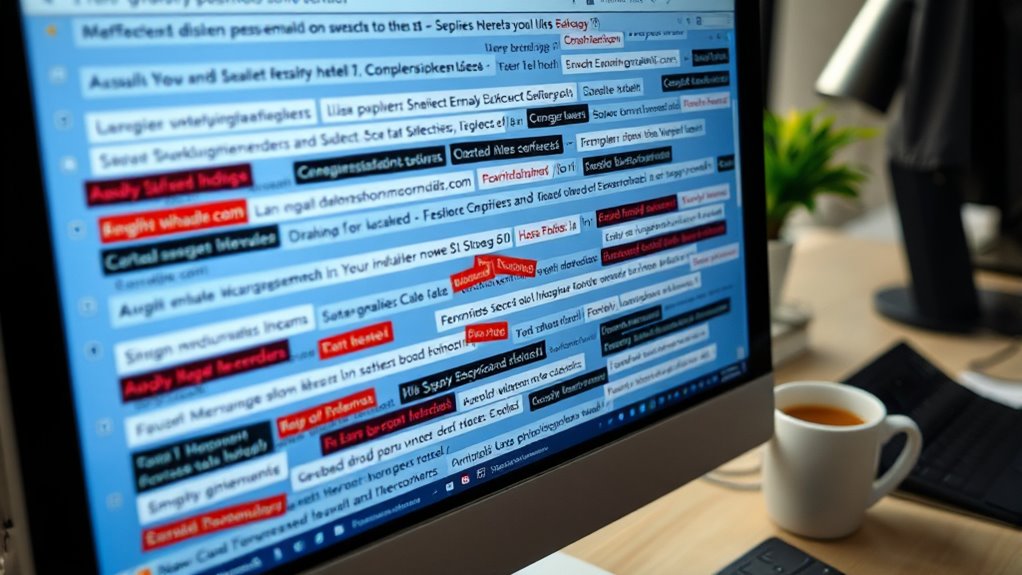
Continuous awareness and training are essential because cyber threats like sophisticated phishing emails evolve rapidly, often outpacing static security measures. Staying vigilant helps you recognize new tactics and avoid falling for scams. Regular training boosts your ability to identify subtle signs of phishing, such as fake sender addresses or urgent language. It also keeps you updated on emerging attack methods, especially AI-generated content. To stay prepared, consider:
Ongoing training sharpens your skills to spot evolving phishing tactics and AI-generated scams.
- Participating in ongoing security workshops
- Reviewing simulated phishing exercises
- Keeping up with threat alerts and updates
- Practicing cautious email behavior
- Sharing knowledge with colleagues
Future Trends in Phishing and How to Prepare
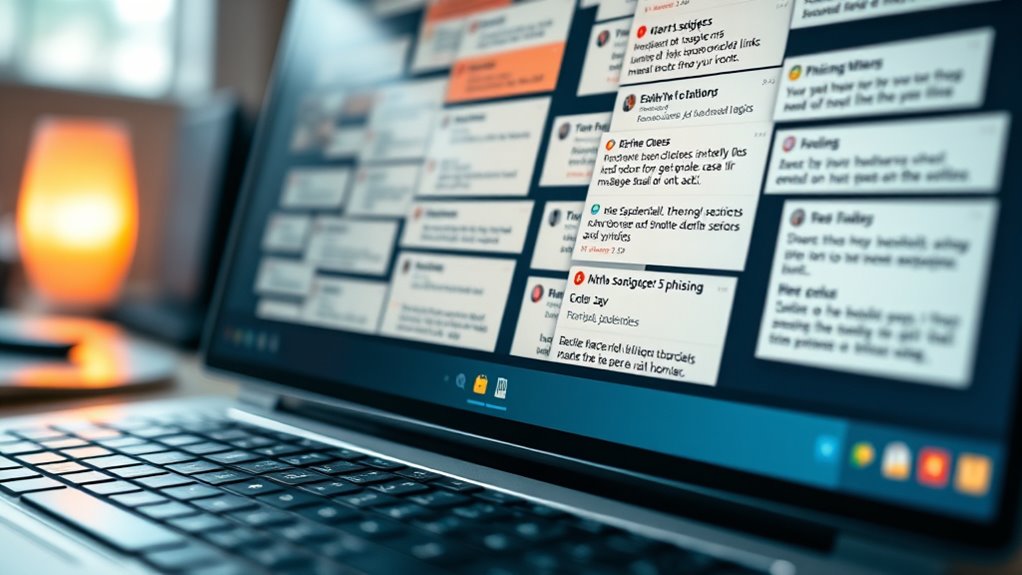
As phishing threats continue to evolve rapidly, attackers are increasingly leveraging advanced technologies like generative AI to craft more convincing and personalized attacks. Expect smarter scams that mimic your communication style, create realistic deepfakes, and target you with tailored messages. AI will automate the creation of convincing content, making it harder to spot scams. To prepare, stay vigilant and maintain strong security habits. Use multi-factor authentication, verify sender identities, and avoid clicking links or opening attachments from unknown sources. Regularly update your software to patch vulnerabilities and employ AI-powered security tools that can detect sophisticated attacks. Educate yourself about emerging tactics and remain cautious of messages that seem unusually urgent or personalized. Staying informed and proactive is your best defense against these evolving threats.
Frequently Asked Questions
How Effective Are Current AI Detection Tools Against Sophisticated Phishing Emails?
Current AI detection tools are improving but still struggle against sophisticated phishing emails. You might find that many AI-crafted scams bypass traditional filters because they mimic genuine content more convincingly. Stay vigilant, as attackers use AI to automate and personalize attacks. To protect yourself, combine AI tools with your awareness, scrutinize suspicious messages, and report any threats. Keeping up with training and new detection methods also boosts your defenses.
What Are the Latest Techniques Used by Cybercriminals to Evade Email Filters?
Cybercriminals have unleashed a wave of tactics so cunning, it’s like they have a crystal ball. They now craft AI-generated, hyper-realistic phishing emails that bypass traditional filters entirely. They use sophisticated evasion techniques like embedding malicious ZIP files, mimicking trusted brands, and personalizing messages through AI. These tactics make it incredibly difficult for email defenses to detect and block, leaving you vulnerable unless you stay vigilant and question every suspicious message.
How Can Organizations Improve Employee Awareness to Combat Ai-Generated Scams?
You can improve employee awareness by providing regular, targeted training on AI-generated scams. Teach your team to recognize subtle signs like unusual language, urgent requests, or unfamiliar links. Encourage a culture of skepticism and verification, such as double-checking sender details or using security tools. Keep everyone updated on the latest phishing tactics, and promote reporting suspicious emails promptly. This proactive approach helps your organization stay one step ahead of sophisticated, AI-crafted scams.
Are There Specific Signs Indicating an Email Is Ai-Crafted Rather Than Human-Made?
Did you know that over 82% of phishing emails now leverage AI-generated content? You can spot AI-crafted scams by watching for subtle inconsistencies, like awkward phrasing, unusual language, or mismatched branding. Pay attention to generic greetings, urgent requests, and unfamiliar sender addresses. These signs often indicate an email isn’t human-made. Trust your instincts, and double-check suspicious messages before clicking links or sharing sensitive information.
What Emerging Technologies Can Help in Proactively Preventing Phishing Attacks?
You can leverage emerging technologies like AI-powered email filters that detect sophisticated phishing attempts and machine learning algorithms that analyze email patterns for anomalies. Implement multi-factor authentication to prevent credential theft and utilize threat intelligence platforms for real-time updates on attack trends. Incorporate behavioral analytics to identify unusual user activity, and deploy automated incident response tools to swiftly neutralize threats before they cause harm. Staying proactive with these tools enhances your defenses against evolving phishing tactics.
Conclusion
As phishing emails grow smarter with AI, staying vigilant is your best defense. Trust your instincts—look for odd details or unfamiliar sender addresses—and use strong security tools. While some claim AI can eliminate scams, research shows it’s more about staying ahead of increasingly clever tactics. By continually educating yourself and adopting best practices, you can outsmart scammers and keep your inbox safe in this evolving digital landscape.
Fall Picks
fall essentials
As an affiliate, we earn on qualifying purchases.