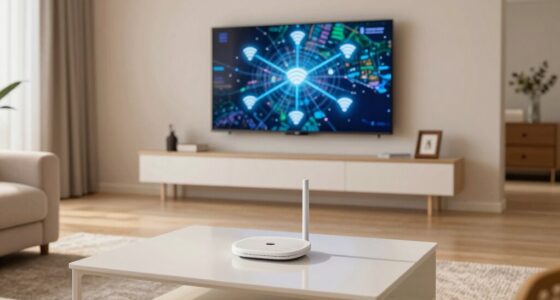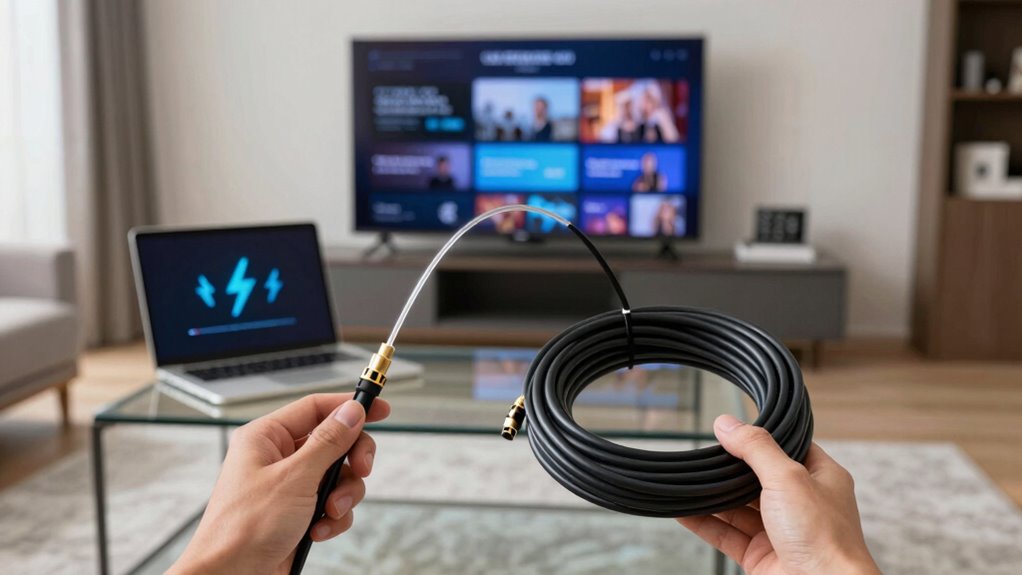

Switching to fiber internet means you’ll enjoy a more stable, interference-free connection, perfect for remote work, streaming, and gaming. You’ll notice fewer disruptions and consistent speeds, even during peak hours. Installing fiber may take longer and cost more upfront, but it’s more future-proof. Cable internet is easier to set up and widely available but might slow down during busy times. Want to see how each option could change your daily life? Keep exploring for details.
Key Takeaways
- Fiber internet ensures more stable and consistent connections for activities like streaming, gaming, and remote work.
- Installation of fiber may take longer and be more costly compared to quick, straightforward cable setup.
- Fiber reduces network disruptions and interference, improving overall reliability in daily online tasks.
- Cable internet is easier to access and set up, often suitable for casual browsing and light streaming.
- Future advancements in fiber technology promise higher speeds and better scalability for evolving digital needs.
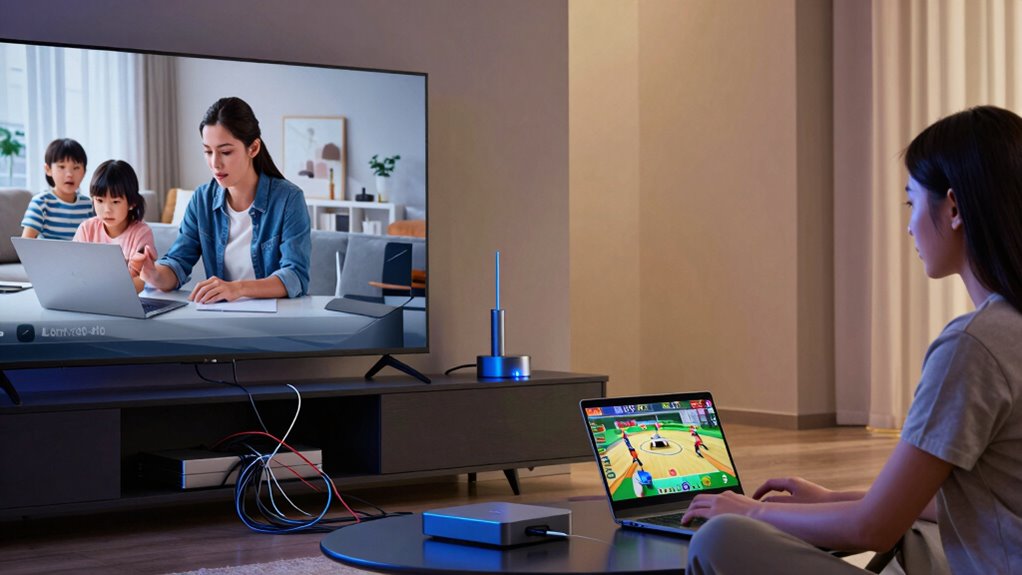
Are you wondering which internet connection best suits your needs: fiber or cable? Deciding between the two can seem tricky, especially with so many factors to consider. One of the first things to think about is network reliability. Fiber internet generally offers a more consistent and stable connection because it uses light signals through thin glass fibers, making it highly resistant to interference. This means fewer disruptions during your video calls, gaming sessions, or streaming marathons. Cable internet, on the other hand, shares bandwidth with neighboring users, which can sometimes lead to slower speeds or lag during peak hours. If your daily routine depends heavily on a dependable internet connection, fiber could be the better choice due to its superior reliability.
Fiber offers a more stable, interference-resistant connection ideal for reliable video calls, gaming, and streaming.
Another aspect to weigh is the installation process. Setting up fiber internet often requires a more involved process because it involves laying down new fiber optic cables directly to your home. This can mean a longer wait time and potentially higher installation costs, especially if your area isn’t already wired for fiber. You might need to coordinate with service providers for a site survey and installation appointment, which can be an inconvenience if you’re keen to get online quickly. Cable internet, however, typically involves a straightforward setup because the infrastructure is already in place. A technician can usually install it faster, often within a day, and with less disruption to your home. This ease of installation can be appealing if you’re looking for a quick upgrade or a hassle-free setup. Additionally, network infrastructure plays a key role in determining the availability and quality of your internet options.
In your everyday life, these differences in network reliability and installation process can profoundly impact your experience. With fiber, you’re less likely to face interruptions, making it ideal if you work remotely, stream high-definition content, or game online. The consistent speed ensures your activities aren’t slowed down by network fluctuations. Additionally, fiber optic technology continues to advance, promising even greater speeds and future-proofing your internet needs. Scientific studies also suggest that network interference can significantly affect internet performance, reinforcing the benefits of fiber’s resistance to such issues. Conversely, cable might be sufficient if your internet needs are more casual, such as browsing social media, emails, or occasional streaming. Its easier installation process might also appeal if you’re moving or upgrading services and want to minimize downtime.
Ultimately, your choice depends on how much you value a stable, high-speed connection versus convenience and installation simplicity. Both options can change your everyday life by enabling better communication, smoother entertainment, and more efficient work-from-home experiences. But if you’re after top-tier performance and reliability, fiber stands out as the more future-proof option.

EVEO Screen Cleaner Spray - Large Screen Cleaner Bottle - TV Screen Cleaner, Computer Screen Cleaner, for Laptop, Phone, Ipad - Computer Cleaning kit Electronic Cleaner (1 Pack)
- Versatile Electronic Device Cleaner: Suitable for TVs, laptops, phones, and tablets
- Effective Streak-Free Cleaning: Removes dust, fingerprints, and smudges
- Gentle on Sensitive Screens: Safe for LCD, LED, OLED, CRT screens
As an affiliate, we earn on qualifying purchases.
Frequently Asked Questions
How Does Fiber Internet Impact Smart Home Device Performance?
Fiber internet considerably boosts your smart home device performance by providing superior network reliability and faster speeds. You’ll notice fewer disconnections and smoother operation, especially with multiple devices connected simultaneously. Plus, fiber offers better device compatibility, ensuring your smart gadgets work seamlessly without lag or interruptions. This means your smart home becomes more responsive, secure, and dependable, enhancing your overall experience and making everyday tasks easier and more efficient.
Can Fiber Internet Improve Online Gaming Experience?
Yes, fiber internet can improve your online gaming experience. With latency reduction, your game responses become quicker, giving you a competitive edge. Plus, bandwidth optimization guarantees smoother gameplay, even when multiple devices are streaming or downloading simultaneously. You’ll notice less lag, faster load times, and a more consistent connection overall. This means you can enjoy your games without interruptions, making your gaming sessions more enjoyable and seamless.
Is Fiber Internet More Secure Than Cable?
Is fiber internet more secure than cable? Absolutely. Fiber networks use advanced encryption protocols that make data transmission harder for hackers to intercept. While both types have vulnerabilities, fiber’s direct, dedicated lines reduce the risk of network breaches compared to cable. Its inherent design minimizes interference and eavesdropping, making it a safer choice for your online activities. So, if security matters, fiber clearly offers a stronger shield.
How Does Internet Speed Affect Remote Work Productivity?
Faster internet speeds boost your remote work productivity by reducing bandwidth limitations and latency issues, allowing seamless video calls and quick file uploads. When your connection is swift, you experience fewer interruptions and lag, making collaboration easier. This means you can focus on tasks without frustration, stay connected with colleagues, and meet deadlines more efficiently. Overall, a high-speed connection enhances your remote work experience and helps you stay productive throughout the day.
Will Switching to Fiber Reduce Overall Internet Costs?
Like the myth of Icarus flying higher, you might think faster internet leads to higher costs, but switching to fiber can actually reduce your overall costs through better efficiency. Fiber offers cost savings over time, especially with lower maintenance and energy expenses. Plus, its increasing service availability means you’re more likely to get reliable, affordable internet that fits your budget and meets your needs, making it a smart choice for long-term savings.
Conclusion
Switching to fiber or cable internet can markedly boost your daily life, making streaming, gaming, and remote work smoother. Did you know that fiber internet can deliver speeds up to 1 Gbps, which is over 20 times faster than traditional cable? Choosing fiber means embracing faster, more reliable connections that keep you connected without frustration. So, consider your needs—you might just find that upgrading transforms how you work, play, and stay in touch every day.

iO CLEAN Screen Cleaner Spray (16oz - 473ml) – Best Large Cleaning Kit
- Versatile Screen Compatibility: Works on all electronic screens and devices
- Gentle, Scratch-Free Formula: Removes dust, fingerprints, grime safely
- Protective, Anti-Static Coating: Leaves a streak-free, smudge-free shine
As an affiliate, we earn on qualifying purchases.