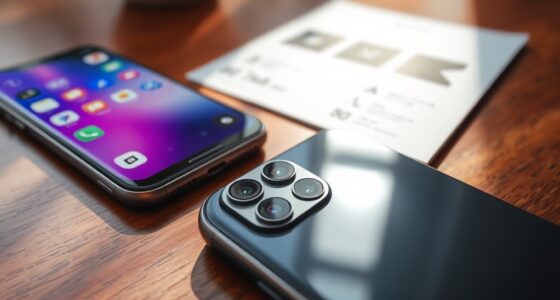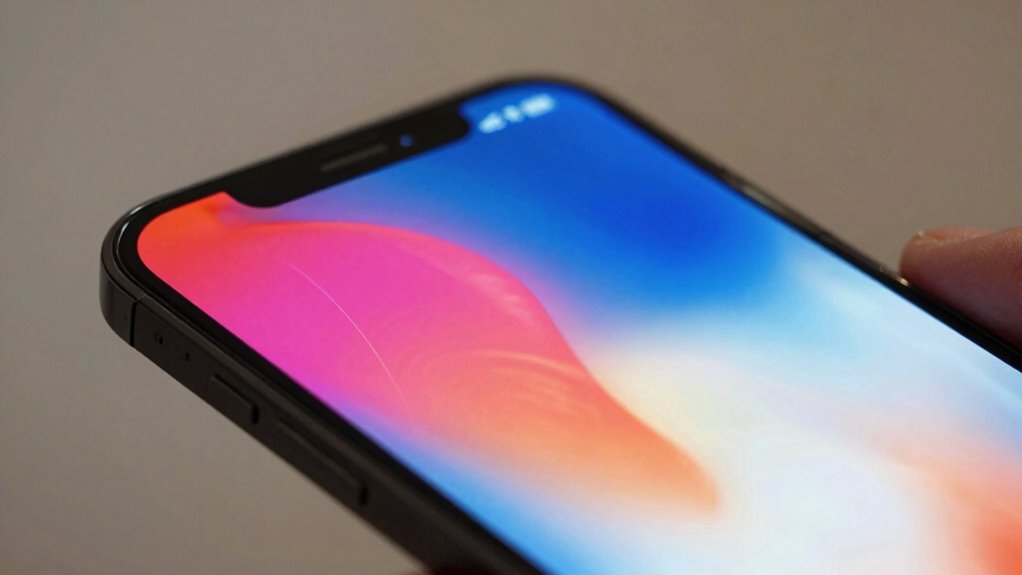

Your phone’s refresh rate tells you how many times per second the screen updates, with higher rates like 120Hz or 240Hz making motion look smoother and more responsive. This affects how fluidly you see scrolling, animations, and fast-paced action. While higher refresh rates improve your user experience, they can also impact battery life. To learn how modern screens balance these factors and improve your viewing, keep exploring more details.

Get the latest gadgets delivered free — and shop member deals
- Fast, free delivery on millions of items
- Access to Prime Big Deal Days deals on October 6–7
- Prime Video, Amazon Music and more included
Key Takeaways
- The refresh rate indicates how many times per second the phone screen updates, measured in Hertz (Hz).
- Higher refresh rates (like 120Hz or 240Hz) provide smoother motion during scrolling, gaming, and videos.
- It enhances responsiveness and visual fluidity, making interactions feel more natural and seamless.
- Increasing refresh rates can consume more battery, but modern phones often adjust them dynamically to save power.
- Improvements in screen technology continue to support higher refresh rates for better user experiences.

When you look at your phone screen, you might notice how smoothly everything moves, but what exactly makes that happen? The answer lies in the refresh rate, a key aspect of screen technology that directly impacts your user experience. Refresh rate refers to how many times per second the display updates with new images, measured in hertz (Hz). A higher refresh rate means your screen refreshes more frequently, resulting in smoother motion. For example, a 60Hz screen updates 60 times per second, while a 120Hz or 240Hz screen refreshes even more often. This difference can be noticeable, especially when you’re scrolling through social media, playing games, or watching videos. The more fluid the motion, the more natural and responsive your device feels.
A higher refresh rate results in smoother, more responsive motion on your phone screen.
Screen technology has advanced significantly over the years, enabling displays to support higher refresh rates without sacrificing image quality or battery life. Modern smartphones incorporate high refresh rate screens to provide a more engaging user experience. When your device refreshes more often, interactions like swiping, tapping, and scrolling become more seamless. This smoothness not only enhances visuals but also makes touch responses feel more immediate, reducing lag and making your device feel more responsive. It’s especially noticeable during fast-paced activities like gaming or using augmented reality apps, where quick reactions are vital. Display technology continues to evolve, enabling manufacturers to develop higher refresh rate displays that are both efficient and capable of delivering stunning visuals. Additionally, manufacturers are exploring refresh rate optimization techniques to further enhance performance while conserving energy.
However, higher refresh rates can sometimes lead to increased battery consumption, which is why some phones allow you to toggle between different refresh rates or set adaptive modes. Adaptive refresh rate technology adjusts the refresh rate dynamically based on your activity, conserving power when high refresh rates aren’t necessary. This blend of advanced screen technology and smart power management ensures you get the best user experience without compromising battery life. Furthermore, the development of adaptive refresh rate systems highlights ongoing efforts to balance performance and energy efficiency in mobile devices. Ultimately, understanding what refresh rate means on a phone screen helps you appreciate the effort that goes into making your device feel fast and responsive. It’s a crucial factor in modern screen technology that influences how smooth and natural your interactions feel, whether you’re scrolling through social feeds or gaming. As manufacturers continue to develop higher refresh rates, your experience will only get better, making your smartphone more intuitive and enjoyable to use. In the end, the refresh rate isn’t just a technical specification; it’s a key element that shapes how you perceive and interact with your device every day.
high refresh rate smartphone screen protector
As an affiliate, we earn on qualifying purchases.
As an affiliate, we earn on qualifying purchases.
Frequently Asked Questions
How Does Refresh Rate Affect Battery Life?
A higher refresh rate can drain your battery faster because your phone updates the screen more frequently, leading to increased power consumption. This can cause screen flickering issues if not optimized and may affect refresh rate compatibility with your device’s battery capacity. You might notice shorter battery life when using a high refresh rate setting, especially during intensive tasks or extended usage, so balancing refresh rate and battery life is essential.
Can I Change My Phone’s Refresh Rate Manually?
Think of your phone’s screen like a dance floor—faster beats mean smoother moves. Yes, you can change your phone’s refresh rate manually through the display or settings menu. Adjusting the refresh rate settings can help reduce screen flickering and save battery life. Just go to your device’s display options, find the refresh rate setting, and select a preferred rate, whether it’s 60Hz for battery savings or higher for smoother visuals.
Is a Higher Refresh Rate Better for Gaming?
Yes, a higher refresh rate generally improves gaming performance by providing better visual smoothness. You’ll notice fewer stutters and more fluid motion, making gameplay feel more responsive. However, it can also drain your battery faster. If your phone supports a high refresh rate, enabling it can give you a competitive edge in fast-paced games. Just keep in mind, the benefits depend on your device’s hardware and game optimization.
Do All Apps Support High Refresh Rates?
Not all apps support high refresh rates, which can affect your experience. While the screen’s durability remains unaffected, software compatibility plays a role in how well apps utilize the higher refresh rate. Some apps may run smoothly, but others might not fully benefit from the increased refresh rate due to limitations in their coding. Always check if your favorite apps are optimized to take advantage of your phone’s higher refresh capabilities.
What’s the Ideal Refresh Rate for Everyday Use?
For everyday use, a 60Hz refresh rate is ideal because it offers smooth screen responsiveness without draining your battery too quickly. Display technology has improved, but most apps are optimized for 60Hz, making it the perfect balance. Higher refresh rates like 90Hz or 120Hz enhance gaming and scrolling, but for daily tasks, sticking to 60Hz keeps your device efficient while still providing a good user experience.
As an affiliate, we earn on qualifying purchases.
Conclusion
Understanding refresh rate is like tuning a musical instrument—you guarantee everything plays smoothly and in sync. A higher refresh rate makes your phone feel more responsive, like gliding effortlessly over ice. It’s especially noticeable when scrolling or gaming, where every move counts. So, next time you pick up your device, remember that a faster refresh rate is your ticket to a smoother, more enjoyable experience—like watching a stunning dance unfold in real-time.
adaptive refresh rate smartphone
As an affiliate, we earn on qualifying purchases.
As an affiliate, we earn on qualifying purchases.
gaming phone with high refresh rate
As an affiliate, we earn on qualifying purchases.
As an affiliate, we earn on qualifying purchases.
Evergreen bestsellers Picks
bestsellers
As an affiliate, we earn on qualifying purchases.