

Smartphone cameras use multiple lenses like wide, ultra-wide, telephoto, and macro to capture different shot types. They rely on stabilization systems—optical or digital—to keep images sharp in various conditions, while sensors influence clarity and color. Understanding these parts helps you make better choices and improves your photos, especially in tricky situations. If you want to know how all these pieces work together, there’s more beneath the surface that can make your shots even better.

Get the latest gadgets delivered free with Prime
- Fast, free delivery on millions of items
- Prime Video, Amazon Music and more included
- Member-only deals all year
Key Takeaways
- Smartphone cameras use different lenses (wide, ultra-wide, telephoto, macro) to improve image quality and versatility.
- Optical Image Stabilization (OIS) physically reduces shake, providing clearer photos compared to digital stabilization.
- Understanding lens types and stabilization helps optimize shot quality without relying on marketing claims.
- Camera systems combine multiple lenses, stabilization, and sensors to deliver better images in varied conditions.
- Knowledge of these components enables better use of camera features, avoiding confusion caused by marketing hype.
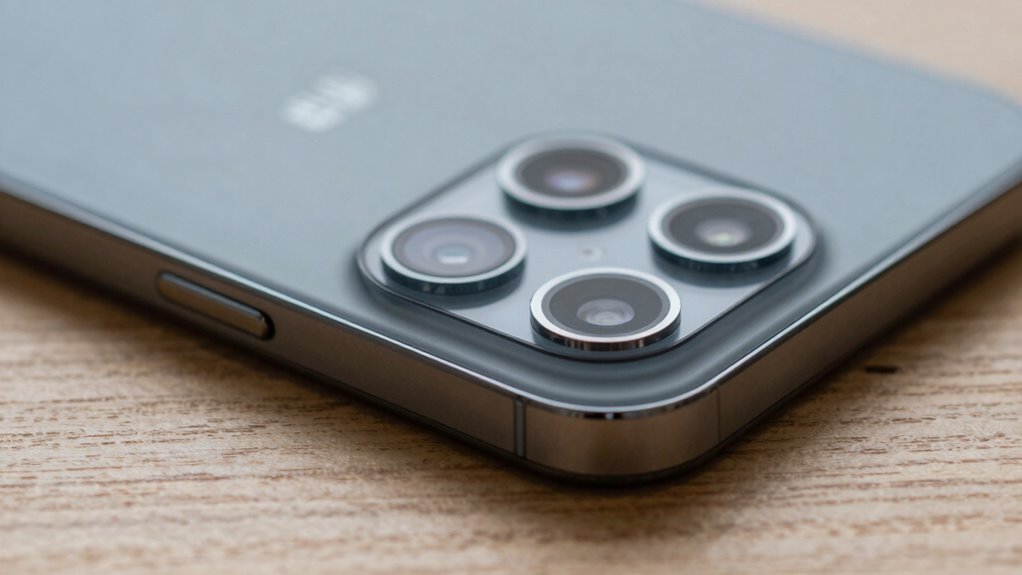
Smartphone cameras have revolutionized the way we capture and share moments, making photography more accessible than ever. When you look at your phone, it’s easy to assume that all cameras are the same, but understanding how they work can improve your photos considerably. One key aspect is the variety of lens types built into modern smartphones. Typically, you’ll find a main wide lens, which captures most of your shots, but many devices also include ultra-wide lenses for landscapes and group photos, telephoto lenses for zooming in on distant subjects, and sometimes macro lenses for close-up shots. Each lens type serves a specific purpose and can dramatically change the perspective and quality of your images. Knowing which lens to use in different situations allows you to make better creative choices and avoid relying solely on digital zoom, which often degrades image quality. Additionally, understanding the role of different lens types can help you better utilize your phone’s lens options to enhance your photography.
Understanding different smartphone lenses helps you capture better photos and avoid the quality loss of digital zoom.
Another critical element that influences your photo quality is image stabilization. It’s a feature that helps keep your shots sharp, especially in challenging conditions like low light or when you’re holding the phone in motion. There are two main types: optical image stabilization (OIS) and digital or electronic stabilization. OIS physically shifts the lens or sensor to counteract hand shake, which is especially useful when you’re taking photos in dim environments or recording videos. Digital stabilization, on the other hand, processes the image after capture to reduce blur caused by movement. While digital stabilization can help, it’s generally less effective than OIS because it may crop your image slightly to reduce shake effects. Recognizing these stabilization methods can help you decide when to use your device’s features to get clearer images.
Understanding how these features work together can help you get better results without relying on marketing hype. For example, knowing that your phone has multiple lens options means you can switch between wide, telephoto, and ultra-wide modes rather than just zoom digitally. This preserves image quality and gives you more creative control. Recognizing that your device has image stabilization tells you that you can confidently shoot in lower light or while moving without ending up with blurry pictures. Instead of obsessing over fancy camera specs, it’s helpful to learn about the sensor technology, which impacts the clarity and dynamic range of your images, and how it works in conjunction with other components. These technologies working together are designed to work in tandem to optimize your photos and videos, especially in variable conditions. Understanding that these integrated systems are purposefully aligned can help you maximize your device’s capabilities for better results in everyday situations.
In essence, your smartphone’s camera is a sophisticated tool with specific components designed to improve your photography experience. By understanding the differences in lens types and how image stabilization works, you can better leverage your device’s capabilities and take photos that truly reflect your vision.
As an affiliate, we earn on qualifying purchases.
Frequently Asked Questions
How Do Smartphone Camera Sensors Differ From Traditional Camera Sensors?
You’ll notice smartphone camera sensors are smaller than traditional camera sensors, affecting image quality. They often have higher pixel density, packing more pixels into a tiny space, which can boost detail but might reduce low-light performance. Sensor size impacts light capture, while pixel density influences detail. So, even though smartphones excel in convenience, their sensors typically trade off some image quality compared to traditional cameras with larger sensors.
What Role Does Image Processing Play in Smartphone Photography?
Image processing is vital in smartphone photography, as it uses computational photography techniques to improve your photos. It automatically applies image enhancement, reducing noise, balancing exposure, and sharpening details for clearer, more vibrant images. This processing happens instantly, allowing you to capture better shots even in low light or challenging conditions. Fundamentally, your phone’s software works behind the scenes to optimize your pictures for a professional look without extra effort.
How Does Lens Quality Impact Smartphone Photo Clarity?
Think of your smartphone lens like a finely crafted window; high-quality lens materials guarantee clearer, sharper images. If the lens is made from cheap glass, your photos can look blurry or distorted. Optical stabilization helps keep images steady, like a tripod in your hand. Together, better lens materials and stabilization directly improve photo clarity, capturing details more accurately, especially in low light or fast-moving scenes.
What Is the Significance of Aperture Size in Smartphones?
Aperture size is essential because it controls how much light enters your smartphone camera—this is aperture mechanics. A wider aperture means more light, which improves photo quality in low-light conditions and creates a pleasing background blur. Conversely, a smaller aperture limits light entry, making your images sharper in bright settings. Understanding this helps you choose phones with the right aperture size for your photography needs, ensuring better photos in various lighting.
How Do Different Smartphone Brands Compare in Camera Performance?
Think of smartphone brands like different chefs, each with their own recipe for camera performance. Apple offers user-friendly interfaces and consistent quality, while Samsung provides versatile features and strong low-light capabilities. Google excels in software processing, and Huawei boasts impressive zoom. When comparing, consider battery life, as high-performance cameras drain power fast, and user interface, which affects how easily you access and control camera features.
optical image stabilization smartphone
As an affiliate, we earn on qualifying purchases.
As an affiliate, we earn on qualifying purchases.
Conclusion
So, next time you brag about your “professional-grade” camera, remember it’s just a tiny lens and some fancy pixels pretending to be a DSLR. Your phone’s camera might be good enough for a quick snapshot, but don’t fool yourself into thinking you’re capturing art. It’s mostly magic of marketing and a little hardware wizardry. So go ahead, snap away—just don’t expect it to replace real photography, or your favorite camera gear.
As an affiliate, we earn on qualifying purchases.
telephoto lens attachment for phone
As an affiliate, we earn on qualifying purchases.
As an affiliate, we earn on qualifying purchases.
Fall Picks
fall essentials
As an affiliate, we earn on qualifying purchases.