
If you’re a student on the go, a tablet offers lightweight portability, longer battery life, and quick app access for reading, note-taking, and media use. Laptops, however, provide better performance for multitasking, software, and typing-heavy tasks, making them ideal for more demanding work. Your choice depends on what’s more important—lightness and convenience or power and versatility. Keep exploring—There’s more to contemplate to help you decide what’s best for your needs.
Key Takeaways
- Tablets are more portable and lightweight, ideal for quick trips and commuting, while ultraportable laptops offer greater versatility.
- Laptops provide better performance for multitasking and complex software, beneficial for intensive coursework.
- Tablets have longer battery life and faster charging, ensuring extended use on the go with less downtime.
- Laptops support specialized educational tools and software, making them suitable for more demanding academic tasks.
- Tablets are generally more affordable and easier to carry, but laptops offer more functionality and compatibility for student needs.
Portability and Design Considerations

When choosing between a tablet and a laptop, portability and design are essential factors to take into account. You’ll find that tablets are compact, lightweight, and easy to slip into a bag or backpack. They’re perfect for quick trips, commuting, or carrying around campus. Their slim profiles and touchscreens make them convenient for reading, note-taking, or browsing without adding bulk. Laptops, on the other hand, tend to be larger and heavier but still designed for mobility. Modern ultraportable laptops are sleek and lightweight, making them easy to carry, but they usually require a dedicated bag. Consider how much weight and size matter for your daily routine. If portability is your priority, a tablet’s simple, minimal design might suit you better. Additionally, understanding the design considerations involved in choosing a device can help ensure it meets your specific needs. For students, device compatibility with educational tools and apps can also influence your choice. Moreover, evaluating security features is important to protect your data when using portable devices on campus or in public spaces. Recognizing the importance of battery life can also make a significant difference during long school days or travel. Incorporating durability into your decision can help ensure your device withstands everyday wear and tear.
Performance and Functionality

While portability influences how you carry your device, performance and functionality determine how well it handles your daily tasks. A laptop generally offers faster processors, more RAM, and better multitasking capabilities, making it ideal for complex assignments, software, and multitasking. It also supports a wider range of software, especially for specialized programs like graphic design or coding. Tablets have improved considerably, but they often rely on mobile processors that can struggle with heavy-duty tasks. However, tablets excel in quick note-taking, media consumption, and app-based work. If you need seamless multitasking and robust software support, a laptop’s performance is unmatched. Additionally, considering device versatility can help you decide which device aligns best with your lifestyle and goals. Moreover, advances in European cloud solutions enable better data management and security for your devices, ensuring your work remains protected and accessible. Furthermore, understanding website performance metrics can help you evaluate how effectively your device supports your online activities. A good understanding of performance benchmarks can guide you in choosing the right device to meet your specific needs.
Battery Life and Charging Needs

Battery life and charging needs are crucial factors to weigh, especially if you’re often on the go or rely heavily on your device throughout the day. Tablets generally offer longer battery life due to their smaller screens and less powerful hardware, allowing you to use them for hours without plugging in. Laptops, on the other hand, tend to drain batteries faster, especially if you’re running demanding applications or multitasking. Charging needs also differ: tablets usually charge quickly and last longer between charges, while laptops may require more time to recharge and might need to be plugged in more frequently. If portability and extended use are priorities, a tablet might be better. However, if you need a device that can handle longer, intensive tasks, you’ll want to evaluate the battery capacity and charging convenience of each option. Additionally, some laptops now feature high-capacity batteries designed to extend usage times, making them more suitable for on-the-go productivity. Understanding power management features can also help optimize battery life during use.
Compatibility With Educational Tools

Compatibility with educational tools plays a significant role in choosing between a tablet and a laptop. If you rely on specialized software or platforms for your coursework, a laptop often offers better compatibility. Many educational programs are designed for desktop or laptop operating systems like Windows or macOS, making laptops a more seamless option. Tablets may support essential apps, but some advanced tools or software features might be limited or unavailable. Additionally, if your classes involve extensive typing or multitasking, a laptop’s physical keyboard and larger screen can enhance productivity. On the other hand, tablets excel with lightweight, touch-based apps, which are perfect for quick note-taking or interactive learning. Ultimately, consider which device supports the educational tools you use most frequently for a smoother learning experience.
Price Range and Value for Students
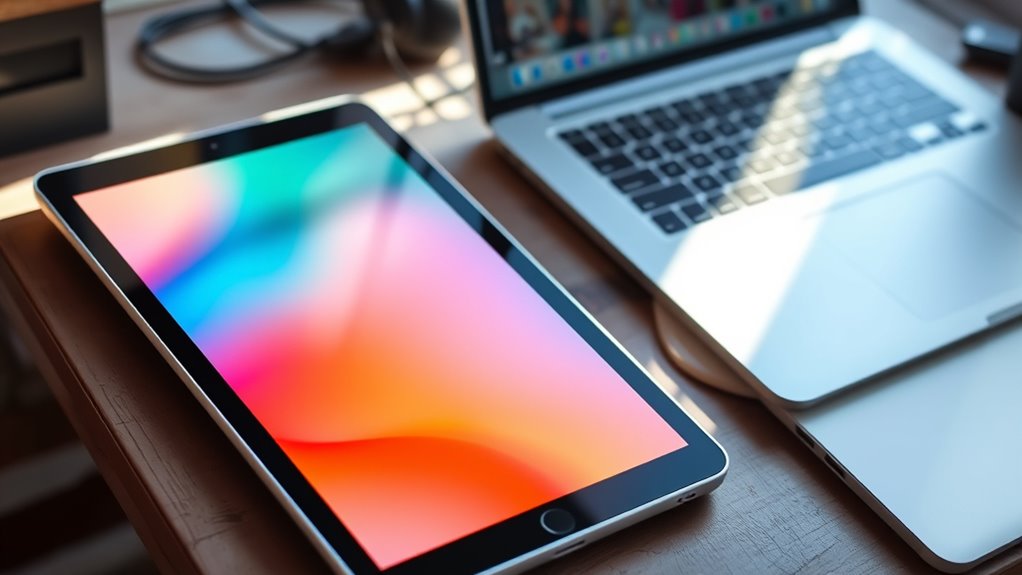
When choosing between a tablet and a laptop, considering their price range and overall value for students is essential. Tablets generally cost less upfront, often between $200 and $600, making them more budget-friendly. Laptops tend to be pricier, with many options starting at $400 and exceeding $1,000 for high-performance models. To help you compare, here’s a quick overview:
| Device Type | Price Range | Key Value Benefit |
|---|---|---|
| Tablet | $200 – $600 | Portability and affordability |
| Laptop | $400 – $1,500+ | Power, multitasking, and software options |
Your choice depends on your needs: affordability or performance. Both offer value, but your budget and usage will guide the best fit. Additionally, understanding the differences in performance and features can help make a more informed decision. For example, considering credit score impacts on financing options for higher-end models or accessories can be beneficial.
Frequently Asked Questions
Which Device Is More Durable for Frequent Travel and Classroom Use?
A laptop is generally more durable for frequent travel and classroom use. It has a sturdy build, often with a hard shell or reinforced casing, making it resistant to bumps and drops. Tablets are lighter but usually more fragile, with glass screens prone to cracking. If you’re always on the move, a rugged or shockproof laptop offers better protection, ensuring your device withstands daily wear and tear.
How Do Tablets and Laptops Support Note-Taking and Organization?
You’ll find tablets excel at quick note-taking, with 80% of students saying they’re more efficient on them. They support organization through apps like Evernote or OneNote, letting you jot down ideas and categorize notes instantly. Laptops also offer powerful tools for detailed organizing with spreadsheets and document management. Ultimately, your choice depends on whether you prefer portability and speed or more robust organization features.
Can Both Devices Run the Same Educational Apps Effectively?
Yes, both devices can run many of the same educational apps effectively. You’ll find popular apps like Google Classroom, Quizlet, and Microsoft Office available on both tablets and laptops. However, performance might vary depending on your device’s specifications. If you need more processing power or multitasking capabilities, a laptop might serve you better. But for portability and quick access, tablets work well with most educational apps.
What Accessories Are Essential for Optimizing Tablet or Laptop Use?
You should consider accessories like a protective case or sleeve to keep your device safe, a portable charger to guarantee you never run out of power, and a Bluetooth keyboard for comfortable typing. Additionally, investing in screen protectors helps prevent scratches, while a stylus can enhance note-taking and drawing. These accessories optimize your device’s performance and durability, making it easier to study efficiently wherever you go.
How Do Device Weight and Size Impact Daily Commuting and Storage?
Did you know that the average commuter spends about 45 minutes daily traveling? This means your device’s weight and size really matter. Lighter, compact devices fit easily into backpacks or bags, making them more comfortable for daily travel. Larger or heavier gadgets can cause fatigue and occupy more space. So, opt for a slim, lightweight device to stay productive and comfortable during your daily commute.
Conclusion
Choosing between a tablet and a laptop really depends on your needs, but did you know that 70% of students find tablets more portable for studying on the go? If you prioritize lightweight design and quick access to apps, a tablet might be your best bet. However, if you need powerful performance for assignments, a laptop could serve you better. Consider your daily routine and educational tools to make the best choice for your lifestyle.