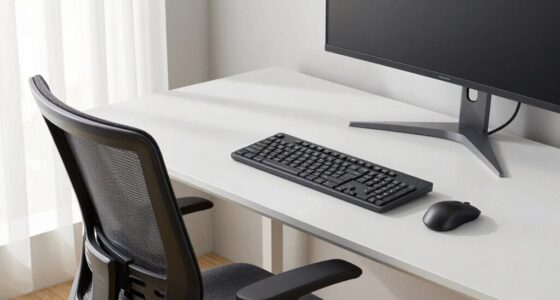
A good ergonomic keyboard and mouse setup keeps your wrists in a neutral position, avoiding excessive bending or extension. Choose devices with a natural shape, slight tilt, and support for your hands and wrists. Use accessories like wrist rests and make workspace adjustments to promote comfort. Regularly change your hand and wrist positions and take breaks to prevent fatigue. If you want to discover more tips for maintaining comfort and health, keep exploring how to optimize your setup.

Get the latest gadgets delivered free — and shop member deals
- Fast, free delivery on millions of items
- Access to Prime Big Deal Days deals on October 6–7
- Prime Video, Amazon Music and more included
Key Takeaways
- Choose keyboards with a neutral, natural wrist position and a slight negative tilt for comfort and reduced strain.
- Select ergonomic mice that fit comfortably in your hand, supporting natural finger and thumb movement.
- Maintain neutral wrist alignment by using adjustable stands or wrist rests to prevent excessive bending.
- Keep hands relaxed and in a natural posture, with fingers gently curved over keys and mouse buttons.
- Take regular breaks and adjust your workspace to promote proper positioning and reduce fatigue.
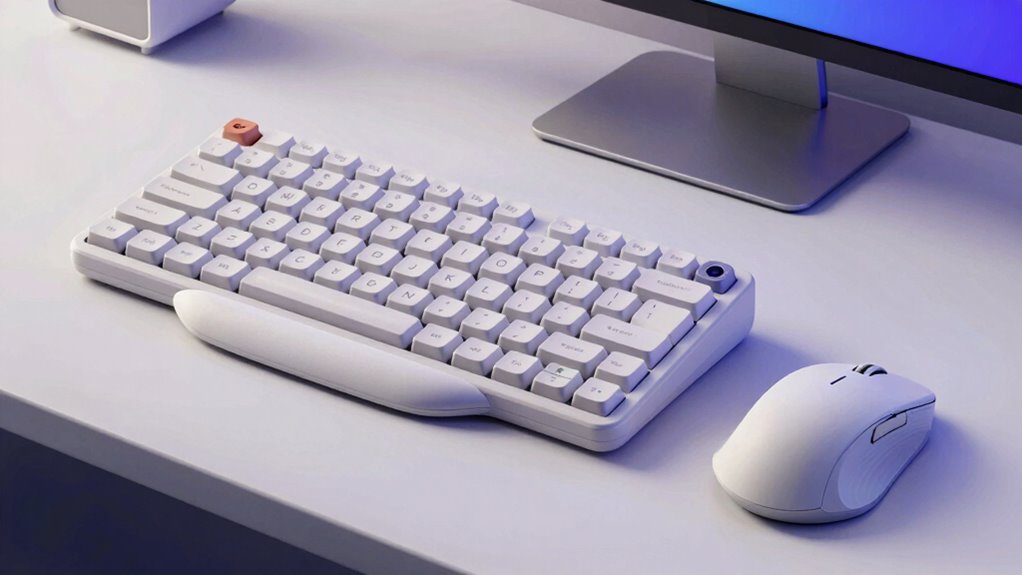
Creating an ergonomic keyboard and mouse setup is essential for reducing strain and preventing discomfort during long hours at your computer. When you focus on proper wrist alignment, you help minimize the risk of repetitive strain injuries like carpal tunnel syndrome, which are common among those who work extensively at a desk. Your goal should be to keep your wrists in a neutral position, avoiding excessive bending upward or downward. To achieve this, opt for a keyboard that allows your wrists to rest comfortably without needing to angle your hands unnaturally. Adjustable stands or wrist rests can be invaluable tools here, supporting your wrists and helping you maintain proper hand posture. When your wrists are aligned correctly, you decrease tension in the tendons and nerves, reducing fatigue and discomfort over time. Ensuring your wrist position remains neutral is key to long-term comfort and health. Proper ergonomic design, including the shape and structure of your keyboard and mouse, is also crucial to support this goal. Incorporating ergonomic principles into your workspace setup can further enhance comfort and reduce strain during extended use.
Your hand posture is equally critical. You want your hands to stay relaxed and natural, with your fingers gently curved over the keys and mouse buttons. Avoid stretching your fingers too far or keeping your hands in awkward positions for extended periods. The ideal setup encourages your hands to hover comfortably over the keyboard and mouse, with your palms facing downward or slightly inward. This natural hand position not only prevents strain but also enhances your typing and navigation efficiency. Using a keyboard with a slight negative tilt can help keep your hands in a more neutral position, reducing wrist extension. Similarly, an ergonomic mouse that fits comfortably in your hand allows you to maintain a relaxed grip, preventing unnecessary tension in your fingers and wrist. Incorporating proper ergonomic accessories can further improve comfort and support during prolonged use. Additionally, selecting ergonomic tools that are tailored to your hand size and shape can significantly improve your overall setup. Regularly adjusting your position and taking breaks can also help prevent fatigue and maintain optimal ergonomics.
ergonomic keyboard with negative tilt
As an affiliate, we earn on qualifying purchases.
As an affiliate, we earn on qualifying purchases.
Frequently Asked Questions
How Often Should I Replace My Ergonomic Keyboard and Mouse?
You should replace your ergonomic keyboard and mouse every 3 to 5 years, depending on usage and wear. Pay attention to signs like a worn keyboard layout or discomfort from your mouse grip style. If your devices no longer support natural hand positioning or cause pain, it’s time to upgrade. Regularly inspecting them guarantees you maintain comfort and prevent strain, keeping your setup ergonomic and effective for your needs.
Can I Use Ergonomic Devices if I Have Small Hands?
Yes, you can use ergonomic devices if you have small hands. Look for options designed with hand size considerations in mind, such as compact or smaller ergonomic keyboards and mice. Compatibility is key, so choose devices that fit comfortably without straining your fingers or wrist. Testing different sizes and styles can help you find the best ergonomic device that suits your hand size and provides ideal comfort and support during use.
Are Wireless Ergonomic Keyboards as Effective as Wired Ones?
Did you know 60% of users prefer wireless keyboards for convenience? Wireless ergonomic keyboards are just as effective as wired ones, offering flexibility and comfort. They use wireless connectivity, reducing cable clutter, and often have impressive battery life, lasting weeks without charging. As long as you guarantee a stable connection and enough battery power, wireless ergonomic keyboards can provide the same productivity and comfort as wired options.
What Accessories Can Improve Ergonomic Comfort?
To improve ergonomic comfort, you can add accessories like wrist supports and adjustable armrests. Wrist supports help reduce strain by maintaining a neutral wrist position, while arm alignment accessories guarantee your arms stay relaxed and properly positioned, preventing fatigue. These additions encourage proper posture, minimize discomfort, and support long-term health during extended computer use, making your workspace more comfortable and efficient.
Do Ergonomic Devices Prevent All Types of Repetitive Strain Injuries?
While ergonomic devices like keyboards and mice promote better posture correction and wrist support, they can’t prevent all types of repetitive strain injuries. You might find some relief from discomfort, but overuse or poor habits can still lead to issues. Staying mindful of your movements, taking regular breaks, and maintaining good posture are essential complements to ergonomic equipment, helping you avoid the more stubborn strains that devices alone can’t fully prevent.
ergonomic mouse for wrist support
As an affiliate, we earn on qualifying purchases.
As an affiliate, we earn on qualifying purchases.
Conclusion
So, are you ready to transform your workspace and boost your comfort? By choosing the right ergonomic keyboard and mouse, you can reduce strain and prevent discomfort during long hours at your desk. Remember, comfort isn’t just a luxury—it’s essential for your productivity and health. Isn’t it time you prioritized your well-being and made the switch? Start making those small changes today and feel the difference tomorrow.
adjustable wrist rest for keyboard
As an affiliate, we earn on qualifying purchases.
As an affiliate, we earn on qualifying purchases.
As an affiliate, we earn on qualifying purchases.
Fall Picks
fall essentials
As an affiliate, we earn on qualifying purchases.