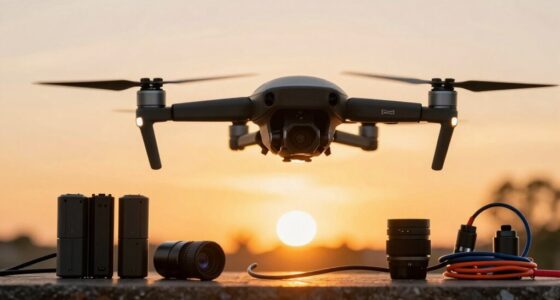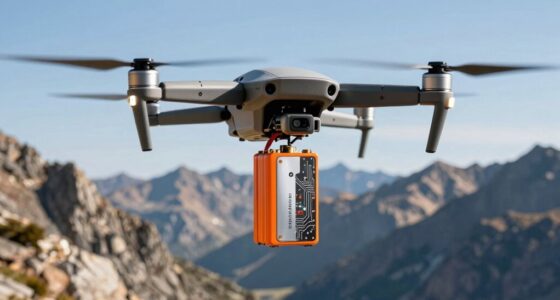
Better batteries are vital for drone use because they directly impact how long you can fly, how safe the operation is, and how well the drone performs. With improved batteries, you get longer flight times, quicker charges, and more reliable, safer flights, even in tough environments. Heavier or less efficient batteries can limit your drone’s capabilities and increase risks. If you want to understand how ongoing advances are shaping the future of drones, keep exploring the details.

Get the latest gadgets delivered free — and shop member deals
- Fast, free delivery on millions of items
- Access to Prime Big Deal Days deals on October 6–7
- Prime Video, Amazon Music and more included
Key Takeaways
- Improved batteries extend drone flight time, enabling more complex and longer missions.
- Higher energy density allows for lighter batteries, enhancing drone maneuverability and efficiency.
- Better batteries reduce charging time, increasing operational availability and quick turnaround.
- Enhanced safety and reliability lower risks of overheating, fires, and battery degradation.
- Advanced battery technology fosters innovative drone designs and broadens application possibilities.

Drones are revolutionizing industries, but their limited battery life often hampers performance and usability. When you’re flying a drone, every minute counts, whether you’re capturing stunning aerial footage, inspecting infrastructure, or conducting search and rescue missions. The key to extending these flight times lies in advancements in battery technology, especially improvements in energy density. Energy density measures how much energy a battery can store relative to its weight and volume, and higher energy density means you get more flight time without adding extra weight.
Advancements in battery energy density are crucial for longer, safer, and more efficient drone operations.
You might not realize how much the current limitations of batteries restrict what you can accomplish with your drone. Traditional lithium-ion batteries, while reliable, have inherent constraints—they store a finite amount of energy, and their energy density is reaching its practical limits. This means even with better battery technology, increasing flight time often involves trade-offs like heavier batteries, which can negatively impact maneuverability and efficiency. Researchers are pushing the boundaries of energy density through new materials and innovative designs, aiming to pack more power into the same or even smaller packages.
When battery technology advances, it directly translates to longer flight times, faster turnaround between charges, and expanded operational capabilities. Imagine being able to fly for 30 minutes or more without worrying about running out of juice, enabling you to complete more complex tasks or cover larger areas. Better batteries also mean quicker charging times, which is crucial in scenarios where time is critical. The development of solid-state batteries, for example, promises safer, more energy-dense options that could revolutionize drone performance. As battery chemistry continues to evolve, we can expect further improvements in energy storage and overall efficiency.
But it’s not just about longer flights. Improved energy density and battery technology also contribute to increased safety and reliability. As batteries become more efficient and stable, the risk of overheating, fires, or sudden power loss diminishes. This means you can trust your drone to perform consistently, even during extended missions or in challenging environments. The ongoing research and breakthroughs in battery technology are vital for unlocking the full potential of drone applications. Additionally, innovations in battery management systems help optimize performance and longevity, further enhancing drone capabilities. These innovations also help mitigate issues related to battery degradation, prolonging the lifespan of drone batteries and reducing costs over time.
Furthermore, advances in energy density are essential in overcoming the inherent constraints of current battery chemistries, paving the way for more innovative drone designs and capabilities. In essence, better batteries are the backbone of future drone innovation. They enable longer, safer, and more efficient operations, opening doors to new uses and markets. As you rely more on drones for critical tasks, the importance of advancements in energy density and battery technology becomes undeniable—these improvements are what will truly push the industry forward.
As an affiliate, we earn on qualifying purchases.
Frequently Asked Questions
How Do Battery Types Affect Drone Flight Time?
Different battery types markedly impact your drone’s flight time. Battery technology determines how much energy each battery can store, directly affecting how long your drone stays in the air. Higher power efficiency means the drone uses energy more effectively, extending flight time. Lithium-polymer batteries are popular for their balance of capacity and weight, giving you longer flights. Choosing the right battery type optimizes your drone’s performance and maximizes your flying experience.
What Are the Safety Concerns With High-Capacity Drone Batteries?
You need to watch out for safety risks with high-capacity drone batteries, like battery explosions or thermal runaway. These dangers can occur if batteries overheat or get damaged, leading to fires or accidents. It’s like walking a tightrope—you must handle them carefully and follow proper charging and storage procedures. Always keep an eye on battery health and avoid pushing limits, so you don’t end up in hot water.
How Long Do Drone Batteries Typically Last?
Drone batteries typically last between 20 to 30 minutes per flight, depending on factors like battery lifespan and charging cycles. As you use your drone, the number of charging cycles increases, which gradually reduces battery performance. To maximize your drone’s flight time, avoid overcharging and store batteries properly. Regularly monitoring battery health helps guarantee safe, efficient flights, especially as the battery ages and approaches the end of its lifespan.
Can Better Batteries Improve Drone Payload Capacity?
Yes, better batteries can improve your drone’s payload capacity. Advanced battery chemistry increases power density, allowing more energy to be stored in a lighter package. This means you can carry heavier equipment or extend your flight time without sacrificing maneuverability. Upgrading to batteries with higher power density and improved chemistry makes your drone more efficient, enabling it to perform demanding tasks with greater flexibility and longer endurance.
What’s the Environmental Impact of Drone Battery Disposal?
You should be aware that drone battery disposal impacts the environment, but eco-friendly disposal and proper recycling methods can minimize harm. When you recycle batteries correctly, you prevent hazardous chemicals from polluting soil and water. Look for certified recycling centers that handle lithium-ion batteries responsibly. By choosing eco-friendly disposal options, you help reduce environmental damage and promote sustainable drone use, ensuring the planet stays healthier for everyone.
fast charging lithium-ion drone batteries
As an affiliate, we earn on qualifying purchases.
As an affiliate, we earn on qualifying purchases.
Conclusion
In the world of drones, better batteries bring boundless benefits. They boost flight times, build confidence, and break barriers, making your adventures more awe-inspiring. With powerful, prolonged power, you’ll push past previous limits, revealing new skies to explore. Don’t settle for subpar; seek smarter, stronger batteries that elevate your experience. Remember, when batteries improve, your drone’s potential soars—so seize this chance to soar higher, stay longer, and succeed stronger in every flight.
As an affiliate, we earn on qualifying purchases.
lightweight energy-dense drone batteries
As an affiliate, we earn on qualifying purchases.
As an affiliate, we earn on qualifying purchases.
Fall Picks
fall essentials
As an affiliate, we earn on qualifying purchases.