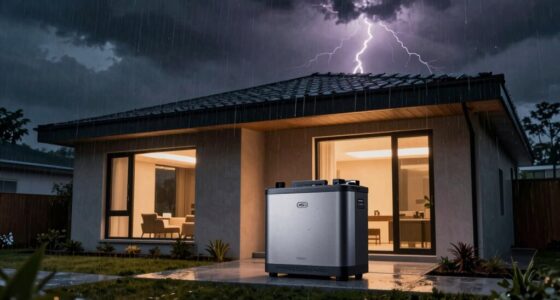
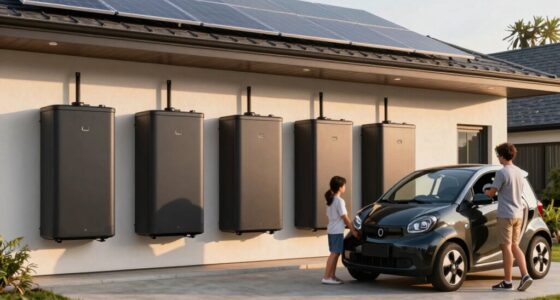
Backup power feels worth the cost when it keeps your essential appliances running during outages, ensuring safety and comfort. It provides peace of mind, especially during severe weather, and can save your food from spoiling. Investing in renewable options boosts environmental benefits and lowers ongoing costs. Plus, enhanced system reliability helps you avoid disruptions long-term. If you want to discover how to maximize your backup power’s value, there’s more to explore below.
Key Takeaways
- Ensures critical appliances and safety systems remain operational during outages.
- Provides long-term savings by reducing energy costs through renewable integration.
- Offers peace of mind and resilience during severe weather events or emergencies.
- Contributes to environmental sustainability by lowering reliance on fossil fuels.
- Represents a strategic investment that enhances overall home reliability and energy independence.
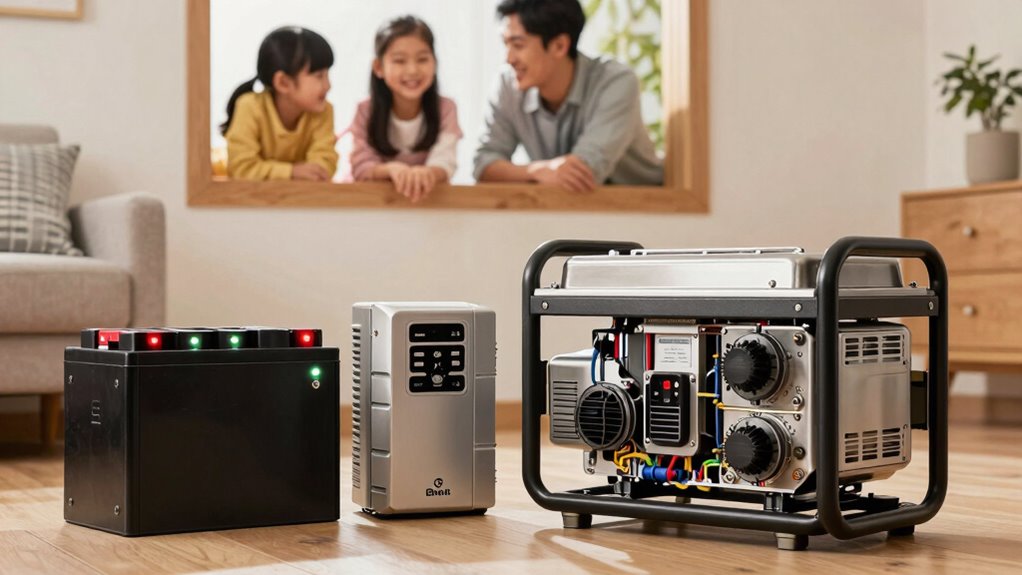
When the power goes out unexpectedly, having backup power can be a game-changer. It keeps your essential appliances running, preserves your food, and ensures your safety, especially during severe weather or outages. But determining whether backup power is worth the cost involves more than just convenience. You need to consider the broader picture, including how it fits into your energy goals and financial planning. One key factor is renewable integration, which allows you to incorporate renewable energy sources like solar panels into your backup system. This not only reduces reliance on fossil fuels but also enhances sustainability. When evaluating the worth of backup power, a thorough cost benefit analysis is essential. This analysis weighs the initial investment against long-term savings, convenience, and environmental benefits.
A well-designed backup power system with renewable integration can significantly lower your ongoing energy costs. For example, pairing a generator with solar panels means you’re generating some of your power naturally, reducing fuel consumption and emissions. Over time, this can translate into savings that offset the upfront expenses. Additionally, renewable integration makes your backup power more resilient and sustainable, which can be especially appealing if you’re committed to reducing your carbon footprint. That said, it’s also important to factor in the costs of installation, maintenance, and potential upgrades. A comprehensive cost benefit analysis considers these expenses alongside the value of uninterrupted power, peace of mind, and environmental impact. Recognizing the importance of renewable energy sources can help you make more informed decisions about your backup power options. Incorporating energy storage solutions can further optimize the efficiency and reliability of your system. Understanding the initial investment involved can also help you plan your budget more effectively.
In the end, what makes backup power feel worth the cost varies from person to person. For some, the peace of mind and resilience outweigh the initial investment. For others, the environmental benefits and potential savings through renewable integration tip the scales. Conducting a detailed cost benefit analysis helps clarify these factors, enabling you to make an informed decision that aligns with your needs and values. When you see how the long-term advantages stack up against the upfront costs, backup power becomes more than just a convenience—it becomes a strategic investment. Understanding energy goals can further help tailor your backup solution to suit your long-term sustainability and financial objectives.
As an affiliate, we earn on qualifying purchases.
Frequently Asked Questions
How Long Can a Backup Power System Typically Run During an Outage?
A backup power system can typically run anywhere from a few hours to several days during an outage, depending on its size and fuel efficiency. Battery lifespan impacts how long batteries can provide power before needing replacement, while fuel efficiency determines how long generators operate on stored fuel. You should consider these factors to match your energy needs, ensuring you have reliable backup power for as long as necessary.
What Maintenance Is Required to Keep Backup Power Reliable?
To keep your backup power reliable, you need to stick to regular maintenance schedules. Check battery lifespan periodically, as batteries degrade over time and can impact performance. Keep terminals clean, confirm connections are tight, and test the system regularly to catch issues early. Proper maintenance not only prolongs your system’s lifespan but also guarantees it’s ready when you need it most, providing peace of mind during outages.
Are There Different Types of Backup Power Options Available?
Think of backup power options as different tools in your survival kit. You can choose from generator types—gas, diesel, or portable—that roar to life when needed, or opt for battery technologies like lithium-ion or lead-acid, which silently kick in. Each type has its own rhythm and strength, so you can select the one that best suits your needs, ensuring your home stays bright and connected when the storm hits.
How Does Backup Power Impact Home Insurance Policies?
Installing backup power can positively impact your home insurance policies by potentially qualifying you for insurance discounts. Insurance companies often view backup systems as reducing risk, which may lower your premiums. However, you should check your policy requirements, as some insurers may have specific standards or documentation needed to qualify for these discounts. Ultimately, investing in backup power can offer both safety and financial benefits.
Can Backup Power Systems Be Environmentally Friendly?
Absolutely, backup power systems can be eco-friendly, even if it seems ironic. By choosing renewable alternatives like solar or wind-powered generators, you actively reduce your carbon footprint. Eco-friendly solutions not only guarantee your home stays powered during outages but also support sustainability. So, while backup power might seem like a convenience, opting for these green options makes it a responsible and environmentally conscious choice, blending reliability with eco-awareness.
As an affiliate, we earn on qualifying purchases.
Conclusion
When you weigh the worthwhile benefits against the wavering costs, backup power becomes a wise and worthwhile investment. It’s the steadfast shield that shields your sanctuary from sudden blackouts, bringing bright reassurance during bleak storms. With dependable, durable backup power, you’re not just surviving outages—you’re securing serenity, safeguarding your sanctuary, and savoring the silent strength that keeps your home humming happily. Ultimately, the worth of backup power whispers promises of peace, preparedness, and persistent protection.
portable emergency power station
As an affiliate, we earn on qualifying purchases.
As an affiliate, we earn on qualifying purchases.
As an affiliate, we earn on qualifying purchases.