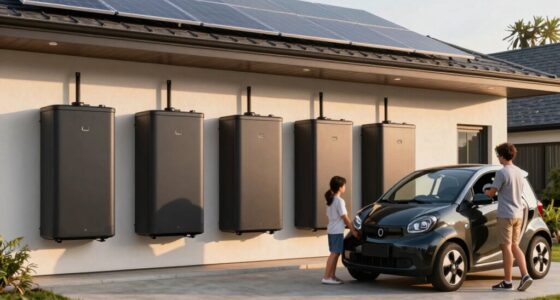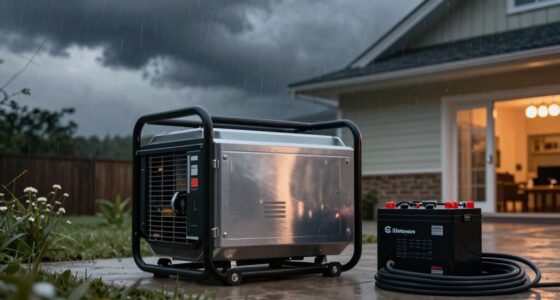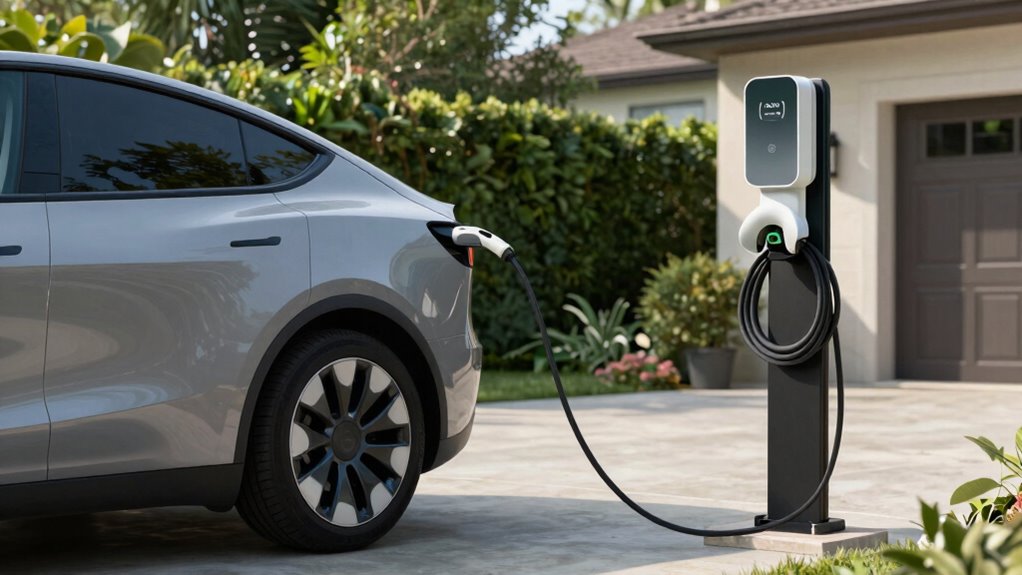

The main difference between portable and home EV charging is flexibility and speed. Portable chargers are easy to carry and ideal for occasional use or emergencies, but they usually charge slowly. Home chargers are fixed, faster Level 2 units that provide quick, reliable charging at your garage or driveway, perfect for daily use. If you want to learn more about how each option suits different needs, you’ll find useful details if you keep exploring.

Get the latest gadgets delivered free — and shop member deals
- Fast, free delivery on millions of items
- Access to Prime Big Deal Days deals on October 6–7
- Prime Video, Amazon Music and more included
Key Takeaways
- Portable chargers are mobile, suitable for occasional use, while home chargers are fixed installations for regular, faster charging.
- Home chargers typically offer higher wattages, delivering quicker charging speeds compared to portable units.
- Portable chargers are limited in speed and capacity, ideal for topping off, whereas home chargers handle larger batteries efficiently.
- Home chargers often feature customizable schedules and smart controls, unlike basic portable chargers.
- The choice depends on your daily driving needs, battery size, and preference for convenience versus speed.
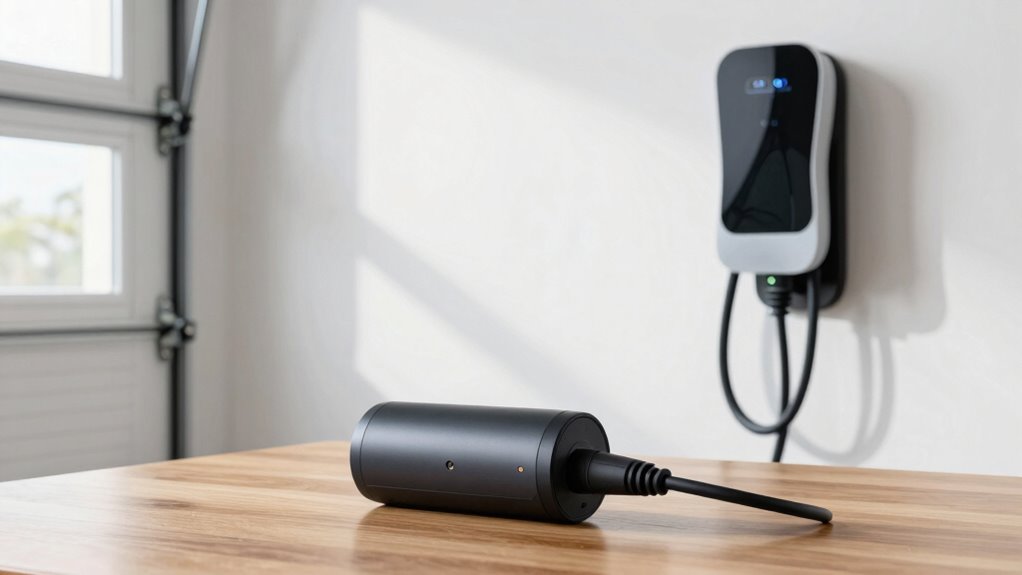
When choosing how to charge your electric vehicle, understanding the differences between portable and home charging options is essential. These choices impact not just convenience but also how quickly you can top off your battery and how well your vehicle’s battery capacity is utilized over time. Portable chargers offer flexibility—you can take them with you and plug into various outlets—making them ideal for occasional use or emergencies. However, they generally provide slower charging speeds, which means longer wait times to recharge your battery. Home chargers, on the other hand, are designed to be fixed installations, often mounted on your garage wall. They tend to deliver faster charging speeds, allowing you to replenish your battery more quickly, especially if your vehicle has a larger battery capacity.
If you’re someone who frequently commutes or needs quick turnarounds, investing in a home charger might be be the better choice. These chargers are usually capable of providing higher wattage, significantly reducing your charging time. For example, a standard Level 2 home charger can deliver up to 25 miles of range per hour of charging, which is a major advantage if you have a sizeable battery capacity or a busy schedule. Portable chargers, by contrast, are typically limited to lower wattages, making them suitable for topping off your battery when you’re on the go, but not ideal for daily rapid charging needs. Their convenience lies in portability, but they can’t match the charging speed of dedicated home units.
Another factor to consider is the impact on your vehicle’s battery over time. Faster charging speeds can be convenient, but they may also contribute to faster battery wear if used excessively. Home chargers usually allow you to customize charging schedules and optimize for battery health, especially if they support smart features. Portable chargers don’t offer this level of control, which means you’ll want to use them judiciously for occasional top-ups rather than regular charging. Additionally, your vehicle’s battery capacity influences your charging choices. Larger batteries take longer to charge, so a faster home charger can save you hours, while a portable option might simply be too slow to be practical in such cases. Moreover, understanding charging infrastructure options can help you make informed decisions about your EV charging needs. Recognizing the charging speed capabilities of your charger can help prevent unnecessary battery strain and prolong your vehicle’s lifespan. Proper knowledge of digital security measures is also important, especially when utilizing smart charging features and connected chargers to prevent potential cybersecurity threats. Being aware of these security measures ensures that your charging setup remains safe and protected from cyber vulnerabilities. Furthermore, selecting the right charger can also contribute to a more sustainable and environmentally friendly living practices by reducing energy waste and maximizing the efficiency of your EV usage.
As an affiliate, we earn on qualifying purchases.
Frequently Asked Questions
Can Portable Chargers Charge My EV Faster Than Home Chargers?
No, portable chargers usually don’t charge your EV faster than home chargers. They typically have lower power capacity, which limits their charging speed. Home chargers are often designed to deliver higher wattages, allowing for quicker charging times. If you need faster charging, a dedicated home charger with higher power capacity is your best option. Portable chargers are more convenient for emergencies but aren’t meant for rapid charging.
Are Portable EV Chargers Compatible With All Electric Vehicle Models?
About 60% of electric vehicle models are compatible with most portable EV chargers, but compatibility depends on your vehicle’s charging port and power capacity. You should check your vehicle’s specifications and the portable charger’s charging station requirements before use. Portable chargers typically have limited power capacity, so they may not work with all EV models, especially those with higher charging needs. Always verify compatibility for safe, efficient charging.
Do Portable Chargers Require Special Safety Certifications?
Yes, portable chargers require safety certifications to guarantee they meet established safety standards. Certification requirements are in place to verify that the device has been tested for electrical safety, durability, and proper function. When choosing a portable EV charger, you should check for relevant safety standards and certifications from recognized organizations. This guarantees safe operation, reduces risks, and confirms the charger complies with industry regulations.
How Do I Maintain and Store a Portable EV Charger?
To maintain and store your portable EV charger, regularly inspect it for damage and keep the connectors clean. For battery maintenance, guarantee the charger is fully dry before storage and avoid exposing it to extreme temperatures. Follow storage tips like keeping it in a cool, dry place, and avoid wrapping cords tightly to prevent damage. Proper care ensures your charger remains safe, reliable, and ready when you need it most.
What’s the Best Portable Charger for Long Road Trips?
For long road trips, you want a portable charger with high battery capacity and reliable performance. The Tesla Mobile Connector or JuiceBox Portable Charger are top choices, providing fast charging and good compatibility. Remember to follow charging etiquette by using designated stations efficiently and respecting other drivers. Always carry spare adapters and guarantee your charger is well maintained, so you’re prepared for any situation on the road.
As an affiliate, we earn on qualifying purchases.
Conclusion
When choosing between portable and home EV charging, consider your daily driving needs and convenience. Did you know that over 80% of EV owners charge their vehicles at home? This highlights how home chargers are often the go-to for regular use. Portable chargers, however, offer flexibility for on-the-go charging. Ultimately, understanding your lifestyle helps you pick the right option, ensuring you’re always ready to hit the road without a hitch.
As an affiliate, we earn on qualifying purchases.
As an affiliate, we earn on qualifying purchases.
Halloween Picks
halloween
As an affiliate, we earn on qualifying purchases.