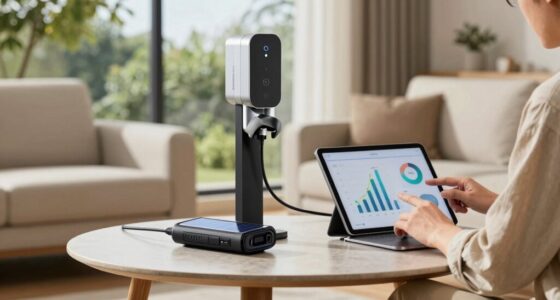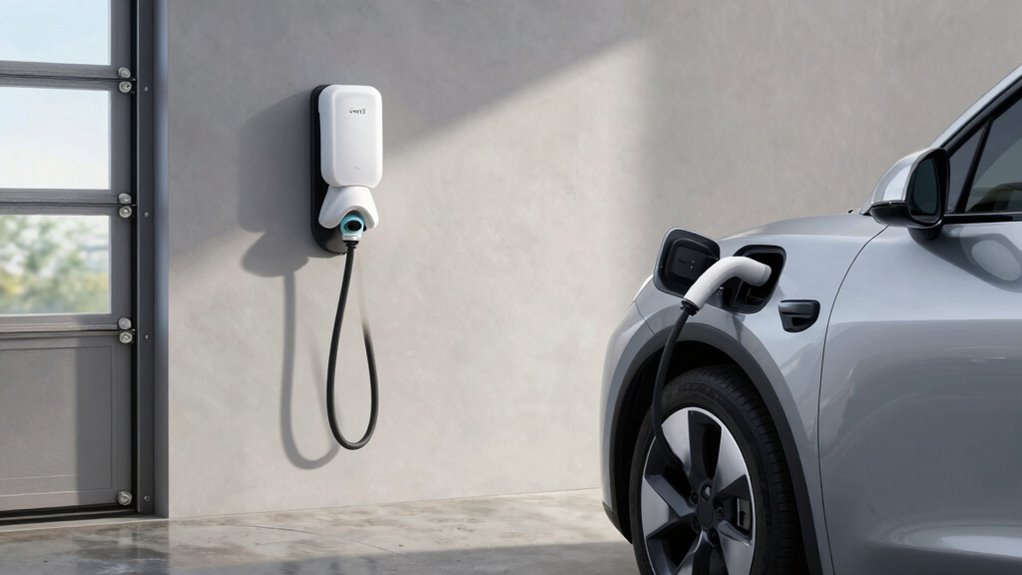

Level 2 EV charging is a faster, more efficient way to charge your electric vehicle at home compared to standard Level 1 chargers. It typically runs on a 240-volt outlet, reducing charging times markedly, often enough to fully charge overnight. Installing a dedicated charging station offers convenience, control over your schedule, and smarter energy management. It might involve some upfront costs, but you’ll enjoy reliable, faster charges and longer vehicle lifespan. To learn more about making the most of your home charging setup, keep exploring these options.

Get the latest gadgets delivered free — and shop member deals
- Fast, free delivery on millions of items
- Access to Prime Big Deal Days deals on October 6–7
- Prime Video, Amazon Music and more included
Key Takeaways
- Level 2 chargers provide faster, more efficient charging than Level 1, typically fully charging an EV overnight.
- Installing a home Level 2 station offers convenience, reliability, and control over your vehicle’s charging schedule.
- Most Level 2 chargers operate on a 240-volt outlet, requiring straightforward installation for home use.
- They support smart features for energy monitoring and integration with home automation systems.
- Although upfront costs are higher, long-term savings and convenience make Level 2 charging a worthwhile investment.
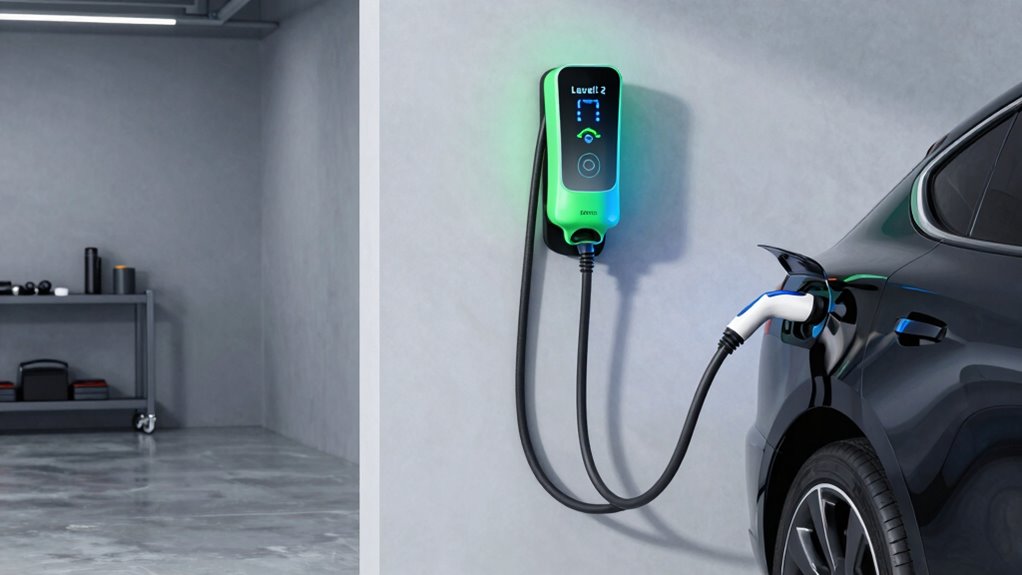
Level 2 EV charging is a popular and efficient way to power up electric vehicles, especially when compared to slower charging options. When you install a charging station at home, you’re providing yourself with a reliable and faster method to recharge your EV. Unlike Level 1 chargers, which use standard household outlets and can take many hours to fully charge your vehicle, Level 2 chargers deliver more power, reducing charging time considerably. This means you can plug in your car in the evening and wake up with a full battery, ready for your day’s commute or errands.
One of the key benefits of a Level 2 charging station is its high energy efficiency. These chargers are designed to transfer electricity more effectively, minimizing energy loss during the charging process. As a homeowner, you’ll appreciate that this efficiency not only helps you save on energy costs but also supports environmentally friendly practices. Plus, with a dedicated charging station, you maintain a clean, organized space that’s optimized for your vehicle’s charging needs. It’s a dedicated setup that guarantees your EV gets the right amount of power without waste or unnecessary energy consumption. Incorporating home charging infrastructure can further enhance your overall energy management.
Level 2 chargers maximize energy efficiency, saving costs and supporting eco-friendly practices for a clean, organized charging space.
Installing a Level 2 charger at home might seem like a substantial investment upfront, but the convenience and savings it offers make it worthwhile. You’ll find that charging your EV becomes as simple as plugging in your phone overnight. You won’t need to rely on public charging stations, which can be time-consuming and less dependable. Instead, you gain control over your charging schedule, and with the right charger, you can even monitor your energy usage through smart features. This level of control helps you optimize energy efficiency further, reducing overall costs and environmental impact. Additionally, leveraging smart home technology can help you better manage your energy consumption and integrate your EV charging with other home systems. Understanding energy management strategies can help you maximize the benefits of your setup.
Furthermore, choosing the right charging station involves considering your energy needs and the capacity of your home’s electrical system. Most Level 2 chargers operate on a 240-volt outlet, similar to what your dryer or oven uses, making installation straightforward for many homeowners. When properly installed, your charging station provides a consistent and dependable power source that keeps your EV ready whenever you need it. This setup not only enhances your vehicle’s lifespan by providing steady, reliable power but also integrates seamlessly into your daily routine. Additionally, understanding the benefits of home charging can help you make informed decisions about your EV setup. Recognizing the importance of energy efficiency can also guide you in selecting the most suitable charging equipment for your needs.
Level 2 EV home charging station
As an affiliate, we earn on qualifying purchases.
As an affiliate, we earn on qualifying purchases.
Frequently Asked Questions
How Much Does Installing a Level 2 Charger Typically Cost?
Installing a Level 2 charger typically costs between $500 and $2,500, including equipment and installation. Your cost estimates depend on factors like the charger’s complexity, electrical upgrades needed, and your location. During the installation process, a professional assesses your home’s electrical capacity, runs wiring, and mounts the charger. While the initial expense might seem high, the faster charging benefits often outweigh the costs over time.
Can I Install a Level 2 Charger Myself?
Thinking you can just wing it like a cowboy in the wild west? Installing a Level 2 charger yourself isn’t recommended due to charger safety and installation prerequisites. You need electrical knowledge, proper permits, and adherence to local codes. Attempting DIY may lead to hazards or code violations. To guarantee safety and proper functioning, it’s best to hire a licensed electrician who understands the intricacies of home wiring and ensures everything is up to snuff.
What Is the Average Charging Speed of a Level 2 Charger?
A typical level 2 charging station delivers an average charging speed of about 25 miles of range per hour, thanks to its power output of around 7.2 kW. This means you can fully charge your electric vehicle overnight or during a workday. The actual speed depends on your vehicle’s compatibility and the station’s power output, but generally, level 2 chargers are much faster than standard level 1 chargers.
Are There Any Government Incentives for Level 2 Home Chargers?
Did you know government rebates and utility incentives can make installing a Level 2 home charger more affordable? Many programs offer financial assistance, reducing upfront costs, and encouraging clean energy use. These incentives vary by location, so it’s worth checking your local or federal programs. Taking advantage of government rebates and utility incentives not only saves money but also helps promote sustainable transportation. Isn’t it time you upgraded your charging setup?
How Does Weather Affect Level 2 Charging Performance?
Weather impacts your Level 2 charging performance mainly through environmental factors like extreme cold or heat. Cold temperatures can slow down charging efficiency because batteries and chargers work less effectively, while hot weather might cause safety shut-offs or reduce charging speed to prevent overheating. Rain and moisture can also pose risks, so it’s crucial to keep your charging station protected from the elements to guarantee consistent, safe charging regardless of weather conditions.
As an affiliate, we earn on qualifying purchases.
Conclusion
Now that you understand Level 2 EV charging, it’s almost like the universe lined up to make your upgrade seamless. You might find that your daily routines naturally align with the faster charging times, saving you precious minutes. As you consider installing your charger, remember how easily this step fits into your home and lifestyle—almost as if it was meant to be. Embrace this upgrade; it’s a coincidence you won’t regret.
As an affiliate, we earn on qualifying purchases.
home EV charger installation kit
As an affiliate, we earn on qualifying purchases.
As an affiliate, we earn on qualifying purchases.
Halloween Picks
halloween
As an affiliate, we earn on qualifying purchases.