
TL;DR

Get the latest gadgets delivered free with Prime
- Fast, free delivery on millions of items
- Prime Video, Amazon Music and more included
- Member-only deals all year
SuperMatics is developing AI models and agents to identify superconducting materials and design synthesis processes with manufacturable wire in mind. The company says it tests candidates with academic researchers and feeds experimental results back into its models; it has not disclosed a commercial wire, performance results or a production timeline.
Berkeley-based SuperMatics is developing AI models and agents to identify superconducting materials that can be manufactured as usable wire, addressing a gap between laboratory discoveries and commercial applications such as data-center power delivery, quantum computing and fusion magnets. The company is scheduled to present its approach on Nov. 5 at the Plug and Play Silicon Valley November Summit in Sunnyvale, according to a report by The Quantum Insider.
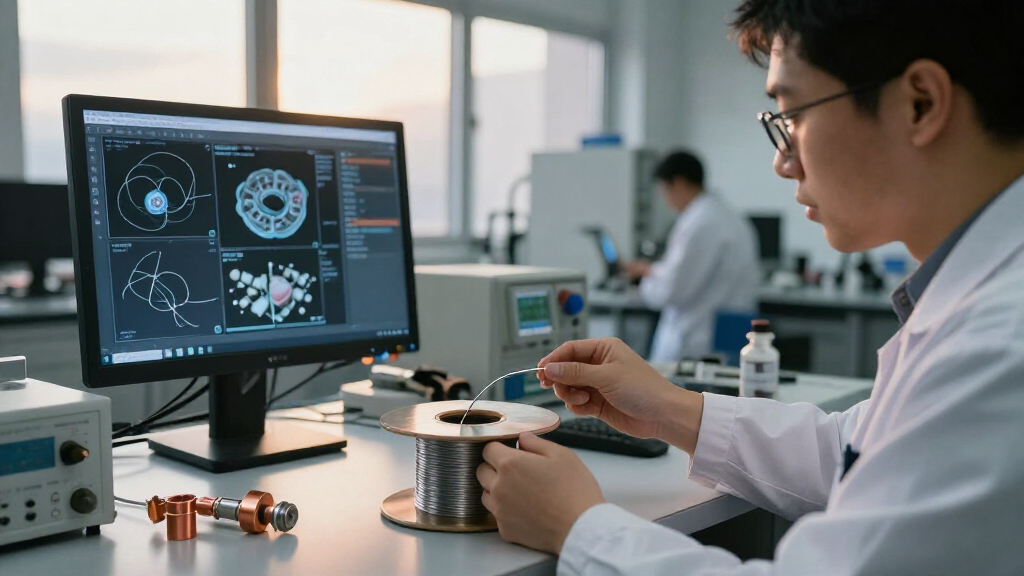
SuperMatics says its system predicts material properties, proposes synthesis recipes and simulates how a finished wire or device might perform. The company describes its models as multimodal and says they incorporate physics, including a framework it calls the Modulated Electron Lattice. Experimental findings are then used to retrain the models, including results that do not support a candidate.
The company says potential materials are made and tested with researchers at UC Berkeley and Georgia Tech. It is also in discussions with global materials and technology companies about joint development programs involving existing high-temperature superconductors, while developing its own materials pipeline, according to the report. The report does not identify those prospective partners or say that any agreements have been signed.
SuperMatics has not announced a commercially available wire or provided performance, cost or production data in the supplied report. Its description of the system and its goals is company-reported; the available material does not independently establish that the AI has produced a usable superconducting wire.
From Lab Materials to Power Cables
Superconductors can carry electrical current with zero electrical resistance under the right conditions, but discovering a material is not the same as making it into durable, affordable wire. SuperMatics is focusing on that manufacturing step. If its approach works, it could help researchers evaluate candidates against practical constraints earlier, rather than prioritizing a material solely for a laboratory measurement.
The potential applications include power delivery in data centers and magnets used in fusion systems. The Quantum Insider report says the International Energy Agency expects data-center electricity use to more than double by 2030, and that fusion developers use high-temperature superconducting tape that remains costly and scarce. Those pressures explain the interest in better materials, but they do not establish that SuperMatics’ system will lower costs or improve supply.
Products Worth Considering

Amazon Kindle Paperwhite (2024), 16 GB, 7-inch Display, Black

Bose TV Speaker (2nd Gen) Compact Soundbar

Samsung Galaxy Tab A11 Wi‑Fi (International Version), 8.7, 64GB + 4GB, Gray
As an affiliate, we earn on qualifying purchases.
Why Superconductor Records Are Not Enough
The supplied report says scientists have discovered thousands of superconductors since the phenomenon was identified, but only a handful have been made into commercial wire. Many materials that attract attention in research are difficult to produce in quantity, shape into a useful conductor or operate under practical conditions. Those requirements can make manufacturability as important as a record-setting superconducting temperature.
The report also says standard simulations cannot reliably predict high-temperature superconductivity at everyday pressures, leaving many teams reliant on trial and error. It cites a 2026 University of Houston research result that raised the ambient-pressure superconductivity record for the first time since 1993. That finding is background to the company’s pitch: a new record does not by itself show that a material can be made into affordable wire.
“Records make headlines, but wires change industries.”
— Davis Rens, SuperMatics co-founder and former quantum engineer at Rigetti Computing
Commercial Proof Is Still Missing
The report does not provide independently verified results showing that SuperMatics has produced a wire using an AI-selected material. It gives no candidate compositions, measured performance, manufacturing yields, cost estimates or comparisons with existing superconducting wire. It is also unclear how the company evaluates its model predictions against conventional research methods.
The status of the reported industry discussions is also uncertain: no prospective partners are named, and no joint-development agreement is confirmed. SuperMatics’ stated applications and anticipated benefits remain goals, not demonstrated outcomes. The supplied material does not specify when the company expects to share test results or move toward production.
The Summit and Development Talks
SuperMatics is scheduled to present its approach at the Plug and Play Silicon Valley November Summit in Sunnyvale on Nov. 5, 2026. The presentation may provide further detail on its models and development work, but the supplied report does not announce a product launch or a new technical result tied to the event.
Readers will be looking for evidence from material synthesis and wire testing, along with measurable performance and cost data. The company’s discussions with potential industry partners could also clarify whether outside organizations will take part in development. Until such information is released, the central question remains whether the AI-guided process can produce superconducting wire that is practical to manufacture and use.
Key Questions
What is SuperMatics developing?
It says it is building AI models and agents to predict superconducting material properties, propose synthesis recipes and simulate potential wires or devices.
Has SuperMatics announced a commercial superconducting wire?
No commercial wire is identified in the supplied report. It does not give verified wire-performance measurements, production figures or a launch date.
Where does the company say its materials are tested?
SuperMatics says candidates are made and tested with researchers at UC Berkeley and Georgia Tech. The report does not provide details about specific projects or results.
When will SuperMatics present its approach?
The company is scheduled to present on Nov. 5, 2026, at the Plug and Play Silicon Valley November Summit in Sunnyvale, California.
Source: thequantuminsider.com