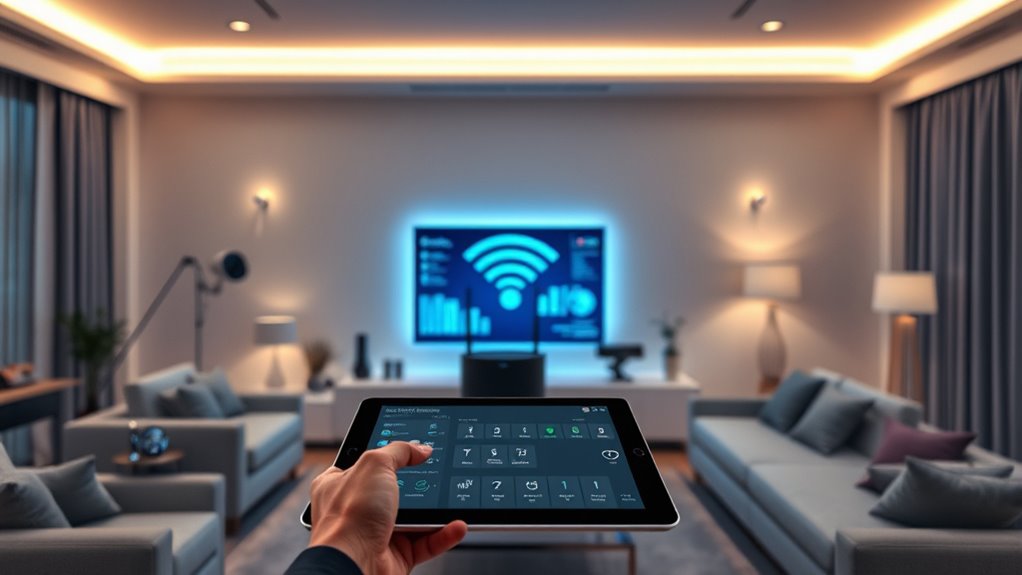

To protect your smart home from hackers, keep all device firmware and software updated regularly. Use strong, unique passwords for each device and enable two-factor authentication where possible. Segment your network by creating separate channels for your IoT devices, isolating them from your main network. Monitor device activity and network traffic frequently to catch suspicious behavior early. If you want to strengthen your defenses further, you’ll find helpful tips just ahead.
Key Takeaways
- Change default passwords to strong, unique credentials for each IoT device.
- Regularly update device firmware and security settings to patch vulnerabilities.
- Use network segmentation to isolate IoT devices from critical systems and personal devices.
- Enable two-factor authentication on devices supporting it for added security.
- Monitor network activity and device behavior to detect and respond to suspicious activity.
Keep Software and Firmware Up-to-Date

Keeping your smart home secure begins with regularly updating its software and firmware. These updates often contain critical security patches that fix vulnerabilities hackers could exploit. By neglecting updates, you leave your devices exposed to known threats. Make it a habit to check for updates frequently, either manually or through automatic settings. Most smart devices notify you when an update is available, so stay attentive to these alerts. Updating is usually quick and straightforward, ensuring your devices run smoothly and securely. Don’t ignore firmware updates, as they improve performance and security simultaneously. Staying current with updates is a simple yet effective way to protect your network and personal data from potential breaches. Emerging trends in nanotechnology can also influence future security measures, making it important to stay informed about technological advancements. Regularly reviewing security protocols can further strengthen your defenses against cyber threats. Additionally, understanding the role of cloud security in safeguarding your devices helps ensure comprehensive protection. Being aware of vulnerabilities associated with outdated firmware is crucial for maintaining a secure smart home environment.
Use Strong, Unique Passwords for Each Device

Using strong, unique passwords for each device substantially enhances your smart home’s security. Avoid common or easily guessable passwords like “password123” or “admin.” Instead, create complex combinations that include uppercase and lowercase letters, numbers, and symbols. Using a different password for every device prevents a breach on one gadget from compromising others. Consider using a password manager to generate and store these passwords securely, so you don’t have to remember each one. Regularly updating your passwords adds an extra layer of protection. Remember, the longer and more complex the password, the harder it is for hackers to crack. Employing local automation can also limit access to your devices and reduce exposure to potential breaches. Additionally, enabling two-factor authentication provides an extra safeguard against unauthorized access and keeps your smart home safer. Implementing strong authentication methods can significantly bolster your security measures and deter cyber intrusions. Regularly reviewing your device permissions and security settings helps identify vulnerabilities before they can be exploited. Incorporating encryption protocols further safeguards your data during transmission and storage, making unauthorized access more difficult. Taking these steps considerably reduces your risk of unauthorized access and keeps your smart home safer.
Enable Two-Factor Authentication Whenever Possible
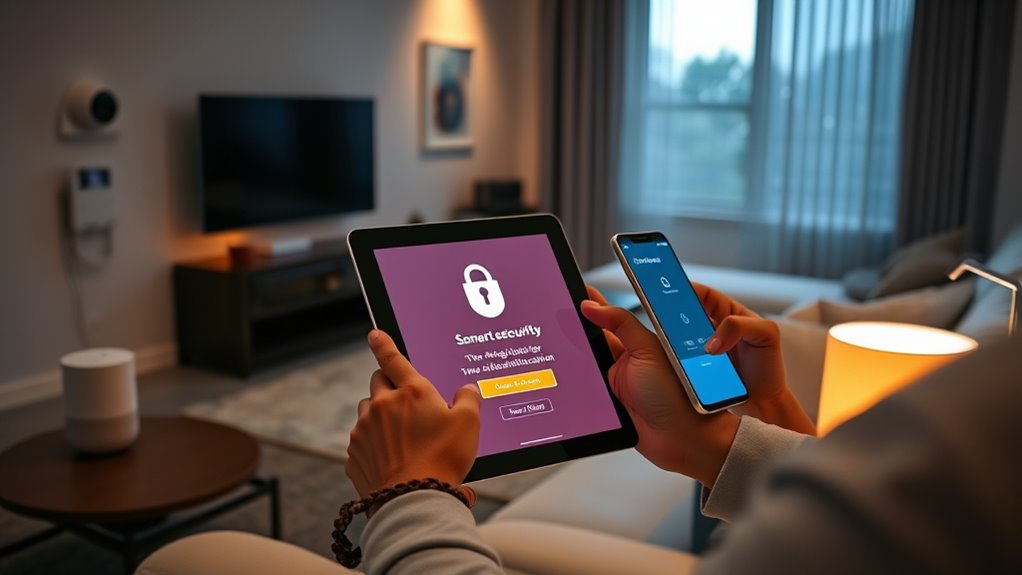
Enabling two-factor authentication (2FA) adds an essential extra layer of security to your smart home devices. It requires a second verification step, making unauthorized access considerably harder. Whenever possible, activate 2FA on your device accounts, such as security cameras, smart locks, or hubs. This way, even if someone obtains your password, they can’t access your devices without the second factor, typically a code sent to your phone or email. Incorporating security best practices from the realm of high-tech outdoor cooking—like careful temperature control and fire management—can inform your approach to managing digital access, making your smart home defenses more robust. Additionally, understanding the privacy policies associated with your devices can help you make informed decisions about data sharing and security features. Staying informed about network security principles ensures your smart home remains protected against potential breaches. Regularly updating your device firmware and security settings further strengthens your defenses, reducing vulnerabilities that hackers might exploit. It’s also advisable to use unique, complex passwords for each device to prevent common hacking techniques.
Segment Your Network to Isolate Smart Devices

To better protect your smart home, you should segment your network to isolate smart devices from your main connection. By creating a separate network, such as a guest Wi-Fi or VLAN, you prevent hackers from accessing your primary devices if one gets compromised. This way, your computers, phones, and work-related gear stay protected even if a smart device is targeted. Set up your router to assign smart devices to a different subnet and restrict their communication with your main network. Keep your smart devices on a dedicated network, and avoid mixing them with your personal devices. This segmentation reduces the risk of a hacker moving laterally across your network and gaining access to sensitive information or control over critical systems. Implementing network segmentation adds an extra layer of security by limiting the potential pathways for cyberattacks. Additionally, regularly updating your device firmware and strong passwords further enhances your cybersecurity defenses, making it harder for hackers to exploit vulnerabilities. Incorporating security best practices such as monitoring network activity can also help detect suspicious behavior early, especially considering the importance of understanding network traffic patterns to identify abnormal activity. Being aware of vulnerabilities in smart devices can further inform your security measures and help prioritize updates and protections.
Regularly Monitor Device Activity and Network Traffic

Regularly monitoring your device activity and network traffic is essential to catch potential security threats early. By keeping an eye on unusual behavior or unexpected connections, you can identify breaches before they escalate. Use network monitoring tools or your router’s logs to track data flows and device activity. Look out for unfamiliar IP addresses or devices communicating at odd hours. If you notice anything suspicious, disconnect the device and investigate further. Setting up alerts for unusual activity helps you respond quickly. Regular monitoring not only detects potential intrusions but also helps you understand your network’s normal patterns, making it easier to spot anomalies. Staying vigilant ensures your smart home remains secure and protected from hackers. Incorporating continuous monitoring practices can further enhance your security by providing real-time insights into your network’s health. Additionally, educating yourself about IoT device vulnerabilities can help you implement targeted security measures to defend against common threats. Being aware of common cyber attack techniques enables you to recognize and prevent potential breaches more effectively. Moreover, understanding network traffic analysis can empower you to identify subtle signs of intrusion that might otherwise go unnoticed. Regularly reviewing your device firmware updates also minimizes security risks, ensuring your devices are protected against known exploits.
Frequently Asked Questions
How Can I Identify if My Iot Device Has Been Hacked?
You can tell if your IoT device has been hacked by noticing unusual behavior, like it responding to commands you didn’t give or slowing down unexpectedly. Check for unfamiliar devices connected to your network, strange data usage, or repeated crashes. Keep an eye on your device’s firmware updates and reset it if you suspect compromise. Regularly monitor your network activity to catch any suspicious activity early.
Are There Specific Brands More Secure Than Others for Smart Home Devices?
Some brands are more secure than others, but no device is completely invulnerable. You should look for reputable manufacturers that prioritize security, regularly update firmware, and offer strong encryption. Popular brands like Samsung SmartThings, Nest, and Ring tend to have better security practices. However, your best bet is to keep devices updated, use strong passwords, and enable two-factor authentication to minimize risks, regardless of the brand.
What Should I Do if I Suspect a Security Breach?
If you suspect a security breach, act quickly by disconnecting your device from the internet to prevent further access. Change your passwords immediately and enable two-factor authentication if available. Check for unusual activity or device behavior, and update all firmware and security settings. Notify your device manufacturer or service provider for guidance, and consider running a security scan on your network. Stay vigilant and monitor your devices closely moving forward.
Can I Use a VPN to Protect My Smart Home Network?
Yes, using a VPN can help protect your smart home network. Studies show that over 60% of IoT devices are vulnerable to cyberattacks, making security essential. A VPN encrypts your internet traffic, shielding your devices from hackers and preventing unauthorized access. By routing your connection through a secure server, you add an extra layer of protection, ensuring your smart home stays private and safe from cyber threats.
How Often Should I Reset or Replace My Iot Devices?
You should reset or replace your IoT devices every 1 to 2 years, or sooner if you notice performance issues or security concerns. Regular updates and firmware checks help keep them secure. If a device becomes obsolete or unsupported, it’s best to replace it promptly. Staying proactive ensures your smart home remains protected against vulnerabilities and hackers, giving you peace of mind and maximum device performance.
Conclusion
By staying proactive and following these tips, you can markedly reduce your smart home’s vulnerability to hackers. Remember, over 60% of IoT devices are targeted due to outdated software and weak passwords. Regular updates, strong passwords, and network segmentation are your best defenses. Protecting your devices isn’t just about convenience — it’s about keeping your personal data safe. Take action today to secure your smart home and enjoy peace of mind tomorrow.