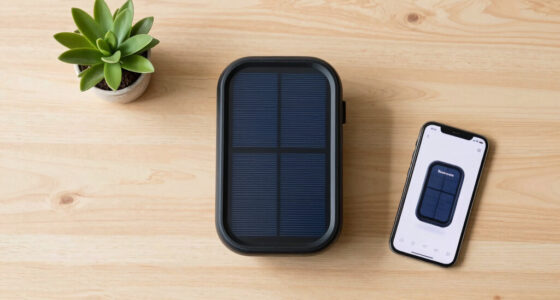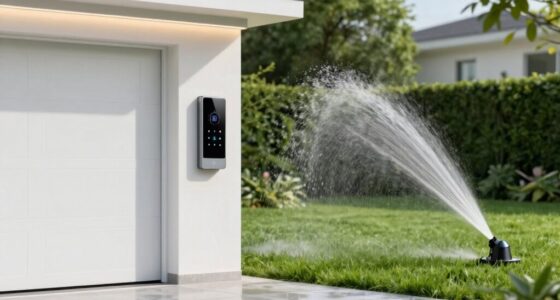
Smart outdoor irrigation and garden gadgets use sensors, automation, and connectivity to optimize watering, save water, and improve plant health. They adjust schedules based on soil moisture, weather, and plant needs, reducing waste and lowering costs. These innovative tools make gardening easier, more sustainable, and efficient. By integrating the latest technology, you can create a thriving garden with less effort. Keep exploring to discover how these solutions can transform your outdoor space.

Get the latest gadgets delivered free — and shop member deals
- Fast, free delivery on millions of items
- Access to Prime Big Deal Days deals on October 6–7
- Prime Video, Amazon Music and more included
Key Takeaways
- Smart irrigation systems use soil moisture sensors and weather data to automate watering, reducing water waste and improving plant health.
- Key components include sensors, automated controllers, and connectivity features like Wi-Fi or cellular for remote management.
- These gadgets optimize water delivery, preventing overwatering or underwatering, and can increase crop yield and garden resilience.
- Integration of AI and IoT enhances system efficiency, enabling real-time adjustments based on environmental conditions.
- Smart outdoor gadgets promote sustainability, conserve resources, and make garden management easier and more eco-friendly.
How Automated Irrigation Saves Water and Boosts Efficiency

Automated irrigation systems considerably reduce water waste by tailoring watering schedules to real-time weather and soil moisture conditions. You won’t waste water watering when it’s raining or the soil is already moist, thanks to sensors and weather data integration. These systems adjust watering times and amounts automatically, ensuring your garden gets exactly what it needs without excess runoff or evaporation. As a result, you can cut water usage by up to 50%, saving money and conserving resources. Plus, they prevent overwatering, which can damage plants and leach nutrients from the soil. With precise control, your plants grow healthier and more uniform. Automated irrigation not only boosts efficiency but also helps protect the environment by reducing unnecessary water consumption.
Key Components of Smart Irrigation Systems

To make your smart irrigation system effective, you need reliable soil moisture sensors that monitor water levels in real time. Automated control systems process this data and adjust watering schedules accordingly, ensuring ideal hydration. Combining these components creates a responsive setup that conserves water and promotes healthy plant growth. Incorporating accurate color reproduction in sensor calibration can further enhance system precision and reliability. Additionally, implementing biological indicators can improve system responsiveness by providing more comprehensive environmental data. Understanding Free Floating technology can also support flexible sensor deployment, adapting to various landscape conditions. Recognizing the importance of vetted components ensures the system’s durability and performance over time. Exploring sensor calibration techniques can optimize accuracy and maintain consistent system functionality.
Soil Moisture Sensors
Have you ever wondered how smart irrigation systems know when your plants need water? Soil moisture sensors are the key. They measure the water content directly in the soil, providing real-time data to your system. These sensors typically come in probes or capacitance-based devices that are easy to install in the ground. When soil dryness reaches a set threshold, the sensors send signals to your automated controller, triggering watering only when necessary. This prevents overwatering and conserves water. Soil moisture sensors work continuously, giving you precise insights into your garden’s hydration needs. They’re compatible with various irrigation systems and can be integrated with weather data for even smarter watering decisions. Overall, they help you maintain healthy plants while saving water and reducing waste. European cloud servers are increasingly supporting these smart gardening technologies through secure and sustainable cloud solutions. Additionally, advancements in cloud computing have enhanced the efficiency and connectivity of these systems, making them more reliable and easier to manage remotely.
Automated Control Systems
A key component of smart irrigation systems is the control unit, which acts as the system’s brain. It processes data from soil sensors, weather forecasts, and user inputs to determine watering schedules. These controllers use algorithms, including machine learning, to optimize irrigation timing and amount automatically. Connectivity via Wi-Fi or cellular networks allows you to monitor and adjust settings remotely. To highlight the importance of adaptability, consider this table:
| Feature | Function | Benefit |
|---|---|---|
| Weather integration | Adjusts watering based on forecasted conditions | Prevents over/underwatering |
| Soil moisture sensors | Provides real-time soil data | Ensures precise watering |
| Remote access | Control from any device | Flexibility and convenience |
| Automated scheduling | Sets irrigation plans based on data | Saves water and time |
This system guarantees efficient, responsive garden care.
Benefits for Crop Yield and Plant Health

With automated irrigation, you deliver water precisely where and when plants need it, reducing stress and encouraging healthy growth. This targeted approach helps boost crop yields and improves overall plant health. When you optimize watering, you set the stage for better quality produce and stronger, more resilient plants. Proper tool selection plays a crucial role in ensuring your irrigation system performs effectively and efficiently. Additionally, understanding auditory processing can help in designing systems that accommodate various plant and environmental needs. Employing sensor technology can further enhance watering accuracy and conservation efforts, ensuring optimal conditions for your garden’s growth. Incorporating smart technology can also streamline watering schedules and adapt to changing weather conditions for even better results, and leveraging environmental monitoring can optimize watering patterns based on real-time data.
Precise Water Delivery
Precise water delivery guarantees crops receive the ideal amount of moisture exactly when and where they need it, directly boosting yield and plant health. By targeting specific areas with accurate amounts, you minimize waste and prevent overwatering, which can cause root rot or nutrient leaching. Automated systems adjust watering schedules based on real-time soil moisture, weather conditions, and crop requirements, ensuring consistent hydration. This level of precision agriculture promotes healthier roots, reduces plant stress, and encourages uniform growth. With controlled water application, you’ll see fewer disease issues and improved crop quality. Additionally, precise water delivery helps optimize resource use, lowering water costs and supporting sustainable farming practices. Incorporating smart sensors and automation technology can further enhance watering accuracy and efficiency. Reliable backup power systems ensure that irrigation automation remains uninterrupted during power outages, safeguarding crop health. Implementing energy-efficient components in irrigation systems can also help reduce overall energy consumption. Overall, it creates an efficient, reliable foundation for healthy, high-yield crops.
Enhanced Plant Growth
Optimized water delivery directly influences plant health and crop yields by ensuring each plant receives the right amount of moisture at the right time. When you use smart irrigation, plants stay consistently hydrated, reducing stress and promoting vigorous growth. Precise watering encourages healthier roots and prevents overwatering, which can lead to nutrient leaching and disease. With real-time environmental data, your system adjusts to changing conditions, delivering moisture exactly when needed. This consistency results in better fruit and vegetable quality, fewer defects, and higher market value. Additionally, uniform water distribution minimizes growth irregularities, leading to more uniform crops. Understanding the importance of proper watering techniques can further improve garden success. Incorporating fiber-rich foods into your garden or diet can support overall plant health and resilience. Staying informed about emerging cryptocurrency trends can help optimize investment strategies for sustainable growth. Furthermore, utilizing sensor-based irrigation systems can provide even more precise control over watering schedules. Overall, smart irrigation enhances plant vitality, boosts productivity, and supports sustainable farming practices by fostering healthier, more resilient plants.
Economic and Environmental Advantages

Automated irrigation systems offer significant economic and environmental benefits that can transform how you manage your garden. First, they cut water costs by adjusting watering schedules based on real-time weather and soil data, saving you money. Second, they reduce water waste, protecting local ecosystems and conserving freshwater resources. Third, automation lowers labor expenses by minimizing manual oversight and maintenance. With precise control, you also improve soil health and reduce nutrient runoff, supporting sustainable practices. Additionally, these systems enhance crop quality and yield, leading to higher market value. By optimizing resource use and decreasing operational costs, you not only save money but also contribute positively to the environment, making your garden more efficient and eco-friendly. The incorporation of electric bikes in your lifestyle can further reduce your carbon footprint by providing eco-friendly transportation options. Furthermore, integrating precise watering technologies can maximize efficiency and promote sustainable water management practices. Incorporating smart sensors allows for real-time monitoring and even more tailored watering schedules, further enhancing sustainability and efficiency. Implementing soil moisture monitoring can help fine-tune watering routines for optimal plant health and resource conservation. Additionally, adopting renewable energy sources such as solar-powered irrigation controllers can further decrease your garden’s carbon footprint and operational costs.
Cutting-Edge Innovations in Garden Technology

Advancements in garden technology are rapidly transforming how you manage your green spaces, making them smarter and more efficient than ever before. Cutting-edge innovations leverage AI, IoT, and automation to optimize watering, lighting, and plant care. For example, smart sensors now detect soil moisture, weather changes, and plant health, enabling real-time adjustments. Wireless connectivity allows you to monitor and control systems remotely, ensuring your garden stays healthy without manual effort. Below is a snapshot of these innovations:
| Technology | Functionality | Benefit |
|---|---|---|
| AI Algorithms | Dynamic watering schedules | Water savings, efficiency |
| IoT Sensors | Continuous environmental monitoring | Plant health |
| Wireless Networks | Remote control and alerts | Convenience |
| Smart Lighting | Automated lighting adjustments | Energy efficiency |
These innovations redefine garden management, making it smarter, more sustainable, and easier than ever.
Tips for Choosing the Right Automated Garden Gadgets

Choosing the right automated garden gadgets starts with understanding your specific gardening needs and goals. To make an informed choice:
- Assess your garden size and plant types to determine necessary features, like soil moisture sensors or weather integration.
- Decide on automation complexity—simple timers for small gardens or advanced systems with remote access for larger landscapes.
- Consider your budget and long-term savings potential, focusing on gadgets that optimize water use and reduce labor costs.
Look for devices compatible with your existing setup and ensure they offer easy installation and user-friendly controls. Prioritize systems with reliable connectivity and data analytics for better decision-making. By aligning features with your garden’s requirements, you’ll maximize efficiency and growth.
Frequently Asked Questions
How Does Weather Data Influence Automated Irrigation Decisions?
Weather data directly influences your automated irrigation decisions by helping your system determine when and how much to water your plants. When it detects rain, it pauses watering to prevent overwatering. Hot or windy conditions trigger increased watering to compensate for evaporation, while cooler weather reduces it. This real-time data ensures ideal watering, conserving water, promoting healthy plant growth, and improving crop yields while minimizing waste.
Can Smart Irrigation Systems Be Integrated With Existing Garden Setups?
You can definitely integrate smart irrigation systems into your existing garden setup. For example, if you already have a sprinkler system, you can add IoT-enabled controllers and soil moisture sensors to automate watering. These components connect wirelessly, allowing you to monitor and adjust watering schedules remotely. It’s a seamless upgrade that improves water efficiency, promotes healthier plants, and saves you time, all while working with your current garden infrastructure.
What Maintenance Is Required for Automated Garden Gadgets?
You need to regularly check your automated garden gadgets to guarantee they work properly. Clean sensors and filters to prevent blockages, update software if available, and inspect connections for damage or corrosion. Test controllers and valves periodically to verify proper operation. Keep batteries charged or replace them as needed. By maintaining these components, you’ll keep your system running efficiently, save water, and ensure your garden stays healthy and vibrant all season long.
How Secure Is Remote Access to Irrigation Control Systems?
Remote access to irrigation control systems can be quite secure if you use strong passwords and enable two-factor authentication. Regularly update your software to patch security vulnerabilities, and connect through encrypted networks like VPNs for added protection. Be cautious with public Wi-Fi, and avoid sharing login details. By taking these steps, you can guarantee your remote control remains safe from unauthorized access and cyber threats.
Are There Any Environmental Regulations Affecting Smart Irrigation Devices?
You’ll find that environmental regulations do impact smart irrigation devices, especially as governments aim to conserve water and protect ecosystems. These rules often require systems to meet water efficiency standards, incorporate sensor data, and sometimes limit automation to prevent overuse. Staying aware of local laws guarantees your device complies, helping you avoid penalties while supporting sustainable practices. Ultimately, these regulations encourage smarter, eco-friendly watering solutions that benefit both your garden and the environment.
Conclusion
By upgrading to smart garden gadgets, you can save up to 50% of your water usage while keeping your plants healthier than ever. With innovative features like automatic watering schedules and real-time soil monitoring, you’ll boost efficiency and reduce waste effortlessly. Embracing these technologies not only benefits your garden but also helps the environment. So, why not take advantage of this smart outdoor revolution and transform your gardening experience today?
Fall Picks
fall essentials
As an affiliate, we earn on qualifying purchases.