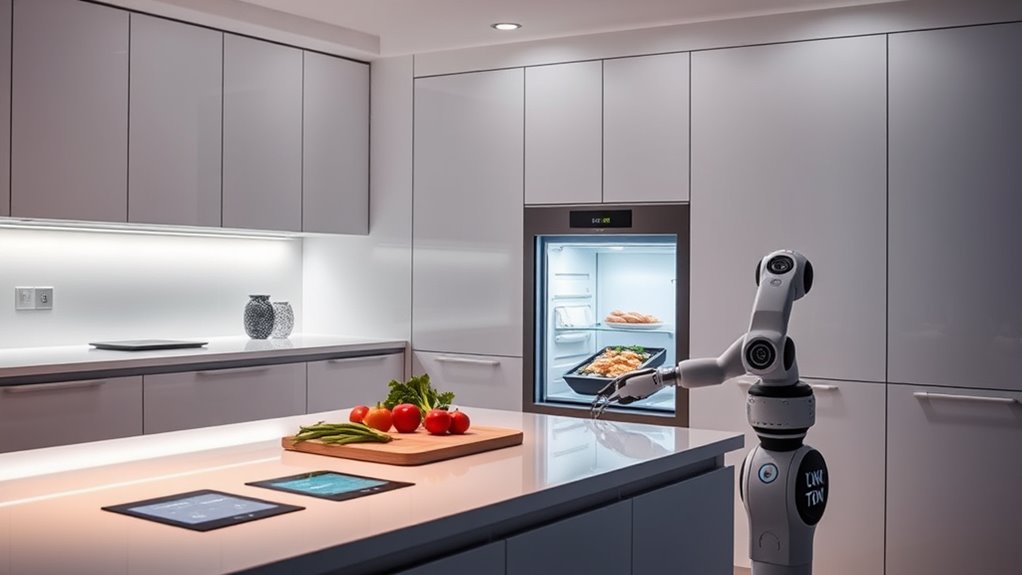

The kitchen of the future combines smart tech and AI-powered appliances that learn your habits, adjust settings automatically, and help you cook more efficiently. Energy-saving devices like induction cooktops and smart dishwashers cut costs while promoting sustainability. Modular layouts and multi-functional appliances maximize space, and voice assistants allow hands-free control. Advanced safety features keep your kitchen safe and connected. Stay with us to explore how these innovations are transforming cooking into a smarter, easier experience.

Get the latest gadgets delivered free — and shop member deals
- Fast, free delivery on millions of items
- Access to Prime Big Deal Days deals on October 6–7
- Prime Video, Amazon Music and more included
Key Takeaways
- Smart appliances learn user habits, enabling automated adjustments for consistent cooking results.
- Connectivity allows remote control and monitoring via smartphone apps and voice assistants.
- Energy-efficient devices like induction cooktops and intelligent ovens reduce power consumption and cooking times.
- Modular, multi-functional kitchen designs optimize space, enhance flexibility, and support sustainable practices.
- Real-time notifications and safety features improve convenience, hygiene, and kitchen safety through automation and sensors.
As an affiliate, we earn on qualifying purchases.
The Rise of AI-Integrated Cooking Appliances

AI-integrated cooking appliances are transforming the way you prepare meals by learning your habits and adjusting settings automatically. Your oven remembers your preferred cooking times and temperatures, ensuring perfect results every time. With smart ranges, you can preheat remotely or monitor progress via your smartphone, reducing guesswork and overcooking. These appliances also recommend recipes based on your taste and usage patterns, making meal planning easier. Voice-controlled assistants like Alexa or Google Assistant let you set timers or modify temperatures hands-free, keeping your focus on cooking. Additionally, connected devices such as smart refrigerators and coffee makers track inventory and suggest meals or beverages, streamlining your kitchen routines and enhancing convenience. This integration creates a seamless, efficient cooking experience tailored specifically to you. Connected kitchen devices are also capable of adjusting settings automatically based on environmental factors like humidity or altitude, further optimizing cooking results. Implementing adaptive automation in your kitchen appliances can optimize energy use and extend device lifespan, making your cooking smarter and more sustainable. Furthermore, integrating European cloud infrastructure ensures secure data management and seamless updates across all connected devices, enhancing reliability and privacy. Newer systems incorporate machine learning algorithms that improve over time, providing increasingly personalized assistance. Incorporating advanced sensor technology allows these appliances to better detect food states and ensure optimal cooking performance.
As an affiliate, we earn on qualifying purchases.
Enhancing Sustainability With Energy-Efficient Technologies

You can make your kitchen more sustainable by choosing energy-efficient appliances that reduce power consumption and lower utility bills. Water-saving technologies like touchless faucets and smart sensors help conserve water during food prep. By adopting these practices, you contribute to a greener future while enjoying a more efficient cooking space. Incorporating energy conservation techniques into your household routines can also promote a supportive environment for all family members. Additionally, implementing smart home technologies can optimize energy use and further enhance your kitchen’s sustainability. Utilizing home energy management systems can help monitor and control energy consumption more effectively in real time, especially when integrated with sauna and cold‑plunge systems that are designed for efficiency.
Energy-Saving Appliance Features
Energy-efficient technologies are transforming modern kitchens by reducing power consumption and minimizing environmental impact. You’ll find appliances with ENERGY STAR® certifications that use less energy without sacrificing performance. Induction cooktops heat faster and lower energy use compared to traditional stoves, saving you money and reducing emissions. Combination ovens, or combi ovens, cut cooking times and energy needs, especially in commercial settings. Smart appliances monitor and report their energy usage, helping you identify ways to cut costs and be eco-friendly. Some models adjust power automatically based on cooking needs, preventing waste. Touchless faucets with sensors also reduce unnecessary water and energy consumption during food prep. Additionally, advancements in nanotechnology are enabling the development of more efficient insulation materials and energy storage solutions, further enhancing the sustainability of modern kitchens. Energy management systems are increasingly integrated into home appliances, allowing for better control and optimization of energy use, making your kitchen more sustainable, efficient, and aligned with greener living habits. Moreover, integrating renewable energy sources like solar panels can further decrease reliance on traditional power grids, promoting a more eco-conscious kitchen setup.
Furthermore, innovations in smart grid technology can optimize energy distribution and reduce waste in residential environments.
Water Conservation Technologies
Have you noticed how smart water-saving technologies are transforming modern kitchens? These innovations help you conserve water without sacrificing convenience. Touchless faucets use sensors to activate water flow only when needed, reducing waste. Some systems automatically shut off after a set time or volume, preventing leaks and overuse. Smart dishwashers optimize water use based on load size, saving gallons per cycle. Additionally, water efficiency features are increasingly integrated into kitchen appliances to promote sustainability. These energy-efficient technologies contribute significantly to reducing your household’s environmental footprint. Incorporating simple organizing strategies can further enhance your kitchen’s efficiency and reduce clutter. Understanding auditory processing can also help optimize your kitchen environment, making it more accessible for everyone. Moreover, integrating aerosol purification systems can improve indoor air quality by reducing airborne contaminants, supporting a healthier cooking space.
Sustainable Cooking Practices
Implementing sustainable cooking practices is essential for reducing environmental impact and lowering energy costs in your kitchen. You can do this by choosing energy-efficient appliances, like ENERGY STAR® certified models, which use less power and cut emissions. Induction cooktops heat faster and consume less energy than traditional stoves, making your cooking more eco-friendly. Smart appliances monitor energy use, helping you identify ways to save. Combining cooking tasks with multi-functional appliances minimizes waste and maximizes space. Using water-saving fixtures, like touchless faucets, conserves water during prep. Additionally, optimizing cooking times and temperatures with precision tools reduces energy waste. These practices not only help protect the environment but also save you money and promote a more sustainable lifestyle in your kitchen. Incorporating energy-efficient appliances and smart technology can further enhance your kitchen’s sustainability.
voice control kitchen appliances
As an affiliate, we earn on qualifying purchases.
As an affiliate, we earn on qualifying purchases.
Modular and Multi-Functional Kitchen Design Innovations

You can customize your kitchen layout with modular designs that adapt to your changing needs, making the space more functional and efficient. Multi-use devices help save room by combining several functions into one appliance, perfect for smaller kitchens. These innovations let you optimize your space while maintaining flexibility and convenience. Incorporating smart appliance integration into your design can further enhance efficiency and control over your cooking environment. Additionally, considering home safety & accessibility features can help ensure the kitchen remains safe and user-friendly for all users. Understanding the materials and craftsmanship behind high-end appliances can also guide you in selecting durable and premium-quality options that elevate your kitchen experience. Exploring wellness technology can add an extra layer of safety and health benefits to your kitchen environment.
Flexible Layout Options
Flexible layout options are transforming modern kitchens by emphasizing modular and multi-functional designs that adapt to changing needs. You can reconfigure your space easily with modular units that fit your workflow, whether you’re cooking, cleaning, or entertaining. Multi-purpose furniture, like islands with built-in storage or fold-away tables, maximize limited space and boost efficiency. These adaptable setups allow you to switch from prep to dining mode effortlessly, making your kitchen more versatile. Reconfigurable cabinetry and movable appliances help optimize traffic flow and reduce clutter. Built-in charging stations and hidden outlets support multiple devices without sacrificing style. Overall, flexible layouts empower you to customize your kitchen environment, creating a functional, organized space that evolves with your lifestyle.
Space-Efficient Multi-Use Devices
In modern kitchens, space is at a premium, making multi-use devices an innovative solution to maximize functionality. These versatile tools help you save room while expanding your cooking options. For example:
- Modular units let you reconfigure your setup based on your needs, whether for baking, prep, or storage.
- Multi-purpose appliances combine functions like grilling, baking, and reheating into a single device, reducing clutter.
- Multipurpose islands integrate sinks, cooktops, and storage, centralizing cooking and prep tasks.
energy-efficient smart dishwasher
As an affiliate, we earn on qualifying purchases.
As an affiliate, we earn on qualifying purchases.
Precision Cooking: Achieving Chef-Quality Results at Home

Advances in precision cooking technology have revolutionized home kitchens, making professional-quality results more accessible than ever. You can now achieve restaurant-grade dishes with tools like sous vide circulators that maintain exact temperatures for perfect doneness every time. Smart thermometers send wireless alerts, preventing overcooking and ensuring food safety. Precision scales automatically adjust ingredient quantities based on servings, enhancing accuracy. Modern ovens with steam injection and humidity control boost baking results, while temperature-controlled surfaces enable delicate culinary techniques. These innovations allow you to replicate complex chef techniques at home, elevating your cooking game. With intuitive controls and real-time monitoring, precise cooking becomes straightforward, consistent, and stress-free—bringing professional results right into your own kitchen.
Seamless Connectivity and Control in Modern Kitchens
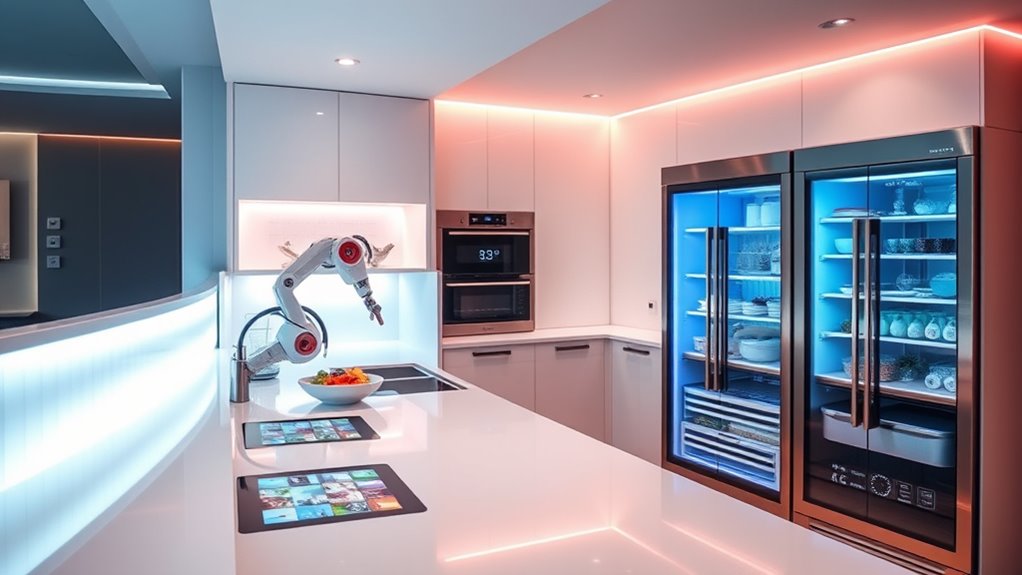
Seamless connectivity transforms your modern kitchen into an integrated hub where appliances communicate effortlessly. You can control devices remotely, monitor cooking progress, and receive alerts without leaving the couch. To maximize this integration, focus on these key features:
Seamless connectivity turns your kitchen into a smart, efficient hub with remote control, alerts, and personalized presets.
- Unified control via smartphone apps or voice assistants, allowing you to manage multiple appliances simultaneously.
- Customizable presets that learn your preferences, making future cooking faster and more consistent.
- Real-time notifications for maintenance, alerts about food spoilage, or when a task is complete, keeping you informed and proactive.
This connectivity reduces clutter, simplifies workflows, and enhances efficiency. With a few taps or voice commands, your kitchen becomes smarter, more responsive, and easier to operate, transforming everyday cooking into a seamless experience.
Advanced Safety and Convenience Features for Today’s Cook
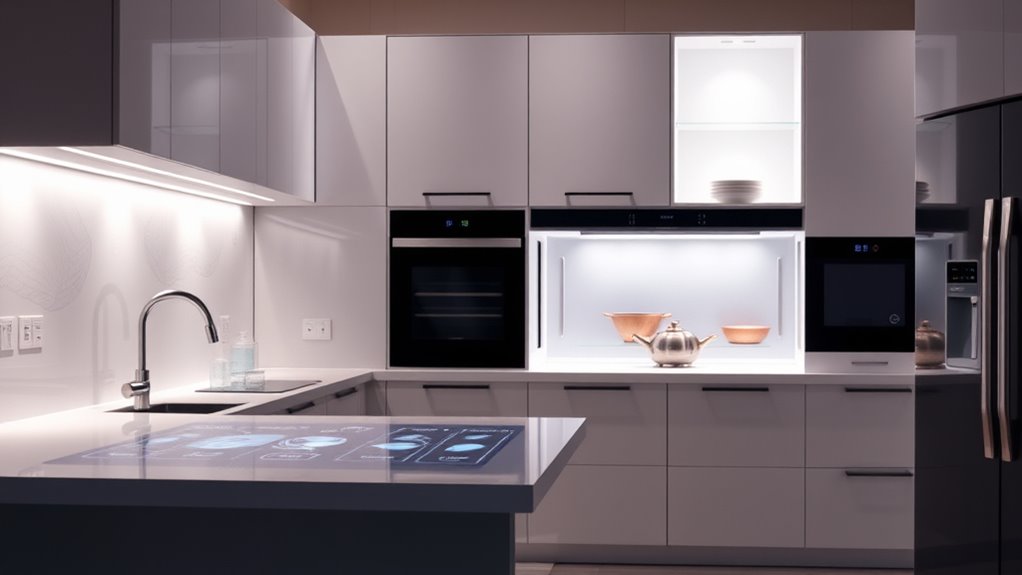
Today’s smart kitchen appliances prioritize your safety and convenience by integrating features that detect issues early and offer proactive assistance. For example, smart ovens and ranges monitor temperature and cooking progress, sending alerts if something’s off or if food is overcooking. Safety alerts notify you of forgotten appliances or malfunctions, preventing accidents. Voice-controlled assistants allow you to adjust settings hands-free, reducing distractions and ensuring precise control. Sensors detect smoke, gas leaks, or spills and trigger automatic shutdowns or alarms. Water-saving faucets with smart sensors help reduce waste, while automated cleaning functions keep appliances hygienic without manual effort. These features work together to create a safer, more efficient cooking environment, giving you peace of mind while simplifying your kitchen routines.
Smart Inventory Management and Meal Planning Tools

Smart inventory management and meal planning tools streamline your kitchen by automatically tracking what’s inside your refrigerator and pantry. With these tools, you get real-time updates on food quantities, expiration dates, and shopping needs. They help you avoid waste and reduce trips to the store. Here are three ways these tools improve your cooking experience:
- They suggest recipes based on available ingredients, minimizing waste.
- You receive automatic alerts when items are running low or nearing expiration.
- Meal plans are tailored to your dietary preferences and schedule, simplifying decision-making.
The Role of Voice Assistants and Hands-Free Operation

Voice assistants like Alexa and Google Assistant have become indispensable tools in the modern kitchen, especially when managing smart appliances and meal planning. You can effortlessly set timers, adjust oven temperatures, or start coffee makers without lifting a finger. Hands-free operation keeps you focused on cooking, reducing the need to touch screens or knobs with messy hands. With simple voice commands, you control multiple devices simultaneously, streamline your workflow, and stay organized. These assistants also provide instant access to recipes, cooking tips, and nutritional information, enhancing your culinary experience. additionally, voice control integrates seamlessly with your smart home ecosystem, allowing you to manage lighting, music, and appliances from one central hub. This technology makes your kitchen more efficient, safer, and more intuitive.
Future Trends: Emerging Technologies Transforming Kitchen Spaces
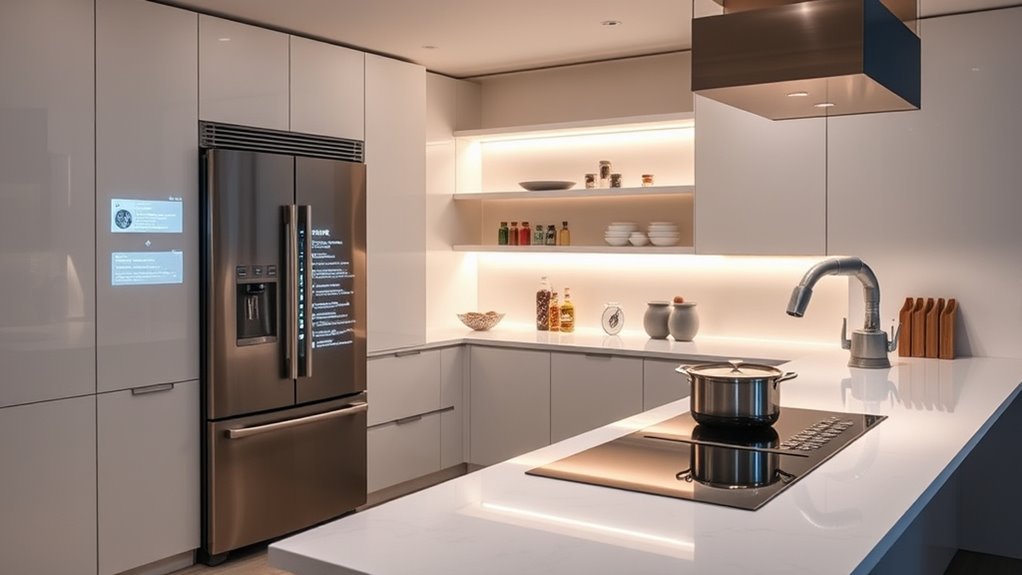
Emerging technologies are revolutionizing kitchen spaces by integrating advanced automation, connectivity, and sustainability features. You’ll see appliances that learn your cooking habits, adjust settings automatically, and suggest recipes based on your preferences. Connectivity enables remote control, so you can preheat ovens or check inventory from anywhere. Sustainability takes center stage with smarter energy use and water-saving solutions. Key trends include:
- Modular, multi-functional equipment that maximizes space and adapts to your needs.
- Precision cooking devices like sous vide and smart thermometers for restaurant-quality results at home.
- Connectivity enhancements that unify appliances for seamless control, diagnostics, and maintenance alerts. These innovations make your kitchen smarter, more efficient, and eco-friendly, transforming everyday cooking into a streamlined experience.
Frequently Asked Questions
How Secure Is My Data When Using Smart Kitchen Appliances?
Your data security depends on the manufacturers’ safeguards and your habits. Most smart appliances use encryption and regular updates to protect your info. However, you should change default passwords, keep firmware up to date, and connect devices to secure networks. Be cautious with sharing personal details and monitor your device activity. Staying proactive helps prevent hacking and keeps your smart kitchen safe and private.
Can Smart Appliances Be Integrated Into Existing Home Automation Systems?
Think of your home automation system as a conductor, seamlessly integrating your smart appliances like an orchestra. Yes, you can integrate smart appliances into existing home systems, using compatible hubs or platforms like Alexa or Google Home. This allows you to control devices with a single app or voice command. Make sure your appliances are compatible and keep your firmware updated for smooth, secure integration.
What Is the Typical Lifespan of Ai-Enabled Kitchen Devices?
AI-enabled kitchen devices typically last around 8 to 12 years, depending on usage and maintenance. You can prolong their lifespan by keeping software updated, regularly cleaning components, and addressing issues promptly. These appliances are built with durable materials, but like all tech, they may become outdated as new features emerge. Staying proactive with care ensures you get the most out of your smart kitchen gadgets for years to come.
Are There Health Risks Associated With Electromagnetic Fields From Smart Appliances?
There are some concerns about electromagnetic fields (EMFs) from smart appliances, but current research shows typical exposure levels are safe for most people. You might experience minor electromagnetic radiation, but it’s generally well below safety limits set by health authorities. To minimize any potential risks, keep appliances at recommended distances, use them according to instructions, and ensure your home is well-ventilated. Overall, smart appliances are safe for everyday use.
How User-Friendly Are These Advanced Kitchen Technologies for Seniors?
You’ll find that many smart kitchen devices are surprisingly user-friendly for seniors, with studies showing over 80% of users find voice commands and touchscreen controls easy to learn. You can pre-set favorite recipes, get alerts, and operate appliances hands-free, reducing effort and confusion. Plus, remote monitoring helps you stay connected, making cooking safer and more enjoyable. These intuitive features empower you to cook confidently, regardless of age or tech experience.
Conclusion
As you explore these smart kitchen innovations, it’s clear that technology isn’t just making cooking easier—some believe it could even revolutionize how we eat and connect with food. With AI and automation advancing rapidly, you might wonder if the kitchen of the future will truly replace traditional cooking. While that’s still up for debate, one thing’s certain: embracing these tools can make your culinary experience more efficient, sustainable, and enjoyable than ever before.
Fall Picks
fall essentials
As an affiliate, we earn on qualifying purchases.