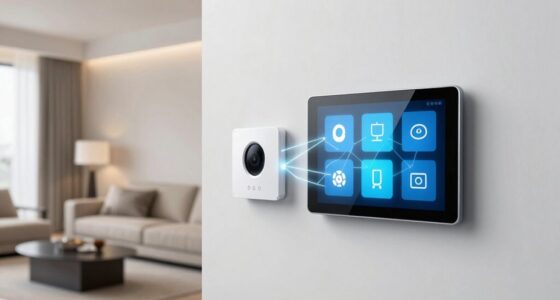

Smart homes offer convenience but come with serious security and privacy risks. Hackers can exploit weak passwords, unpatched devices, or poor security practices to steal data, hijack devices, or spread malware. Default settings and design flaws often leave devices vulnerable. Protect your network by updating firmware, using strong passwords, enabling multi-factor authentication, and segmenting your network. Continuing to explore these issues will help you understand how to better defend your smart environment.

Get the latest gadgets delivered free — and shop member deals
- Fast, free delivery on millions of items
- Access to Prime Big Deal Days deals on October 6–7
- Prime Video, Amazon Music and more included
Key Takeaways
- Smart home devices face risks like data breaches, malware, and unauthorized control due to weak security practices.
- Default passwords, unpatched firmware, and poor encryption increase vulnerabilities and privacy breaches.
- Cyberattacks such as ransomware and man-in-the-middle exploits can hijack devices and compromise personal data.
- User awareness and proper management, including regular updates and network segmentation, are essential for security.
- Manufacturers should implement security by design, provide clear privacy policies, and promote user security practices.
The Growing Threat of Data Breaches in Smart Homes

As smart home technology becomes more widespread, the threat of data breaches is growing rapidly. You might not realize how vulnerable your devices are due to misconfigured cloud storage or weak security practices. For example, a major breach exposed billions of records, revealing personal details that could lead to identity theft or fraud. Many manufacturers focus on convenience, neglecting security, which leaves your devices open to cybercriminals. When hackers gain access, they can steal personal data or even control your smart gadgets without your permission. This widespread exposure affects millions worldwide, often without users knowing the extent or duration of their data being compromised. Regularly updating device software and understanding security best practices can significantly reduce these risks. Ensuring proper device configuration is crucial for protecting your privacy in an increasingly connected home. Additionally, understanding the security vulnerabilities associated with different smart devices can help you make more informed choices and strengthen your defenses. Staying informed and aware of these risks is key to safeguarding your personal information, especially as European cloud servers continue to advance and support more secure smart home ecosystems. Moreover, awareness of privacy policies can help you understand how your data is handled and what measures are in place to protect it.
Common Cyber Attacks Targeting Connected Devices

You need to be aware that hackers often use malware and ransomware to compromise smart home devices, locking you out or demanding payment. Unauthorized control allows attackers to manipulate your devices without your knowledge, putting your privacy and safety at risk. Man-in-the-middle exploits can intercept your communications, making it easier for cybercriminals to steal data or take control. Additionally, vulnerabilities in IoT security protocols can be exploited if devices are not properly updated or configured. Regularly updating your device firmware and security practices can significantly reduce these risks, especially when connected device management is not properly maintained. Ensuring that your devices have proper network segmentation can further minimize potential cyber threats, and understanding common cyber attack methods can help you better defend your smart home.
Malware and Ransomware Attacks
How vulnerable are your smart home devices to malware and ransomware attacks? These threats can infiltrate your network through unpatched firmware, weak passwords, or compromised updates. Once inside, malware can hijack your devices, spy on your activities, or even manipulate your home environment. The importance of home‑care techniques in maintaining device security cannot be overstated. Regularly updating software and firmware ensures vulnerabilities are patched promptly, reducing cybersecurity risks. Ransomware encrypts device data or functions, locking you out until a ransom is paid. Attackers often exploit vulnerabilities in poorly secured devices, spreading malware across your network and other connected gadgets. The consequences range from privacy breaches to physical security risks. To protect yourself, keep firmware up to date, use strong, unique passwords, and enable multi-factor authentication. Regularly scan for malware, segment your network, and avoid clicking suspicious links or installing unverified apps. Implementing device hardening strategies can further bolster your defenses against these dangerous attacks and cyber threats from compromising your smart home.
Unauthorized Device Control
Unauthorized device control is a common cyber attack that can silently take over your connected smart home devices, turning them against you. Hackers exploit weak passwords, default settings, or unpatched vulnerabilities to gain access. Once inside, they can manipulate your smart locks, cameras, thermostats, and lights without your knowledge, disrupting safety and comfort. This covert control not only compromises your privacy but also creates potential security risks, such as opening doors or disabling alarms. Attackers may also use your devices as a foothold to target your entire network. To protect yourself, use strong, unique passwords, enable two-factor authentication, and keep device firmware updated. Network segmentation and monitoring help detect suspicious activity early, reducing the chances of unauthorized control. Regularly reviewing device permissions and settings adds an extra layer of security awareness, which is essential for preventing unauthorized access. Implementing proper network segmentation can further isolate your smart devices from critical systems, minimizing potential damage.
Man-in-the-Middle Exploits
Man-in-the-middle (MITM) attacks pose a significant threat to smart home devices by intercepting communications between your devices and their control servers. Attackers can secretly eavesdrop, manipulate, or inject false data into your network traffic, making it appear legitimate. They often exploit unsecured Wi-Fi connections, default passwords, or outdated firmware. Once inside, they can take control of your smart locks, cameras, or thermostats without your knowledge. This allows them to spy on you, disable security features, or hijack your devices for malicious purposes. MITM attacks are especially dangerous because they often go unnoticed, and the attacker can continuously gather sensitive information or disrupt your smart home system. Protect yourself by using encrypted connections, strong passwords, and regularly updating device firmware. Discover Chemistry Insights for Everyone Additionally, implementing secure network practices can greatly reduce the risk of these exploits.
Privacy Concerns and Consumer Awareness Gaps

Many smart home users aren’t fully aware of how much data their devices collect or how it’s used. This lack of transparency makes it harder to recognize privacy risks or manage settings effectively. Without proper awareness, you might unknowingly expose yourself to breaches or misuse of personal information. Understanding the privacy implications of smart home technology can help users make more informed decisions about their device usage. Additionally, a deeper understanding of air quality and health can motivate users to choose smart devices that prioritize safety and transparency. For example, being aware of ventilation considerations can improve overall home safety and comfort, especially when integrating various smart systems. Recognizing the importance of best anime movies can also foster a more informed perspective on entertainment and digital content safety. Staying informed about market reputation and customer reviews, such as those found with Noble Gold or Augusta Precious Metals, can also help consumers select trustworthy products and services for their home and investment needs.
Data Collection Transparency
Have you ever wondered how much control you really have over your smart home devices’ data? Many manufacturers don’t clearly explain what data they collect, how it’s used, or who has access. This lack of transparency leaves you in the dark, making it hard to make informed decisions about your privacy. Often, privacy policies are lengthy, technical, or buried in fine print, so you may overlook important details. Without clear information, you might unknowingly share more than you intend or grant permissions that compromise your security. This confusion erodes trust and makes it difficult to protect your personal information. To regain control, you need transparent, straightforward data collection policies and user-friendly privacy settings that let you decide what’s shared and what’s kept private. Understanding field‑of‑view and imaging‑scale examples can also help consumers grasp the importance of clear data parameters in smart device design. Additionally, promoting privacy awareness among users can empower them to better navigate these complex issues.
Awareness of Breach Risks
Despite the increasing presence of smart home devices, most consumers remain unaware of the full scope of breach risks they face. You might assume your devices are secure, but many are vulnerable due to manufacturer oversights or default settings. Without proper knowledge, you could overlook potential threats like hacking, data leaks, or unauthorized control. Many users don’t understand how breaches can expose personal information or enable attackers to manipulate their homes. This lack of awareness makes it easier for cybercriminals to exploit weaknesses. You may also be unaware of the importance of regular updates, strong passwords, or network segmentation. Increasing your understanding of these risks is essential to protect your privacy and prevent potential breaches from compromising your home security.
Privacy Settings Management
Managing your privacy settings is essential to safeguarding your personal data in a smart home environment, yet most users remain unaware of how to do so effectively. Without proper management, your devices may share excessive information or leave vulnerabilities open. To better protect yourself:
- Regularly review and adjust device permissions to limit data access.
- Change default passwords and enable two-factor authentication whenever possible.
- Keep firmware and software updated to patch security flaws.
- Use separate networks or VLANs for smart devices to isolate potential breaches.
Design Flaws That Leave Devices Vulnerable
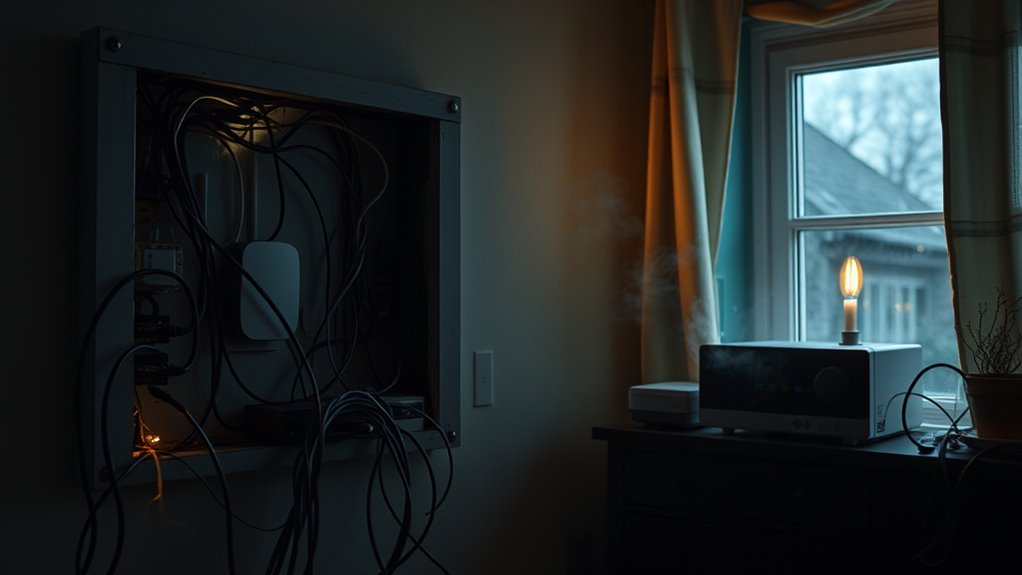
Many smart home devices suffer from design flaws that make them easy targets for cybercriminals. Manufacturers often rush products to market without integrating strong security features, leaving vulnerabilities behind. Default passwords, weak encryption, and lack of regular updates are common issues that attackers exploit. Devices like cameras, locks, and thermostats frequently come with insecure settings, giving hackers easy entry points. Poorly documented security protocols and the absence of user-friendly update mechanisms worsen the problem. Sometimes, manufacturers neglect to patch known vulnerabilities promptly, prolonging exposure. These flaws not only jeopardize device security but also open the door to broader network intrusions. As a user, you end up bearing the risk of these design oversights, which can lead to privacy breaches, unauthorized control, or even physical security threats.
Protecting Your Network From Iot Vulnerabilities
To protect your network from IoT vulnerabilities, start by implementing network segmentation to isolate your smart devices from your main systems. Keep an eye on your network’s activity with real-time threat monitoring to spot suspicious behavior early. Regular firmware updates are essential, as they fix security flaws and help keep your devices protected against new threats.
Network Segmentation Strategies
Network segmentation is a crucial strategy for safeguarding your smart home from IoT vulnerabilities. By separating your devices into different network zones, you limit the impact of a breach and reduce attack surfaces. For example, keep your smart devices on a dedicated Wi-Fi network, separate from your personal computers and smartphones. This prevents hackers from easily moving laterally across your entire system. You can also:
- Use VLANs or subnetting to create isolated segments for different device groups
- Enable strong, unique passwords for each network
- Regularly update device firmware and security settings
- Monitor network activity for unusual behavior
Implementing these strategies ensures that even if one device is compromised, the rest of your network remains protected, minimizing potential damage.
Real-Time Threat Monitoring
Implementing network segmentation is a strong step toward securing your smart home, but it’s not enough on its own. To detect threats early, you need real-time threat monitoring. This involves continuously analyzing device behavior and network traffic for unusual activity, such as unexpected data transfers or unknown device connections. Many security tools can flag anomalies and alert you immediately, so you can act before a breach escalates. Setting up intrusion detection systems (IDS) or intrusion prevention systems (IPS) helps identify vulnerabilities and stop cyberattacks in their tracks. Regularly monitoring your network also reveals compromised devices and suspicious patterns, giving you the opportunity to isolate or disable threats instantly. Staying vigilant with real-time monitoring is essential to protect your smart home from evolving IoT vulnerabilities.
Regular Firmware Updates
How often do you update your smart home devices? Regular firmware updates are vital for keeping your network secure. They fix vulnerabilities that hackers often exploit, strengthening your devices against attacks. Failing to update leaves your system open to threats like malware, unauthorized access, or data breaches. To stay protected, make sure you:
- Enable automatic updates whenever possible
- Check for firmware releases regularly
- Read update notes to understand what’s fixed
- Remove outdated or unused devices from your network
Keeping firmware current ensures patches are applied promptly, reducing the risk of cyberattacks. It also helps your devices run smoothly and efficiently. Don’t wait for a breach—stay proactive with updates to safeguard your smart home environment.
The Importance of Strong Authentication and Updates

Strong authentication methods and regular software updates are essential to safeguard your smart home devices from cyber threats. Without strong passwords or multi-factor authentication, hackers can easily access your devices, leading to privacy breaches or control loss. Regular updates patch security vulnerabilities and fix bugs that could be exploited.
Here’s a quick overview:
| Security Measure | Purpose | Benefit |
|---|---|---|
| Strong passwords | Prevent unauthorized access | Keeps intruders out |
| Multi-factor authentication | Adds extra verification | Reduces risk of hacking |
| Firmware updates | Fix vulnerabilities | Enhances device security |
| Encryption | Protects data in transit | Ensures privacy |
| Regular monitoring | Detects suspicious activity | Early threat identification |
Prioritize these steps to keep your smart home safe from cyber threats.
How Data Collection Impacts User Privacy

When you secure your smart home devices with strong passwords and regular updates, you reduce the risk of unauthorized access. However, data collection can still threaten your privacy. Many devices automatically gather detailed information about your routines, habits, and even location. This data is often shared with manufacturers or third parties without your explicit consent. You might not be aware of what’s being collected or how it’s used, raising concerns about surveillance and misuse.
- Your data could be sold to advertisers or malicious actors.
- Sensitive information may be stored insecurely, risking leaks.
- Continuous collection creates detailed profiles that infringe on your privacy.
- Lack of transparency makes it hard to control or delete your data.
Practical Steps to Secure Your Smart Home Devices
Securing your smart home devices starts with taking simple, proactive steps to protect your privacy and prevent unauthorized access. Change default passwords immediately, opting for strong, unique ones. Regularly update device firmware and software to patch vulnerabilities. Enable two-factor authentication where available, adding an extra layer of security. Isolate smart devices on a separate Wi-Fi network to contain potential breaches. Use encryption for data transmission and disable unnecessary features like remote access. Review privacy settings and understand data collection policies. The table below summarizes key actions:
| Action | Purpose | Tips |
|---|---|---|
| Change default passwords | Prevent unauthorized access | Use complex, unique passwords |
| Keep software updated | Fix security flaws | Enable automatic updates |
| Network segmentation | Limit breach scope | Create separate Wi-Fi for smart devices |
| Enable multi-factor auth | Add security layer | Use authentication apps or tokens |
These steps considerably strengthen your smart home’s defenses.
The Role of Manufacturers in Enhancing Device Security
Manufacturers play a crucial role in safeguarding smart home devices, as they are responsible for embedding security features from the outset. You rely on them to implement strong authentication, encrypt data, and provide timely firmware updates. Without these measures, devices remain vulnerable to hacking and data breaches. To improve security, manufacturers should:
Manufacturers must embed security features and provide updates to protect smart home devices from threats.
- Incorporate default strong passwords and encourage users to change them
- Design easy-to-use update mechanisms for firmware patches
- Clearly communicate security features and best practices in manuals
- Regularly monitor and address known vulnerabilities proactively
Building a Safer Smart Home Environment

Creating a safer smart home environment requires proactive steps beyond just trusting manufacturers to embed security features. You should start by changing default passwords on all devices to strong, unique ones. Enable two-factor authentication whenever possible to add an extra layer of protection. Segment your network by setting up separate Wi-Fi networks for your smart devices and personal computers, limiting potential breaches. Regularly update device firmware and software to patch known vulnerabilities. Use encrypted connections and disable unnecessary features like remote access or UPnP to reduce attack surfaces. Monitor your network for unusual activity and set up alerts for suspicious behavior. Finally, review privacy settings and restrict data collection to only what you need, maintaining control over your information.
Frequently Asked Questions
Can Smart Home Devices Be Fully Secured Against Cyber Threats?
Smart home devices can’t be fully secured against cyber threats, but you can drastically reduce risks. You should update firmware regularly, use strong, unique passwords, and enable multi-factor authentication. Segment your network to isolate devices, monitor activity for anomalies, and disable unnecessary features. Staying informed about vulnerabilities and choosing reputable manufacturers with strong security practices also helps protect your smart home. While no system is invulnerable, these steps considerably enhance your security.
How Can I Identify if My Smart Devices Have Been Compromised?
Did you know that nearly 50% of US households experienced a security issue with smart devices last year? To identify if your devices are compromised, check for unusual activity like unexpected device controls, strange network traffic, or devices that won’t respond. Keep an eye on your network’s performance, update firmware regularly, and change default passwords. Use network segmentation and monitor for anomalies to catch potential breaches early.
Are There Legal Protections for Consumers Affected by Data Breaches?
Yes, you’re protected by laws like the General Data Protection Regulation (GDPR) in Europe and the California Consumer Privacy Act (CCPA) in the US. These laws require companies to secure your data, notify you of breaches, and give you control over your information. If a breach occurs, you can often seek compensation or legal remedies. Stay informed about your rights and report any suspicious activity to authorities promptly.
What Are the Best Practices for Managing Smart Home Device Passwords?
To manage your smart home device passwords effectively, you should use strong, unique passwords for each device, avoiding default or easily guessable ones. Enable two-factor authentication whenever possible, and change passwords regularly. Keep firmware updated to patch security flaws, and consider a password manager to securely store your credentials. Also, avoid sharing passwords and disable remote access if you don’t need it, reducing potential vulnerabilities.
Do Manufacturers Have a Legal Obligation to Fix Security Flaws Promptly?
Yes, manufacturers do have a legal obligation to fix security flaws promptly, especially in regions with strict consumer protection laws. You should expect companies to address vulnerabilities quickly once identified, as delays can put your data and home safety at risk. Many jurisdictions now require clear disclosure of security issues and timely updates. If they neglect these responsibilities, you may have legal recourse or grounds for complaints to enforce better security practices.
Conclusion
To keep your smart home safe, think of your devices as a fortress and your network as its shield. Stay vigilant, update regularly, and question what data you share. Manufacturers can build stronger walls, but it’s your awareness that guards the gates. By taking proactive steps, you turn potential vulnerabilities into a well-guarded sanctuary—transforming the dark side of smart homes into a secure, shining haven where your connected world thrives without fear.
Fall Picks
fall essentials
As an affiliate, we earn on qualifying purchases.