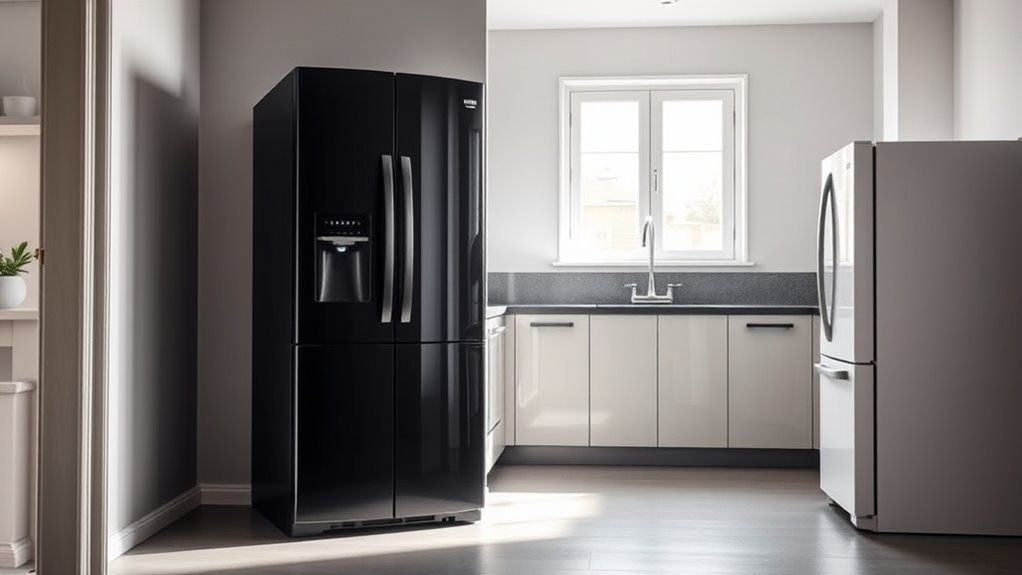

If you’re choosing between a smart or dumb fridge, focus on how often you’ll use it and the benefits of connected tech. Smart models are ideal if you want remote inventory checks, meal planning, and reducing food waste. However, many other appliances like ovens or dishwashers might not need to be smart to do their job well. Curious about which devices truly add value and how to make the most of your kitchen? Keep exploring for more insights.
Key Takeaways
- Smart refrigerators excel in inventory management, reducing food waste through remote monitoring and expiration alerts.
- They are most beneficial for households seeking automation, convenience, and energy efficiency in food storage.
- Basic appliances like ovens or dishwashers may not require smart features unless automation or remote control significantly enhances usage.
- Cost and complexity are barriers; smart fridges are worthwhile if their features align with your food management needs.
- Future connectivity and AI improvements will make smart fridges more intuitive and secure, increasing their practical value.
The Market for Smart Appliances: Who Benefits Most
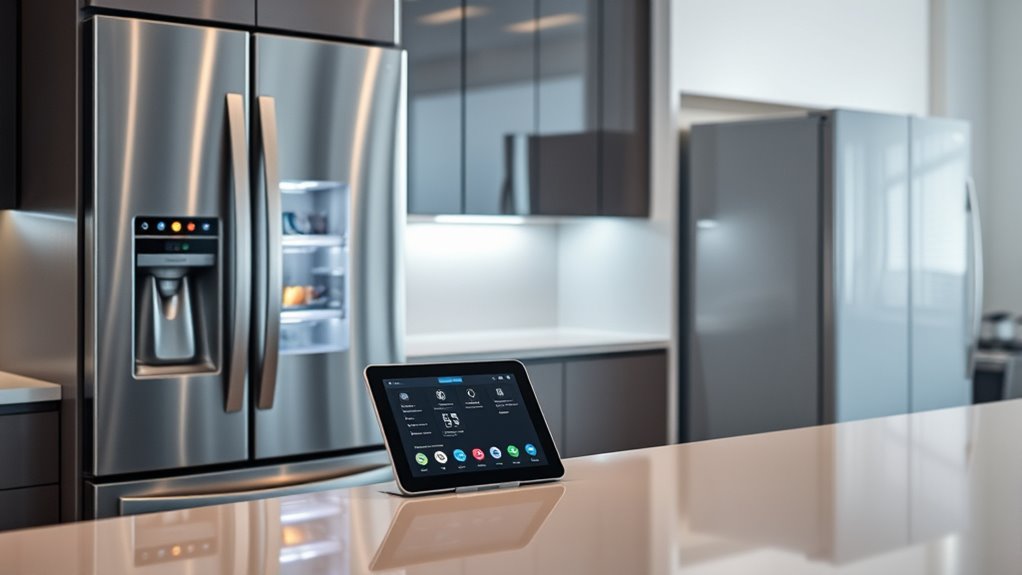
Smart appliances are transforming households and businesses alike, but some benefit more than others. As a consumer, you’ll find that smart refrigerators offer the most value due to their frequent use and direct impact on food management. Since they monitor inventory, reduce food waste, and optimize energy use, they save you money and time. Commercial entities like grocery stores and restaurants also benefit markedly, improving inventory accuracy and lowering operational costs with real-time data. Additionally, integrated energy-efficient technologies and wave and wind innovations are increasingly integrated into smart appliances to enhance energy efficiency and performance. These advancements help reduce overall energy consumption and support sustainable practices. Furthermore, color accuracy and contrast ratios in smart appliances can influence how effectively they display information and alerts, improving user interaction. However, smaller appliances or those used less often don’t gain as much from smart features. If you prioritize energy savings, convenience, and reducing food waste**, a smart fridge is a smart investment**. For less frequently used or simpler appliances, traditional models often suffice, making smart tech less essential.
Key Features That Make Smart Fridges Valuable
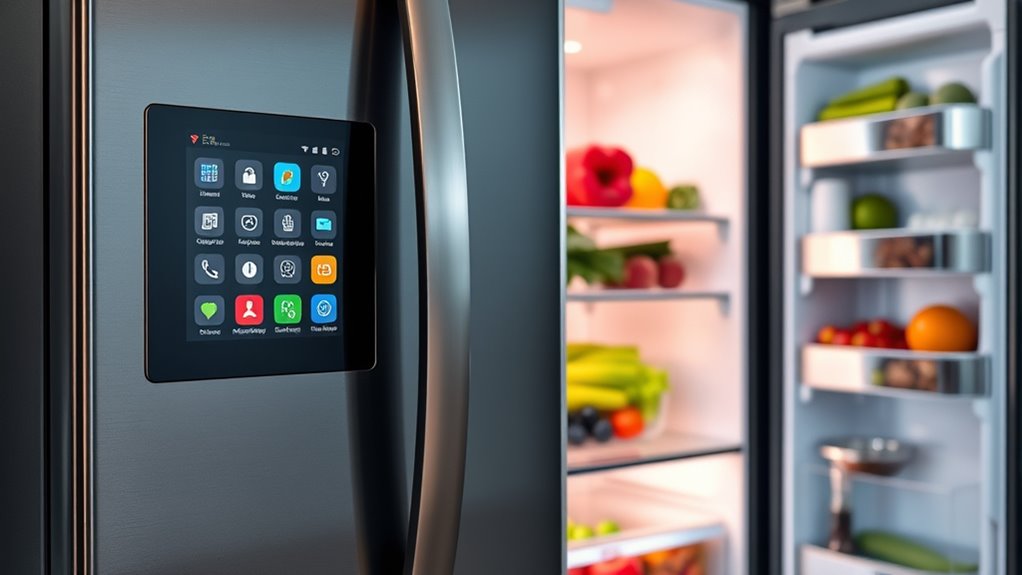
Key features that make smart fridges valuable revolve around their ability to enhance convenience, efficiency, and food management. These features help you better organize, monitor, and reduce waste, saving time and money. For example, built-in cameras let you check contents remotely, so you can shop smarter. AI-based meal planning suggests recipes based on what’s inside, minimizing food spoilage. Digital grocery lists and direct ordering streamline shopping trips. Integration with voice assistants offers hands-free control, making daily routines easier. Touchscreens provide quick access to calendars, weather, and entertainment, keeping your family connected. Overall, these features simplify food management and make your kitchen smarter, saving you effort and reducing waste. They turn a basic appliance into a central hub for convenience and sustainability. Smart home integration further enhances these capabilities by allowing seamless control over multiple devices and systems within your house. Additionally, energy efficiency features help reduce utility costs and support eco-friendly living. Incorporating monitoring sensors can also alert you to spoilage or malfunctions, ensuring freshness and safety. Advanced diagnostic tools can provide real-time insights into appliance performance, helping you maintain optimal operation and longevity.
Cost and Convenience: Weighing the Investment
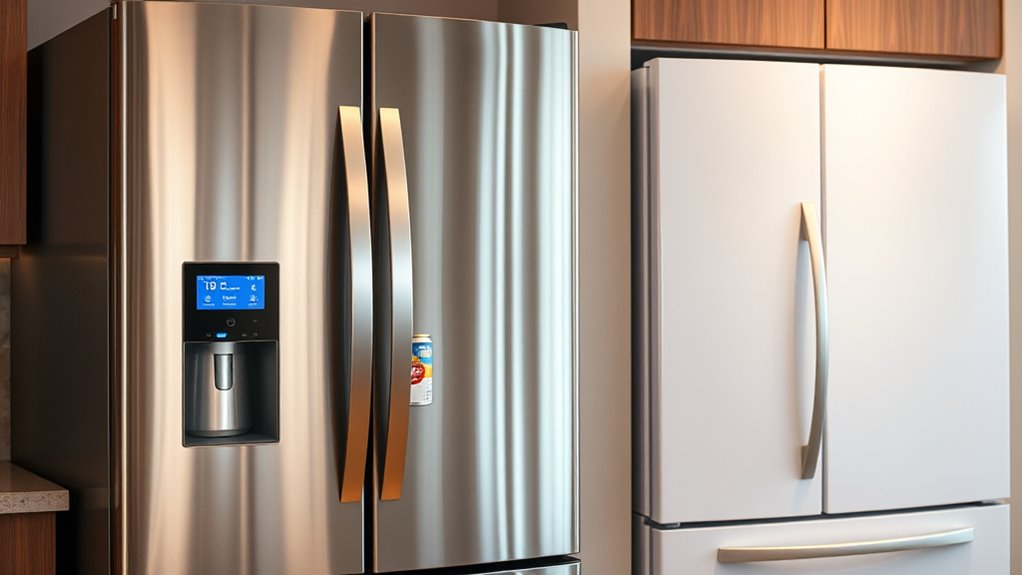
Investing in a smart fridge means weighing the upfront costs against the convenience and long-term savings they offer. These appliances can range from $2,500 for basic models to over $5,000 for premium units, compared to $800-$1,500 for traditional refrigerators. While the initial expense is significant, smart fridges can reduce energy bills through optimized cooling and eco-friendly features, potentially offsetting costs over time. They also improve convenience with remote monitoring, grocery management, and automation, saving you time and reducing food waste. Energy efficiency can be a key factor in justifying the expense for environmentally conscious consumers. Additionally, considering how these appliances fit into your overall technology integration can help determine if the investment aligns with your household’s needs. Proper maintenance is essential for ensuring these advanced features continue to function smoothly over time. Regular updates and cleaning of sensors and software can prolong the lifespan and performance of your smart fridge. To maximize their benefits, it’s important to understand the performance reliability of these devices, as they often depend on stable internet connections and software updates. However, consider whether these benefits match your usage habits and comfort with technology. If you’re not keen on digital features or worry about potential glitches, the higher cost may outweigh the advantages. Weigh your priorities carefully before investing.
Why Refrigerators Are Prime Candidates for Smart Technology
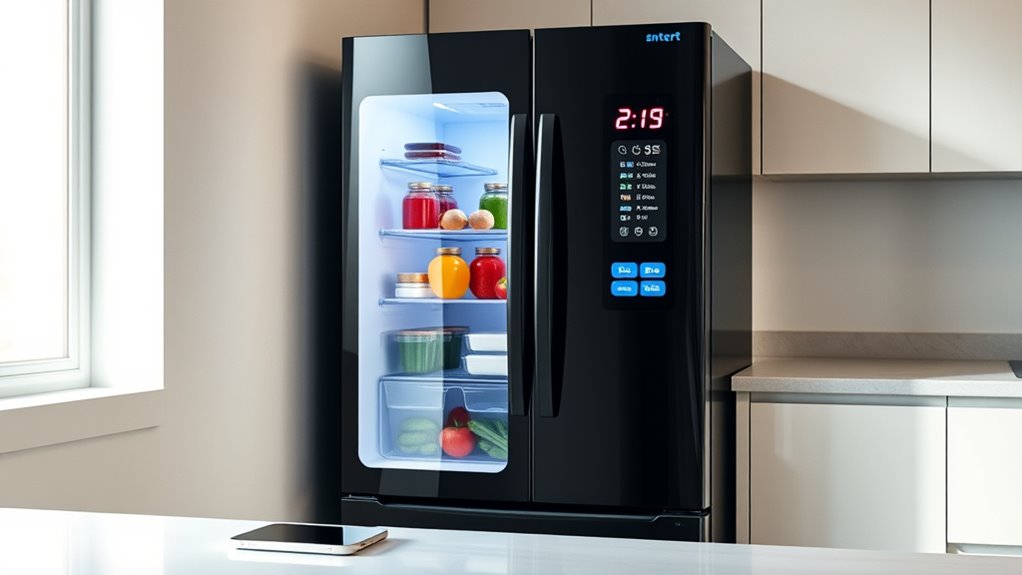
Refrigerators are ideal candidates for smart technology because they are among the most frequently opened appliances in your home, making them prime for efficiency improvements and inventory management. Their constant use means they can benefit from features like adaptive cooling, energy optimization, and spoilage alerts. Smart fridges can track food expiration dates, suggest recipes based on current ingredients, and even generate shopping lists, saving you time and reducing waste. The integration of cameras allows you to check contents remotely, preventing unnecessary trips to the store. Additionally, their energy consumption is significant, so smart cooling and eco-modes help reduce costs and environmental impact. Implementing energy-efficient appliances further enhances these benefits by optimizing power use and sustainability. These advantages make refrigerators especially suitable for smart upgrades, maximizing convenience, efficiency, and sustainability. Internet of Things technology enhances the capabilities of smart fridges by enabling seamless connectivity and data sharing with other devices.
Other Kitchen Devices: Do They Need to Be Smart?

Smart ovens and dishwashers can offer convenience and efficiency, but do they truly need to be connected? While features like remote control and cycle optimization save time and energy, their impact may not be as critical as in refrigerators. Consider whether the benefits justify the added complexity and cost for these devices. Additionally, evaluating the practical benefits of smart capabilities can help determine if investing in these features aligns with your caregiving needs. For some users, automation features can significantly enhance daily routines, but for others, traditional models may suffice without sacrificing performance. Understanding the user experience can guide better purchasing decisions, especially for those who prioritize simplicity and reliability. Assessing the thermal behavior of appliances can also inform whether smart features truly improve cooking or cleaning outcomes.
Benefits of Smart Ovens
Are smart ovens worth the upgrade for your kitchen? They offer several benefits that can improve cooking efficiency and convenience. With smart ovens, you can control your appliance remotely, ensuring your meal is ready when you want it. Features like automatic temperature adjustments and recipe guidance help you achieve perfect results every time. Plus, smart ovens can learn your preferences over time, customizing cooking cycles for various dishes. They also integrate seamlessly with your smart home system, allowing voice commands and automation. Incorporating smart home integration can further enhance your cooking experience by enabling comprehensive automation and control.
Dishwashers and Connectivity
While connectivity features are becoming common in many kitchen appliances, the question remains whether dishwashers really need to be smart. You might wonder if remote control, cycle monitoring, or maintenance alerts truly add value. For most households, dishes get cleaned reliably without extra tech. Smart dishwashers offer convenience by allowing you to start or pause cycles from your phone, view cycle status, or receive alerts when a wash finishes. Some models can diagnose issues and suggest troubleshooting steps, saving time and money. However, these features tend to increase costs and complexity. If your dishwasher runs smoothly and you prefer simplicity, smart connectivity may not justify the investment. For busy households or those enthusiastic to optimize appliance maintenance, smart dishwashers can offer meaningful benefits.
Barriers to Adoption and Overcoming Them
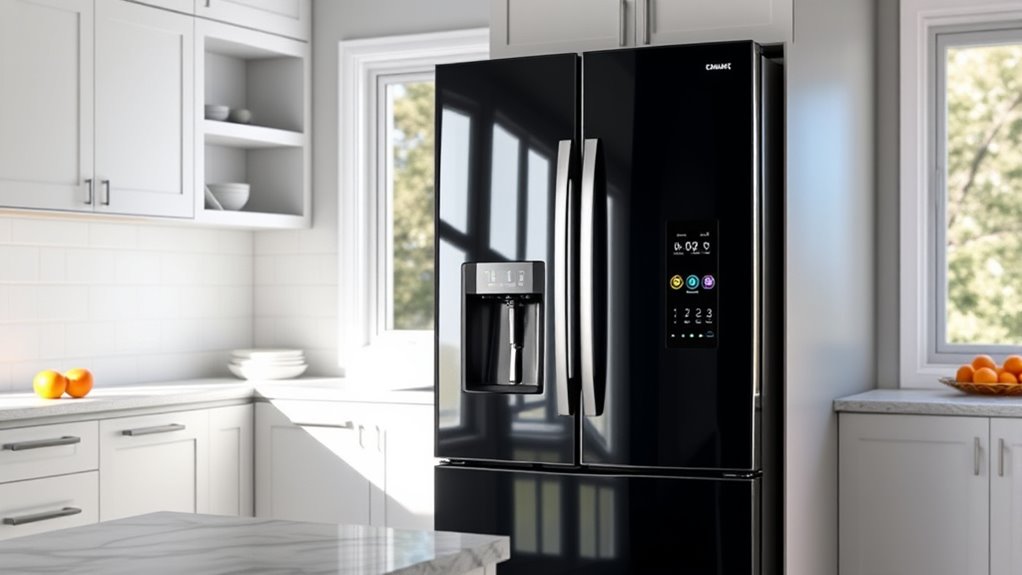
You might hesitate to buy a smart fridge because of the high upfront costs and concerns about privacy and security. The technology can seem complicated, making it feel overwhelming or difficult to use. Addressing these barriers is key to making smart fridges more accessible and appealing to everyone. For instance, understanding the market for smart appliances can help consumers make more informed decisions about investment value and reliability. Additionally, familiarity with water resistance features in other devices demonstrates how durability and long-term performance can ease consumer apprehension. Recognizing how user-friendly interfaces are designed in smart devices can also boost confidence in adopting new technology. Moreover, exploring consumer reviews and ratings can provide insights into real-world performance and satisfaction with these appliances.
High Upfront Costs
High upfront costs remain a primary barrier to widespread adoption of smart refrigerators, as their prices often considerably exceed those of traditional models. You might hesitate to spend $2,500 or more, especially when standard refrigerators cost between $800 and $1,500. To overcome this, consider these strategies:
- Look for discounts during sales or holiday promotions.
- Explore financing options offered by retailers or manufacturers.
- Prioritize models with features you genuinely need, avoiding unnecessary extras.
- Focus on energy-efficient units that can lower electricity bills over time.
Privacy and Security Concerns
Privacy and security concerns pose significant barriers to adopting smart refrigerators, as these devices collect and transmit personal data that can be vulnerable to breaches. You might worry about hackers gaining access to your personal inventory, grocery habits, or even family schedules through connected features. Data breaches could expose sensitive information or allow malicious actors to manipulate your appliance. Additionally, the constant data exchange raises questions about how your information is stored, used, and shared with third parties. These concerns can make you hesitant to trust your smart fridge, especially if security measures aren’t transparent or robust enough. Overcoming these barriers involves manufacturers implementing strong encryption, transparent privacy policies, and regular security updates to guarantee your data remains protected and your smart fridge is safe to use.
Complexity and Usability
Complexity and usability remain significant barriers to the widespread adoption of smart refrigerators, as many consumers find these devices intimidating or difficult to operate. If you’re not tech-savvy, setting up or troubleshooting smart features can feel overwhelming. Users may also struggle with charting touchscreen interfaces or managing app integrations, which can hinder daily use. Additionally, software glitches or internet outages can disrupt functionality, causing frustration. To overcome these barriers, manufacturers are simplifying interfaces and offering better onboarding experiences. Educating consumers about benefits and providing responsive customer support also helps ease concerns. Ultimately, reducing complexity encourages more users to embrace smart technology, making these appliances more accessible to everyone.
- Intuitive interfaces reduce learning curves
- Clear instructions and tutorials boost confidence
- Reliable connectivity minimizes disruptions
- Customer support addresses technical concerns
Future Trends in Smart Appliance Integration
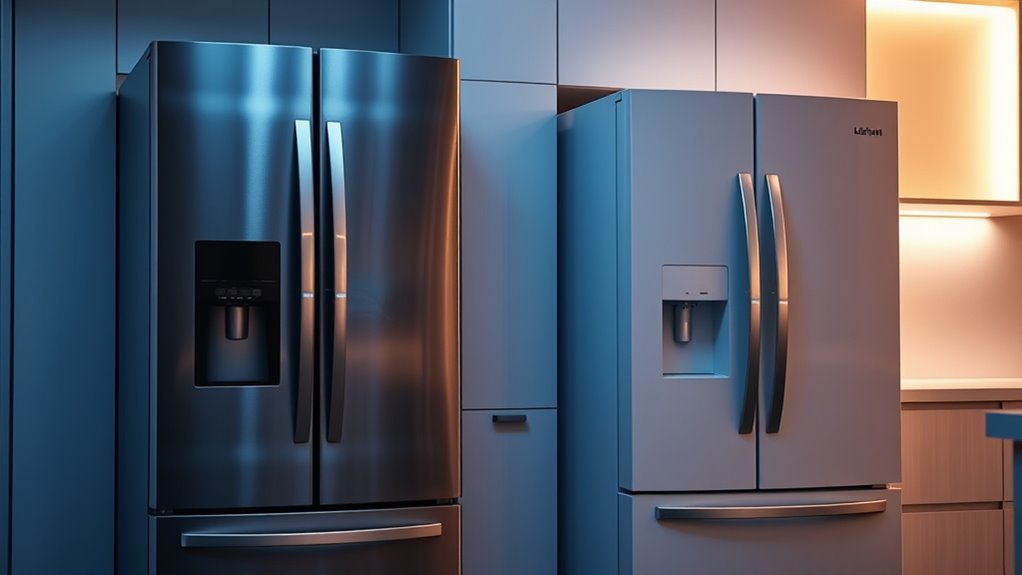
As technology continues to advance, the integration of smart features into appliances is expected to become more seamless and intuitive. You’ll see smarter interfaces that adapt to your habits, making setup and daily use effortless. Voice control and AI-driven personalization will become standard, allowing you to manage appliances hands-free and receive tailored recommendations. Connectivity will expand across entire smart home ecosystems, enabling appliances to coordinate with each other for optimized energy use and convenience. Future appliances will leverage machine learning to anticipate your needs, such as adjusting cooling based on your schedule or suggesting recipes based on inventory. Enhanced data security measures will address privacy concerns, encouraging wider adoption. Overall, smart appliances will become more user-friendly, efficient, and integrated into your everyday routines.
Frequently Asked Questions
How Do Smart Fridges Impact Overall Household Energy Consumption?
Smart fridges can substantially reduce your household energy consumption. They use AI sensors and adaptive cooling to optimize temperature settings, prevent unnecessary door openings, and detect when food is nearing expiration. These features help conserve energy by only cooling when needed and avoiding waste. Additionally, eco-modes and smart monitoring enable you to track and adjust usage remotely, ultimately lowering your electricity bills and reducing your carbon footprint over time.
Are Smart Fridge Features Compatible With All Home Automation Systems?
Imagine commanding your kitchen with a simple voice command—your smart fridge responds seamlessly. Yes, smart fridge features are compatible with most home automation systems, especially those supporting popular platforms like Alexa, Google Assistant, or Apple HomeKit. You can sync it effortlessly to control settings, check inventory, or receive alerts. This integration makes your smart home feel more connected, intuitive, and ready to simplify your daily routines.
What Privacy Measures Protect User Data Collected by Smart Refrigerators?
You should know that privacy measures protect your data collected by smart refrigerators through encryption, secure data storage, and strict access controls. Manufacturers often implement regular security updates and anonymize data to prevent misuse. Additionally, you can review privacy policies and opt out of data sharing features. By staying informed and managing your settings, you can help safeguard your personal information while enjoying the convenience of smart fridge technology.
Can Smart Fridges Be Easily Upgraded or Repaired Over Time?
Certainly, smart fridges are designed for durability and adaptability, making upgrades and repairs relatively straightforward. You can often update software remotely, ensuring your appliance stays current without costly visits. Hardware repairs might require professional help, but many parts are replaceable, and manufacturers often offer support for ongoing maintenance. Regular updates keep your smart fridge running smoothly, saving you time and trouble while maximizing its modern, multifunctional features.
How Do Smart Fridges Compare to Traditional Models in Resale Value?
You’ll find that smart fridges generally have higher resale value than traditional models because their advanced features appeal to tech-savvy buyers. The integrated technology, such as cameras, AI, and connectivity, makes them more attractive on the secondhand market. However, their value depends on the appliance’s age, condition, and whether the smart features still function properly. If you keep up with maintenance, your smart fridge can retain a better resale price.
Conclusion
So, maybe your fridge doesn’t need to tell you jokes or order groceries automatically. Sometimes, a simple fridge does just fine—and it’s probably cheaper, too. But let’s be honest, who doesn’t want a device that keeps track of your milk and reminds you when to buy more? Whether you go smart or stick to classic, just remember: even the smartest fridge can’t keep your snack cravings in check.