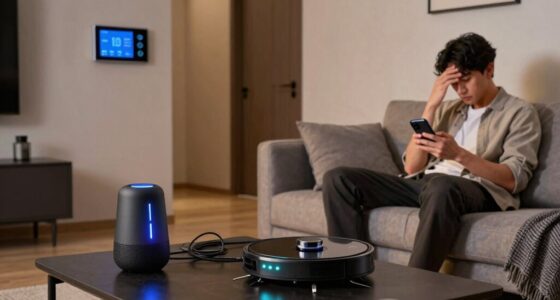
Smart home hubs work behind the scenes to coordinate security protocols, protect your data, and keep your network stable. They encrypt data, manage device interactions, and run automation routines that make your smart devices work seamlessly together. The hub optimizes network performance by prioritizing important traffic and preventing congestion. It also handles updates and maintains compatibility, ensuring everything runs smoothly and securely. Keep exploring to discover how these unseen functions make your smart home more reliable and user-friendly.

Get the latest gadgets delivered free — and shop member deals
- Fast, free delivery on millions of items
- Access to Prime Big Deal Days deals on October 6–7
- Prime Video, Amazon Music and more included
Key Takeaways
- Manage and coordinate multiple smart devices to ensure seamless interoperability and automation routines.
- Handle device communication securely through encryption, firewalls, and regular firmware updates.
- Allocate network resources efficiently to maintain stability and prioritize critical device functions.
- Monitor device status continuously to trigger automated actions and respond quickly to user commands.
- Serve as the central processor, managing device interactions behind the scenes for a smooth user experience.
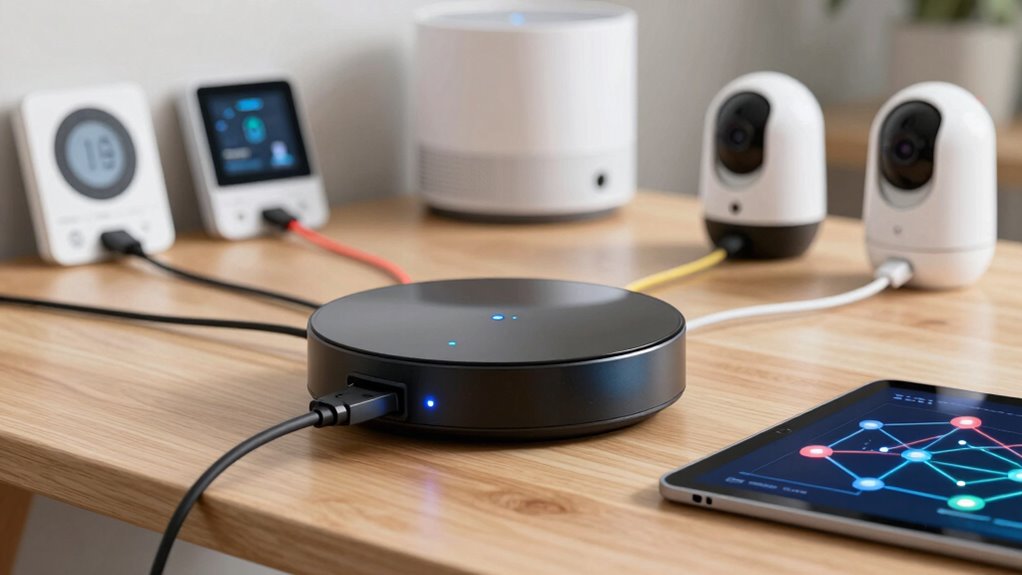
Beyond compatibility, security protocols are a critical part of what these hubs do behind the scenes. They safeguard your connected ecosystem by encrypting data transmitted between devices, preventing unauthorized access. When your hub communicates with your smart locks, cameras, or other sensitive devices, it employs robust security measures to keep your information private. This not only protects your data but also ensures that malicious actors can’t manipulate your devices or disable your security systems. Many hubs come with built-in firewalls or support for VPNs, adding extra layers of protection. Additionally, they often receive firmware updates to patch vulnerabilities, maintaining the integrity of your network over time. These updates are crucial because they ensure your security protocols stay effective against emerging threats. The hub also manages network traffic to optimize performance and prevent congestion, especially during peak usage times. Proper network management helps maintain the overall stability of your smart home environment.
The hub also acts as a central processor, executing automation routines you’ve set up. For example, when you leave the house, it can automatically turn off lights, lower the thermostat, and activate security cameras—all in one smooth operation. It continuously monitors the status of your devices, responding instantly to your commands or environmental triggers. This means you don’t have to manually control each device individually; the hub manages these interactions seamlessly behind the scenes. Moreover, the hub’s ability to prioritize network traffic helps prevent lag or disconnection issues, especially when multiple devices are active simultaneously.
Furthermore, your smart home hub prioritizes network stability and performance. It allocates bandwidth efficiently, ensuring that critical devices like security cameras or alarms get the necessary resources without interruption. If you’re using voice commands, it processes these requests locally or in the cloud, depending on the setup, ensuring quick and reliable responses.
In essence, your smart home hub is much more than just a simple connector. It’s the backbone that *assures* device compatibility, enforces security protocols, manages automation, and maintains a stable network environment. All these behind-the-scenes functions work together to make your smart home experience smooth, secure, and effortless.
smart home hub with security features
As an affiliate, we earn on qualifying purchases.
As an affiliate, we earn on qualifying purchases.
Frequently Asked Questions
How Secure Are Smart Home Hubs From Hacking?
Smart home hubs offer decent security, but you should stay cautious about privacy concerns. They use encryption standards to protect data, yet vulnerabilities can still exist if you don’t keep firmware updated or use weak passwords. Regularly update your hub’s software, enable two-factor authentication, and choose strong, unique passwords to reduce hacking risks. While no device is completely invulnerable, proactive security measures can help keep your smart home safer.
Can Hubs Control Devices From Multiple Brands Seamlessly?
Yes, smart home hubs can control devices from multiple brands seamlessly. They excel at device integration by supporting various protocols and standards, making brand compatibility easier. You can connect smart lights, thermostats, and security systems from different manufacturers without hassle. The hub acts as a central command center, allowing you to manage all your smart devices in one app, ensuring smooth operation regardless of brand differences.
What Power Sources Do Smart Home Hubs Rely On?
Smart home hubs typically rely on standard power outlets, drawing power from your home’s electrical system. They consume a modest amount of energy, so their energy consumption is usually low. Many hubs also include backup power options like batteries or uninterruptible power supplies (UPS), ensuring they stay connected during outages. This backup power helps maintain control over your smart devices and keeps your system running smoothly, even when the mains fail.
How Often Do Hubs Need Firmware Updates?
They say, “Better safe than sorry,” and that’s true for firmware updates. Your smart home hub usually needs updates every few weeks to maintain firmware stability and security. Regular updates fix bugs, improve performance, and enhance compatibility with devices. You’ll typically get notifications or see automatic updates, but it’s wise to check manually occasionally to guarantee your hub stays current and functions smoothly in your smart home ecosystem.
Do Hubs Support Voice Commands From All Assistants?
Most smart home hubs support voice commands from popular assistants like Alexa, Google Assistant, and sometimes Siri, but compatibility varies. You might face device integration challenges if your hub isn’t fully compatible, limiting voice control options. To guarantee smooth operation, check the voice assistant compatibility list before buying. This way, you can confidently control your devices using your preferred voice assistant without running into unexpected issues.
best smart home hub for automation
As an affiliate, we earn on qualifying purchases.
As an affiliate, we earn on qualifying purchases.
Conclusion
Behind the scenes, your smart home hub is the silent conductor orchestrating your connected devices. While it seamlessly manages lights, thermostats, and security, it’s easy to forget the complexity working behind the scenes. Think of it as the unseen engine powering your convenience, much like the engine that drives a smooth ride or the unseen roots supporting a towering tree. Without it, your smart home isn’t quite as smart—or as effortless—as you might think.
smart home hub with network security
As an affiliate, we earn on qualifying purchases.
As an affiliate, we earn on qualifying purchases.
smart home hub compatible with multiple devices
As an affiliate, we earn on qualifying purchases.
As an affiliate, we earn on qualifying purchases.
Fall Picks
fall essentials
As an affiliate, we earn on qualifying purchases.