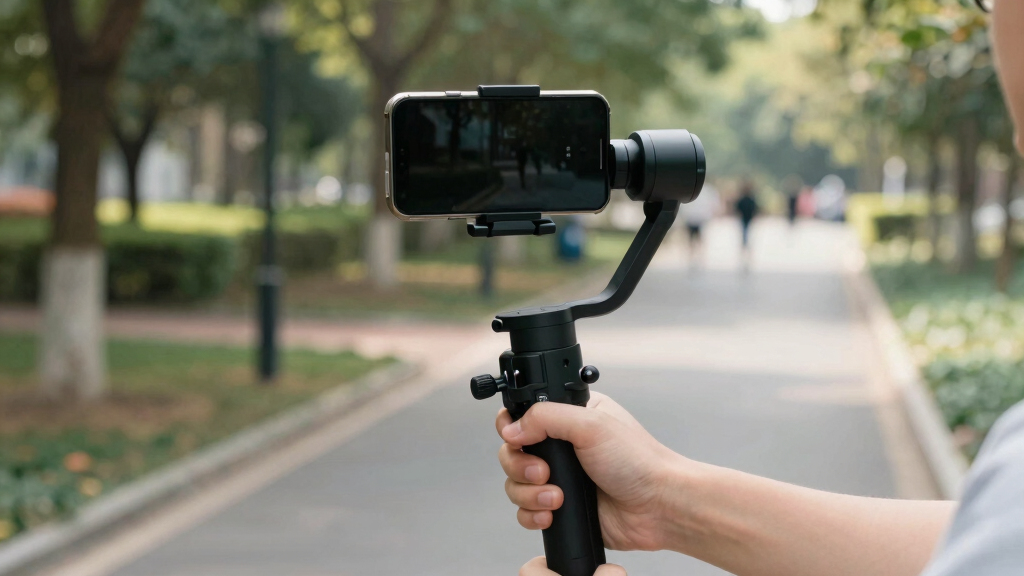

If you’re searching for a gimbal stabilizer, you’re likely looking to achieve smooth, professional-looking footage whether for vlogging, filmmaking, or live streaming. The best options vary widely in features, payload capacity, and usability, with some excelling for smartphone use while others are tailored for mirrorless or DSLR cameras. The DJI RS 4 stands out as the overall best for its robust build and versatile controls, while the DJI Osmo Mobile 8 offers excellent tracking features for mobile users. However, tradeoffs include price, weight, and complexity—more advanced models tend to be bulkier and more expensive. Continue reading for a detailed breakdown of the top gimbals and what makes each one unique.
Key Takeaways
- Payload capacity and compatibility with camera types significantly influence which gimbal is suitable for a given user.
- Smartphone stabilizers are increasingly feature-rich, often including AI tracking and extension rods, but may lack the robustness for heavier camera setups.
- Build quality and battery life are key for professional use, with premium models offering longer operation times and more durable materials.
- Ease of use varies, with beginner-friendly models prioritizing quick setup and intuitive controls, while advanced options offer extensive customization.
- Price differences reflect not only build quality but also feature sets like auto-tracking, vertical shooting, and remote control options.


More Details on Our Top Picks
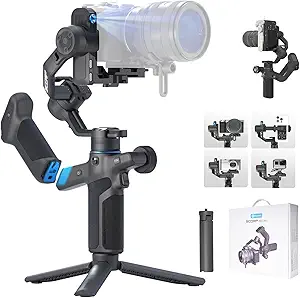
FeiyuTech SCORP Mini-3-Pro Gimbal Stabilizer for Camera Mirrorless/Compact/Action Cameras,Smartphone,18m AI Tracking,Detachable Remote Handle,4.4lbs Payload,3-axis Gimbal for Canon Sony Nikon
This model stands out for its four-in-one design supporting a wide range of devices from smartphones to mirrorless cameras, making it highly adaptable for content creators with diverse equipment. Compared to larger stabilizers like the DJI RS 4, the Mini 3 Pro offers incredible portability without sacrificing stabilization quality for lighter setups. Its AI tracking and 360° follow make solo shooting and dynamic shots seamless, though its 2kg payload means heavier cinema gear isn’t ideal. The detachable remote handle adds flexibility for long-distance shots, but the modular design requires some assembly and disassembly, which could slow down workflow during quick shoots. The quaternion algorithm ensures smooth footage even during high-speed movement, but the manual axis locks can be less convenient than automated locks in premium models. Overall, this gimbal makes the most sense for solo creators and travel vloggers who need versatility and portability in one package.
Pros:- Supports multiple device types including smartphones, action, and mirrorless cameras
- Excellent AI tracking with 18-meter follow distance
- Detachable remote handle for long-distance control
- Modular design allows quick switching between horizontal and vertical modes
Cons:- Limited payload capacity of 2 kg makes it unsuitable for heavier camera/lens combos
- Manual axis locks require extra effort during setup and packing
- Some users may find assembly/disassembly slightly cumbersome in fast-paced environments
Best for: Travel videographers, solo content creators, and those using a variety of mainstream cameras and smartphones
Not ideal for: Professional filmmakers with heavy cinema rigs or requiring automated locking features
- Payload Capacity:2 kg (4.4 lbs)
- Weight:1 kg (2.2 lbs)
- AI Tracking Distance:18 meters
- Construction:Modular, detachable handle
- Stabilization Algorithm:Quaternion
- Supported Devices:Smartphones, mirrorless, compact, action cameras
Bottom line: Ideal for content creators seeking a lightweight, versatile gimbal that excels with lighter setups and solo shooting scenarios.
DJI RS 4, 3-Axis Gimbal Stabilizer for DSLR and Mirrorless Cameras Canon/Sony/Panasonic/Nikon/Fujifilm, 2nd-Gen Native Vertical Shooting, 2-Mode Switch Joystick, Teflon Axis Arms, Camera Gimbal
This pick makes the most sense for professional videographers who need maximum stability and advanced control features. Compared to the lighter DJI RS 3 Mini, the RS 4 offers a higher payload of 3 kg (6.6 lbs) and extended tilt axis for larger camera/lens setups. Its Teflon-coated axes reduce friction, resulting in smoother operation during complex movements, and the new RSA port expands control options with third-party accessories. The built-in vertical shooting mode and longer battery life (up to 29.5 hours with the optional grip) support long shoots without interruption. While it’s bulkier and heavier than the RS 3 Mini, this gimbal provides more professional features, like automated axis locks and extensive control ecosystem, which are essential for high-end production. The only tradeoff is portability, which is less ideal for quick travel or handheld vlogging.
Pros:- Supports payloads up to 3 kg (6.6 lbs) for larger cameras
- Extended tilt axis for better balancing larger lenses
- Teflon-coated axes for smoother operation
- Supports vertical shooting without extra accessories
Cons:- Heavier and bulkier than compact models like the RS 3 Mini
- More expensive, making it less accessible for hobbyists
- Longer setup and balancing time due to size and complexity
Best for: Professional videographers, film crews, and heavy camera setups requiring maximum stability and control
Not ideal for: Travel vloggers or solo creators prioritizing lightweight gear and quick setup
- Payload Capacity:3 kg (6.6 lbs)
- Battery Life:Up to 29.5 hours
- Vertical Shooting:Yes, native support
- Control Ecosystem:RSA port, third-party accessories
- Build Material:Teflon-coated axes
- Supported Devices:DSLRs, mirrorless cameras
Bottom line: Best suited for professional shooters who prioritize stability, control, and larger camera compatibility over portability.
DJI RS 3 Mini, 3-Axis Gimbal Stabilizer for Cameras Canon/Sony/Panasonic/Nikon/Fujifilm, 2 kg (4.4 lbs) Tested Payload, Camera Gimbal with Native Vertical Shooting, Black
This pick is perfect for creators who need a portable yet powerful stabilizer. Compared with the larger RS 4, the RS 3 Mini is significantly lighter at 795g (1.75 lbs), making it ideal for extended handheld use or travel. It supports a tested payload of up to 2 kg (4.4 lbs), suitable for most mirrorless and compact camera setups, and it features native vertical shooting for social media content. Its 3rd-gen stabilization algorithm provides smooth footage even in challenging conditions, and the Bluetooth shutter control adds convenience for quick captures. While it lacks some advanced features like automated locks and extensive control ports, its compact form factor and solid stabilization performance make it a favorite for vloggers, travel filmmakers, and solo shooters who need a balance of portability and professional quality.
Pros:- Ultra-lightweight at 795g for all-day handheld comfort
- Supports up to 2 kg payload for most mirrorless cameras
- Native vertical shooting for social media content
- Advanced stabilization with 3rd-gen algorithm
Cons:- Limited payload makes it unsuitable for heavier setups
- Lacks automated locks and some control ports
- Not designed for heavy professional or cinema use
Best for: Travel vloggers, solo content creators, and social media influencers using mirrorless or compact cameras
Not ideal for: Professional production environments with heavy or cinema-grade camera setups
- Payload Capacity:2 kg (4.4 lbs)
- Weight:795 g (1.75 lbs)
- Vertical Shooting:Native support
- Stabilization Algorithm:Third-Generation
- Bluetooth Control:Yes
- Supported Devices:Mirrorless, compact cameras
Bottom line: Excellent for creators who want a portable, professional-quality gimbal for lighter camera rigs and social media content.
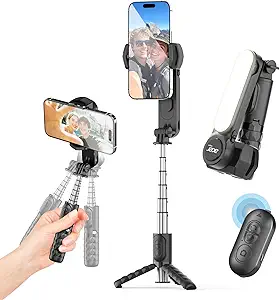
Smartphone Gimbal Stabilizer with Remote, Aluminum Extendable Selfie Stick Tripod, 360° Automatic Rotation, Auto Balance for Live Video Recording, Vlogging, YouTube Compatible with iPhone and Android
This gimbal makes a great choice for casual vloggers and social media users who prioritize ease of use and portability. Compared to professional models like the DJI Osmo Mobile 8, this unit is lighter at 200 grams and features a simple, foldable design with an extendable selfie stick up to 75 cm. Its high-performance brushless motor effectively reduces shake for smooth videos without complex setup, and the 360° automatic rotation enables dynamic shooting angles. The built-in tripod and remote control add convenience for group shots or hands-free recording. The battery lasts around 2 hours, which is sufficient for casual outings but less than high-end models, and it supports most smartphones seamlessly. For beginners or those on a budget, this stabilizer offers impressive performance at a lower price point, though it lacks advanced features found in premium options.
Pros:- Lightweight at 200 grams and highly portable
- Extensible selfie stick up to 75 cm for wide-angle shots
- Effective anti-shake with brushless motor
- Built-in tripod and remote for flexible shooting
Cons:- Limited battery life of around 2 hours
- Basic controls lacking advanced customization
- Not suitable for heavy or professional camera setups
Best for: Casual vloggers, social media users, and those new to gimbals wanting an affordable, portable solution
Not ideal for: Professional videographers or users needing extended shooting times and advanced controls
- Weight:200 grams
- Battery Life:2 hours
- Max Extendable Length:75 cm
- Rotation:360° automatic
- Material:Aluminum
- Supported Devices:iPhone, Android smartphones
Bottom line: Perfect for beginners and casual users seeking an easy-to-use, portable stabilizer for smartphones and everyday vlogging.
DJI RS 4 Mini Combo, Gimbal Stabilizer for Cameras Canon/Sony/Panasonic/Nikon/Fujifilm, Auto Axis Locks, Intelligent Tracking, 2kg/4.4lbs Payload, Camera Gimbal, Camera Stabilizer, Briefcase Handle
The DJI RS 4 Mini Combo stands out for its ultra-lightweight design, weighing just over a kilogram, making it ideal for quick setup and on-the-go filming. Its auto axis locks significantly cut down setup time compared to traditional gimbals like the DJI RS 3 Mini, which requires manual locking. The intelligent tracking feature ensures subjects stay centered, even during rapid movements, outperforming simpler stabilizers without smart follow modes. However, its payload capacity of 2kg might limit heavier mirrorless setups, a tradeoff for its portability. Compared to larger models like the FeiyuTech SCORP Mini-3-Pro, it offers less payload but more mobility. This makes it perfect for indie filmmakers or vloggers seeking a balance between weight, speed, and professional features. The main tradeoff is less payload capacity, which might restrict some heavier cameras. Ideal for lightweight, fast-paced filming scenarios, but not suited for heavy DSLR rigs.
Pros:- Extremely lightweight and portable at just over 1kg
- Fast setup with auto axis locks for quick transitions
- Responsive intelligent tracking for dynamic scenes
- Includes briefcase handle and tripod for versatility
Cons:- Limited payload capacity of 2kg may restrict heavier camera setups
- No integrated screen or advanced control panel
Best for: Content creators using mirrorless or compact cameras who prioritize portability and quick setup.
Not ideal for: Professional videographers with heavier camera rigs needing higher payload capacity and extensive control options.
- Weight:1.03 Kilograms
- Payload Capacity:2kg / 4.4lbs
- Max Length:13.3 inches
- Battery Life:13 hours
- Compatible Devices:Cameras, Smartphones
- Color:Gray
Bottom line: This gimbal is best suited for lightweight camera users who need quick, reliable stabilization on the move.
DJI Osmo Mobile 7P Gimbal Stabilizer for iPhone, Android, Native Tracking, Lighting, 3-Axis Phone Gimbal, Quick Launch, One-Tap Edit, Built-in Extension Rod & Tripod, 10hrs Use, Phone Charging
The DJI Osmo Mobile 7P excels in delivering cinema-quality stabilization for smartphones, making it ideal for vlogging and social media content. Its 3-axis stabilization keeps footage smooth even during energetic moves, outperforming simpler stabilizers that lack advanced stabilization tech. Integrated features like ActiveTrack 7.0 and one-tap editing streamline the creative process, similar to the hohem iSteady V3 Ultra, but with more emphasis on ease of use and portability. The built-in extension rod and tripod expand creative angles, though its payload limit of approximately 300 grams restricts use with larger phones or accessories. The compact foldable design and 10-hour battery life support all-day filming, outperforming bulkier models. The main tradeoff is its limited payload, which may not accommodate larger phones or cases. Perfect for solo vloggers, influencers, and mobile storytellers who want professional stabilization without extra gear.
Pros:- Excellent 3-axis stabilization for smooth footage
- Built-in extension rod and tripod for versatile shots
- Long 10-hour battery life supports all-day filming
- Intuitive One-Tap Edit with DJI Mimo app
Cons:- Limited payload of around 300 grams restricts larger phones or cases
- No dedicated touchscreen or advanced manual controls
Best for: Vloggers and social media content creators using smartphones who need reliable stabilization and quick editing features.
Not ideal for: Professional videographers with larger camera setups or requiring extensive manual controls.
- Battery Life:10 hours
- Weight:15.1 oz
- Max Phone Weight:Approx. 300 grams
- Color:Gray
- Compatibility:iPhone, Android
- Shooting Modes:Portrait, Landscape, Sports, Night, Time-lapse
Bottom line: Ideal for smartphone vloggers seeking professional stabilization and portability for all-day shooting.
DJI Osmo Mobile 7 Gimbal Stabilizer for iPhone, Android, Built-in Tripod, Portable Stabilizer for iPhone, Selfie Stick, 3-Axis Phone Gimbal, ActiveTrack 7.0, One-Tap Edit, 10hrs Use, Phone Charging
The DJI Osmo Mobile 7 offers a seamless stabilization experience with its robust 3-axis gimbal and integrated features catering to mobile creators. Its ActiveTrack 7.0 enables dynamic subject tracking, making it a step above basic stabilizers like the hohem iSteady V3 Ultra. The foldable design with a built-in tripod makes it easy to carry and set up, ideal for outdoor shoots or quick vlogs. Its 10-hour battery life is suited for extended filming sessions, and the ability to charge the phone via USB-C adds a layer of convenience. However, its payload limit of around 300 grams may restrict larger phones or cases, similar to the DJI OM 7 Series. While offering excellent stability and smart tracking, it sacrifices some manual control options. Overall, it’s ideal for mobile users who want reliable, all-day stabilization without extra gear.
Pros:- Strong 3-axis stabilization for smooth footage
- ActiveTrack 7.0 for precise subject following
- Foldable with built-in tripod for portability
- Long 10-hour battery life
Cons:- Payload capacity around 300 grams limits larger phones or cases
- Limited manual control options
Best for: Mobile content creators who need long-lasting stabilization with intelligent subject tracking and portability.
Not ideal for: Professional videographers with larger cameras or those seeking manual focus and exposure controls.
- Battery Life:10 hours
- Weight:Approx. 15.1 oz
- Max Phone Weight:Approx. 300 grams
- Color:Gray
- Shooting Modes:Portrait, Landscape, Sports, Night
- Additional Features:ActiveTrack 7.0, Built-in Tripod, Phone Charging
Bottom line: Best suited for mobile users who need all-day stabilization with smart tracking and easy portability.
hohem iSteady X3 SE Plus Gimbal Stabilizer for iPhone, 3-Axis Phone Gimbal with Detachable Remote Control, Extendable Rod, 11-Hour Battery, Portable Foldable Stabilizer for Video Recording
The hohem iSteady X3 SE Plus is a versatile, budget-friendly gimbal that combines portability with advanced stabilization tech. Its 3-axis stabilization ensures steady footage in most scenarios, comparable to higher-end options like the DJI OM 7, but at a lower price point. The detachable remote control allows remote operation up to 32 feet, adding creative flexibility for solo creators or pet videographers. The extendable rod offers unique angles, though prolonged use might cause slight deformation, which is a tradeoff for its compact foldable design. The 11-hour battery supports lengthy sessions, making it suitable for traveling or event coverage. Its payload of about 0.66 lbs limits larger phones, similar to other lightweight stabilizers. This model makes the most sense for beginners seeking a blend of features and affordability, with the main tradeoff being payload capacity.
Pros:- Affordable, lightweight, and foldable design
- Detachable remote control for remote shot framing
- Extended 11-hour battery life
- Extendable rod for creative angles
Cons:- Payload capacity around 0.66 lbs limits larger phones
- Prolonged stretching of extension rod may cause deformation
Best for: Beginners or casual creators wanting a portable, easy-to-use stabilizer with remote control features.
Not ideal for: Professional creators with larger phones or demanding production needs requiring manual controls.
- Battery Life:11 hours
- Weight:Approx. 13.6 oz
- Payload Capacity:0.66 lbs
- Color:Black
- Additional Features:Remote control, Extendable rod, Foldable design
- Compatibility:iPhone, Android
Bottom line: Ideal for entry-level users seeking a portable, feature-rich gimbal for casual or travel videography.
GoPro Fluid Pro AI 3-Axis Gimbal Stabilizer for GoPro Cameras and Smartphones
This gimbal stands out for its ability to support multiple devices including mobile phones, GoPro cameras, and compact point-and-shoots, making it highly adaptable for diverse filming scenarios. Its built-in AI subject tracker ensures smooth, professional-looking footage with automatic face and body tracking, surpassing basic stabilizers like the Acer Gadget Gimbal, which lacks AI tracking. The integrated fill light improves lighting conditions in low-light environments, providing a real advantage over simpler stabilizers. However, this versatility comes with added weight and complexity, which might be a drawback for users seeking a lightweight, straightforward stabilizer. The impressive 18-hour battery life doubles as a power bank, adding convenience for extended shoots. Tradeoffs include a higher price point and a larger footprint compared to more compact options.
Pros:- Supports multiple device types including smartphones and GoPro cameras
- AI subject tracking for smooth, automatic framing
- Built-in fill light enhances shooting in low light
- Long battery life up to 18 hours with power bank function
Cons:- Relatively heavy and bulky, less ideal for extended handheld use
- Higher price compared to simpler stabilizers
- Requires some setup time for device switching
Best for: Content creators and vloggers needing a flexible stabilizer compatible with various devices and advanced tracking features.
Not ideal for: Beginners or travelers prioritizing lightweight, ultra-portable gear without the need for AI tracking or device interchangeability.
- Device Compatibility:Mobile phones, GoPro cameras, compact point-and-shoots
- Battery Life:Up to 18 hours
- Weight:Approximately 551 grams
- Rotation:360° rotation
- Lighting:Built-in fill light
- Connectivity:Bluetooth, USB-C charging
- Supports AI Tracking:Yes
- Tripod Included:Yes
Bottom line: This gimbal is best suited for serious videographers seeking versatile device support and advanced AI features, accepting the tradeoff of added weight.
hohem iSteady X3 SE Gimbal Stabilizer for iPhone
The hohem iSteady X3 SE excels in portability with its lightweight (under 1 pound) foldable design, making it ideal for travelers and on-the-go vloggers. Its upgraded 3-axis stabilization ensures ultra-smooth footage even during vigorous activities like jogging or jumping, comparable to the stabilization quality of the DJI RS 3 Mini but with a more compact form factor. The detachable magnetic remote control extends shooting flexibility, allowing distant selfies and group shots up to over 30 feet away—an advantage over basic stabilizers without remote control. Its seamless integration with the Hohem Joy app unlocks features like AI tracking and gesture controls, elevating content quality. A significant benefit is its 11-hour battery life, suitable for all-day filming. The main tradeoff is that it supports phones up to a certain weight (around 0.66 lbs), limiting use with very large phones or bulky cases.
Pros:- Lightweight and foldable for easy packing
- Detachable remote control for distant shooting
- Advanced stabilization (iSteady 8.0) for smooth footage
- Long 11-hour battery life for all-day use
Cons:- Limited payload capacity (roughly 0.66 lbs), unsuitable for large phones
- Requires app for full feature set, which may be a learning curve for some
- Less suitable for heavier or larger phones with bulky cases
Best for: Travel vloggers and casual creators seeking a highly portable, easy-to-use stabilizer with remote control features.
Not ideal for: Professional videographers or those using larger smartphones or heavy cases, as payload capacity is limited.
- Device Compatibility:Smartphones up to 0.66 lbs
- Battery Life:11 hours
- Weight:Approximately 0.79 lbs
- Rotation:360° horizontal pivot
- Features:Remote control, AI tracking, gesture control
- Connectivity:Bluetooth 5.2
- Foldable Design:Yes
- App Support:Hohem Joy app
Bottom line: This gimbal is ideal for travelers and casual vloggers who prioritize portability and remote control, accepting limitations with larger phones.
Acer Gadget Gimbal Stabilizer 1Axis for iPhone/Cell Phone/Smartphone/Android
The Acer Gadget Gimbal provides a simple, lightweight solution for steady video recording and selfies, weighing only 8.29 ounces and folding down to just 5.9 inches, making it highly portable. Its 1-axis stabilization focuses on reducing vertical shake, which is suitable for casual filming and basic vlogging, but falls short of the 3-axis stabilization offered by more advanced models like the DJI RS 4. The built-in fill light is a handy feature for indoor or low-light shooting, enhancing video quality without extra gear. The inclusion of a remote control over Bluetooth allows for easy group shots and selfies, but its range and functionality are more limited compared to premium stabilizers with app-based controls. Its compatibility with most smartphones and simple operation makes it ideal for beginners, but it lacks advanced features like AI tracking or multi-axis stabilization.
Pros:- Extremely lightweight and foldable for portability
- Built-in fill light improves indoor shot quality
- Remote control for easy selfies and group shots
- Compatible with most smartphones
Cons:- Limited to 1-axis stabilization, less effective for complex movements
- No dedicated app or advanced features like AI tracking
- Supports phones up to a certain weight (around 300g), limiting larger devices
Best for: Beginners and casual content creators seeking an affordable, compact stabilizer for selfies and basic videos on the go.
Not ideal for: Professional videographers or users needing advanced stabilization or multi-axis control for complex shots.
- Weight:8.29 ounces
- Folded Size:5.9 inches
- Stabilization Axis:1-axis
- Battery Life:Approximately 8.3 ounces
- Device Compatibility:Most smartphones
- Remote Control Range:Over 32 feet
- Lighting:Removable fill light
- Operation:Simple, no app needed
Bottom line: This stabilizer is perfect for beginners and casual users prioritizing portability and ease of use, with the understanding that it offers basic stabilization only.
How We Picked
The products were selected based on a combination of performance, usability, build quality, and value. We prioritized gimbals that cater to a broad range of users, from mobile vloggers to professional filmmakers. Ratings and user reviews helped gauge reliability, while feature sets like payload capacity, stabilization quality, and additional functions informed our hierarchy. The ranking emphasizes versatility and ease of use, ensuring that both novice and experienced users find suitable options, with a bias towards models offering a good balance of features and affordability.Factors to Consider When Choosing Gimbal Stabilizer
Choosing the right gimbal stabilizer requires weighing several factors that impact your footage quality, convenience, and budget. Understanding these key considerations can help you avoid common pitfalls like overpaying for unnecessary features or selecting a model that doesn’t support your camera or phone. The right choice depends on your specific needs, whether casual vlogging or professional filmmaking, and your comfort with complex equipment.Payload Capacity and Compatibility
It’s vital to select a gimbal that can support your camera or smartphone’s weight to ensure stable operation. Overloading a gimbal can lead to poor stabilization, motor strain, or even damage. Make sure to check the maximum payload, especially if you plan to upgrade your camera gear in the future. For mobile users, compatibility with various phone sizes and case thicknesses is equally important, and some models offer adjustable mounts or extendable arms to accommodate different devices.
Ease of Use and Controls
Ease of operation varies widely, from simple plug-and-play models to complex systems with customizable settings. For beginners, intuitive interfaces, quick setup, and automatic features like face tracking simplify shooting. More advanced users may appreciate manual controls, app integrations, and programmable profiles that enable fine-tuning. Consider whether the gimbal includes features like auto-calibration or quick-release mounts, which can save significant setup time during shoots.
Battery Life and Portability
Longer battery life supports extended shooting sessions without frequent recharging, which is crucial for professional use or travel. Portability also matters—compact, foldable gimbals are easier to carry and fit into bags, but may sacrifice some stability or payload capacity. Weighing these factors helps determine if you prioritize lightweight design for travel or rugged durability for tough environments. Always check the charging options, as some models support fast charging or mobile power banks.
Build Quality and Durability
Durability influences how well a gimbal withstands regular use, especially in outdoor or active settings. Premium models often feature metal components, weather sealing, and high-quality motors, ensuring smoother operation over time. Cheaper options might be more fragile or prone to calibration drift, which can compromise footage quality. Assessing the materials and construction details helps prevent frustrations caused by wear and tear or breakdowns during critical shoots.
Additional Features and Compatibility
Extra features like AI tracking, vertical shooting modes, built-in lighting, or remote control can add significant value, especially for content creators and event videographers. Compatibility with accessories such as extension rods, external microphones, or dedicated remotes enhances versatility. However, be cautious of feature bloat—select a gimbal with the functionalities you genuinely need to avoid unnecessary complexity and cost.
Frequently Asked Questions
Can I use a smartphone gimbal with a larger or thicker case?
Many smartphone gimbals are designed with adjustable mounts or extendable arms to accommodate different phone sizes and cases. However, extremely thick cases or very large phones may pose compatibility issues, causing instability or difficulty fitting the device securely. It’s best to check the maximum supported dimensions listed by the manufacturer. If your phone is oversized or heavily protected, consider a gimbal explicitly rated for larger devices or one with an adjustable mount.
How long does the battery typically last on a gimbal stabilizer?
Battery life varies depending on the model and usage but generally ranges from 4 to 12 hours. Premium models tend to offer longer durations, which is vital for extended shoots or travel days. Keep in mind that using features like active tracking or high motor speeds can drain the battery faster. If you plan on shooting for long periods, look for gimbals with quick-charging options or the ability to swap batteries easily.
Is a more expensive gimbal worth it for casual use?
For casual users, spending on a high-end gimbal may not be necessary, especially if basic stabilization suffices for your videos. More affordable models often provide excellent stabilization and user-friendly controls suitable for vlogging or social media content. However, investing in a slightly more capable model can deliver better build quality and longer usability, making it a worthwhile upgrade if you plan to improve your content quality or expand your setup over time.
Are there gimbals that work well with both cameras and smartphones?
Yes, some gimbals are designed to support both professional cameras and smartphones, offering adjustable mounts and payload flexibility. These hybrid models typically feature quick-detach systems and weight capacity ranges suitable for various devices. However, they may be bulkier or more expensive than dedicated smartphone or camera-only models. If versatility is your priority, choose a gimbal explicitly rated for multiple device types and check user reviews for real-world compatibility.
What should I prioritize: advanced features or ease of use?
Your choice depends on your experience level and shooting needs. Beginners benefit from gimbals with simple controls, automatic modes, and quick setup, ensuring you can start filming right away. More experienced users may prefer models with advanced features like customizable profiles, multiple shooting modes, and fine motor control, allowing for more creative flexibility. Balancing these factors involves considering your comfort with technology and how much you want to invest in learning complex systems.
Conclusion
For casual vloggers or beginners, the DJI Osmo Mobile 8 offers excellent tracking and ease of use at an attractive price point. Professional videographers or content creators who need maximum stability and payload support should consider the DJI RS 4, as it combines robust construction with versatile features. Budget-conscious buyers may find the Acer Gadget Gimbal sufficient for basic needs, while those looking for compact, travel-friendly options will appreciate the foldable designs of the hohem iSteady X3 SE. Ultimately, selecting the right gimbal depends on your specific filming needs, experience level, and budget—match your priorities to the features that matter most for your content creation journey.