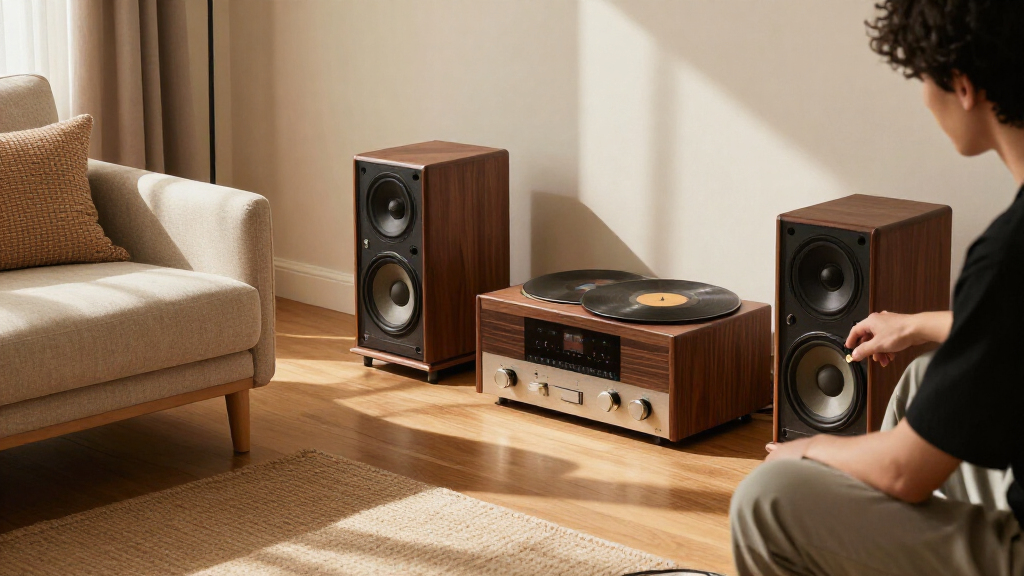
The best home sound system for most living rooms is the ULTIMEA Skywave X50, which pairs a 5.1.4-channel layout with wireless surround speakers for a more enveloping setup than a conventional soundbar. For a simpler route to cinematic sound, the JBL Bar 800 stands out with detachable surrounds, while the Yamaha YHT-4970U suits buyers who want a traditional receiver-and-speaker system. The main tradeoff is between an easier, tidier soundbar package and the placement flexibility of separate speakers. Room size, connection needs, and willingness to install rear speakers can matter as much as channel count. Read on for the full breakdown and a pick matched to your space and priorities.

Get the latest gadgets delivered free with Prime
- Fast, free delivery on millions of items
- Prime Video, Amazon Music and more included
- Member-only deals all year
Complete the kit



Key Takeaways
- Channel count alone does not decide immersion: the Skywave X50’s 5.1.4 layout adds height channels, while several 7.1 soundbar packages focus on surround width without the same overhead speaker arrangement.
- Setup style separates the leading options: the JBL Bar 800 uses detachable surrounds for flexible placement, while Yamaha’s receiver-based systems ask for more speaker setup in exchange for a traditional component layout.
- Wireless surrounds still need a plan: wireless links can reduce cable runs, but rear speakers still need suitable placement and, depending on the system, access to power.
- There are distinct routes to a full system: the Logitech Z906 is a PC-friendly discrete-speaker option, while the Amazon Fire TV Soundbar Plus builds its appeal around a bundled soundbar, subwoofer, and surrounds.
- Matching the system to the room beats chasing specifications: compact soundbar packages may fit everyday TV spaces better, while larger subwoofers and separate speakers make more sense when the room and layout can support them.
| ULTIMEA Aura A60 Pro 7.1-Channel Dolby Atmos Soundbar System |  | Best for Wide Surround Coverage | Channels: 7.1 | Audio format: Dolby Atmos | Surround speakers: 4; two front wired and two rear wired, with rear pair connecting wirelessly to the soundbar | VIEW LATEST PRICE | See Our Full Breakdown |
| TCL S65K 5.1-Channel Soundbar System with Dolby Atmos, DTS:X, Wireless Subwoofer and Surround Speakers |  | Best for Dialogue and Easy Room Setup | Audio channels: 5.1 | Maximum output power: 630 watts | Audio technologies: Dolby Atmos, DTS:X, and DTS Virtual:X | VIEW LATEST PRICE | See Our Full Breakdown |
| JBL Bar 800 5.1.2-Channel Soundbar with Dolby Atmos, Detachable Surround Speakers, and 10-Inch Wireless Subwoofer |  | Best for Cable-Free Surround Sound | Audio channels: 5.1.2 | Total output power: 720 W | Audio technology: Dolby Atmos | VIEW LATEST PRICE | See Our Full Breakdown |
| Yamaha YHT-4950U 4K Ultra HD 5.1-Channel Home Theater System with Bluetooth |  | Best Traditional Receiver-Based System | System configuration: 5.1-channel | Included components: AV receiver, five speakers, subwoofer, and speaker wire | HDMI ports: 4 | VIEW LATEST PRICE | See Our Full Breakdown |
| Yamaha YHT-4970U 5.1-Channel Home Theater System with Dolby Atmos and 4K/120, 8K/60 HDMI |  | Best for Gaming and HDMI 2.1 | AV receiver: RX300A | Audio channels: 5.1 | Included speakers: Two front, one center, and two surround speakers | VIEW LATEST PRICE | See Our Full Breakdown |
| ULTIMEA Skywave X50 5.1.4-Channel Wireless Surround Sound System |  | Best for Height-Effect Home Theater | Audio configuration: 5.1.4-channel | Peak power: 760 W | Subwoofer: 8 inches; bass response down to 28 Hz | VIEW LATEST PRICE | See Our Full Breakdown |
| Sony BRAVIA Theater System 6 5.1-Channel Soundbar with Subwoofer and Rear Speakers |  | Best for Clear TV Dialogue | Channels: 5.1 | Speaker configuration: 10 speakers, including soundbar, wired subwoofer, and two rear speakers | Audio formats: Dolby Atmos and DTS:X | VIEW LATEST PRICE | See Our Full Breakdown |
| Amazon Fire TV Soundbar Plus with Subwoofer and Surround Speakers, 5.1-Channel Dolby Atmos Soundbar |  | Best for Straightforward Wireless Setup | Speaker channels: 5.1 | Supported surround sound: Dolby Atmos and DTS:X | Subwoofer connectivity: Wireless | VIEW LATEST PRICE | See Our Full Breakdown |
| ULTIMEA 7.1-Channel Surround Soundbar System with Subwoofer |  | Best for Adjustable Surround and Dialogue | Channels: 7.1 | Speaker configuration: Soundbar, subwoofer, and four surround speakers | Bass response: Down to 45 Hz | VIEW LATEST PRICE | See Our Full Breakdown |
| Sony HT-S40R 5.1-Channel Home Theater Soundbar System |  | Best for Flexible TV Connections | Audio channels: 5.1 | Maximum output power: 600 W | TV connectivity: HDMI, optical, and analog | VIEW LATEST PRICE | See Our Full Breakdown |
| ULTIMEA Aura New Model 7.1-Channel Dolby Atmos Soundbar System with 5.25-Inch Subwoofer |  | Best for Lots of Physical Surround Speakers | Model: Aura New Model (U2625) | Audio configuration: Described as 7.1-channel; product information also lists 5.1 channels | Peak power: 420 W | VIEW LATEST PRICE | See Our Full Breakdown |
| ULTIMEA Poseidon M80 5.1-Channel Dolby Atmos Soundbar System with Wireless Subwoofer |  | Best for a Straightforward 5.1 Setup | Audio channels: 5.1 | Peak power: 312 W | Subwoofer: 5.25-inch; wireless connection to soundbar | VIEW LATEST PRICE | See Our Full Breakdown |
| Logitech Z906 5.1 Surround Sound Speaker System | 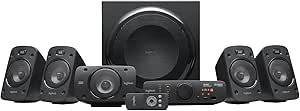 | Best for DTS and Multiple Wired Sources | Speaker configuration: 5.1 surround sound | Power: 500 W RMS; 1000 W peak | Audio decoding: Dolby Digital and DTS | VIEW LATEST PRICE | See Our Full Breakdown |
| JBL Bar 500MK2 5.1-Channel Soundbar System with Dolby Atmos and 10-Inch Wireless Subwoofer |  | Best Premium Soundbar-Style System | Channel configuration: 5.1 | Maximum output power: 750 W | Subwoofer: 10-inch, wireless | VIEW LATEST PRICE | See Our Full Breakdown |
| ULTIMEA 5.1.2-Channel Dolby Atmos Soundbar System with Subwoofer |  | Best for Height-Effect Atmos on a Budget-Friendly Layout | Channels: 5.1.2 | Audio format: Dolby Atmos | Surround technology: SurroundX | VIEW LATEST PRICE | See Our Full Breakdown |
| home sound system | Subwoofer | Connectivity |
|---|---|---|
| ULTIMEA Aura A60 Pro 7.1-Chann | Wired 5.25-inch | HDMI eARC |
| TCL S65K 5.1-Channel Soundbar | — | Bluetooth, USB, Wi-Fi, HDMI, and wireless |
| JBL Bar 800 5.1.2-Channel Soun | 10-inch wireless | Bluetooth, Ethernet, HDMI, USB, and Wi-Fi |
| Yamaha YHT-4950U 4K Ultra HD 5 | — | HDMI, Ethernet, coaxial, optical, USB, auxiliary, and Bluetooth |
| Yamaha YHT-4970U 5.1-Channel H | Powered | — |
| ULTIMEA Skywave X50 5.1.4-Chan | 8 inches; bass response down to 28 Hz | — |
| Sony BRAVIA Theater System 6 5 | — | Bluetooth |
| Amazon Fire TV Soundbar Plus w | — | — |
| ULTIMEA 7.1-Channel Surround S | — | — |
| Sony HT-S40R 5.1-Channel Home | — | — |
| ULTIMEA Aura New Model 7.1-Cha | Wired, 5.25-inch | AUX, Bluetooth, HDMI eARC, Optical |
| ULTIMEA Poseidon M80 5.1-Chann | 5.25-inch; wireless connection to soundbar | HDMI eARC, optical, USB, Bluetooth 6.0 |
| Logitech Z906 5.1 Surround Sou | 6.5-inch | — |
| JBL Bar 500MK2 5.1-Channel Sou | 10-inch, wireless | HDMI eARC, HDMI input, AirPlay, Google Cast, Spotify Connect, Tidal Connect, Roon Ready |
| ULTIMEA 5.1.2-Channel Dolby At | Wired, 5.25-inch | HDMI eARC, Bluetooth 5.4, CEC |
More Details on Our Top Picks
ULTIMEA Aura A60 Pro 7.1-Channel Dolby Atmos Soundbar System
The ULTIMEA Aura A60 Pro is the strongest fit here for buyers who want several physical surround speakers without assembling a receiver-based package. Its 7.1-channel layout uses four surround speakers, giving it a broader speaker spread than the TCL S65K’s 5.1 setup. Dolby Atmos and the app’s 121 EQ presets and 10-band equalizer give sound-tuning flexibility for different rooms and content. The tradeoff is a more involved placement and wiring job: the subwoofer is wired, and two front surround speakers are wired as well. The JBL Bar 800 is easier to arrange around a room because its surround speakers are detachable and battery-powered, while this ULTIMEA favors a fixed setup and extensive adjustment. Its stated room range is 108–270 square feet, so it is less suited to unusually large spaces.
Pros:- Four surround speakers create a wide, speaker-based soundstage.
- Dolby Atmos support adds spatial audio compatibility.
- App offers 121 EQ presets, 10-band adjustment, and six listening modes.
- Wired 5.25-inch subwoofer with BassMX is designed to add low-frequency impact.
Cons:- The wired subwoofer limits placement flexibility.
- Front and rear speaker placement calls for more setup than a soundbar-only arrangement.
- Recommended room size is limited to 108–270 square feet.
Best for: Movie fans with a 108–270-square-foot room who want four surround speakers and hands-on EQ control.
Not ideal for: People who want a low-cable setup or need to place a subwoofer far from the soundbar, since its subwoofer is wired.
- Channels:7.1
- Audio format:Dolby Atmos
- Surround speakers:4; two front wired and two rear wired, with rear pair connecting wirelessly to the soundbar
- Subwoofer:Wired 5.25-inch
- Peak power:420 W
- Connectivity:HDMI eARC
- Sound customization:121 EQ presets, 10-band equalizer, and 6 EQ modes
- Recommended room size:108–270 ft²
Our verdict“Choose the Aura A60 Pro if broad surround coverage and detailed app tuning matter more than minimizing cables.”
TCL S65K 5.1-Channel Soundbar System with Dolby Atmos, DTS:X, Wireless Subwoofer and Surround Speakers
The TCL S65K prioritizes a straightforward, room-adaptive setup over the Aura A60 Pro’s more elaborate 7.1 speaker layout. Its AI Sonic Auto Room Calibration is meant to tailor playback to the listening space, while a dedicated center channel and tweeter help keep voices distinct in busy scenes. Dolby Atmos and DTS:X provide format flexibility, and the wireless subwoofer and surround speakers reduce signal-cable runs. They still need power, so this is not a fully cable-free system. Compared with the JBL Bar 800, the TCL does not list detachable, battery-powered surrounds or the JBL’s Wi-Fi streaming platform; in return, it offers room calibration and a dialogue-focused configuration. ChoruSound integration requires a compatible TCL TV, so buyers with another television should not choose it for that feature.
Pros:- Dolby Atmos, DTS:X, and DTS Virtual:X support a range of spatial audio formats.
- Center channel and built-in tweeter are aimed at clearer dialogue and detail.
- AI Sonic calibration adjusts sound for the listening space.
- Wireless subwoofer and surround speakers reduce cable runs from the main bar.
Cons:- ChoruSound integration requires a compatible TCL television.
- Wireless subwoofer and surrounds still need power connections.
- The listed specifications do not include a dedicated music-streaming platform such as AirPlay or Chromecast.
Best for: TCL TV owners who want room calibration, clear dialogue, and surround speakers without long audio cables.
Not ideal for: Buyers seeking a TV-brand-independent setup or wireless surrounds that can operate without nearby power outlets.
- Audio channels:5.1
- Maximum output power:630 watts
- Audio technologies:Dolby Atmos, DTS:X, and DTS Virtual:X
- Subwoofer driver:6.5 inches
- Connectivity:Bluetooth, USB, Wi-Fi, HDMI, and wireless
- Room calibration:AI Sonic Auto Room Calibration
- Mounting type:Wall mount
Our verdict“Pick the S65K for dialogue-focused TV watching and automatic room adjustment, especially if your television is a compatible TCL model.”
JBL Bar 800 5.1.2-Channel Soundbar with Dolby Atmos, Detachable Surround Speakers, and 10-Inch Wireless Subwoofer
The JBL Bar 800 makes the clearest case for buyers who want surround effects but do not want to route speaker cables across the room. Its detachable, battery-powered surrounds can be placed behind the seating area for movie nights and returned to the bar afterward. Two up-firing drivers support Dolby Atmos height effects, while the 10-inch wireless subwoofer gives it a larger bass driver than the TCL S65K’s 6.5-inch unit. The JBL also adds AirPlay, Chromecast, and Alexa Multi-Room Music, making it more capable for streaming than the more installation-focused Yamaha YHT-4950U. The compromise is reliance on charging and placement for the detachable speakers, rather than permanently wired surrounds like the ULTIMEA Aura A60 Pro. The main system remains corded, and it is not waterproof.
Pros:- Detachable battery-powered surround speakers avoid extra speaker cables.
- Dolby Atmos and two up-firing drivers support height effects.
- 10-inch wireless subwoofer provides a larger driver than the TCL S65K’s 6.5-inch subwoofer.
- Wi-Fi streaming includes AirPlay, Chromecast, and Alexa Multi-Room Music.
Cons:- Detachable surround speakers need charging and active placement.
- The main soundbar and subwoofer still require corded power.
- The system is not waterproof.
Best for: Living-room movie watchers who want rear surround effects without running speaker wires and also stream music over Wi-Fi.
Not ideal for: Buyers who prefer permanently wired surround speakers or do not want to manage charging detachable speakers.
- Audio channels:5.1.2
- Total output power:720 W
- Audio technology:Dolby Atmos
- Surround speakers:Two detachable, battery-powered speakers
- Subwoofer:10-inch wireless
- Dialogue enhancement:PureVoice
- Connectivity:Bluetooth, Ethernet, HDMI, USB, and Wi-Fi
- Streaming support:AirPlay, Alexa Multi-Room Music, and Chromecast built-in
- HDMI features:eARC and 4K Dolby Vision pass-through
Our verdict“Choose the Bar 800 if easy-to-place surrounds and broad Wi-Fi streaming matter more than a fixed, wired speaker layout.”
Yamaha YHT-4950U 4K Ultra HD 5.1-Channel Home Theater System with Bluetooth
The Yamaha YHT-4950U is the traditional home theater choice in this group: it supplies an AV receiver, five speakers, a subwoofer, and speaker wire rather than packaging everything into a soundbar. That receiver-based design gives buyers four HDMI inputs and a range of wired connections, useful when several video sources need to stay connected. It supports 4K at 60 frames per second and HDR formats including Dolby Vision. Compared with the newer YHT-4970U, however, this model lacks the listed 4K/120, 8K/60, and HDMI 2.1 gaming features, making it a less future-focused match for current high-frame-rate consoles. YPAO room optimization and virtual CINEMA FRONT add setup flexibility, but the five speakers require wiring; Bluetooth is its wireless option, not a substitute for network streaming.
Pros:- Package includes an AV receiver, five speakers, subwoofer, and speaker wire.
- Four HDMI inputs accommodate multiple connected video sources.
- Supports 4K at 60 frames per second, Dolby Vision, HDR, and Hybrid Log-Gamma.
- YPAO room optimization and virtual CINEMA FRONT provide setup options.
Cons:- Speaker installation requires wiring around the room.
- Bluetooth is the listed wireless feature; network music streaming is not listed.
- Its 4K/60 video support lacks the YHT-4970U’s 4K/120 and HDMI 2.1 gaming features.
Best for: Home theater buyers who want a receiver, separate speakers, multiple HDMI inputs, and 4K/60 video support.
Not ideal for: Console owners seeking 4K/120 or 8K/60 passthrough, and anyone who wants a wireless or low-installation system.
- System configuration:5.1-channel
- Included components:AV receiver, five speakers, subwoofer, and speaker wire
- HDMI ports:4
- Video support:4K Ultra HD at 60 frames per second
- HDR support:HDR, Dolby Vision, and Hybrid Log-Gamma
- Connectivity:HDMI, Ethernet, coaxial, optical, USB, auxiliary, and Bluetooth
- Output wattage:150 watts
- Frequency response:28 Hz–25 kHz
Our verdict“The YHT-4950U suits buyers who want a complete wired receiver system and do not need the newer gaming features of the YHT-4970U.”
Yamaha YHT-4970U 5.1-Channel Home Theater System with Dolby Atmos and 4K/120, 8K/60 HDMI
The Yamaha YHT-4970U is the receiver-based pick for households that want a complete speaker package and modern gaming connections. Its RX300A receiver supports HDMI 2.1, 4K/120, 8K/60, ALLM, and VRR, giving compatible consoles and displays a more capable video path than the YHT-4950U’s 4K/60 support. The package includes five speakers, a powered subwoofer, setup microphone, and speaker wire; automatic room correction helps tune the installed system. Dolby Atmos and DTS Virtual:X add spatial formats, though this remains a 5.1-channel package rather than a system with dedicated height speakers. Compared with the JBL Bar 800, it demands more cable routing and does not list Wi-Fi music services, but it offers the receiver-and-speaker approach many buyers prefer. At 50.4 pounds, moving the package is also less convenient.
Pros:- HDMI 2.1 supports 4K/120, 8K/60, eARC, ALLM, and VRR.
- Package includes an RX300A receiver, five speakers, and powered subwoofer.
- Dolby Atmos and DTS Virtual:X support spatial audio processing.
- Automatic room correction includes a setup microphone.
Cons:- Connecting five speakers and the subwoofer requires substantial cable setup.
- The 50.4-pound package is cumbersome to move.
- Bluetooth Multipoint is listed, but Wi-Fi streaming services are not.
Best for: Console gamers and home theater builders who want HDMI 2.1 features alongside a full receiver, five speakers, and subwoofer.
Not ideal for: People who want a quick soundbar installation, Wi-Fi streaming services, or a setup with minimal speaker wiring.
- AV receiver:RX300A
- Audio channels:5.1
- Included speakers:Two front, one center, and two surround speakers
- Subwoofer:Powered
- Audio formats:Dolby Atmos and DTS Virtual:X
- Video support:4K/120 and 8K/60
- HDMI features:HDMI 2.1, eARC/ARC, ALLM, and VRR
- HDMI inputs/outputs:4 inputs, 1 output
- Room correction:Automatic, with included setup microphone
Our verdict“Choose the YHT-4970U if HDMI 2.1 gaming support and a separate-speaker home theater matter more than quick setup or wireless streaming.”
ULTIMEA Skywave X50 5.1.4-Channel Wireless Surround Sound System
The Skywave X50 is the pick here for buyers who want height-channel effects as well as surround sound. Its 5.1.4 layout adds four height channels, while the dual 5 GHz link connects the surround speakers wirelessly, reducing speaker-cable runs across the room. The 8-inch subwoofer is specified to reach 28 Hz, a useful fit for movie effects that need deeper bass. Compared with the Sony BRAVIA Theater System 6, the X50 offers a more elaborate channel layout and a stated low-frequency reach; the Sony instead offers a dedicated center channel and DTS:X support. The X50’s tradeoffs are practical: the system still needs power outlets, and its 43-inch bar and separate speakers need room. I’d choose it for immersive movie playback, not for a compact, cable-free setup.
Pros:- 5.1.4-channel layout provides dedicated height as well as surround audio.
- Dual 5 GHz transmission connects the surround speakers wirelessly.
- 8-inch subwoofer is specified for bass down to 28 Hz.
- 4K Ultra HD and HDR pass-through supports compatible video sources.
Cons:- Soundbar, subwoofer, and surround speakers require corded power.
- The 43.31-inch soundbar and separate components demand more room than a compact all-in-one setup.
Best for: Home theater viewers who want four height channels, wireless surround links, and deep bass for action movies.
Not ideal for: Apartment dwellers with limited space or buyers who want a completely wireless, battery-powered system; the components need room and corded power.
- Audio configuration:5.1.4-channel
- Peak power:760 W
- Subwoofer:8 inches; bass response down to 28 Hz
- Wireless transmission:Dual 5 GHz
- Audio processing:24-bit/192 kHz
- Video pass-through:4K Ultra HD and HDR
- Dimensions:43.31 × 2.76 × 3.94 inches
- Controls:App and remote
Our verdict“Choose the Skywave X50 if height effects and deep bass matter more than minimizing equipment and power cables.”
Sony BRAVIA Theater System 6 5.1-Channel Soundbar with Subwoofer and Rear Speakers
Sony’s BRAVIA Theater System 6 earns its place for households that put speech clarity ahead of the largest channel count. Its dedicated center channel is designed to keep dialogue distinct from effects, and Dolby Atmos and DTS:X support cover common surround formats. Unlike the ULTIMEA Skywave X50, it is a 5.1-channel system without four height channels, so it’s a simpler match for buyers focused on TV and movie sound rather than height effects. The included rear speakers add a more enveloping presentation than a soundbar alone, but the subwoofer is wired, which limits placement flexibility. BRAVIA TV owners also get access to Voice Zoom 3 and TV menu controls; those conveniences don’t apply to every television. I’d favor this Sony for dialogue-focused viewing, not for a room where wireless component placement is a priority.
Pros:- Dedicated center channel is designed to make dialogue easier to distinguish.
- Includes rear speakers for 5.1-channel surround sound.
- Supports Dolby Atmos and DTS:X.
- Bluetooth supports music streaming from compatible devices.
Cons:- The wired subwoofer restricts where it can be placed.
- Voice Zoom 3 and TV menu controls require a compatible BRAVIA TV.
Best for: TV and movie viewers who often struggle to hear dialogue, especially owners of compatible Sony BRAVIA TVs.
Not ideal for: Buyers seeking a wireless subwoofer, four-channel height effects, or BRAVIA-specific features with a non-compatible TV.
- Channels:5.1
- Speaker configuration:10 speakers, including soundbar, wired subwoofer, and two rear speakers
- Audio formats:Dolby Atmos and DTS:X
- Maximum output power:1000 W
- Connectivity:Bluetooth
- Soundbar dimensions:3.6 × 35.7 × 2.6 inches
- Mounting:Tabletop or wall mount
- Power source:Corded electric
Our verdict“Pick the BRAVIA Theater System 6 for dialogue-focused 5.1 sound, especially if you own a compatible Sony TV.”
Amazon Fire TV Soundbar Plus with Subwoofer and Surround Speakers, 5.1-Channel Dolby Atmos Soundbar
The Fire TV Soundbar Plus is a well-matched choice for buyers who want wireless surround components without moving up to a more elaborate 5.1.4 system like the ULTIMEA Skywave X50. It pairs a wireless subwoofer and two wireless surround speakers with a 5.1-channel bar, while the dedicated dialogue channel targets clearer speech. Four EQ modes give listeners an easy way to shift between movies, music, sports, and nighttime playback, rather than requiring detailed sound tuning. Bluetooth, HDMI, and optical connections also make it usable with a range of TVs and devices. Its Fire TV sound customization is limited to select models, though, and the listed wall-mount kit covers only the soundbar. Compared with the Sony BRAVIA Theater System 6, this system avoids a wired subwoofer, but it doesn’t offer the same TV-brand-specific dialogue controls.
Pros:- Wireless subwoofer and two wireless surround speakers reduce speaker-cable runs.
- Dedicated dialogue channel supports clearer speech.
- Dolby Atmos and DTS:X support.
- Four EQ modes and Bluetooth streaming suit different listening needs.
Cons:- Fire TV sound customization applies only to select models.
- The wall-mount kit is for the soundbar only, not the full speaker system.
Best for: Viewers who want a 5.1 system with wireless subwoofer and surrounds, plus simple listening modes and broad TV connectivity.
Not ideal for: Buyers who need a complete wall-mount solution or expect Fire TV sound customization to work across every television.
- Speaker channels:5.1
- Supported surround sound:Dolby Atmos and DTS:X
- Subwoofer connectivity:Wireless
- Surround speaker connectivity:Wireless
- Soundbar dimensions:37 × 5.2 × 2.5 inches
- Subwoofer dimensions:10.4 × 10.4 × 13.4 inches
- EQ modes:Movie, Music, Sports, Night
- Ports:HDMI, Optical, AC, USB-A
Our verdict“Choose this system for accessible 5.1 surround with wireless components and simple listening modes, provided you don’t need full-system wall mounting.”
ULTIMEA 7.1-Channel Surround Soundbar System with Subwoofer
This ULTIMEA system suits listeners who want to shape their surround mix rather than rely on a few fixed modes. Its 7.1-channel layout includes four surround speakers, while app controls offer a 10-band EQ, 121 presets, and adjustable surround levels. VocalMatrix and VoiceMX processing are intended to improve vocal placement and dialogue clarity, giving it a different focus from the Amazon Fire TV Soundbar Plus, whose four EQ modes are simpler to operate. That added control comes with setup compromises: two rear speakers need a wired connection between them, and the subwoofer’s specified bass reach is 45 Hz, not as deep as the Skywave X50’s stated 28 Hz. I’d choose this model for a listener who likes tuning sound to a room or genre, but skip it if minimizing setup work or chasing deep bass is the priority.
Pros:- Four surround speakers form a 7.1-channel system.
- VocalMatrix and VoiceMX processing target vocal placement and dialogue clarity.
- App includes a 10-band EQ and 121 sound presets.
- Thirteen adjustable surround levels allow changes to speaker balance.
Cons:- Two rear speakers require a wired connection between them.
- Specified bass response reaches down to 45 Hz, less deep than the Skywave X50’s 28 Hz specification.
Best for: Home theater listeners who want multiple surround speakers and detailed app-based control over EQ and speaker levels.
Not ideal for: Buyers who want deep sub-bass or a fully wireless surround setup; the rear speakers connect to each other by wire.
- Channels:7.1
- Speaker configuration:Soundbar, subwoofer, and four surround speakers
- Bass response:Down to 45 Hz
- Bluetooth:Version 6.0; 15 m range
- Equalizer:10-band graphic EQ
- Sound presets:121
- Adjustable surround levels:13
- Mounting:Tabletop or wall mount
Our verdict“Pick this ULTIMEA if you value adjustable 7.1 surround and app tuning more than deep bass or a fully wireless rear-speaker arrangement.”
Sony HT-S40R 5.1-Channel Home Theater Soundbar System
The Sony HT-S40R makes the most sense for buyers whose TV setup calls for more than one connection option. It accepts HDMI, optical, and analog inputs, while Bluetooth and USB add ways to play music beyond the TV. Its 5.1-channel arrangement includes rear speakers, with selectable sound modes and dialogue enhancement for everyday movie and TV viewing. Compared with the newer Sony BRAVIA Theater System 6, the HT-S40R offers analog connectivity and wireless connections for both the rear speakers and subwoofer; the BRAVIA model adds Dolby Atmos and DTS:X support and a dedicated center-channel emphasis. The HT-S40R’s tradeoff is that its listed feature set is less focused on newer immersive formats. I’d pick it for a straightforward TV room with mixed connections, not for buyers seeking height effects or advanced format support.
Pros:- HDMI, optical, and analog inputs accommodate a range of TV connections.
- Includes rear speakers for 5.1-channel surround sound.
- Wireless connectivity is specified for the rear speakers and subwoofer.
- Bluetooth, USB, selectable sound modes, and dialogue enhancement add everyday flexibility.
Cons:- Dolby Atmos and DTS:X support are not listed.
- The supplied remote requires two AAA batteries.
Best for: Households connecting an older or mixed-device TV setup that need HDMI, optical, and analog inputs alongside rear surround speakers.
Not ideal for: Movie fans seeking Dolby Atmos, DTS:X, or height-channel effects; those formats are not listed for this system.
- Audio channels:5.1
- Maximum output power:600 W
- TV connectivity:HDMI, optical, and analog
- Other connectivity:Bluetooth and USB
- Rear speaker connectivity:Wireless
- Subwoofer connectivity:Wireless
- Bluetooth range:10 m
- Warranty:1 year
Our verdict“Choose the HT-S40R for adaptable TV connections and wireless 5.1 components, but look elsewhere for immersive height formats.”
ULTIMEA Aura New Model 7.1-Channel Dolby Atmos Soundbar System with 5.25-Inch Subwoofer
The ULTIMEA Aura New Model is the pick for buyers who want several separate speakers around the room rather than relying mainly on a soundbar to create width. Its four surround speakers and wired subwoofer make a more physically distributed setup than the JBL Bar 500MK2, which uses a single soundbar and wireless subwoofer. Dolby Atmos and HDMI eARC add modern TV-audio support, while app access to a 10-band EQ and 121 presets gives sound-tuners plenty to adjust.
The tradeoff is a more involved layout: the front surrounds and subwoofer are wired, and the rear-right speaker needs power for its wireless link. Product information also lists both a 7.1-channel configuration and 5.1 channels, so buyers should confirm the intended channel layout before purchasing. It makes the most sense in the stated 108–270 sq ft room range, not for someone seeking a minimal, cable-light installation.
Pros:- Four surround speakers provide a more physically distributed setup than a single-bar soundstage.
- Dolby Atmos support and HDMI eARC suit compatible TVs.
- App includes a 10-band equalizer, 121 presets, and six listening modes.
- Recommended for rooms measuring 108–270 sq ft.
Cons:- Front surround speakers and subwoofer require wired connections.
- The rear-right surround speaker needs power for its wireless link.
- Product information lists both 7.1-channel and 5.1-channel configurations, making the channel description unclear.
Best for: Home-theater buyers with a medium-sized room who want multiple separate surround speakers and hands-on app equalizer controls.
Not ideal for: Renters or anyone prioritizing a tidy, low-cable setup; the wired speakers and subwoofer limit placement flexibility.
- Model:Aura New Model (U2625)
- Audio configuration:Described as 7.1-channel; product information also lists 5.1 channels
- Peak power:420 W
- Subwoofer:Wired, 5.25-inch
- Surround speakers:4 (2 front and 2 rear)
- Audio support:Dolby Atmos
- Connectivity:AUX, Bluetooth, HDMI eARC, Optical
- Room size:Recommended for 108–270 sq ft
Our verdict“Choose the Aura New Model if you want four surround speakers and can accommodate its wiring, rather than the simpler layout of the JBL Bar 500MK2.”
ULTIMEA Poseidon M80 5.1-Channel Dolby Atmos Soundbar System with Wireless Subwoofer
The ULTIMEA Poseidon M80 suits buyers who want a conventional 5.1 layout without the four-surround-speaker arrangement of the Aura New Model. Two wired surround speakers add rear effects, while the subwoofer connects wirelessly to the soundbar, giving it more placement flexibility than a fully wired bass unit. Dolby Atmos decoding, HDMI eARC, and a mix of app and remote controls make it a practical fit for TV and movie use.
That wireless subwoofer still needs a power outlet, and the surround speakers connect by wire to the subwoofer, so this is not a cable-free system. Its 312 W peak output is also below the Aura New Model’s listed 420 W peak, and the M80 does not decode DTS. Buyers with DTS-based sources should look at the Logitech Z906, which supports both Dolby Digital and DTS, though it lacks the M80’s Dolby Atmos decoding. Six EQ modes provide useful adjustment without the M80’s specs listing a multiband equalizer.
Pros:- Two wired surround speakers add rear-channel effects.
- Wireless subwoofer connection gives more placement choice than a wired subwoofer.
- HDMI eARC and Dolby Atmos decoding support compatible TV setups.
- App and remote offer six EQ modes plus bass and surround-level adjustment.
Cons:- Does not support DTS decoding.
- Surround speakers connect by wire to the subwoofer.
- The wireless subwoofer still requires its own power connection.
Best for: TV and movie viewers seeking a 5.1 Dolby Atmos system with two rear speakers, app or remote control, and a subwoofer that can sit away from the soundbar.
Not ideal for: Buyers with DTS-dependent media or people who cannot run speaker wires and provide power near the subwoofer.
- Audio channels:5.1
- Peak power:312 W
- Subwoofer:5.25-inch; wireless connection to soundbar
- Surround speakers:2 wired speakers
- Audio formats:Dolby Atmos decoding; no DTS decoding
- Connectivity:HDMI eARC, optical, USB, Bluetooth 6.0
- EQ modes:Movie, Music, Voice, Sport, Game, Night
- Mounting:Tabletop or wall mount
Our verdict“Pick the Poseidon M80 for a modestly specified 5.1 Dolby Atmos setup with a wirelessly linked subwoofer, but choose the Logitech Z906 if DTS decoding matters more.”
Logitech Z906 5.1 Surround Sound Speaker System
The Logitech Z906 is the strongest fit here for buyers who want a conventional satellite-speaker system with broad support for older and current audio sources. Its Dolby Digital and DTS decoding gives it a format advantage over the ULTIMEA Poseidon M80, which does not support DTS, and its inputs include optical, coaxial, RCA, 3.5mm, and six-channel direct. Up to six devices can be connected, making the Z906 better suited to a mixed TV, computer, and console setup than a soundbar with fewer input choices.
This is a different kind of home system from the JBL Bar 500MK2: the Logitech relies on separate satellite speakers and a control console, rather than Atmos processing and a single bar’s wide soundstage. It lists 500 W RMS output and THX certification, but no Dolby Atmos support. Buyers should also note that the supplied dimensions are not tied to a specific component. The separate speakers and wiring call for more setup effort than a streamlined soundbar.
Pros:- Decodes both Dolby Digital and DTS.
- Multiple analog and digital inputs support up to six connected devices.
- 500 W RMS output and THX certification are listed for the 5.1 system.
- Satellite speakers and center channel can be wall mounted.
Cons:- Does not list Dolby Atmos support, unlike the JBL Bar 500MK2 and ULTIMEA Poseidon M80.
- Separate speakers and connections require more setup than a single soundbar.
- Listed dimensions are not identified as belonging to a particular component.
Best for: People connecting several wired sources—such as a TV, computer, and console—who need Dolby Digital and DTS decoding in a separate-speaker 5.1 system.
Not ideal for: Buyers seeking Dolby Atmos, minimal wiring, or a soundbar-style installation with room-calibration features.
- Speaker configuration:5.1 surround sound
- Power:500 W RMS; 1000 W peak
- Audio decoding:Dolby Digital and DTS
- Inputs:3.5mm, RCA, six-channel direct, digital coaxial, optical
- Maximum simultaneous connections:6 devices
- Subwoofer:6.5-inch
- Controls:Control console and wireless remote
- Mounting:Satellite speakers and center channel are wall mountable
Our verdict“Choose the Z906 if DTS support and connections for several wired sources matter more than Dolby Atmos or a simpler soundbar installation.”
JBL Bar 500MK2 5.1-Channel Soundbar System with Dolby Atmos and 10-Inch Wireless Subwoofer
The JBL Bar 500MK2 is the premium-leaning choice for buyers who want substantial bass and a wide soundstage without arranging multiple rear speakers. Its 10-inch wireless subwoofer is much larger than the 5.25-inch units in the ULTIMEA Poseidon M80 and 5.1.2 system, which makes the JBL the more bass-focused option on paper. Dolby Atmos and MultiBeam 3.0 aim to spread sound beyond the bar, while PureVoice 2.0 is designed to keep dialogue more distinct.
Room calibration and the JBL One app offer more setup support than the simpler control approach of the Logitech Z906, and HDMI eARC plus 4K Dolby Vision passthrough suit a modern TV chain. The tradeoff is that virtualized surround is not the same speaker layout as systems with dedicated rear speakers, such as the ULTIMEA Poseidon M80. The large subwoofer also needs floor space, and voice control depends on a linked assistant-enabled device.
Pros:- Dolby Atmos and MultiBeam 3.0 are designed to create a wide, immersive soundstage.
- 10-inch wireless subwoofer is larger than the 5.25-inch units in the listed ULTIMEA systems.
- PureVoice 2.0 is designed to improve dialogue clarity.
- Room calibration, HDMI eARC, and 4K Dolby Vision passthrough support a modern TV setup.
Cons:- The large subwoofer takes up more room than smaller 5.25-inch alternatives.
- It does not include separate rear surround speakers like the ULTIMEA Poseidon M80.
- Voice control requires a linked voice assistant-enabled device.
Best for: TV owners who want a powerful, app-adjustable soundbar with a large wireless subwoofer, room calibration, and Dolby Atmos support without setting up separate rear speakers.
Not ideal for: Buyers who need dedicated rear speakers, have little space for a large subwoofer, or want voice control without another compatible device.
- Channel configuration:5.1
- Maximum output power:750 W
- Subwoofer:10-inch, wireless
- Audio technologies:Dolby Atmos, MultiBeam 3.0, PureVoice 2.0, SmartDetails
- Connectivity:HDMI eARC, HDMI input, AirPlay, Google Cast, Spotify Connect, Tidal Connect, Roon Ready
- Video passthrough:4K Dolby Vision
- Control methods:App, remote, voice assistant
- Frequency response:20 Hz
Our verdict“Choose the JBL Bar 500MK2 for a bass-forward soundbar with Atmos processing and TV-friendly setup features, but pick the Poseidon M80 if dedicated rear speakers matter more.”
ULTIMEA 5.1.2-Channel Dolby Atmos Soundbar System with Subwoofer
For buyers focused on overhead-style effects, the ULTIMEA 5.1.2 system adds up-firing drivers to a 5.1.2 layout, setting it apart from the Poseidon M80, which is listed as 5.1-channel. Those height channels give compatible Dolby Atmos soundtracks a route to create a more elevated presentation, while two rear speakers provide separate surround effects. HDMI eARC supports lossless 5.1.2 audio transmission, and CEC can link basic power, volume, and input commands with a compatible TV.
The app’s 10-band EQ, 121 presets, and 13-step level adjustment offer more detailed tuning than the Poseidon M80’s six listed EQ modes. In exchange, the 5.25-inch subwoofer is wired, and the system does not support DTS. That makes it a better match for an Atmos-centered TV setup than for households with DTS-heavy media collections. The JBL Bar 500MK2 has a larger wireless subwoofer and room calibration, but does not list separate rear speakers in its configuration.
Pros:- 5.1.2 layout combines up-firing drivers with two rear surround speakers.
- HDMI eARC supports lossless 5.1.2-channel audio transmission.
- App includes a 10-band EQ, 121 presets, and 13-step speaker-level adjustment.
- CEC can link TV and soundbar power, volume, and input controls.
Cons:- Does not support DTS.
- The subwoofer is wired, limiting placement options.
- Requires a more involved speaker setup than the single-bar JBL Bar 500MK2.
Best for: Dolby Atmos viewers who want up-firing drivers, two rear speakers, detailed app-based sound tuning, and TV-linked controls.
Not ideal for: People who need DTS decoding or want to place a subwoofer without running a cable.
- Channels:5.1.2
- Audio format:Dolby Atmos
- Surround technology:SurroundX
- Subwoofer:Wired, 5.25-inch
- Surround speakers:2
- Connectivity:HDMI eARC, Bluetooth 5.4, CEC
- App controls:13-step level adjustment, 10-band graphic EQ, 121 presets
- Dimensions:31.5 × 1.81 × 3.54 inches (D × W × H)
Our verdict“Choose this ULTIMEA if height-channel Atmos effects and detailed app tuning matter more than DTS support or wireless subwoofer placement.”
How We Picked
I compared these 15 systems by how well their design fits common home listening needs: TV dialogue, movie surround, music playback, gaming connections, and the practical work of placement and setup. I looked at speaker configuration, whether surrounds and subwoofers are included, Dolby Atmos or DTS:X support where specified, connectivity, and the amount of room flexibility each system offers. A higher channel count mattered only when it created a useful difference for the buyer, rather than serving as a number on a box.
The order favors systems that combine meaningful surround capability with a manageable setup and clear use case. That puts the ULTIMEA Skywave X50 first for its height-channel layout and wireless surround design, with the JBL Bar 800 close behind for detachable rear speakers and a substantial subwoofer. Receiver-based Yamaha systems rank for buyers who value component flexibility, while more specialized or simpler packages sit lower because they suit narrower needs. I also weighed tradeoffs: no system earns a strong recommendation without a clear fit and a drawback readers should know.
Factors to Consider When Choosing Best Home Sound Systems
Before choosing a system, decide how much of your room you want to dedicate to sound. The right match depends on layout, listening habits, equipment, and how much setup you are willing to take on—not just the channel count printed on the product.
Match the speaker layout to your room
A 5.1 system can deliver satisfying surround without needing the extra height channels found in 5.1.2 or 5.1.4 layouts. Height effects depend on speaker design, room surfaces, and placement, so a bigger channel number does not guarantee a more convincing result in every space. Before paying for overhead effects, check whether the system uses upward-firing drivers or separate height speakers and whether your ceiling and room arrangement suit them. A compact room may benefit more from well-placed surrounds than from extra channels. In an open-plan space, sound can spread out, making speaker placement and subwoofer position more important. Choose for the room you have, not a theoretical ideal layout.
Decide how much installation you will accept
Soundbars generally reduce the number of components around the TV, while receiver-based systems require space for a receiver and separate speakers. Wireless surrounds can cut long signal cables, but they do not always remove every cable or power requirement. Check where rear speakers can sit and how they will receive power before choosing a package. Detachable speakers offer a middle ground: they can be placed behind the listening area for movies and returned to the bar when not needed. Do not assume that “wireless” means a completely cable-free room. A quick sketch of the TV, sofa, outlets, and likely speaker positions can prevent a frustrating mismatch.
Check source connections before buying
List the devices you actually use—such as a TV, game console, streaming box, or computer—and check how each system connects to them. HDMI features and supported video formats matter when a console or high-refresh-rate source needs to pass through the sound system. If you rely on the TV’s apps, a straightforward HDMI ARC or eARC connection can simplify daily use, but verify that the specific setup supports the audio formats you want. Bluetooth can be handy for casual music playback, yet it is not a substitute for checking TV and gaming connections. Buyers with several sources should count available inputs rather than assume every soundbar offers the same flexibility. The goal is to avoid adding adapters or changing cables every time you switch devices.
Prioritize clear dialogue or bass according to how you listen
For dialogue-heavy shows, a system with a center channel or useful speech controls may matter more than a powerful subwoofer. Action films and music with deep bass place greater demands on the subwoofer, but a large unit can be overpowering in a small room or shared home. Think about typical listening volume and whether you need to hear speech clearly at lower levels. Sound modes can help tailor output, though they cannot fix poor speaker placement or a room that muffles sound. If music is a major use, consider whether the system’s connectivity and speaker layout suit listening beyond the TV. Choose the performance trait you will notice most often rather than paying for capabilities that rarely enter your routine.
Choose a system you can expand or replace comfortably
Soundbars are appealing as complete packages, but their speakers and processing are usually tied to the system as sold. A receiver-based setup can offer more freedom to adjust components, though that flexibility comes with more setup and equipment. Consider whether you expect to add speakers, replace a subwoofer, or keep the system through future TV upgrades. Check format and connection support against the devices you own now, while avoiding purchases based only on future features you may never use. A self-contained bundle is often the easier choice for someone who wants one coordinated purchase. A component system makes more sense when customization is part of the plan, not a chore.
Treat placement and room acoustics as part of the purchase
Walls, floors, furniture, and seating position shape what you hear, sometimes more than a modest difference in speaker specifications. A subwoofer tucked into a cabinet or wedged into a corner may sound uneven, while rear speakers placed too close to the listener can make effects distracting. Leave room to position speakers near the recommended locations and avoid blocking drivers with furniture. Hard, reflective rooms can make treble sound sharper; rugs, curtains, and careful placement may help without adding equipment. If the sofa sits against the back wall, a system designed around distant rear placement may be harder to arrange. Measure first, then choose a layout that fits the actual listening area.
Frequently Asked Questions
Is a 5.1.4 system always better than a 5.1 system?
No. A 5.1.4 layout adds height channels that can make compatible movie soundtracks feel more three-dimensional, but the effect depends on the room, speaker design, and placement. A well-arranged 5.1 system can be a better fit when space is tight or overhead effects are not a priority. Check whether the height channels use upward-firing drivers or speakers that need specific placement. If your room has an open ceiling or awkward layout, extra channels may bring less benefit than a simpler system arranged well.
Should I choose a soundbar package or a receiver-based home theater system?
Choose a soundbar package if you want fewer components and a more direct route from box to TV sound. A receiver-based system is a better fit if you value separate speakers, source connections, and the possibility of changing components over time. The tradeoff is space and setup: a receiver and individual speakers take more planning than a single bar. Think about whether you enjoy arranging equipment or mainly want a finished system. Also check your TV stand, available outlets, and speaker locations before deciding.
Do wireless surround speakers need power cables?
Often, yes: “wireless” commonly describes the audio connection, not the power supply. Rear speakers may still need to connect to wall outlets or a shared wireless amplifier, so check the exact system’s setup requirements. This matters if your sofa is far from outlets or you want to avoid visible cables altogether. Detachable surrounds can make placement more flexible, but they still need a practical place to operate and charge or receive power, depending on their design. Map the rear speaker positions before choosing a system.
Will these systems work well for both gaming and streaming TV?
Many can serve both, but connection support is the deciding factor. Check how your console connects, whether the system supports the video features you use, and whether the TV can pass the sound formats from its built-in streaming apps. A soundbar with limited inputs may require devices to connect through the TV, while a receiver-based option can offer a different connection layout. Bluetooth is useful for casual audio but does not answer questions about console video passthrough or TV audio return. Compare the ports and supported formats with your exact devices before choosing.
How much room do I need for a separate subwoofer and rear speakers?
You do not need a dedicated theater room, but you do need sensible places for the components. A subwoofer needs floor space and some freedom from enclosed cabinets, while rear speakers should sit around or behind the listening area without blocking walkways. Small rooms can work well with compact layouts, though a large subwoofer may be harder to blend at comfortable listening levels. If your seating is against a wall, look for a package whose surround placement remains practical in that arrangement. Measuring the room and checking outlet locations can reveal fit issues before purchase.
Conclusion
For the strongest all-around fit, I recommend the ULTIMEA Skywave X50 for buyers who want height-channel effects and wireless surrounds in one package. The best value for a traditional home theater layout is the Yamaha YHT-4950U, while the best premium-style soundbar choice is the JBL Bar 800 for its detachable surrounds and 10-inch wireless subwoofer. Beginners who want a bundled path to surround sound should compare the Amazon Fire TV Soundbar Plus and Sony BRAVIA Theater System 6, then choose based on their TV and connection setup. For a more component-focused system, consider the Yamaha YHT-4970U; for PC-centered discrete surround, the Logitech Z906 has a distinct role. Pick the system whose layout fits your room and whose connections match your gear, rather than buying extra channels you cannot use well.