
AIThis post was created with the assistance of artificial intelligence (AI).

TL;DR

Users and industry experts are increasingly criticizing VR controls, citing poor usability and frustration. This development raises questions about the future of VR gaming and hardware design.

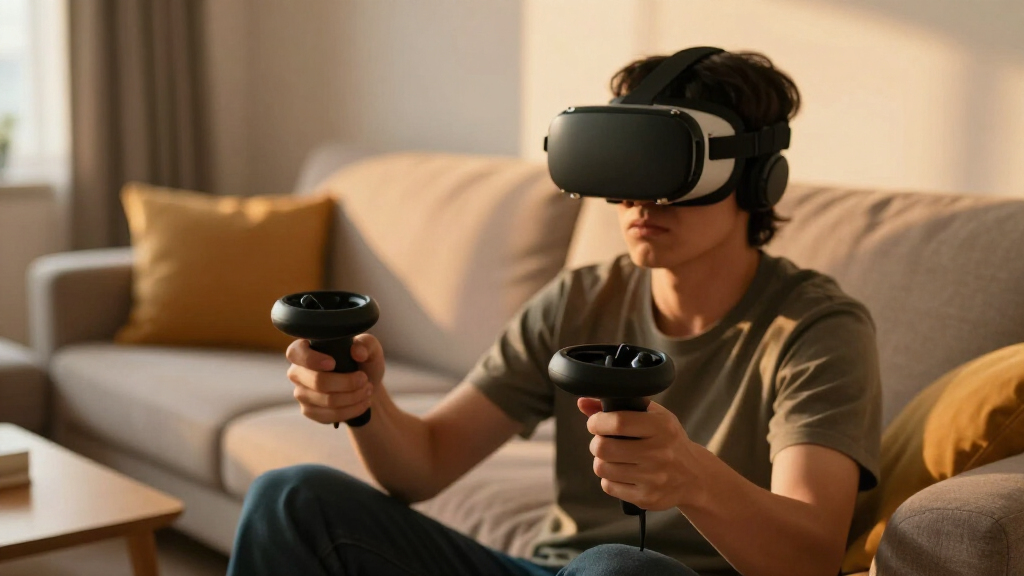
Recent user feedback and industry reports indicate that VR controls are being widely criticized for their poor usability and frustrating experience. This criticism has gained momentum among gamers and developers, raising concerns about the future viability of current VR hardware.

Multiple sources, including user reviews on social media and industry surveys, describe VR controls as unintuitive, unreliable, and uncomfortable. Users report frequent issues such as inaccurate tracking, delayed response times, and physical discomfort during extended use. Experts from VR development firms have acknowledged these problems, with some stating that the current generation of VR controllers fail to meet user expectations for seamless interaction.

While some companies have attempted to improve controls through firmware updates, feedback suggests that these efforts have not sufficiently addressed core usability issues. Industry analysts warn that if these problems persist, they could hinder the broader adoption of VR technology, especially among casual gamers and new users.

At a glance
reportWhen: ongoing, with increasing feedback over…
The developmentRecent user reports and industry feedback indicate that VR controls are widely regarded as ineffective and frustrating, sparking debate about their design and usability.
VR Controls Are The Worst
Interface failure report · August 2026

VR Controls Are The Worst

Users and industry experts are increasingly criticizing VR controls as unintuitive, unreliable, and uncomfortable. The backlash is no longer a minor hardware complaint—it is becoming a test of whether virtual reality can move beyond its enthusiast niche.

Primary failures
4

Tracking, latency, precision, and comfort dominate the criticism.

Design tension
3-Way

Accuracy, comfort, and affordability remain difficult to balance.

Prototype horizon
6–12

Months in which new controller concepts may be announced.

Status
Open

It remains unclear whether refinements can solve fundamental flaws.

Why users are frustrated

Four breaks in the illusion

VR depends on immediate, believable interaction. When the controller loses position, responds late, strains the hand, or makes precision difficult, the user stops inhabiting the virtual world and starts troubleshooting a device.

01

Inaccurate tracking

Hands drift, disappear, or jump when sensors lose sight of a controller. Fast movements and edge-of-range gestures expose the weakness.

02

Delayed response

Even small latency between a real movement and its virtual result makes aiming, grabbing, and rhythm-based actions feel disconnected.

03

Physical discomfort

Weight, grip pressure, button placement, and repeated arm movement can create fatigue during longer sessions.

04

Poor precision

Small targets, virtual keyboards, menus, and object manipulation demand a level of control that current systems do not always deliver.

Editorial signal map

Where the experience breaks hardest

This qualitative severity map translates the recurring themes in the supplied user and industry feedback. It illustrates relative concern, not survey percentages.

Tracking
High
Precision
High
Comfort
High
Latency
Elevated

Signal strength reflects the frequency and emphasis of issues described in the source material.

Control technology scorecard

Progress without a complete fix

New features have expanded what controllers can sense and communicate, but added capability does not automatically create a simpler interface. The central challenge remains making advanced interaction feel natural to a first-time user.

Capability What it improves Tracking Comfort Precision Core usability solved?
Motion controllers Direct hand movement and spatial input ~ ~ ~
Haptic feedback Physical confirmation of virtual events ~ ~
Finger tracking More expressive and natural gestures ~
Firmware updates Calibration, stability, and response tuning ~ ~
Next-generation prototypes Potential redesign of sensing and ergonomics ~

Legend: ✓ promising improvement · ✗ does not directly resolve the issue · ~ partial, inconsistent, or unproven improvement.

Traceability chain

From bad input to a smaller market

The control problem travels beyond a single frustrating session. Repeated friction changes product reviews, weakens recommendations, raises the cost of onboarding, and can slow the entire category’s path toward mainstream adoption.

Input fails

A gesture is lost, delayed, or interpreted incorrectly.

⚠️

Immersion breaks

The user notices the interface instead of the experience.

🎮

Sessions shorten

Fatigue and frustration reduce repeat play.

💬

Sentiment falls

Negative feedback discourages prospective buyers.

📉

Adoption slows

VR risks remaining a specialist entertainment segment.

Industry implication

Feature density is not the same as usability.

Manufacturers must treat comfort, learnability, and error recovery as core hardware requirements—not polish to be added after tracking systems are built.

Consumer implication

New users bear the highest friction cost.

Enthusiasts may adapt to calibration, button conventions, and tracking limits. Casual players are more likely to abandon the experience when interaction is not immediately legible.

What to monitor next
Ongoing criticism
Prototype announcements
User testing
Adoption verdict

“We recognize the issues with tracking and comfort, and are actively working on next-generation controllers that aim to fix these problems.”

Alex Smith · VR Hardware Developer
Key questions

What remains unresolved?

01 · Frustration

Why do VR controls feel so difficult?

Inaccurate tracking, delayed responses, physical discomfort, and weak precision turn basic interactions into repeated corrections.

02 · Current options

Are some controllers better?

Some newer models receive more positive feedback, but the broader criticism suggests that no current approach has eliminated the central usability tradeoffs.

03 · Next generation

Will upcoming hardware solve it?

Prototypes may improve tracking and ergonomics, but it is not yet clear whether incremental upgrades can overcome deeper interaction-design flaws.

04 · Market future

What happens if controls stay frustrating?

VR may struggle to attract casual gamers, weakening its prospects as a mainstream platform and slowing investment in related hardware innovation.

Implications for VR Industry and Consumer Adoption

The widespread dissatisfaction with VR controls threatens the growth of the virtual reality market by discouraging new users and frustrating existing ones. If hardware developers do not address these usability issues, VR may remain a niche segment rather than a mainstream gaming platform. Moreover, poor control experiences could damage the reputation of VR technology and slow innovation in related hardware designs.

Amazon

VR controller replacement

As an affiliate, we earn on qualifying purchases.

As an affiliate, we earn on qualifying purchases.

Background on VR Control Development and User Expectations

VR controls have historically struggled with balancing accuracy, comfort, and affordability. Early controllers faced criticism for limited tracking capabilities, which improved over time but still fall short of user expectations for intuitive interaction. Recent models, including those from major manufacturers, introduced new features like haptic feedback and finger tracking, but user feedback indicates these enhancements have not resolved core usability issues. The current criticism reflects a broader industry challenge: creating controls that are both technologically advanced and user-friendly.

“We recognize the issues with tracking and comfort, and are actively working on next-generation controllers that aim to fix these problems.”

— Alex Smith, VR Hardware Developer

Amazon

VR tracking sensors

As an affiliate, we earn on qualifying purchases.

As an affiliate, we earn on qualifying purchases.

Extent of User Dissatisfaction and Future Improvements

While user dissatisfaction is well-documented, it is unclear how quickly manufacturers will respond with effective solutions. It is also uncertain whether upcoming hardware releases will significantly improve control usability or if fundamental design flaws persist.

Amazon

ergonomic VR controllers

As an affiliate, we earn on qualifying purchases.

As an affiliate, we earn on qualifying purchases.

Next Steps for VR Hardware Innovation and User Feedback

Industry players are expected to announce new controller prototypes within the next 6-12 months, with hopes of addressing current issues. User feedback will continue to shape development priorities, and regulatory bodies may also scrutinize hardware safety and comfort standards. Monitoring these developments will be critical to understanding whether VR controls can overcome current limitations.

Amazon

VR controller grip covers

As an affiliate, we earn on qualifying purchases.

As an affiliate, we earn on qualifying purchases.

Key Questions

Why are VR controls considered so frustrating?

Users report issues such as inaccurate tracking, delayed responses, physical discomfort, and difficulty performing precise actions, which impair the overall experience.

Are there any current VR controllers that are considered better?

Some newer models from major manufacturers have received more positive feedback, but overall, the consensus remains that current controls are inadequate for many users.

Will new VR controllers fix these issues?

Industry insiders suggest upcoming prototypes aim to improve tracking accuracy and comfort, but it remains to be seen if these will fully resolve existing problems.

How might this affect the future of VR gaming?

If usability issues persist, VR may struggle to achieve broader adoption, especially among casual gamers, potentially limiting its growth as a mainstream entertainment platform.

Source: fediverse

You May Also Like

Marvell Technology Surges In Global Coverage

Marvell Technology’s stock prices rise significantly as global media coverage increases, with 31 mentions in recent monitoring data.

Understanding Claude’s Watermarking System For AI-Generated Works

Anthropic plans to introduce watermarking for Claude-generated content, aiming to improve detection and attribution of AI-created media. Details are still emerging.

Forget Gaming, Immersed CEO Renji Bijoy Tells Benzinga Why The Workplace Is Where VR And AR Is Really Nee

Immersed CEO Renji Bijoy emphasizes the workplace as a key area for VR and AR adoption, shifting focus from gaming to enterprise use cases.

The only AI glossary you’ll need this year

A comprehensive, up-to-date AI glossary covering key terms like AGI, AI agents, and more — essential for understanding AI developments this year.