TL;DR

Get the latest gadgets delivered free with Prime
- Fast, free delivery on millions of items
- Prime Video, Amazon Music and more included
- Member-only deals all year
This article reviews the top 10 studio condenser microphones for home recording in 2027, highlighting models suited for beginners and professionals. It covers both USB and XLR options, with insights into features, pros, cons, and ideal use cases.
In 2027, the market for studio condenser microphones for home use has expanded to include a wide range of models suited for different needs, from USB plug-and-play devices to professional XLR microphones, as covered in the original guide. A new comprehensive guide has been released, ranking the top 10 options based on features, connectivity, and value, helping home recorders select the best equipment for their setups.
The guide highlights the Audio-Technica AT2020 as the best balanced XLR microphone for its reliability and sound quality, making it ideal for those seeking a professional studio sound without extensive setup, alongside AI-informed microphone picks. The MAONO A04 Gen2 stands out as the most versatile, offering both USB and XLR connectivity, catering to beginners and experienced users alike.
Among XLR models, the AKG P120 is praised for its adjustable features, including a -20 dB pad and high SPL handling, suitable for recording loud sources. The 512 Audio Skylight is favored for vocal recordings, thanks to its large 34 mm capsule, while the SUUNTOK BM6000 offers a straightforward, affordable choice for voice-over and streaming.
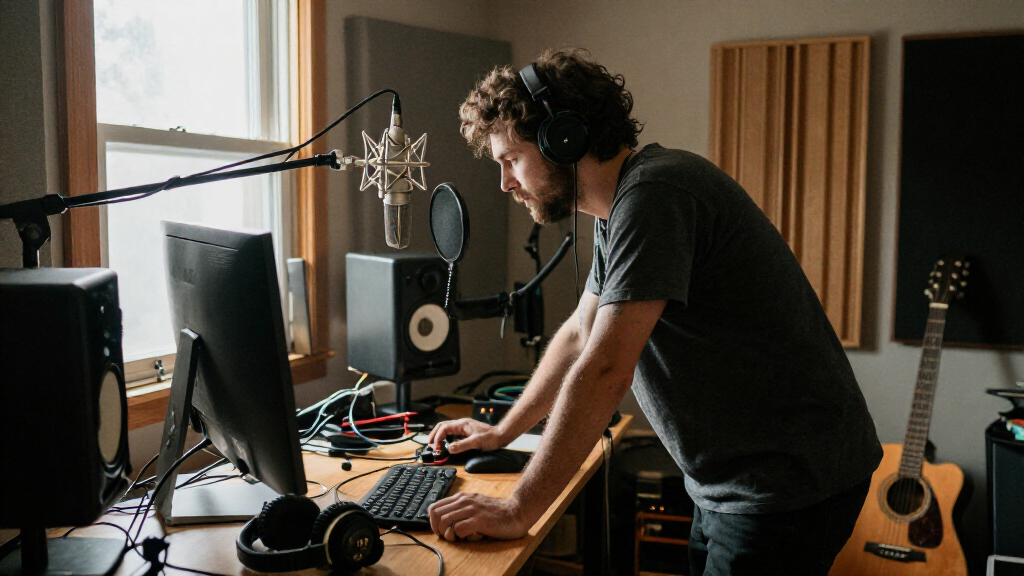
Additional considerations such as included accessories, ease of setup, and room acoustics are discussed, emphasizing that equipment alone cannot compensate for poor room treatment or placement, and that studio headphones for recording and mixing are another key part of a home setup.
A Guide to the 10 Best Studio Condenser Microphones
Find a microphone that fits your room, workflow, and next step. This guide spans simple USB starters, flexible hybrid models, and XLR choices built for a growing home studio.
Ten picks, different recording needs
The guide weighs connectivity, features, value, and intended use. Start with the use case that sounds most like your setup.
Audio-Technica AT2020
Reliable sound and a straightforward path to a more traditional studio chain.
Studio all-rounderMAONO A04 Gen2
USB and XLR connectivity make it adaptable as your recording setup changes.
Flexible workflowAKG P120
A -20 dB pad and high sound-pressure handling suit louder sources.
Loud instruments512 Audio Skylight
Its large 34 mm capsule is highlighted for vocal recording.
Voice and vocalsSUUNTOK BM6000
An affordable, uncomplicated option for voice-over and streaming.
Voice-overFIFINE T669
Plug-and-play USB setup keeps the first recording steps simple and accessible.
New home recordersUSB condenser picks
USB models in the guide prioritize direct computer connection and ease of use.
Fast setupStudio XLR picks
XLR choices suit users who want an interface, more control, and room to expand.
Expandable rigControl-focused models
Some options add practical controls or accessories that can simplify a setup.
Useful extrasChoose for your room
The right match depends on placement, room sound, budget, and recording habits.
Personal shortlistHome studios moved into the mainstream
Affordable gear and content creation made recording at home more common. USB lowered the setup barrier; XLR remained a favorite for more involved studios.
Hobbyist setups
Home recording was a more niche pursuit, often requiring dedicated equipment knowledge.
USB simplifies entry
Direct computer connections help beginners get a first recording underway quickly.
XLR scales up
Interfaces and external controls keep XLR appealing to serious hobbyists and pros.
More hybrid features
Multiple patterns, built-in controls, and hybrid connections answer varied needs.
USB simplicity or XLR flexibility?
Neither route is right for every room or creator. Match the connection to the equipment and control you want today.
USB
Connect directly to a computer for a compact, beginner-friendly recording chain.
XLR
Pair with an audio interface for studio control and a setup that can expand over time.
Room, placement, and monitoring matter
A capable microphone cannot erase room reflections or background noise. Your recording space and working habits shape the result.
Control reflections first
Untreated rooms can add echo and noise to a recording. Improve placement and room treatment where possible before expecting a microphone upgrade to solve the problem.
Plan for the full chain
Consider included accessories, setup effort, and studio headphones for recording and mixing. The best choice is the one that fits the whole workflow.
Questions still open in 2027
Noise reduction, wireless audio, and durability may reshape future recommendations. Long-term testing and changing user preferences will help clarify which features last.
Which microphone suits beginners?
The FIFINE T669 is highlighted for affordable, plug-and-play USB recording without a complex setup.
Are XLR microphones worth the extra setup?
They can offer sound quality and control for serious home studios. The AT2020 and AKG P120 are examples, though an interface adds equipment and setup steps.
Can these microphones work in untreated rooms?
Yes, but reflections and background noise may affect results. Thoughtful placement or room treatment can help.
Will future lists include wireless microphones?
Possibly as fidelity and latency improve. Wired USB and XLR options remain the main studio choices in this guide.
Why These Microphones Shape Home Recording in 2027
The selection of these top microphones reflects ongoing trends toward accessible, high-quality home recording. As remote work, podcasting, and content creation grow, having reliable, versatile microphones becomes essential for producing professional-sounding audio. The diversity of options ensures users can find models aligned with their technical skills and budget, fostering broader participation in audio content creation.
best studio condenser microphone for home recording
As an affiliate, we earn on qualifying purchases.
As an affiliate, we earn on qualifying purchases.
Evolution of Home Studio Microphones Leading to 2027
Over the past decade, home recording has shifted from niche hobbyist activity to a mainstream pursuit, driven by advances in microphone technology and affordability. The rise of USB microphones simplified entry, while XLR models maintained popularity among serious hobbyists and semi-professionals. Recent models incorporate features like built-in controls, multiple polar patterns, and hybrid connectivity, reflecting a trend toward multifunctional devices. The 2027 guide consolidates these developments, offering a curated list of the most relevant options for various user needs.
USB condenser microphone for vocals
As an affiliate, we earn on qualifying purchases.
As an affiliate, we earn on qualifying purchases.
Remaining Questions About Microphone Selection in 2027
While the guide provides a comprehensive overview, it is still unclear how emerging technologies like AI-driven noise reduction or wireless microphones will influence future models. Additionally, long-term durability and user preferences for specific features are still evolving, and real-world testing over time will better inform these rankings.
XLR condenser microphone for professional studio
As an affiliate, we earn on qualifying purchases.
As an affiliate, we earn on qualifying purchases.
Future Developments in Home Recording Microphones
Expect ongoing innovation in microphone technology, including increased integration of digital features, wireless connectivity, and AI-enhanced sound processing. Manufacturers may also focus on improving room adaptability and reducing background noise, making high-quality recording more accessible. The next update to this guide will likely incorporate new models and technological advances as they become available.
As an affiliate, we earn on qualifying purchases.
Key Questions
Which microphone is best for beginners?
The FIFINE T669 USB Condenser Microphone is ideal for beginners due to its plug-and-play USB setup and affordability, offering good sound quality without complex equipment.
Are XLR microphones worth the extra setup effort?
Yes, XLR microphones like the Audio-Technica AT2020 and AKG P120 generally provide higher sound quality and more control, making them suitable for serious home studios and future expansion.
Can I use these microphones in untreated rooms?
While these microphones can be used in untreated rooms, sound quality may suffer due to reflections and background noise. Proper room treatment or placement is recommended for best results.
Will wireless microphones be included in future top lists?
Wireless microphones are gradually gaining popularity, and future lists may include models with high fidelity and low latency, but wired XLR and USB options remain dominant for studio-quality recordings.
Source: Thorsten Meyer AI
Halloween Picks
halloween
As an affiliate, we earn on qualifying purchases.