

In a world beyond smartphones, wearable devices like smart glasses and health monitors will become your daily tools, offering personalized AI-driven assistance without screens. Future displays could include foldable, holographic, or transparent options that interact through gestures, eye movements, or brain signals. Eco-friendly innovations, such as solar-powered gadgets and recyclable materials, will make tech more sustainable. As industry trends shift, you’ll experience immersive environments with augmented reality and brain interfaces. Explore more to discover how these advancements will truly transform your everyday life.
Key Takeaways
- Wearable devices like smart glasses and health monitors will provide seamless, personalized access to information without traditional screens.
- Advanced AR and holographic displays will create immersive, context-aware interfaces replacing smartphones for navigation and communication.
- Brain-computer interfaces could enable thought-controlled interactions, eliminating the need for handheld devices.
- AI-powered gadgets such as the Humane AI Pin will serve as intelligent, screenless helpers integrated into daily life.
- Sustainable, energy-efficient hardware and integrated IoT systems will support ubiquitous connectivity and smarter environments beyond smartphones.
The Rise of Wearable and AI-Driven Devices
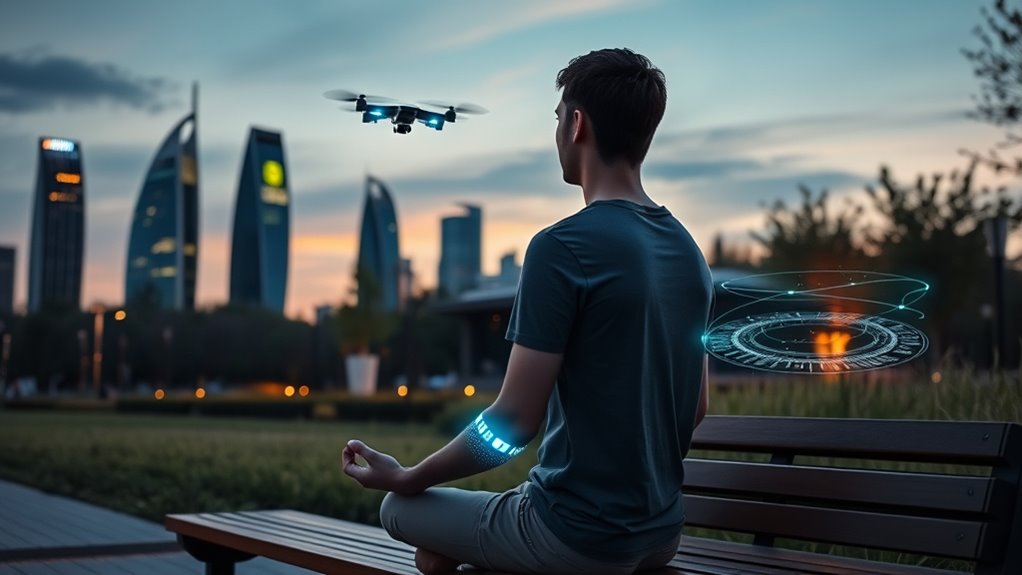
As smartphones gradually give way to more advanced alternatives, wearable and AI-driven devices are taking center stage in redefining how you interact with technology. Instead of pulling out a phone, you’ll manage calls, messages, and navigation through smart glasses or voice-activated assistants. Wearables like smartwatches and health monitors become your primary interfaces, seamlessly connecting to your digital ecosystem. These devices use AI to personalize experiences, monitor your health, and respond instantly to your needs. AI gadgets like the Humane AI Pin act as intelligent helpers, handling tasks without needing a traditional screen. This shift makes your tech more integrated, portable, and hands-free, transforming your daily interactions into smooth, intuitive experiences. The integration of projector technology in wearable devices could further enhance immersive experiences, expanding how you consume content on the go. Additionally, wearable connectivity is improving rapidly, enabling these devices to communicate more effectively with other smart systems. The development of energy-efficient hardware supports longer usage times and reduces environmental impact, making these devices more sustainable. Moreover, advancements in secure wireless communication are ensuring your data remains protected as these devices become more interconnected. As these innovations continue to evolve, user customization is becoming increasingly sophisticated, allowing devices to adapt more precisely to individual preferences. Wearable AI devices are paving the way for a future beyond smartphones.
Next-Generation Displays and User Interfaces
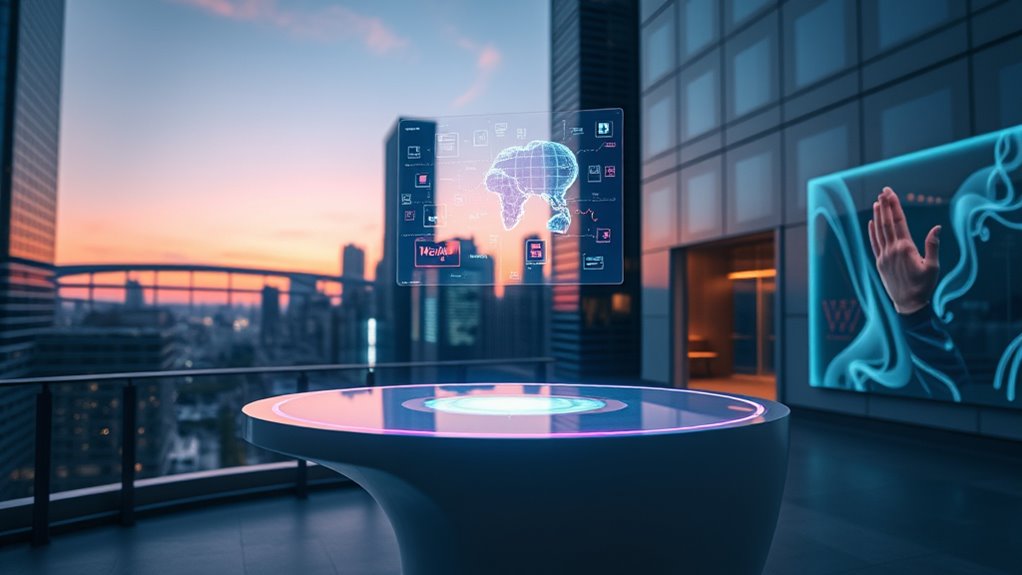
Have you ever wondered how your device’s interface will evolve to become more immersive and seamless? Future displays won’t just be screens—they’ll adapt dynamically to your environment and needs. Foldable, transparent, and holographic displays will blur the line between digital and physical worlds. You’ll interact through gestures, eye movements, or even brain signals, eliminating physical buttons. These interfaces will integrate biometric data for instant security and personalized experiences. As these innovations develop, user interaction methods will become more intuitive and natural. Additionally, advancements in display technology will enable even more versatile and responsive interfaces. The development of adaptive interfaces will allow devices to modify their behavior based on user context, further enhancing usability. Furthermore, simple, effective systems will be essential in making these complex technologies accessible and easy to use for everyone. For example, improving home automation integration will help users control their environment more effortlessly. Below is a glimpse of upcoming innovations:
| Technology | Impact |
|---|---|
| Foldable Screens | Larger viewing areas, portability |
| Photonic Displays | Enhanced visibility in sunlight |
| Liquid Buttons | Tactile, adaptable controls |
| Biometric Integration | Seamless security, personalization |
| AR Overlays | Immersive, hands-free interaction |
Sustainable Innovations and Eco-Friendly Technologies

Innovative mobile technologies are now prioritizing sustainability to address environmental concerns. You’ll see manufacturers using eco-friendly materials, such as biodegradable plastics and recycled metals, reducing waste and resource depletion. Energy-efficient components, like low-power chips and displays, help extend device lifespan and lower power consumption. Solar-powered options are emerging, allowing devices to harness renewable energy, decreasing reliance on traditional charging. You might also encounter initiatives focused on recycling programs and e-waste reduction to manage product life cycles responsibly. These innovations promote a circular economy, minimizing environmental impact. Sustainable manufacturing techniques are increasingly being adopted to further reduce the ecological footprint of mobile devices, encouraging eco-conscious design and responsible production practices. Additionally, sustainable supply chains are being developed to ensure materials are ethically sourced and environmentally friendly throughout the entire manufacturing process, supporting environmental responsibility and reducing carbon footprints. This shift toward eco-friendly innovations reflects a broader commitment to sustainable development in technology.
Market Shifts and Industry Trends Shaping the Future

Market shifts and industry trends are accelerating the progression toward a post-smartphone era by reshaping consumer expectations and technological advancements. You now see companies investing heavily in AI, wearables, and seamless connectivity with IoT devices. Over 80% of new devices support 5G, making high-speed data the norm. Premium pricing and innovation focus drive profits, while wearables like smart glasses aim to replace your phone’s functions. Industry giants develop AR, VR, and neural interfaces, pushing immersive, hands-free experiences. Here’s a quick look:
| Trend | Impact |
|---|---|
| AI Integration | Personalized, smarter devices |
| Wearable Devices | Hands-free communication and health tracking |
| AR/VR Technologies | Immersive, multitasking environments |
Envisioning a World Beyond Handheld Smartphones

As technology continues to evolve, the way you interact with digital information will shift from handheld screens to more integrated, immersive experiences. You’ll find yourself engaging with devices that blend seamlessly into your environment, making interactions more natural and intuitive. Imagine wearing smart glasses or contact lenses that project information directly into your eyes, giving you instant access without distraction. Augmented reality will overlay digital data onto the real world, enhancing navigation, shopping, and social interactions. You might also communicate via brain-computer interfaces that read your thoughts and transmit commands directly. This future includes: – Wearable AI assistants embedded in jewelry or clothing – Immersive AR environments replacing traditional screens – Neural interfaces enabling thought-controlled device operations which require careful preservation to maintain the longevity and functionality of these advanced systems. Additionally, ongoing advancements in biometric security will ensure that these seamless interfaces remain private and protected, leveraging AI-driven authentication to prevent unauthorized access. The integration of AI in everyday devices will further blur the line between digital and physical worlds, creating more intuitive and personalized experiences.
Frequently Asked Questions
How Will Privacy Concerns Evolve With Pervasive AI and Wearable Technology?
You’ll face increased privacy concerns as AI and wearable tech become more pervasive. These devices collect vast amounts of personal data, making you vulnerable to breaches and misuse. To protect yourself, expect stricter regulations and advanced security measures. You’ll need to stay vigilant about data sharing, regularly update privacy settings, and choose devices with transparent privacy policies. Staying informed and cautious will be your best defense against evolving privacy risks.
Will Brain-Computer Interfaces Become Mainstream by 2030?
By 2030, brain-computer interfaces will likely become more common, gently weaving into daily life like a whisper in your mind’s ear. You’ll find yourself effortlessly connecting, controlling devices with your thoughts, as if your brain’s symphony harmonizes with technology. These interfaces will feel seamless, almost invisible—an intuitive extension of yourself—making communication, navigation, and creativity flow naturally without needing a screen or voice.
How Will Environmental Sustainability Impact Future Device Manufacturing?
Environmental sustainability will considerably shape future device manufacturing. You’ll see companies using eco-friendly materials and energy-efficient components to reduce environmental impact. They’ll incorporate solar power and energy harvesting tech, making devices more sustainable. Longer-lasting, recyclable products will become standard, and recycling programs will grow. Your devices will be designed to minimize waste, use renewable resources, and promote responsible consumption, ensuring tech advances are kinder to the planet.
What Role Will 6G Networks Play in Life Without Smartphones?
6G networks will reshape your connected experience by enabling ultra-fast data transfer and real-time AI processing, making traditional smartphones less necessary. You’ll benefit from seamless, instant communication through wearable devices, smart glasses, and ambient interfaces. With 6G, your AI assistants will anticipate your needs, and augmented reality will become immersive. This technology supports a future where your interactions are more integrated, intuitive, and less reliant on handheld devices, transforming daily life profoundly.
Can Smart Glasses Fully Replace Traditional Smartphones in Daily Use?
You might find that smart glasses can fully replace traditional smartphones in daily use. As they evolve with AI, AR, and seamless connectivity, they’ll handle calls, messages, navigation, and even health monitoring right in your line of sight. With features like foldable displays and voice activation, you’ll enjoy a hands-free experience that’s more integrated into your life, making the bulky phone a thing of the past.
Conclusion
Imagine stepping into a new world where your digital life flows seamlessly like a river, guided by wearables and intelligent interfaces instead of a single device. Just as a river carves new paths through the landscape, these innovations reshape your interaction with technology, making it more sustainable and intuitive. Embrace the journey ahead, where you’re the navigator, exploring the ever-evolving currents of a future beyond the smartphone, flowing toward endless possibilities.