
A simple smart home setup often hides complex challenges like compatibility issues between different voice assistants and devices. You may face troubleshooting, managing proprietary protocols, and ensuring your network is strong enough for reliable performance. Firmware updates and security considerations add further layers of complexity. Achieving seamless automation requires ongoing effort beyond installation. If you keep exploring, you’ll discover how much work goes into making smart homes truly effortless and reliable.
Key Takeaways
- Voice control systems often lack full compatibility, leading to inconsistent responses and requiring careful ecosystem selection.
- Device interoperability is complicated by proprietary protocols and the need for third-party hubs or bridges.
- Firmware updates, security protocols, and network stability are critical for reliable and secure device operation.
- Achieving seamless automation involves ongoing management, troubleshooting, and understanding of communication protocols.
- Behind the scenes, extensive configuration and maintenance efforts are necessary for a truly integrated smart home experience.
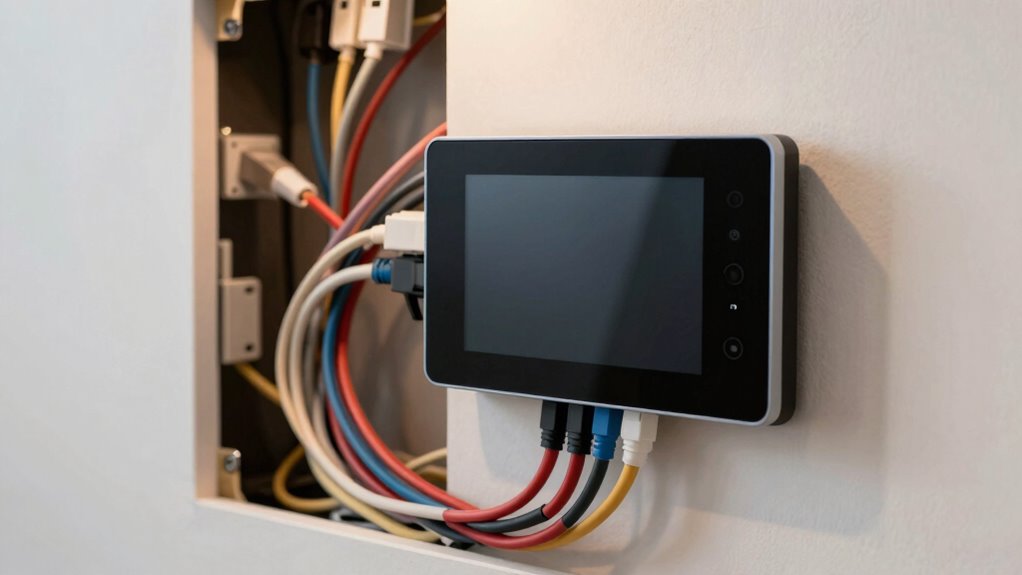
Setting up a smart home might seem straightforward at first, but beneath the surface lies a web of hidden complexities. On the surface, you might think installing a few devices and connecting them to your Wi-Fi is enough. However, as you dive deeper, you’ll discover that ensuring seamless operation involves more than just plugging in gadgets. One of the biggest challenges is achieving reliable voice control. While it’s tempting to assume that saying a command will instantly turn on your lights or adjust your thermostat, the reality is more nuanced. Different devices often use varying voice recognition platforms, like Alexa, Google Assistant, or Siri, and they don’t always work harmoniously. You might find yourself frustrated because your smart speaker recognizes certain commands, but your smart blinds or security cameras don’t respond as expected. This inconsistency stems from the fact that not all devices are fully compatible across different voice control systems, making it necessary to research and choose products that support the same ecosystem you prefer.
Device interoperability is another hidden hurdle that complicates simple setups. It’s not enough to have numerous smart devices; they need to communicate effectively with each other. Many devices use proprietary protocols or specific apps that don’t always talk to one another smoothly. For instance, connecting a smart light bulb from one brand with a smart switch from another can turn into a frustrating puzzle, especially if they rely on different automation standards. You might spend hours troubleshooting or searching for third-party hubs or bridges to bridge these gaps. The process becomes even more complex when you want to set up routines or automation sequences—like having your lights turn on when your door opens or your thermostat adjust based on your location. For these automations to work reliably, all devices must understand and respond to shared commands, which is often easier said than done. Additionally, understanding the importance of device compatibility can help prevent many common issues and streamline your setup process. Furthermore, it’s essential to stay informed about firmware updates and security protocols, as these can significantly impact the stability and safety of your smart home ecosystem. Regularly monitoring network configurations and ensuring a robust Wi-Fi setup also play a crucial role in maintaining a smooth smart home experience. The real challenge lies in managing these layers of compatibility, ensuring your voice control features are responsive, and maintaining a cohesive experience across all devices. That’s where many homeowners realize that what seems simple on the surface actually involves a lot of behind-the-scenes work. Additionally, understanding the communication protocols used by different devices can help you make more informed decisions and avoid compatibility pitfalls. It’s also important to consider software integration to ensure that all your devices work together seamlessly and can be controlled from a central platform.
smart home hub compatible with Alexa Google Siri
As an affiliate, we earn on qualifying purchases.
As an affiliate, we earn on qualifying purchases.
Frequently Asked Questions
How Secure Are Smart Home Devices From Hacking?
Smart home devices can be quite secure if you prioritize strong encryption protocols and user authentication. They often use advanced encryption to protect your data, but weak passwords or outdated firmware can compromise security. You should regularly update your devices, enable two-factor authentication, and choose robust passwords. While no system is completely hack-proof, taking these steps considerably reduces your risk of falling victim to hacking attempts.
Can Smart Home Systems Work During Power Outages?
Smart home systems often struggle during power outages, with only about 30% remaining fully functional. You can improve this by using battery backups for critical devices and signal boosters to maintain connectivity. These backup options guarantee your smart locks, security cameras, or thermostats stay operational, giving you peace of mind. Investing in these solutions helps your smart home work seamlessly, even when the power’s out.
Are Smart Home Devices Compatible Across Different Brands?
Yes, smart home devices can be compatible across different brands, but it depends on their support for brand interoperability and device integration. When choosing devices, look for those that work with popular platforms like Zigbee, Z-Wave, or Matter, which promote cross-brand compatibility. You might need a hub or bridge to connect devices seamlessly, ensuring your smart home functions smoothly, regardless of brand differences.
What Is the Average Cost of a Comprehensive Smart Home Setup?
A complete smart home setup can cost between $5,000 and $20,000, depending on your choices. You’ll invest in devices that boost energy efficiency and offer user customization, making your home smarter and more efficient. While it might seem overwhelming, this investment transforms your space into a futuristic haven, where convenience and control are at your fingertips. Expect costs to vary based on the number of devices and the level of automation you desire.
How Much Technical Knowledge Is Needed to Install Smart Home Systems?
You’ll need moderate technical knowledge to install smart home systems, especially to navigate the user interface and manage setup complexity. While some systems offer user-friendly interfaces that guide you through installation, others require a basic understanding of networking and device compatibility. If you’re comfortable troubleshooting and following detailed instructions, you’ll find the setup manageable. However, for more complex configurations, consulting a professional can guarantee everything functions smoothly without frustration.
smart home device interoperability bridge
As an affiliate, we earn on qualifying purchases.
As an affiliate, we earn on qualifying purchases.
Conclusion
While smart home setups may seem straightforward, they hide a surprising level of complexity. Did you know that the average smart home involves over 10 connected devices? This intricate web requires careful integration and management, often overlooked by users. So, next time you automate your lights or thermostat, remember there’s more beneath the surface. Embracing this complexity can help you better understand and optimize your smart home, making your digital living experience smoother and more secure.
best smart home security firmware updates
As an affiliate, we earn on qualifying purchases.
As an affiliate, we earn on qualifying purchases.
reliable smart home automation system
As an affiliate, we earn on qualifying purchases.
As an affiliate, we earn on qualifying purchases.