
In daily use, AR overlays digital info onto the real world with simple devices like smartphones or glasses, making tasks like navigation or shopping more intuitive and engaging. VR, on the other hand, immerses you in a fully virtual environment using complex headsets, perfect for gaming or training. AR helps you stay connected to reality while adding useful details, whereas VR transports you elsewhere entirely. To discover how each can fit into your routine, keep exploring their unique features and benefits.
Listen free for 30 days with Audible
Thousands of audiobooks and originals — cancel anytime.
As an affiliate, we earn on qualifying purchases.
Key Takeaways
- AR overlays digital content onto the real world, enhancing daily tasks, while VR immerses users in a fully virtual environment.
- AR requires minimal hardware like smartphones or glasses, making it more accessible for everyday use; VR needs specialized headsets and sensors.
- AR allows users to stay connected to their physical surroundings during interactions, unlike VR which isolates users from reality.
- AR enhances routine activities such as shopping, navigation, or translations with real-time digital overlays.
- VR is primarily used for immersive experiences like gaming or training, less suited for quick, practical daily interactions.
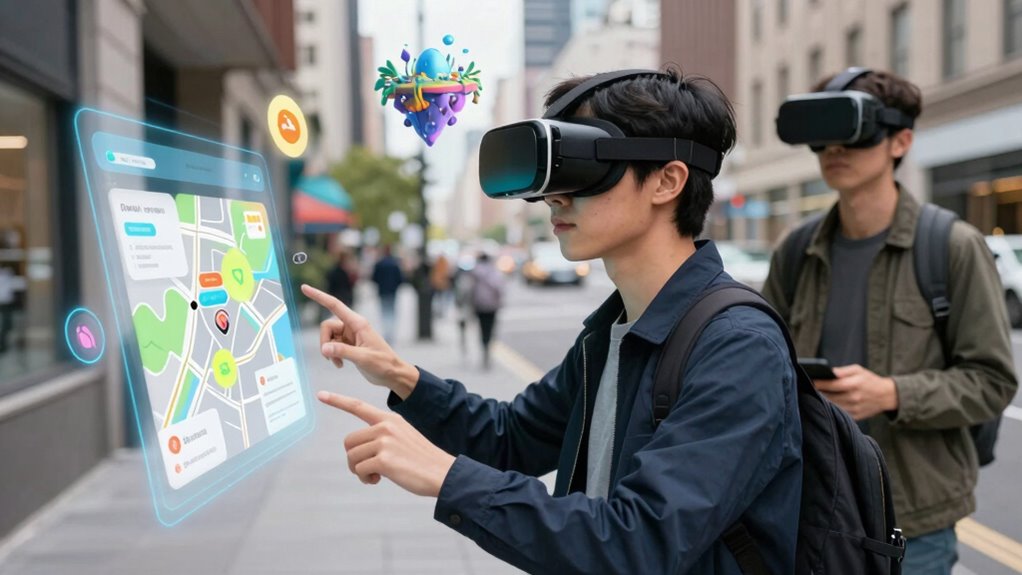
Augmented reality (AR) and virtual reality (VR) may seem similar at first glance, but they serve different roles in your daily life. When you engage with AR, you’re blending digital elements into the real world, enhancing your environment with overlays of information, images, or interactive features. This augmented reality integration allows you to see and interact with virtual objects superimposed onto your physical surroundings, making tasks like navigation, shopping, or learning more intuitive and engaging. For instance, AR apps can display directions directly on your phone’s camera view or show how furniture would look in your living room before purchasing. These applications keep you grounded in reality while adding useful digital layers, making everyday activities more seamless. Real-world interaction is a key aspect that sets AR apart from VR, as it maintains your connection to the physical environment.
AR overlays digital content onto the real world, making tasks more intuitive and engaging.
On the other hand, VR transports you into a fully virtual environment, immersing you in a completely simulated world that disconnects you from your physical surroundings. When you put on a VR headset, you’re entering an alternate reality where your senses are immersed in a virtual environment. This immersion is intense: you can look around, move, and interact as if you’re truly inside a different place. VR is often used for gaming, training simulations, or virtual tours, where the goal is to create a convincing, interactive experience that feels real. Because of this virtual environment immersion, VR provides a sense of presence that’s much deeper than AR’s overlay of digital content onto the real world. Additionally, hardware requirements for VR tend to be more complex, often needing specialized equipment like headsets and sensors, which can limit its daily use compared to AR.
Your daily use of AR might include checking real-time sports scores while watching a game, using AR glasses to get instant translations, or trying on clothes virtually at a store. These experiences enhance your interaction with the physical world, providing useful information right when you need it. Conversely, VR is more suited for scenarios where you want to escape reality entirely—like taking a virtual vacation, practicing complex surgical procedures, or playing immersive video games. VR demands more setup and hardware, but it offers a level of engagement and realism that AR can’t match. Advances in display technology like high refresh rates further improve the visual experience, making VR environments feel more natural and comfortable during extended use.
Ultimately, these technologies serve different purposes in your life. AR enriches your real-world experiences by adding digital layers, making tasks easier and more informative. VR creates entirely new worlds, allowing you to explore, learn, or play in a virtual space. Understanding these differences helps you choose the right technology for your needs, whether it’s enhancing your daily routines or stepping into a completely new environment.
As an affiliate, we earn on qualifying purchases.
Frequently Asked Questions
Can AR and VR Be Used Together in Daily Life?
Yes, you can use augmented reality (AR) and virtual reality (VR) together in daily life. AR overlays digital information onto your real world, while VR immerses you in a completely virtual environment. Combining both allows you to switch seamlessly between real and virtual experiences, enhancing productivity, entertainment, and learning. For example, you might use AR for navigation and VR for immersive gaming, making daily tasks more engaging and efficient.
How Affordable ARe AR and VR Devices for Everyday Users?
AR devices tend to be more affordable than VR, making them more accessible for everyday users. With a cost comparison, you’ll find that AR options like smartphone apps or affordable smart glasses are easier to access without a hefty price tag. VR devices, especially high-end models, can be pricier, but entry-level options are becoming more affordable. Overall, AR’s device accessibility and lower costs make it easier for you to integrate into daily life.
Do AR and VR Require Internet Connectivity?
Did you know that about 60% of AR and VR applications require internet for full functionality? Augmented Reality often needs internet to access real-time data, updates, or cloud-based features, while Virtual Reality can sometimes operate offline for immersive experiences. However, many AR and VR devices benefit from an internet connection for streaming content, software updates, or multiplayer features, making connectivity essential for peak use.
ARe There Safety Concerns With Extended AR or VR Use?
Extended AR or VR use can raise safety concerns, including physical health risks like eye strain, headaches, and fatigue. You should also be aware of privacy concerns, as these devices often collect data about your movements and environment. To stay safe, take regular breaks, maintain good posture, and be mindful of your surroundings to prevent accidents. Always review privacy settings to protect your personal information.
How Do AR and VR Impact Social Interactions Daily?
Augmented reality and virtual reality profoundly impact your daily social interactions. AR enhances real-world connections by overlaying digital info, making conversations more engaging. VR, on the other hand, creates immersive environments that can either isolate you or connect you with others in virtual spaces. While AR fosters face-to-face interactions with added digital details, VR often encourages entirely new social experiences, shaping how you communicate and share in both personal and professional settings.
VR headset for gaming and training
As an affiliate, we earn on qualifying purchases.
As an affiliate, we earn on qualifying purchases.
Conclusion
In daily life, AR actively alters your environment, adding accessible, augmented awareness, while VR veers into vivid, virtual vistas that vanish with a switch. AR’s accessible applications allow you to adapt and augment your surroundings seamlessly, offering an always-at-hand advantage. VR immerses you in a completely different domain, demanding dedicated devices and detaching you from reality. By understanding these differences, you can choose the right reality for your routine, making technology truly tailored to your daily needs.
As an affiliate, we earn on qualifying purchases.
As an affiliate, we earn on qualifying purchases.
Flea & tick season Picks
flea and tick prevention
As an affiliate, we earn on qualifying purchases.