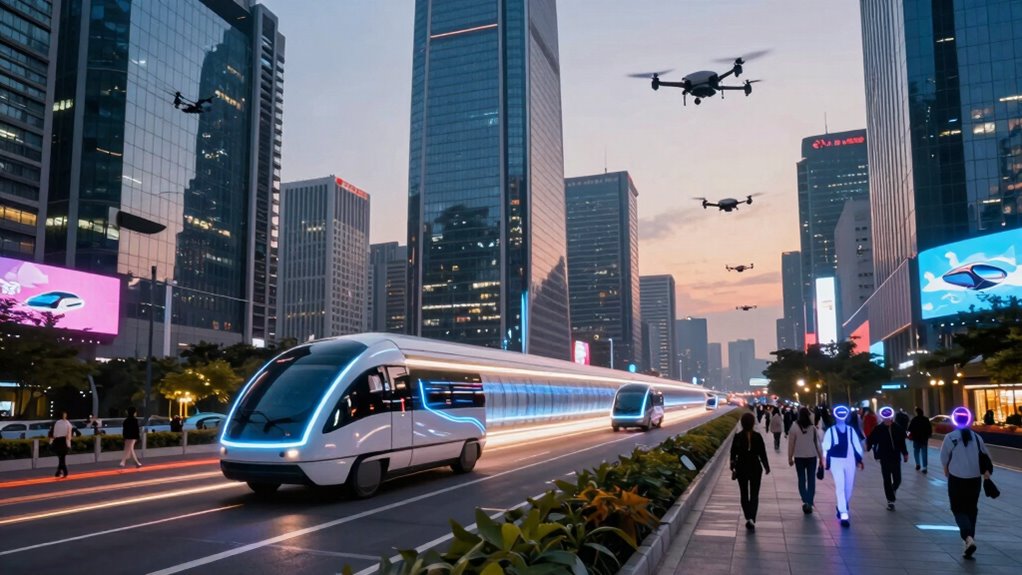
Future mobility tech is bigger than just EVs because it’s shaping entire urban systems. It involves autonomous vehicles, smart traffic management, and connected infrastructure that improve safety, reduce congestion, and cut pollution. It also includes diverse options like ride-sharing, electric scooters, and urban air mobility, making transportation more accessible and sustainable. By transforming city designs and travel experiences, mobility tech creates smarter, eco-friendly urban environments—keep exploring to discover how it’s revolutionizing city life beyond just electric cars.
Key Takeaways
- Future mobility tech encompasses connected infrastructure, autonomous vehicles, and smart traffic systems, extending beyond electric vehicles alone.
- Integration of multiple mobility solutions like ridesharing, electric scooters, and urban air mobility creates a holistic transportation ecosystem.
- Infrastructure upgrades enable seamless vehicle-to-city communication, enhancing safety, efficiency, and urban flow beyond just EV adoption.
- The shift from vehicle ownership to integrated, intelligent systems promotes sustainability, accessibility, and reduced urban congestion.
- Broader mobility innovations improve urban living by reducing pollution, enhancing safety, and making transportation more inclusive and efficient.
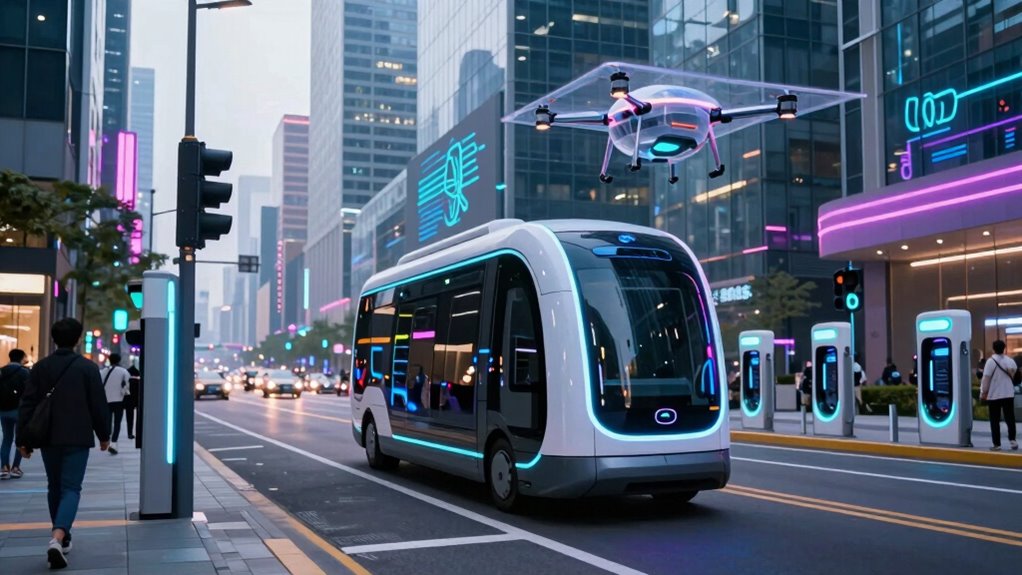
The future of mobility is rapidly transforming as innovative technologies reshape how we move. While electric vehicles often grab the headlines, the bigger picture involves much more than just EVs. Autonomous vehicles are at the forefront of this shift, promising to revolutionize transportation by reducing accidents, easing congestion, and offering greater accessibility. These self-driving cars are not just about individual convenience; they are part of a broader ecosystem that depends heavily on urban infrastructure. Cities are redesigning streets, traffic signals, and public transit systems to accommodate these intelligent vehicles, making urban environments more efficient and safer.
Autonomous vehicles are transforming cities with smarter infrastructure, safer roads, and more accessible, efficient transportation systems.
You’ll find that autonomous vehicles rely on sophisticated sensors, cameras, and data processing to navigate complex cityscapes. This technology demands a substantial overhaul of urban infrastructure to support seamless communication between vehicles and city systems. Smart traffic lights, real-time data sharing, and dedicated lanes are just some ways cities are preparing for the widespread adoption of autonomous transport. This integration isn’t just about making cars smarter — it’s about transforming entire urban landscapes to optimize flow and reduce pollution. As a result, future mobility isn’t just about the vehicles themselves but about creating intelligent, interconnected urban environments that facilitate smoother, safer journeys.
You might also notice that these advancements extend beyond individual cars. Ridesharing platforms, electric scooters, and urban air mobility solutions are all part of this evolving landscape. These technologies work together within a connected system that prioritizes mobility as a service rather than just vehicle ownership. It’s about creating more accessible transportation options for everyone, including those who can’t drive or prefer not to own a car. This shift will likely lead to fewer parking lots, less traffic congestion, and cleaner air—benefits that extend well beyond the vehicles themselves.
Ultimately, future mobility is bigger than just EVs because it encompasses a complex web of interconnected technologies and infrastructure changes. Autonomous vehicles, smart urban infrastructure, and integrated transportation systems are transforming how cities operate and how you experience travel. It’s about building smarter, more sustainable cities that prioritize safety, efficiency, and accessibility. As these innovations continue to evolve, they’ll redefine what mobility means in your daily life—making movement more seamless, environmentally friendly, and inclusive than ever before.
As an affiliate, we earn on qualifying purchases.
Frequently Asked Questions
How Will Future Mobility Tech Impact Urban Infrastructure?
Future mobility tech will profoundly impact urban infrastructure by enabling smarter traffic management and more efficient urban planning. You’ll see real-time data optimizing traffic flow, reducing congestion, and lowering emissions. Smart traffic systems will adapt to changing conditions, making commutes smoother. Urban planning will also evolve to accommodate innovative transport modes, creating more walkable, livable cities. This tech transforms how cities function, making them more sustainable and better suited for future generations.
What Role Will AI Play in Autonomous Vehicles?
You’re in the driver’s seat as AI transforms autonomous vehicles. AI plays a vital role by enabling machines to learn through machine learning, making cars smarter and safer. However, you’ll need to navigate AI ethics carefully, ensuring decisions align with human values and safety standards. This tech’s potential is huge, but staying vigilant about ethical concerns keeps the journey smooth and trustworthy.
Are There Safety Concerns With Emerging Mobility Technologies?
Yes, safety concerns exist with emerging mobility technologies. You should be aware that safety regulations are still evolving, and manufacturers must conduct thorough risk assessments to identify potential hazards. As these technologies develop, continuous monitoring and updates are essential to guarantee passenger safety and public trust. Staying informed about regulatory changes and technological updates helps you navigate the evolving landscape of future mobility responsibly and safely.
How Will These Innovations Affect Transportation Costs?
Think of future mobility tech as a rising tide, lifting transportation costs and making travel more affordable. These innovations will slash expenses through cost reduction strategies like autonomous driving and shared mobility, leading to lower ownership costs. Plus, they’ll boost convenience, making commutes smoother and more flexible. As a result, you’ll find transportation becoming not only cheaper but also more accessible and stress-free, transforming how you move every day.
What Environmental Benefits Can Future Mobility Tech Offer?
Future mobility tech offers significant environmental benefits. It can reduce emissions by optimizing energy use and integrating with the electric grid, making transportation cleaner. Additionally, advancements focus on material sustainability, using eco-friendly and recyclable components to lessen environmental impact. By adopting these innovations, you help lower pollution levels, conserve resources, and promote a healthier planet, making transportation more sustainable for future generations.
smart traffic management systems
As an affiliate, we earn on qualifying purchases.
As an affiliate, we earn on qualifying purchases.
Conclusion
So, stay savvy and see the sweeping scope of future mobility tech. It’s not just about electric engines; it’s about transforming transit, tackling traffic, and transforming towns. From flying vehicles to flexible fleets, this bold breakthrough beckons a brighter, better, and more balanced tomorrow. By embracing these innovations, you’ll be part of a powerful push toward progress, paving the path for a future where mobility is more manageable, more mobile, and more meaningful.
electric scooter for urban commuting
As an affiliate, we earn on qualifying purchases.
As an affiliate, we earn on qualifying purchases.
As an affiliate, we earn on qualifying purchases.