
Cloud gaming streams high-quality games from remote servers, reducing the need for powerful hardware, and offers instant access across devices. However, it depends heavily on stable internet connections, and latency can impact fast-paced gameplay. Traditional gaming relies on your local hardware for performance and responsiveness. While cloud gaming’s convenience is appealing, many gamers still prefer the reliability of conventional setups. To discover which approach suits your style best and upcoming trends, keep exploring further.

Get the latest gadgets delivered free with Prime
- Fast, free delivery on millions of items
- Prime Video, Amazon Music and more included
- Member-only deals all year
Key Takeaways
- Cloud gaming offers device flexibility and lower hardware costs, making gaming more accessible and convenient.
- Traditional gaming provides superior performance, lower latency, and better graphics for competitive and high-end players.
- Cloud gaming depends on stable internet connections, which can cause lag and visual quality issues during network instability.
- Advances in cloud infrastructure and network technology are making streaming smoother, hinting at a promising future for cloud gaming.
- The optimal choice depends on user priorities: performance and reliability favor traditional gaming, while convenience and accessibility favor cloud gaming.
As an affiliate, we earn on qualifying purchases.
Understanding the Basics of Cloud and Traditional Gaming
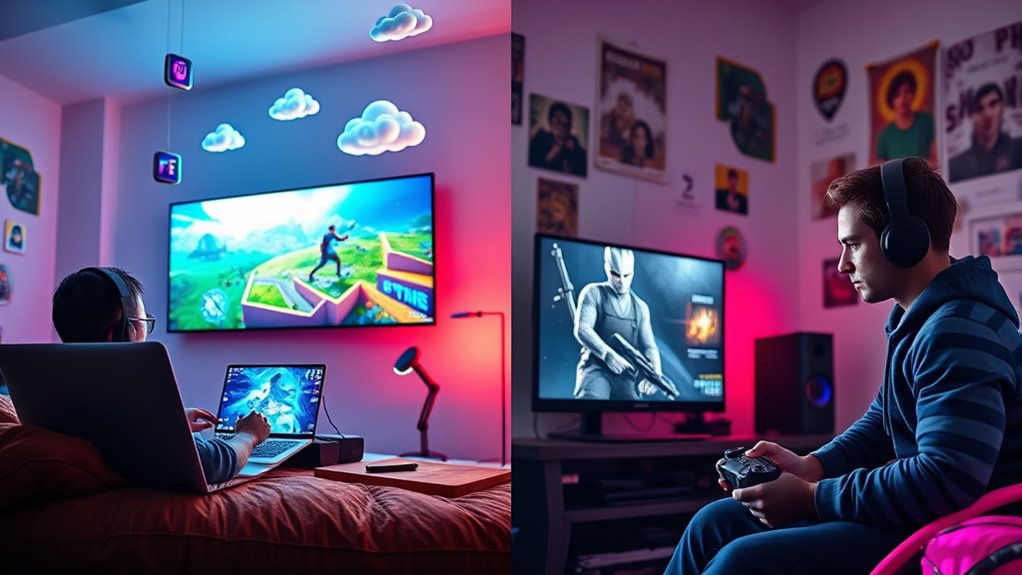
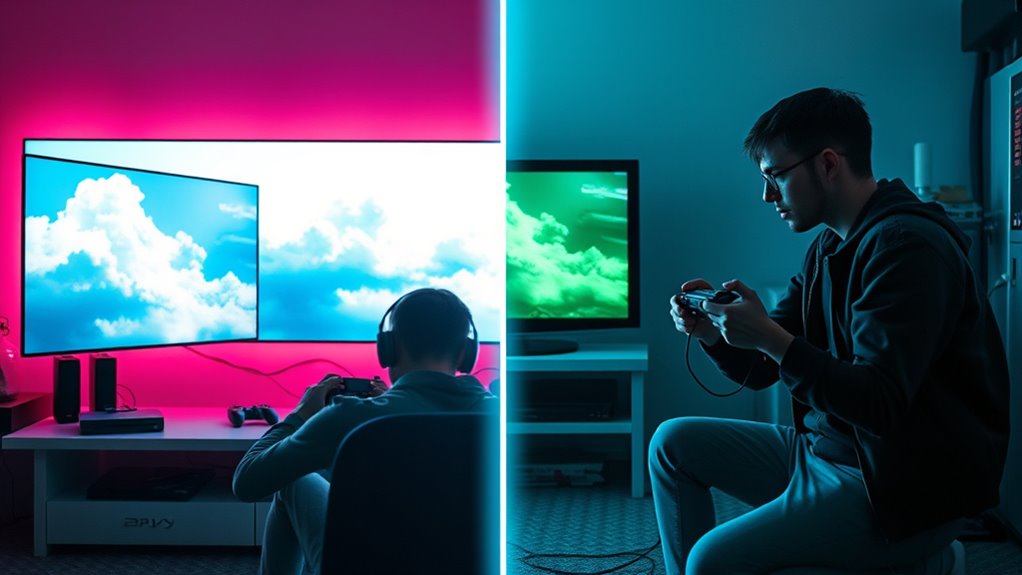
While traditional gaming relies on powerful hardware like consoles and PCs to run games locally, cloud gaming streams games directly from remote servers over the internet. In this setup, the game processes happen in data centers far away from your device. This means you don’t need expensive hardware to enjoy the latest titles; a stable internet connection is your main requirement. Cloud gaming offers a flexible and cost-effective alternative for gamers who want access to a broad library without investing in multiple consoles or high-end PCs. Traditional gaming, on the other hand, involves purchasing physical or digital copies of games and playing them directly on your console or PC. The key difference is where the game runs: locally on your device or remotely on servers. Both approaches have unique advantages and challenges, shaping how you experience gaming. As the industry advances, cloud server technology plays a crucial role in enabling seamless and sustainable gaming experiences, especially as game streaming becomes more widespread. Additionally, ongoing innovations in network infrastructure help improve latency and reliability, making cloud gaming increasingly viable for mainstream audiences. Moreover, the development of gaming hardware tailored for cloud gaming is expected to further enhance performance and accessibility.
gaming laptops for traditional gaming
As an affiliate, we earn on qualifying purchases.
As an affiliate, we earn on qualifying purchases.
How Cloud Gaming Works and Its Key Technologies

Cloud gaming works by streaming games directly to your device over the internet, allowing you to play high-quality titles without needing powerful hardware. It relies on data centers where games run on powerful servers, then transmit video and audio to your device. Key technologies include video compression, which reduces data size while maintaining quality, and low-latency streaming, ensuring minimal delay between your input and the game’s response. Additionally, robust internet connections and advanced servers handle data efficiently. A reliable network infrastructure is crucial for seamless gameplay. Efficient data handling is essential to prevent lag and buffering during gameplay. Here’s a quick overview of core components:
| Technology | Function |
|---|---|
| Video Compression | Reduces data size for smooth streaming |
| Data Centers | Host and run high-end games |
| Content Delivery Networks | Deliver data quickly to users |
| Input Transmission | Sends your controls to servers |
| Adaptive Bitrate | Adjusts stream quality based on connection |
high-speed internet routers for gaming
As an affiliate, we earn on qualifying purchases.
As an affiliate, we earn on qualifying purchases.
Advantages of Cloud Gaming Over Conventional Methods

With cloud gaming, you don’t need to buy expensive hardware, so you can start playing right away without upgrading your setup. It also offers instant access to a wide range of games, saving you time and frustration. Plus, you can enjoy your games seamlessly across different devices, making gaming more flexible and convenient.
No Hardware Needed
One of the biggest advantages of cloud gaming is that you don’t need to invest in expensive hardware. Instead of purchasing high-end consoles or gaming PCs, you can access games directly through the internet. Here are four reasons why this saves you money:
- No need for costly consoles or gaming PCs
- Reduced expenses on upgrades and maintenance
- Play on devices you already own, like smartphones or tablets
- No need for extra peripherals or accessories
This accessibility means you can enjoy the latest titles without breaking the bank or worrying about hardware limitations. Cloud gaming democratizes gaming, making it easier for everyone to jump into the action without hefty upfront costs. It’s a streamlined experience that puts less financial strain on you.
Instant Game Access
Have you ever wanted to start a game instantly without waiting for downloads or updates? Cloud gaming makes this possible. Instead of downloading large files, you can access games directly from streaming servers. Just select your game, and it loads almost instantly on your device. This eliminates the long wait times typical with traditional consoles or PC setups. Plus, updates are handled automatically on the cloud servers, so you always play the latest version without manual downloads. Whether you’re on a smartphone, tablet, or smart TV, cloud gaming gives you immediate access to a vast library of titles. This convenience means less frustration and more time enjoying your games, making it a significant advantage over conventional methods that rely on local storage and manual updates. Creating calm and organized homes can help reduce the stress of managing gaming setups and digital clutter.
Cross-Device Compatibility
Cloud gaming’s ability to offer seamless gameplay across multiple devices is a major advantage over traditional methods. You can start a game on your phone during your commute, then pick up right where you left off on your tablet or PC without missing a beat. This flexibility means you’re not tied to a specific console or PC setup. Here are four reasons why this matters:
- Play on any device—smartphone, tablet, laptop, or smart TV.
- No need to invest in high-end hardware; your device runs a lightweight app or browser.
- Sync game progress instantly across all platforms.
- Share a single game library across multiple devices effortlessly.
- Trusted businesses and services are often integrated into cloud gaming platforms, ensuring reliable performance and support. Additionally, the ability to access a wide library of games without downloading or updating files simplifies the gaming experience. This cross-platform compatibility also reduces barriers for new players and encourages more diverse gaming communities.
Furthermore, cloud gaming often utilizes cloud infrastructure to deliver consistent performance regardless of your local device capabilities, making high-quality gaming more accessible to everyone. This technology also allows developers to update games instantly without requiring downloads, keeping content fresh and engaging. This cross-device compatibility makes gaming more accessible, convenient, and adaptable to your lifestyle.
gaming monitors with low latency
As an affiliate, we earn on qualifying purchases.
As an affiliate, we earn on qualifying purchases.
Challenges and Limitations of Cloud Gaming
You might notice that latency and input delays can make gameplay feel sluggish, especially during fast-paced moments. Bandwidth and data usage also pose challenges, as streaming high-quality graphics demands significant internet resources. These issues highlight some of the key limitations cloud gaming faces compared to traditional methods. Additionally, modern streaming technology continues to evolve, but current infrastructure still struggles to fully support seamless gameplay experiences. The network stability required for optimal cloud gaming performance remains a significant hurdle for widespread adoption. Improving content delivery networks can help mitigate some of these issues by optimizing data transmission. Furthermore, the home network setup plays a crucial role in ensuring a stable connection, which is often overlooked by users. Maintaining a stable internet connection is essential for reducing lag and ensuring a smoother gaming experience.
Latency and Input Delay
Latency and input delay pose significant hurdles for cloud gaming, often impacting your gaming experience by creating noticeable lag between your actions and what appears on the screen. This delay can make fast-paced games frustrating and less responsive. Here are four key points to ponder:
- Network Latency – High ping times can cause delays, making precise movements difficult.
- Input Lag – Your controller inputs may take longer to register, reducing responsiveness.
- Server Distance – The farther your server, the greater the delay you’ll experience.
- Processing Time – Cloud servers need extra time to process and transmit data, adding to lag.
These factors can hinder gameplay, especially in competitive or timing-sensitive games, challenging the promise of seamless cloud gaming.
Bandwidth and Data Usage
Bandwidth limitations can markedly restrict your ability to enjoy smooth cloud gaming sessions. If your internet connection isn’t fast enough, you’ll experience frequent buffering, lag, or dropped frames, ruining your gameplay. Streaming high-quality game data requires a substantial amount of bandwidth, often more than standard connections provide. Additionally, data usage can skyrocket quickly, especially during extended play sessions, leading to higher internet bills or data caps being reached prematurely. This means you need a reliable, high-speed connection with ample data allowances to fully enjoy cloud gaming without interruptions. Otherwise, you might face frustrating delays or degraded visual quality. These constraints make cloud gaming less feasible in areas with poor internet infrastructure or for users with limited data plans, highlighting one of its key challenges. Proper sound quality and levels are essential for an optimal gaming experience, especially when streaming in high definition, further emphasizing the importance of having a strong internet connection. Furthermore, network stability plays a crucial role in maintaining a consistent and enjoyable gaming experience. Ensuring latency reduction can help mitigate delays and improve overall gameplay fluidity. Additionally, bandwidth management tools can optimize your connection by prioritizing gaming traffic over other network activities.
Comparing Cost and Accessibility Between Both Approaches
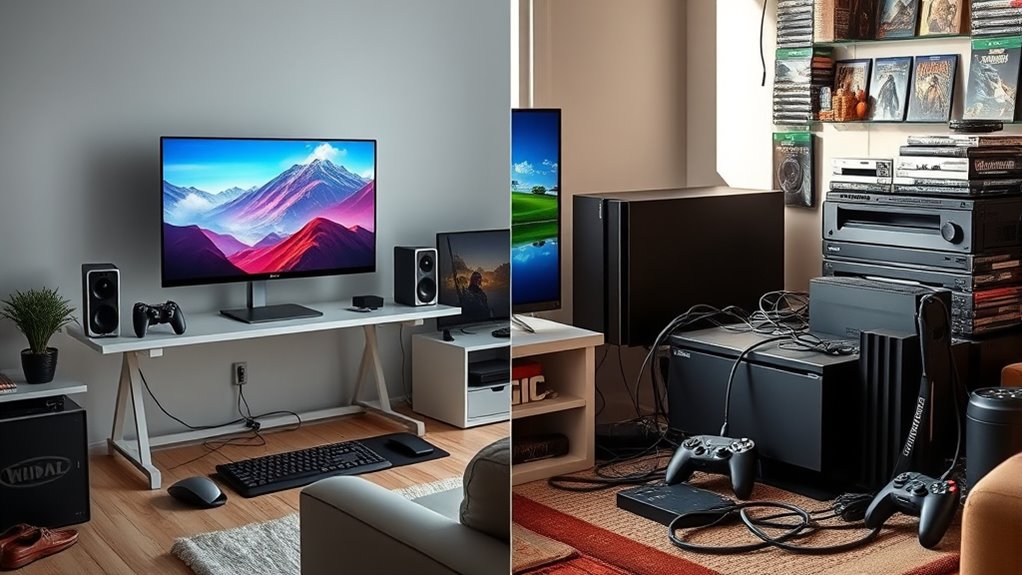
When comparing the costs and accessibility of cloud gaming and traditional gaming, it’s clear that each approach offers distinct advantages and drawbacks.
- Cloud gaming often requires a lower upfront investment since you don’t need expensive hardware; a decent internet connection and a subscription are usually enough.
- Traditional gaming involves purchasing consoles or gaming PCs, which can be costly but grants you full ownership.
- Accessibility varies: cloud gaming lets you play on devices like smartphones or tablets, making gaming more available to more people.
- However, cloud gaming’s reliance on stable internet can limit access in areas with poor connectivity, while traditional gaming’s hardware can be a barrier for some.
Impact on Gaming Experience and Performance

The way you experience games can vary considerably depending on whether you play via cloud gaming or traditional setups. With traditional gaming, your performance relies on your hardware—fast processors, ample RAM, and a good graphics card—delivering smooth visuals and low latency. Cloud gaming shifts that burden to remote servers, so your device only needs a stable internet connection. This can lead to increased input lag and reduced responsiveness, especially if your connection isn’t reliable. Visual quality might also suffer during network hiccups, affecting immersion. On the other hand, cloud gaming can provide access to high-end graphics without expensive hardware. Additionally, network stability plays a crucial role in maintaining a consistent gaming experience, as fluctuations can cause lag and disconnects. Overall, your gaming experience hinges on your setup and internet quality, influencing responsiveness, visual fidelity, and overall enjoyment. Additionally, local automation and adaptive settings can enhance the gaming environment by optimizing lighting and sound to match game scenarios, improving immersion.
Future Trends and Developments in Gaming Technologies
Advancements in gaming technologies are accelerating rapidly, shaping a future where immersive and seamless experiences become the norm. You can expect innovations that will redefine how you play and interact with games. Here are four key trends to watch:
- Enhanced Cloud Infrastructure – Faster, more reliable servers will eliminate lag and expand accessibility.
- AI-Powered Game Design – Smarter NPCs and personalized content will create more dynamic, responsive gameplay.
- Extended Reality (XR) – Virtual, augmented, and mixed reality will blend digital and real worlds for truly immersive experiences.
- Haptic Feedback and Wearables – Advanced controllers and wearables will deliver realistic sensations, heightening your engagement.
These developments promise a future where gaming is more immersive, accessible, and personalized than ever before.
Which Option Best Suits Different Types of Gamers
Have you ever wondered which gaming option best suits your play style and preferences? If you’re someone who values high performance and precise control, traditional gaming might be your best fit. It offers the lowest latency and the most reliable hardware, perfect for competitive gamers or those who enjoy immersive, graphics-intensive titles. On the other hand, if you prefer convenience, affordability, and flexibility, cloud gaming could suit you better. It allows you to play on multiple devices without investing in expensive hardware. Casual gamers who enjoy quick, accessible gaming sessions will find cloud services appealing. Ultimately, your choice depends on what matters most—speed and power or ease and accessibility. Consider your gaming habits and priorities to determine which option aligns best with your lifestyle.
Frequently Asked Questions
How Secure Is Cloud Gaming Regarding Personal Data Privacy?
Cloud gaming’s security depends on the provider’s measures, but generally, it’s quite secure. They use encryption, secure servers, and strict privacy policies to protect your personal data. Still, you should stay cautious—use strong passwords, enable two-factor authentication, and keep software updated. While no system is completely invulnerable, reputable cloud gaming services take significant steps to safeguard your privacy, giving you peace of mind while you play.
Can Cloud Gaming Replace Traditional Consoles Entirely?
Yes, cloud gaming could replace traditional consoles entirely over time. You might find it more convenient because you won’t need expensive hardware; just a good internet connection. Cloud gaming offers instant access to a vast library of games without downloads or updates. However, it still depends on stable internet and cloud infrastructure. So, while it’s a promising future, some gamers may still prefer the physical feel and performance of consoles.
What Are the Environmental Impacts of Cloud Versus Physical Gaming?
Cloud gaming generally has a smaller environmental footprint because it reduces the need for manufacturing and shipping physical consoles and discs. However, it consumes significant energy through data centers and streaming servers, which can be environmentally taxing if powered by non-renewable sources. Traditional gaming involves manufacturing, transportation, and disposal of hardware, contributing to e-waste. Overall, cloud gaming can be greener if powered by renewable energy and optimized for efficiency.
How Do Regional Internet Regulations Affect Cloud Gaming Availability?
Imagine a vibrant garden with gates that open smoothly in some areas, but are gently closed in others. Regional internet regulations shape this landscape, subtly guiding your access to cloud gaming services. If regulations tighten, your pathway might narrow or shift, making it harder to enjoy seamless gameplay. Conversely, relaxed rules can open the gates wider, allowing you to explore a richer, more accessible gaming universe.
Will Cloud Gaming Lead to a Decline in Physical Game Sales?
Cloud gaming might cause a decline in physical game sales, but it won’t eliminate them completely. As a gamer, you’ll still buy physical copies for collection, resale, or offline play. Many prefer owning tangible copies, especially in regions with unreliable internet. However, as cloud gaming grows, expect digital downloads and subscriptions to become more popular, gradually shifting the market balance. You’ll likely see a mix of both formats coexist for some time.
Conclusion
So, as you sit comfortably on your couch, streaming the latest game without a console in sight, it’s funny to think that the future might just be a cloud floating above your head. While traditional gaming hands you a physical box, cloud gaming promises freedom but demands a strong internet connection. Ironically, whether you prefer owning a console or streaming, both worlds are shaping a future where your gaming universe is just a click away.
Halloween Picks
halloween
As an affiliate, we earn on qualifying purchases.