Handheld gaming has come a long way from the simple LCD devices like the Game Boy, which revolutionized portable entertainment, to sophisticated consoles with high-resolution screens, online multiplayer, and hybrid designs like the Nintendo Switch. Modern devices offer powerful hardware, cloud gaming, and seamless shifts between portable and TV modes. If you keep exploring, you’ll discover how technological innovations continue to redefine the way you play on the go.

Get the latest gadgets delivered free — and shop member deals
- Fast, free delivery on millions of items
- Access to Prime Big Deal Days deals on October 6–7
- Prime Video, Amazon Music and more included
Key Takeaways
- Handheld gaming evolved from simple LCD devices like the Game & Watch to advanced consoles with high-resolution screens.
- The Game Boy revolutionized portable gaming, making it mainstream and inspiring competitors.
- Modern devices like the Nintendo Switch blend portable and home gaming with hybrid designs.
- Cloud gaming and digital distribution now enable instant access to extensive game libraries anywhere.
- Innovations focus on powerful hardware, immersive experiences, and seamless multi-platform gameplay.
As an affiliate, we earn on qualifying purchases.
The Dawn of Handheld Gaming: Early Innovations and Milestones

The dawn of handheld gaming began in 1976 when Mattel introduced Auto Race, the first electronic game you could hold in your hand. It marked the start of a new entertainment era, where gaming became portable. Following that, Mattel launched Football in 1977, creating a $400 million industry. In 1978, Merlin became the first successful handheld console, selling over 5 million units. Then, Milton Bradley’s Microvision in 1979 introduced interchangeable cartridges and the directional pad, setting new standards. Nintendo’s Game & Watch series (1980) featured LCD screens with single-game designs like Donkey Kong. During this period, Tiger Electronics launched affordable LCD handhelds based on popular franchises such as Sonic and Jurassic Park, making portable gaming accessible to a broader audience. These innovations laid the foundation for future handheld devices.
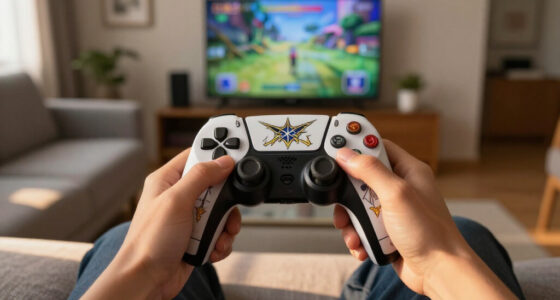
handheld gaming console with high-resolution screen
As an affiliate, we earn on qualifying purchases.
As an affiliate, we earn on qualifying purchases.
The Game Boy Revolution and Its Impact on Portable Entertainment

When Nintendo launched the Game Boy in 1989, it transformed portable gaming from a niche hobby into a mainstream entertainment powerhouse. You could now carry your favorite games everywhere, changing how you experienced gaming. The Game Boy’s success sparked a revolution, making handheld consoles a staple in households worldwide. It introduced iconic titles like Tetris and Super Mario Land, mesmerizing millions. The device’s long battery life and affordable price made gaming accessible for everyone. Its influence inspired competitors and shaped future devices. You felt the thrill of gaming on the go, anytime, anywhere. This shift created a new cultural landscape, where portable entertainment became essential. The development of dedicated handheld consoles set new standards for gaming portability and innovation. You can now enjoy advanced features on modern devices, building on the legacy of the Game Boy. Additionally, the integration of energy-efficient technology in newer devices ensures longer playtime and sustainability, echoing the original device’s emphasis on accessibility and convenience. Furthermore, advances in digital platforms have expanded the gaming ecosystem, allowing seamless access to a vast library of titles across devices.
portable gaming device with hybrid design
As an affiliate, we earn on qualifying purchases.
As an affiliate, we earn on qualifying purchases.
Technological Competition and the Rise of Advanced Handheld Devices

As the popularity of the Game Boy soared, manufacturers competed fiercely to outdo each other with innovative features and hardware improvements. You saw companies like Atari, Sega, and Neo Geo introduce color screens, touch controls, and internet connectivity, but many failed to gain lasting market share. Despite these innovations, the Game Boy’s simple design and vast game library kept it ahead. As technology advanced, the focus shifted from raw power to multifunctionality, with devices like the Nintendo DS and Sony PSP offering touchscreens, online play, and multimedia capabilities. Competition drove rapid innovation, but the real breakthrough came when hybrid systems like the Nintendo Switch blurred the lines between portable and home gaming. Today, advanced handheld devices prioritize versatility, connectivity, and user experience over hardware specs alone. Additionally, the incorporation of high refresh rates in some modern devices has further enhanced gaming performance and visuals. This ongoing evolution demonstrates how technological competition continues to shape the development of portable gaming, encouraging continuous hardware innovation to meet consumer demands.
As an affiliate, we earn on qualifying purchases.
The Era of Modern Handheld Consoles: Nintendo and Sony Take Center Stage

Modern handheld consoles have shifted focus from raw hardware power to versatility, connectivity, and user experience, with Nintendo and Sony leading the charge. You now enjoy devices that blend gaming on the go with seamless online play, innovative controls, and rich multimedia features. These consoles have transformed portable gaming into an all-encompassing entertainment hub:
- Experience blockbuster titles like The Legend of Zelda and *Uncharted* anywhere
- Connect effortlessly with friends through online multiplayer
- Switch between handheld and TV modes instantly
- Access vast digital libraries and cloud gaming services
- Embrace innovative features like touchscreen controls and motion sensing
- The integration of modern technologies has significantly enhanced gameplay and device capabilities.
This era makes gaming more immersive and accessible, turning handheld consoles into essential companions in your daily life. It’s not just about playing; it’s about engaging anytime, anywhere.
The Shift to Hybrid Gaming: Nintendo Switch and Beyond

The landscape of handheld gaming has fundamentally shifted toward hybrid devices that seamlessly blend portability with home console capabilities. You now have the flexibility to play AAA titles on the go without sacrificing the experience you’d expect from a home console. The Nintendo Switch exemplifies this shift, allowing you to switch effortlessly between handheld mode and a full-sized TV experience. This design prioritizes versatility, enabling you to enjoy a wide range of games—from indie hits to major franchises—anywhere, anytime. Modern hybrid consoles focus on cross-platform play, digital downloads, and online connectivity, making gaming more accessible and social. Additionally, the evolution of gaming technology has paved the way for more integrated and innovative gaming experiences. As a result, the traditional distinction between portable and home consoles has blurred, transforming how and where you can enjoy gaming, with the integration of online services playing a key role in this transformation.
The Role of Digital and Cloud Technologies in Shaping Handheld Gaming

Digital distribution and cloud gaming have transformed how you access and play handheld games, making libraries larger and more flexible. You no longer need physical cartridges or discs, as titles are just a download away or streamed directly to your device. This shift enhances convenience and broadens your gaming options, regardless of where you are.
Cloud Gaming Accessibility
As cloud gaming technology advances, it’s transforming how handheld devices access and play games. You’re no longer limited by hardware power or storage; instead, the cloud delivers high-quality games directly to your device. This shift means you can enjoy AAA titles anywhere, anytime, without worrying about downloads or updates. Imagine streaming your favorite game on a lightweight device, feeling free and connected. The accessibility expands gaming beyond traditional boundaries, making it easier for everyone to join in.
- Play top-tier games without expensive hardware
- Access your library instantly from anywhere
- Share experiences with friends effortlessly
- Experience near-instant loading times
- Feel the thrill of limitless gaming possibilities
Digital Distribution Impact
Digital distribution has revolutionized handheld gaming by shifting the focus from physical cartridges to online stores and cloud services. You no longer need to visit stores or buy physical copies; instead, you access vast libraries instantly through digital storefronts like the Nintendo eShop or PlayStation Store. Cloud technology allows you to stream games directly to your device, reducing hardware limitations and expanding access to high-quality titles. This shift has made game updates, DLC, and demos more accessible, keeping your library fresh and dynamic. It also enables indie developers to reach audiences worldwide without manufacturing costs. As a result, your gaming experience becomes more flexible, with instant access, reduced physical clutter, and the ability to enjoy a wider variety of games anytime, anywhere.
Emerging Trends and Future Directions in Portable Gaming Devices

The future of portable gaming is increasingly shaped by hybrid devices that blend the best features of consoles and smartphones, offering seamless shifts between gaming at home and on the go. You can expect more devices that adapt to your environment, delivering high-quality graphics and versatile controls. These trends foster a sense of excitement and innovation, making gaming more accessible and immersive.
- Feel the thrill of console-quality games anywhere you go
- Experience effortless switching between handheld and TV modes
- Enjoy faster, more responsive controls on versatile devices
- Access vast libraries through digital and cloud platforms
- Connect effortlessly with friends worldwide for multiplayer fun
These advancements mean your gaming experience will become more fluid, personal, and exhilarating, pushing boundaries you once thought impossible.
Comparing Past and Present: How Handheld Gaming Continues to Evolve

Handheld gaming has come a long way from its early days of simple LCD screens and interchangeable cartridges to the sophisticated hybrid devices and digital platforms you enjoy today. Modern devices blend portability with powerful hardware, enabling seamless progression between handheld and home gaming. You now have access to high-resolution screens, fast processors, and expansive game libraries through digital downloads and cloud services. Unlike the limited, single-game LCD devices of the past, today’s portables support online multiplayer, streaming, and cross-platform play. Design has shifted toward sleek, lightweight consoles with versatile features like detachable controllers. While battery life and processing power remain priorities, the focus has moved toward hybrid functionality, giving you flexibility and richer experiences in a compact form. The evolution continues to reshape how you game on the go.
Frequently Asked Questions
How Has Battery Life Influenced the Design of Modern Handheld Consoles?
Battery life substantially influences how you experience modern handheld consoles. You notice that manufacturers prioritize longer battery life to keep you gaming without frequent recharges, especially during travel or extended sessions. This focus leads to optimized hardware, energy-efficient processors, and better power management. As a result, devices are designed to balance performance and longevity, ensuring you get more playtime and a smoother gaming experience without sacrificing portability or gameplay quality.
What Are the Key Differences Between Dedicated Handhelds and Hybrid Gaming Devices?
You’ll notice that dedicated handheld consoles focus solely on gaming, offering optimized hardware, longer battery life, and exclusive games. Hybrid devices, however, combine portability with home console features, allowing you to switch between handheld mode and TV gameplay. They emphasize versatility, touchscreen controls, and online connectivity. While dedicated devices excel in simplicity and battery life, hybrids prioritize multi-functionality, making your gaming experience more flexible and integrated across different environments.
How Has Digital Distribution Changed the Handheld Gaming Landscape?
Digital distribution dramatically diversifies and democratizes your gaming experience. You can access a vast vault of virtual titles, ditch physical disks, and effortlessly download games directly to your device. This shift simplifies shopping, speeds up updates, and sustains seamless streaming, making gaming more accessible, affordable, and adaptable. You stay connected, competitive, and constantly curated with fresh content, transforming handheld gaming into a highly hybrid, highly personalized, and highly convenient universe.
What Role Does Indie Gaming Play in the Evolution of Portable Gaming?
Indie gaming plays a vital role in shaping portable gaming’s future by expanding the variety and creativity of available titles. You can access unique, innovative games on devices like the Nintendo Switch and handheld consoles like the Panic Playdate. Indie developers push technological boundaries, making gaming more diverse and accessible for you. Their creativity enriches your experience, ensuring portable gaming stays fresh, exciting, and inclusive for all types of players.
Will Dedicated Handheld Consoles Regain Popularity in the Future?
Dedicated handheld consoles probably won’t regain the widespread popularity they once had. You now see more hybrid devices like the Nintendo Switch, which combine portability with home console features. Consumers prefer versatile, multi-functional devices that offer access to a larger game library and online connectivity. As technology advances, you’ll likely see dedicated handhelds remaining niche products, with most players opting for flexible, all-in-one gaming solutions that fit their on-the-go lifestyles.
Conclusion
As you’ve seen, handheld gaming has evolved like a mighty river, flowing from simple beginnings to a powerful current of innovation. Every device, from the Game Boy to today’s hybrid consoles, shapes your journey through immersive worlds. The future promises even more exciting rapids to navigate, blending technology and imagination. Embrace this wave, and get ready to ride the thrilling tide of portable gaming’s endless evolution.
Fall Picks
fall essentials
As an affiliate, we earn on qualifying purchases.