If you’re choosing between a soundbar and surround sound, consider your room size, budget, and how immersive you want your audio experience. A soundbar is sleek, easy to set up, and fits tight spaces, making it perfect for simpler setups. Surround sound provides richer, more immersive audio but requires more space, time, and cost. To find out which option suits your needs best, explore the details below for a clearer comparison.
Key Takeaways
- Soundbars are ideal for small spaces and quick setup, offering convenience and space-saving design.
- Surround sound provides immersive audio with multiple speakers, suitable for larger rooms and dedicated home theaters.
- Cost-effective soundbars deliver good quality with minimal calibration, while surround systems are more expensive but customizable.
- Surround sound setups require more complex installation and calibration but offer richer, crisper audio.
- Your choice depends on room size, budget, desired immersion, and ease of setup preferences.
Understanding the Basics of Soundbars and Surround Sound Systems

Soundbars and surround sound systems are popular options for enhancing your home audio experience, but they differ considerably in design and performance. A soundbar is a slim, elongated speaker that sits beneath or above your TV, providing improved sound without taking up much space. It typically contains multiple speakers in a single enclosure, simplifying setup and reducing clutter. Surround sound systems, on the other hand, involve multiple speakers placed around your room, including rear and side channels, to create a more immersive experience. They often require more complex wiring and setup but deliver richer, more directional sound. While soundbars focus on convenience and compactness, surround sound systems aim for a more detailed and enveloping audio environment, catering to different preferences and room sizes. Modern audio technology has also introduced wireless options that simplify setup even further.
Audio Quality and Immersion

While both soundbars and surround sound systems can considerably enhance your audio experience, their ability to deliver immersive sound varies. Soundbars offer a streamlined setup with virtual surround effects, but they often lack the depth and crispness of dedicated systems. Surround sound setups, with multiple speakers placed around your room, create a more enveloping experience, making you feel like you’re part of the action. Additionally, understanding audio technology can help you choose the best system for your specific needs. Recognizing the importance of audio calibration can further optimize your setup and improve overall sound clarity. Being aware of speaker placement techniques also plays a crucial role in maximizing your home theater’s audio performance. Moreover, considering quality components can significantly impact the overall sound quality and durability of your home theater system. Properly integrating room acoustics can also enhance sound distribution and reduce unwanted echoes.
Installation and Space Requirements
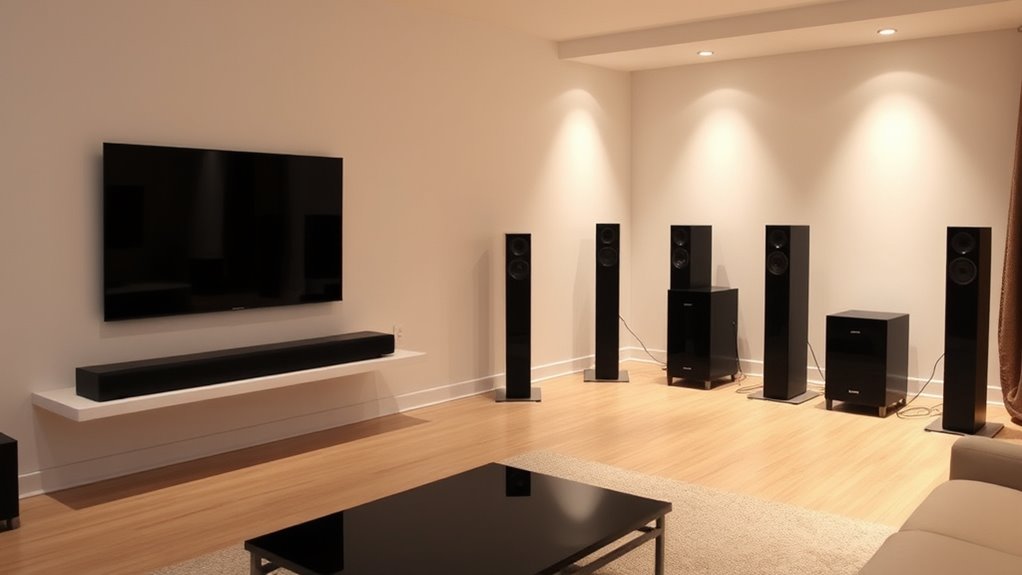
When choosing between a soundbar and surround sound, you’ll want to contemplate how much space each setup requires and how easy it is to install. Soundbars offer more flexibility with placement and generally have simpler setups, while surround systems can take up more room and involve more steps. Understanding these differences helps you pick the option that fits your space and installation preferences best. Additionally, considering installation and space requirements can ensure you select a system that integrates seamlessly into your home environment. For example, knowing the room size wattage can help determine the appropriate power level for your setup. Moreover, assessing navigation and mapping features might be beneficial if your setup involves automated or integrated components. Proper filtration and pump protection, like using filters for spray guns, can also be relevant when maintaining or upgrading your home theater equipment to prevent dust and ensure longevity. Taking into account space optimization can further enhance your overall home theater experience by making the most of your available area.
Space Flexibility
Choosing between a soundbar and surround sound often comes down to how much space you have and how easy it is to set up each system. Soundbars are compact, fitting neatly beneath your TV or mounted on a wall, making them ideal for small or cluttered spaces. Surround sound systems require more room, with multiple speakers placed around your room, which can limit flexibility. Consider these points:
- Space efficiency: Soundbars save space and simplify placement. Additionally, compact design allows for easier integration into various room setups.
- Room layout: Surround systems need strategic speaker positioning.
- Furniture constraints: Large setups may not work well in tight areas.
- Acoustic design: Proper sound distribution in surround systems can enhance sound quality.
Additionally, advancements in audio technology have made modern surround sound systems more adaptable to various room configurations, though they still require a dedicated setup space. If you want a minimal footprint, a soundbar offers greater flexibility. If you’re willing to dedicate space for immersive sound, surround systems provide more options but with less flexibility.
Setup Complexity
Setting up a soundbar is generally straightforward and quick, often requiring just a few connections to your TV and power source. You typically place it directly beneath or above your TV, making installation simple without needing extra furniture or mounting brackets. Surround sound systems, however, can be more complex. They usually involve multiple speakers placed around the room, each requiring individual connections and positioning. This setup can take more time and effort, especially if you need to run wires discreetly or mount speakers on walls. Space requirements also differ: soundbars need minimal room, while surround systems demand more space to optimize sound distribution. If you prefer a hassle-free setup with minimal adjustments, a soundbar is the easier choice. For a more immersive experience, be prepared for a more involved installation process. Proper wiring is essential to ensure optimal performance and safety when installing surround sound systems. Additionally, room acoustics can significantly impact the overall sound quality, requiring careful placement of speakers for the best experience. Properly managing cable organization can also help prevent clutter and improve the overall setup process, especially since audio calibration can be necessary to fine-tune the sound for your specific environment. Incorporating professional assistance may be beneficial for complex surround sound installations to ensure optimal placement and configuration.
Cost and Budget Considerations
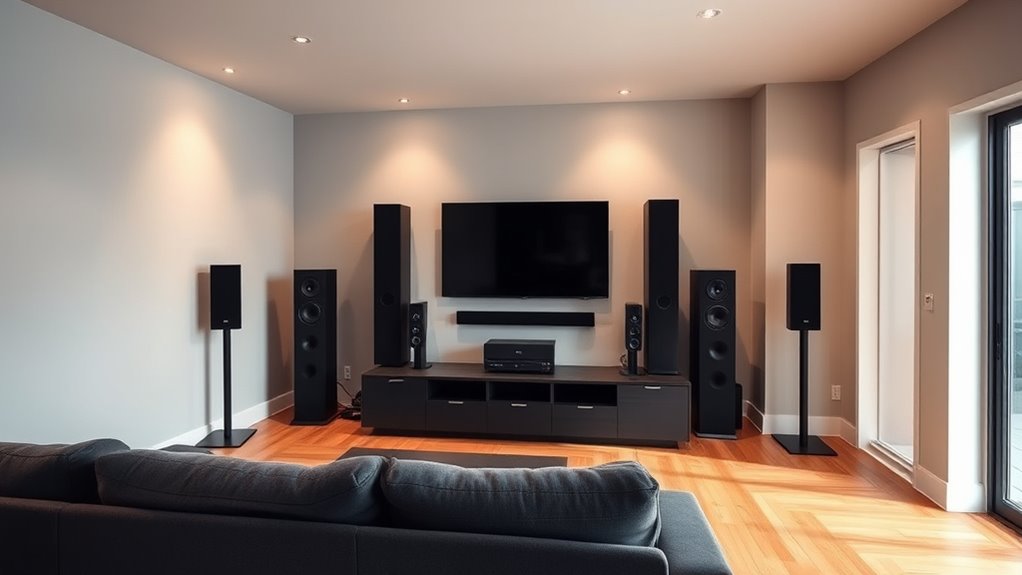
Cost and budget considerations play a crucial role in deciding between a soundbar and surround sound system. Your budget influences not only initial purchase prices but also ongoing expenses. Here are three key points to contemplate:
- Initial Cost: Soundbars typically cost less upfront, making them ideal if you’re on a tight budget.
- Upgrade Potential: Surround sound systems can be expanded over time but require more investment initially. Considering expandability options can help you plan for future upgrades.
- Value for Money: While surround systems offer immersive audio, soundbars often provide better sound quality for their price. Additionally, considering vetted audio technology can help you select options that maximize quality within your budget. Understanding interest rates and financing options can also make higher-end systems more accessible and affordable over time. Being aware of cost-effective features can lead to smarter purchases that fit your financial plan.
Ultimately, your budget helps determine which option aligns with your financial comfort and long-term home theater goals. Balancing cost against desired audio experience ensures you make a choice that fits your needs.
Ease of Use and Connectivity Options
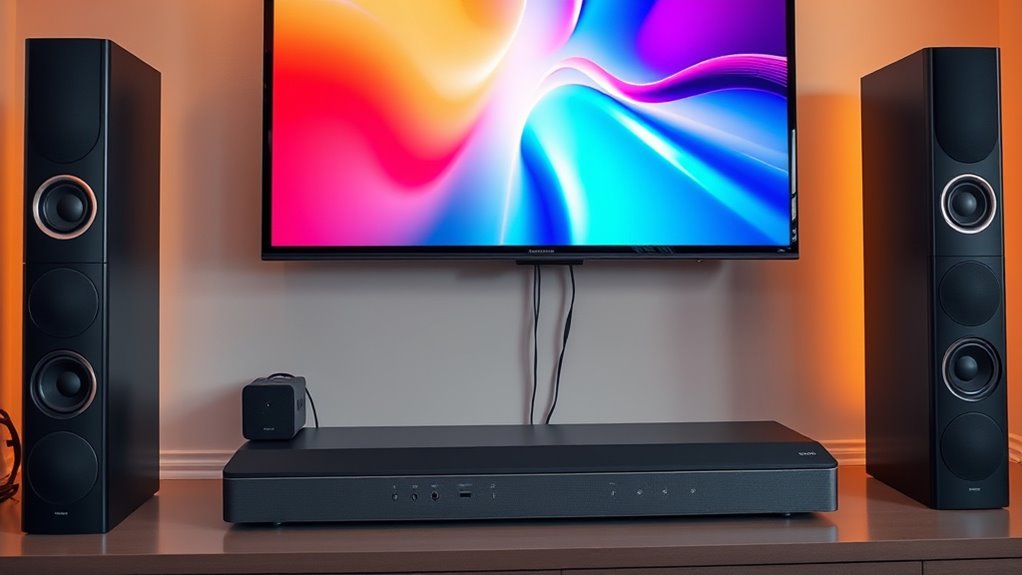
When considering ease of use and connectivity options, it’s important to think about how seamlessly your audio system integrates with your existing devices. Soundbars typically connect easily via HDMI ARC, Bluetooth, or optical cables, making setup quick and straightforward. They often come with smartphone apps for quick adjustments and streaming, which enhances user-friendliness. Surround sound systems, on the other hand, usually require multiple cables and more complex setup, including speaker placement and calibration. While they may offer more connection options like multiple HDMI inputs and legacy connections, the process can be more time-consuming. If you value simplicity and minimal effort, a soundbar is likely more convenient. However, if you’re comfortable with detailed setups and want versatile connectivity, surround sound systems provide more options to suit various devices. Additionally, understanding the thermal behavior of your system can ensure optimal performance and longevity of your setup.
Customization and Expandability
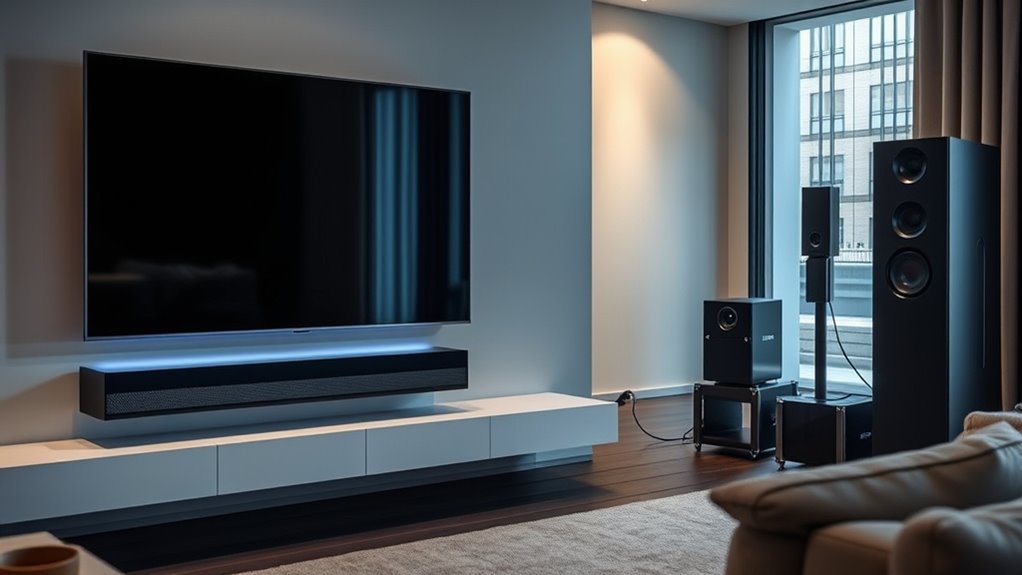
While soundbars offer some level of customization through adjustable sound modes and remote controls, their expandability is generally limited. You can tweak audio settings to suit your preferences, but adding new components isn’t straightforward. To enhance your system, consider these points:
- Built-in ports: Look for models with HDMI or optical outputs for future upgrades.
- Modular design: Some soundbars allow adding separate subwoofers or rear speakers.
- Compatibility: Ensure it supports multi-room audio or wireless expansion options.
These features give you some flexibility, but overall, soundbars don’t match the expandability of traditional surround sound setups. Your ability to customize and grow your system is more restricted, making it less adaptable over time.
Making the Right Choice for Your Home Theater
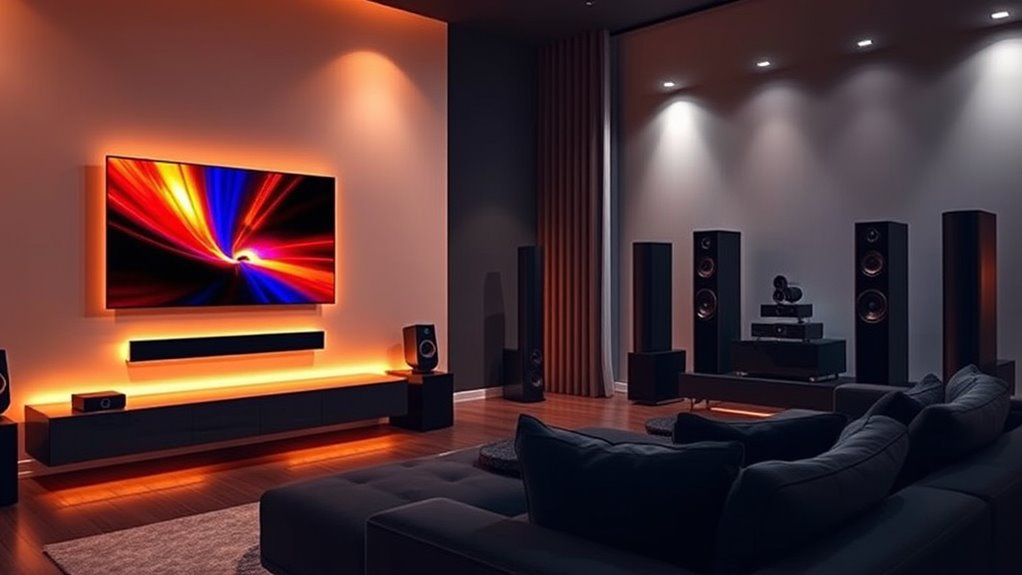
When choosing the best setup for your home theater, you need to think about your space, budget, and how you prefer your audio to sound. A soundbar might fit smaller rooms and tighter budgets, while surround sound offers a more immersive experience if you have room to spare. Think about what matters most to you so you can make a choice that truly enhances your viewing and listening pleasure.
Space Considerations
Choosing between a soundbar and surround sound system depends heavily on your available space. If you have a smaller or cluttered room, a soundbar offers a sleek, compact solution that fits easily beneath your TV. For larger rooms, surround sound systems can fill the space more effectively, creating an immersive experience. Consider these points:
- Room Size: Smaller rooms benefit from the simplicity of a soundbar, while larger spaces need the reach of multiple speakers.
- Speaker Placement: Limited space may restrict positioning, making a soundbar more practical.
- Aesthetic Impact: Cluttered areas demand minimalistic options, favoring soundbars over bulky surround setups.
Your space shapes your choice, ensuring your home theater is both functional and comfortable.
Budget Constraints
Budget constraints play a significant role in determining whether a soundbar or surround sound system is the better fit for your home theater. If you’re working with a tight budget, a soundbar is usually more affordable and offers a straightforward setup. It provides decent sound quality without breaking the bank and fits easily into limited spaces. Surround sound systems, on the other hand, can be costly, especially when you factor in multiple speakers and installation costs. They often require more time and effort to set up properly. If saving money is your priority, a soundbar allows you to enjoy better audio without significant financial investment. However, if your budget allows for it, investing in surround sound can deliver a more immersive experience, but only if you’re willing to spend more upfront.
Audio Preferences
Your audio preferences play a crucial role in deciding between a soundbar and surround sound system. Think about what you value most: clarity, immersive experience, or simplicity. To help you decide, consider these points:
- If you prefer straightforward audio with minimal setup, a soundbar offers clear dialogue and easy operation.
- For a more immersive experience that surrounds you with sound, surround sound systems deliver detailed spatial effects.
- Your listening habits matter: if you mainly watch movies or play games, surround sound enhances realism; if you enjoy casual TV viewing, a soundbar might suffice.
Frequently Asked Questions
Can a Soundbar Replace a Full Surround Sound System Effectively?
Yes, a soundbar can effectively replace a full surround sound system for many people. Modern soundbars come with virtual surround technology that mimics immersive audio, making your movies and music feel more dynamic. While they might not deliver the same depth as a full system with multiple speakers, they’re easier to set up, save space, and still provide impressive sound quality, making them a great choice for most home theaters.
How Do Room Size and Acoustics Affect Soundbar Performance?
In the blink of an eye, room size and acoustics play a vital role in your soundbar’s performance. Larger rooms may cause sound to dissipate, making audio less clear. Hard surfaces reflect sound, creating echoes, while soft materials absorb it, dulling audio. To optimize, position your soundbar near walls or corners and consider adding rugs or curtains to improve sound quality and guarantee you get the best listening experience.
Are Wireless Surround Sound Systems More Reliable Than Wired Setups?
Wireless surround sound systems can be more convenient, but they may face reliability issues like signal interference or connectivity drops, especially in crowded or Wi-Fi-heavy environments. Wired setups, on the other hand, generally offer more consistent and stable audio because they’re directly connected. If you prioritize reliability and minimal interruption, a wired system might be better, but if you want flexibility and easy installation, wireless options could suit you better.
What Are the Maintenance Requirements for Different Home Theater Options?
You’ll find that maintenance varies with your home theater setup. Wireless systems usually need occasional software updates and battery replacements, while wired options require checking for loose cables and connections. Soundbars are low-maintenance, needing only regular dusting. Surround sound systems demand more upkeep, like speaker alignment and cleaning. Bottom line, stay on top of upkeep, or you’ll find yourself in hot water when things go awry. Regular checkups keep your system running smoothly.
How Future-Proof Are Current Soundbar and Surround Sound Technologies?
Current soundbar and surround sound technologies are fairly future-proof, thanks to ongoing updates like firmware upgrades and compatibility with new audio formats. You can easily connect them to smart home systems or streaming devices, ensuring longevity. However, as audio tech advances rapidly, investing in models with HDMI eARC, Bluetooth, and Wi-Fi support helps you stay compatible with future devices and standards, giving you a more adaptable home theater setup.
Conclusion
Ultimately, choosing between a soundbar and surround sound depends on your space, budget, and desired experience. If you value sleek design and simplicity, a soundbar might be your best bet—think of it as the “iPhone” of audio setups. However, if you seek immersive cinema, surround sound offers richer audio. Weigh your priorities, and you’ll find the perfect fit for your home theater. After all, in the grand quest for cinematic bliss, there’s no need to be a damsel in distress.